
Research Arsenal Spotlight 36: David McGowan 47th Illinois Infantry
David McGowan was born in 1838 to James and Eliza (Conn) McGowan in Pennsylvania. His family later moved to Baltimore, Maryland, but David himself was living in Bennington, Illinois when he enlisted in Company I of the 47th Illinois Infantry. He wrote the seven letters in the Research Arsenal collection to a pair of sisters named Fannie and Ellen of Minonk, Illinois. Although not confirmed, these sisters were almost certainly Ellen Philena Fowler and Fannie Josepha Fowler who were living in Minonk in the 1860 census. It is not clear that there was any familial relationship between the Fowlers and the McGowans, but in one letter David McGowan mentions his mother visiting the Fowler family.
On September 4, 1861, David McGowan was mustered into the 47th Illinois Infantry as a corporal. By the time he mustered out, he had been promoted to first sergeant.
The 47th Illinois Infantry in Missouri
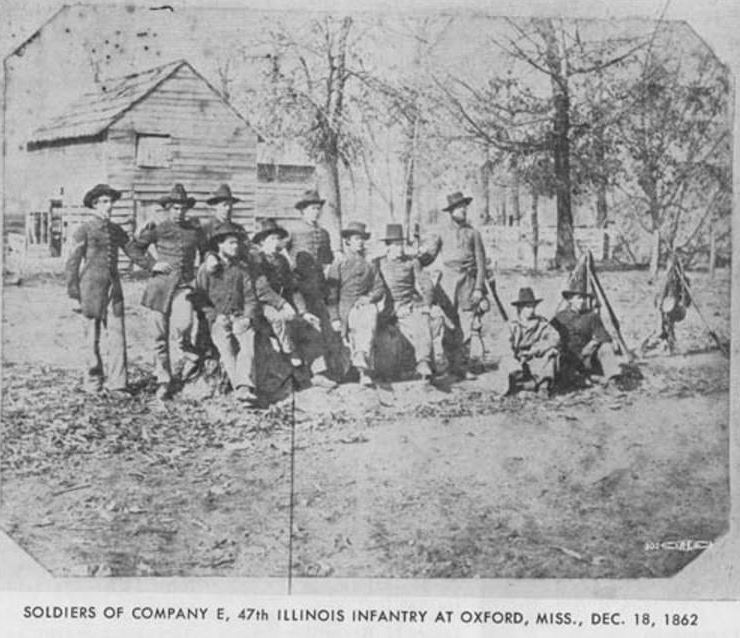
The first letter in our collection was written on January 20, 1862 from Otterville, Missouri. In the letter, David McGowan was hopeful that the war might come to an end soon, though was not confident in the current rumors around camp.
“We are in a very strong secession district but as yet have had no fight and not much prospect of getting into one. There is a rumor quite prevalent in camp to the effect that war operations (on both sides) have been stopped for twenty days and that the South is about suing for peace. I don’t put much confidence in it yet. If they do make a peace, I hope it will be honorable to the United States Government.”
The 47th Illinois was also busy at this time building quarters and other buildings for the winter, as David McGowan stated later in the same letter.
“We have got a hospital built out here in the woods. It is built out of logs. Of course it is not very smooth but will answer the purpose very well. We are thinning the timber very fast. It was pretty heavy timber when we first came here but is getting thinner very fast. There are a good many sick. Not many that are very bad.”
David McGowan and Camp Life
The next letter in our David McGowan collection was written nearly a year later, on December 15, 1863. However, it found David McGowan in similar circumstances, settling in for a cold winter with the 47th Illinois Infantry, this time in La Grange, Tennessee. He was then hopeful that a new theatre performance might bring some liveliness to camp.
“There is nothing of much interest going on here if I except the theatre. We are actually going to have a theatre in the seminary building. I expect they will be ready to commence operations about the last of this week. I don’t suppose it will amount to much. They say there are to be four actresses. I may go once just to get a sight of a woman for I can assure you, they are a scarce article in this benighted land. There are a few in town. Out Col’s wife and a Lt’s wife (neither of them are very attractive. I have not got acquainted with either of them yet) are here for a short stay.”
Unfortunately, the actresses seem to not have been enough to hold David McGowan’s interest as his follow up letter written on December 23, 1863, had a rather negative review of the theatre.
“Capt. Andrews and me went to the theatre last night. The plays were just tolerable. There was quite a full house and considerable noise and I did not enjoy it very much. The theatre is quite close to our camp. I can hear them now cheering the actors.”
When David McGowan wrote to Fannie Fowler a few weeks later on January 19, 1864, he humorously revealed one of the not-so-pleasant aspects of his current camp life.
“You know cats are my favorite. We have several in camp. They are more for ornament that use as the rats are larger than the cats. Mr. Hart & me have a board floor in our shebang and there are quite a number of rats under it. A couple of them got on our bed last night. One of them got on Mr. Hart’s head. He made a very energetic movement and the enemy was routed and beat a hasty retreat. One got on my feet but by gently moving them (my feet), the rat left. I don’t think they are very dangerous as they have no discipline. They fight among themselves—and you know they must be Union to be strength. Well, I suppose you think I have chosen a queer subject to write about. Still as they are our nightly comrades, I could not do less than mention them.”
David McGowan Considers Reenlistment
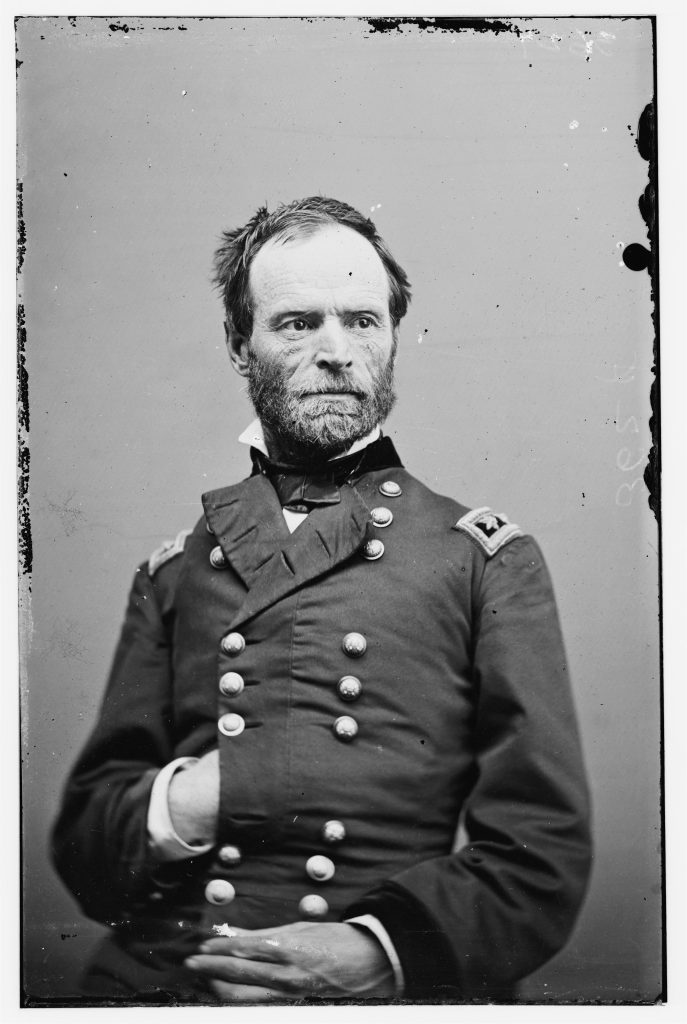
David McGowan enlisted in the 47th Illinois Infantry for a term of three years. As he neared the expiration of that term, one of the chief thoughts on his mind was whether he should reenlist as a veteran at his term’s expiration.
In a letter written January 19, 1864, he brought up his current indecision to Fannie Fowler.
“I have been thinking some of enlisting in the Veteran Corps. What do you think of the idea? From present appearances, very few of the 47th will re-enlist. That is one drawback to my trying it and then I want to have my friend’s opinion. I have had letters from home lately. Neither Father no Mother are very well. I rather think my duty calls me there when my term of service expires. I feel very anxious to see them all over more. And if I am spared until my term of service expires, I will not be slow in going there.”
David McGowan also told Ellen in a separate letter that his father had advised against reenlistment, stating “I received a letter from the East the other day. Father don’t want me to re-enlist. I guess maybe I will obey him.”
March, 1864 found the 47th Illinois Infantry in Vicksburg, supporting General Sherman. David McGowan wrote to both Ellen and Fannie about his current duties and the difficult conditions of the area.
“On the 26th of Feb. we (our brigade) started in charge of a large train of wagons with rations for General Sherman’s Army. We marched to Canton, Miss. in 48 hrs (56 miles). Canton is one of the prettiest towns I ever saw—something like Holly Springs, only not so large, is much prettier laid out, and is in the (by far) best portion of Mississippi I have yet seen. It is the county seat of Madison County.
We left there March 1st during a very cold rain. The roads coming back were execrable. We reached Black River Bridge on the third after a very tiresome march. We marched — or rather crawled — nearly all night two nights in succession. On our way out, we met a train of Negroes about 4 miles long, estimated at 5,000. They had all kinds of wagons, carts, etc., quite a number dying on the way. Mothers killing their own children to get rid of them. There was also a very long string of captured horses and mules. Sherman destroyed 23 engines at Canton, also a large number of cars and about 100 miles of railroad during his march. I suppose you have seen the account of his raid in the papers.”
Ultimately, David McGowan decided not to reenlist and mustered out with the other non-veterans on October 11, 1864. As he mentioned in an earlier letter, he returned to Maryland to be near his parents. The last letter in our collection was written on December 22, 1864, and even at that time David McGowan still considered reenlisting in the service.
“Somehow I feel completely lost about half the time. If I was away from home I would think I had an attack of homesickness. Maybe i am homesick for my western home. At any rate, I long to see you all once more. Maybe I will get used to this kind of life after awhile but at present, it nearly kills me. Have half a notion to re-enlist and make one of the “300,000 more” that Uncle Abe has called for. Don’t you think I had better? I ought to be perfectly satisfied at home as I have the best of parents and the sweetest of sisters and all that makes home pleasant. Still there is a something wanting. Can you explain it? If you can, I wish you would.”
In the end, David McGowan did not reenlist. He married Ida Annette Miller in 1871 and worked as an auditor in the US Treasury Department. He died in 1924.
We’d like to give a special thanks to William Griffing of Spared & Shared for his work in transcribing and sharing these letters.
To read more of David McGowan’s letters as well as thousands of other Civil War letters and documents, sign up for a Research Arsenal membership.
If you enjoyed this article, check out some of our other featured collections like Aaron Wheeler of the 50th Illinois Infantry and Farner Shaw of the 4th Minnesota Infantry.
