
How to Store Historical Documents
How to Store Historical Documents
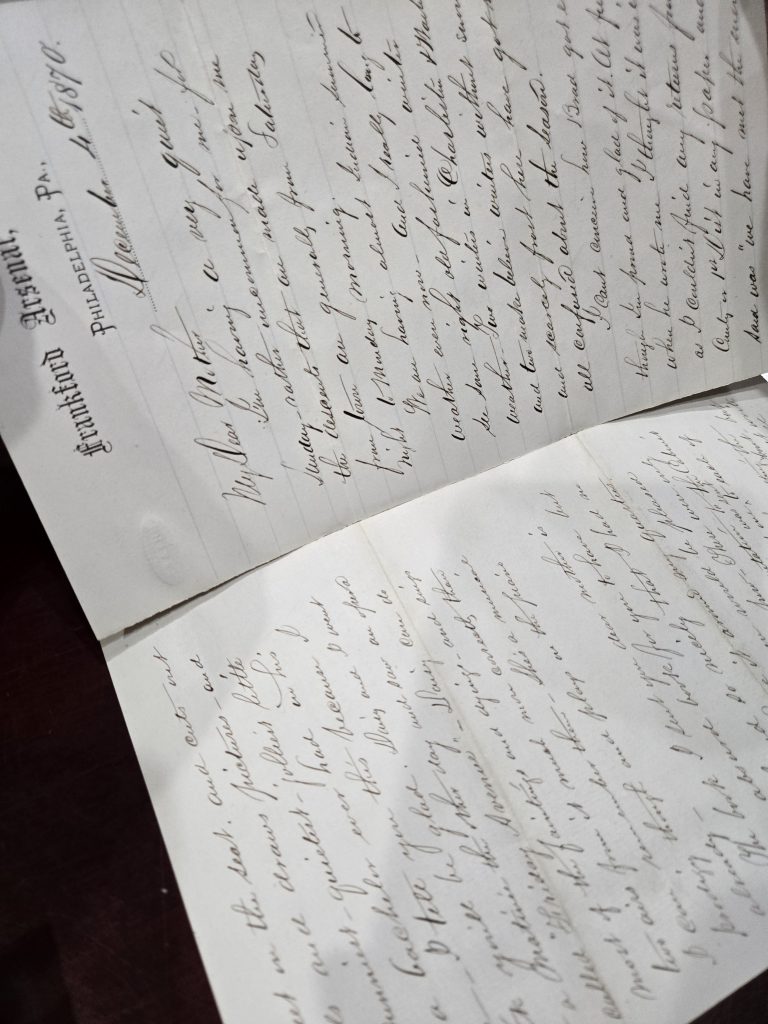
This week while scanning some Civil War letters I ran across damage that I’ve seen all too often with old documents that have been folded. The original crease of the letter had become brittle and damaged over time to the point that it had torn nearly the entire length except for a short 2-inch section. This is something that tends to happen when documents are stored folded. It’s not necessarily from poor handling (although that certainly plays a role) it can happen just from being stored improperly. Here are a few tips on how to store historical documents that you can use in your archive to avoid similar damage.
Store Historical Documents Flat
This is a simple thing to do and it makes a huge difference in the care of documents. At first, it might seem strange to take a letter that has been folded in half for 160 years and store it unfolded. But the reason behind it is simple: the paper was produced in a flat sheet and that is position that puts the least amount of stress on it. Creases over time become tears because the crease is putting a large amount of stress on the paper fibers—eventually weakening them to the point of tearing. If you’ve ever wanted to tear a straight line on a sheet of paper, what’s the first thing you do to it? Make a crease where you want the tear to be. Doing that first weakens the paper so that when you apply stress to it, the tear will follow the crease. The same principle applies here even though you are not intentionally applying stress to the paper to tear it.
Store Historical Documents in Sleeves
This is something I’ve mentioned in previous archive posts, but I strongly recommend storing historical documents in protective sleeves. The sleeves themselves provide another layer of strength to the fragile period paper which helps prevent damage. In addition, storing a document flat in a sleeve allows both sides of the paper to be completely visible without folding/unfolding, and the sleeve protects the document from hand oils, dirt, dust, etc.
If sleeves are not viable for your collection, I would recommend using archival paper as interleaves between the historic documents. This will provide a buffer between one paper and the next, which offers some protection.
Store Historical Documents in Archival Boxes
Storing documents flat produces the least amount of stress on the papers themselves. Once the papers have been sleeved, you can place them in archival folders and those folders should fit neatly into the box. I understand that boxing everything may not be practicable for everyone, and the alternative would be to store them vertically in filing cabinets. This is something that is accepted and done by many major archives, and can be very efficient.
If you have oversized documents such as muster rolls, ledger books, newspapers, etc., I would strongly recommend storing those flat in appropriately sized boxes. If the oversized loose papers are pliable and strong enough to be rolled, they may be stored rolled using an archival tube and rolling the papers around the tube and storing them in a second tube or wrapped in archival tissue and then polyester film. This ensures that the document is not rolled too tightly causing damage.
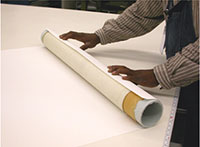
The National Archives has a great page dedicated to much of what I just discussed, including how to properly store oversized documents with tubes, here: https://www.archives.gov/preservation/family-archives/storing#page-header
No archive is perfect, and when you are working with old and fragile items, unfortunately, some deterioration is unavoidable as the very materials simply age. But, the more steps we can take to better care for our collections, the longer they will last. For other archival tips, check out previous blog posts here: https://researcharsenal.com/category/archival-and-preservation-tips/
