
Research Arsenal Spotlight 46: Halsey Bartlett 6th Connecticut Infantry
Halsey Bartlett was born in 1831 to Richard Bartlett and Christina S. (Fisher) Bartlett of Killingly, Connecticut. He enlisted in Company A, 6th Connecticut Infantry on September 3, 1861. Most of his letters were written to his mother and to his sister, Christina Bartlett.
Halsey Bartlett at Hilton Head, South Carolina
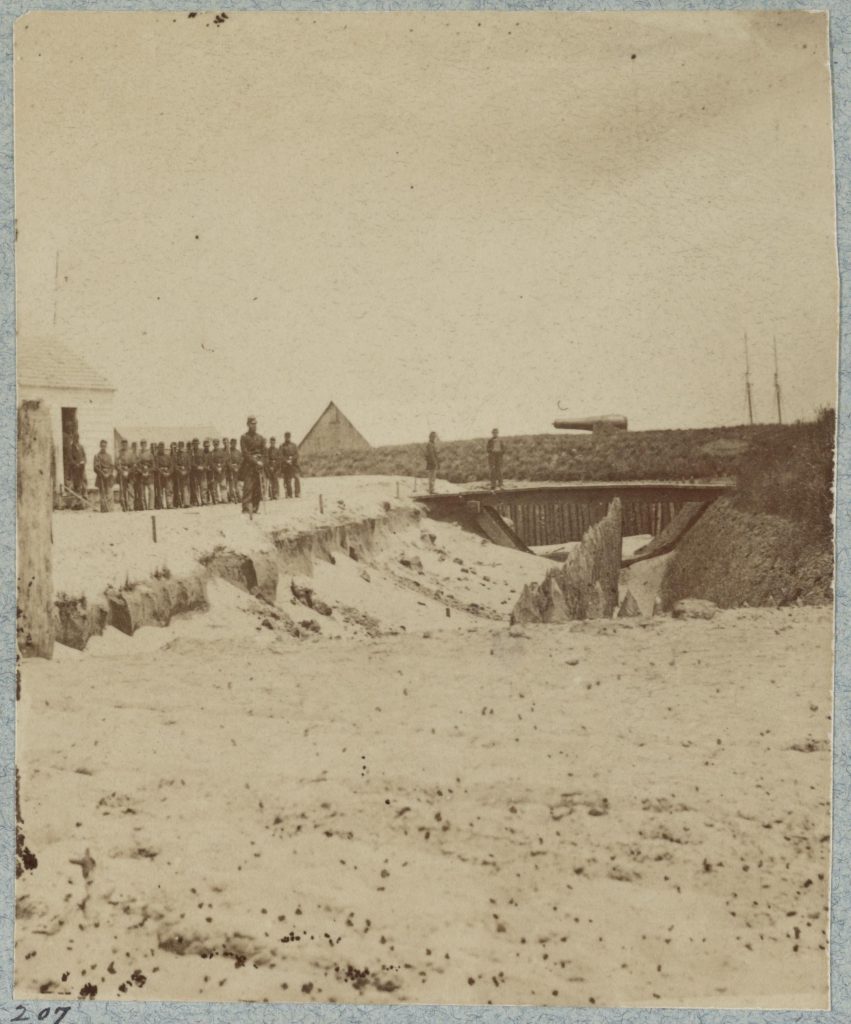
On January 6, 1862, Halsey Bartlett wrote to his mother from Hilton Head, South Carolina. In it he described the recent Battle of Port Royal.
“There was a smart battle on the opposite shore on the other side of this island. Our troops gained the victory by taking the fort at the head of Hilton Head Bay and 10 field pieces of artillery (brass) and 3 Columbiads with a loss of 17 men on our side and (80) eighty on the other side. Our regiment was not in the battle. After which our troops followed them up to Bluffton and they had another fight which was in our favor. Our troops followed them to a creek where they could not get away and they had to surrender. They raised the flag of truce and we took seven hundred prisoners with a great loss of lives on both sides. Our loss was small compared to the other side. We expected to go to the fight with them. Our regiment was called into line of battle on New Years Day. The orders were to be in readiness to march at any moment, but we did not go for the order was countermanded and we returned to our quarters. Our boys are anxious to go into battle.”
The 6th Connecticut Infantry remained in South Carolina for quite some time. In August, 1862, the regiment saw its beloved Lieutenant Colonel William G. Ely leave to accept the position of colonel in the 14th Connecticut Infantry. In a letter written on August 4, 1862, Halsey Bartlett described the gift made to the departing colonel from the regiment.
“Lieutenant Colonel Ely of our regiment has been promoted to Colonel of the Fourteenth Connecticut Regiment. He went from here to take his command yesterday. Col. Ely was a nice man. He was a gentleman in every respect. Our regiment — or most of them — miss him. as a soldier he is fitted for the post which has been assigned to him. Major [John] Speidel is to take his place. He too is a gentleman in every respect. Don’t know who will be major of this regiment but think Captain Tracy of Company G will take his place. He is a good man and fully competent for the post. Our company in respect and for the love we had for Col. Ely subscribed seventy dollars towards getting a sword on which will be engraved, ‘Presented by the Soldiers of Windham County in Company A, 6th Reg. Conn. Vol. to Col. Wm. G. Ely for the respect they showed him as a Soldier and a Gentleman. Arnold Leach, Captain Commanding.’ I gave one dollar towards the sword.”
6th Connecticut Infantry in Beaufort
The 6th Connecticut Infantry remained at Beaufort, South Carolina for several months, making it their winter quarters. On November 20, 1862, Halsey Bartlett wrote home with an account of a man in Company C being drummed out of the regiment for cowardice.
“There is one of the soldiers belonging to Co. C to be drummed out of this regiment tomorrow for cowardice in the late [Second] Battle at Pocotaligo. He, when [near where] the battle was, heard the first gun from the Secesh and it scared him so he run and left the ranks. He said he was not going to have his brains blowed out. He was taken and court martialed and sentenced to have head head shaved and drummed out of the regiment. Oh what a disgrace to him. But he will get home. I would not disgrace myself so for all the world.”
There continued to be small skirmishes, as Halsey Bartlett recounted in a letter dated December 1, 1862.
“A party of Rebels tried to land at the Capen Plantation where we go on guard but were relieved the trouble by the firing of muskets — a whole company firing on them (two boatloads of the Rebels some thirty in number) and killing quite a number. They skedaddled and went back as fast as they could. This is the third time they have tried to land but Yankee too much for them.”
Halsey Bartlett wrote about another expedition on January 17, 1863.
“There was an expedition started from here made up of a small force from the several regiments here and Hilton Head. They went down on the coast of Florida to capture a lot of lumber from the Rebels but when going up Nassau River, they were fired at by the Rebels. Our men fired back and by their tell, some of them were killed or wounded. Our men went ashore and found that the Rebels had burned the lumber and they had to go farther down on St. John’s River and get a lot of lumber that was there. They got their lumber and came home. Was gone ten days. Went some ninety miles. Two of the Third Rhode Island boys got killed but none out of our regiments either killed or wounded. I did not go but 20 — twenty — out of our company went.”
The 6th Connecticut Infantry at Fort Wagner
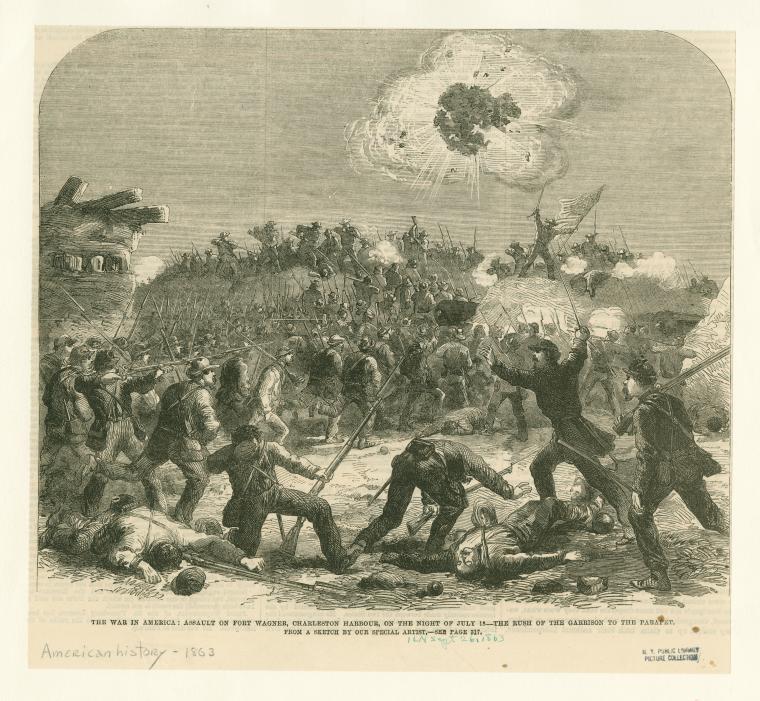
The 6th Connecticut Infantry fought at the Second Battle of Fort Wagner on July 18, 1863. Though the Union was unsuccessful at taking the fort, the role of the 54th Massachusetts Infantry in the fight inspired countless African-American soldiers to enlist. Fort Wagner was ultimately abandoned by Confederate forces in September, 1863.
On August 1, 1863, Halsey Bartlett wrote home about the 6th Connecticut Infantry’s role in the battle.
“But a few days ago I wrote you a small detail of what we were doing on Morris Island and now I will tell you farther of the doings. We left (our regiment) Morris Island night before last and was I not rejoiced to get away. I rather think I was — not that there was anything cowardly on my part but I got sick of hearing so much noise. It was nothing but boom — boom, night and day on both sides and men to the average of four or five per day from some regiment brought down from the deadly missiles of the enemy.
The night of 29 July our regiment had orders to report to Hilton Head immediately and in the night we moved our tents and baggage to the dock at Morris Island and soon it was aboard the General Hunter and all hands aboard, we were ready to proceed on our way to Hilton Head. And here I am. I tell you, it seems more like home to me now. But God has been good in preserving my life until now. Now I am out of danger for awhile. On Morris Island, if I lie down at night to sleep, I knew not whether I should wake up in the morning safe or not for they shelled our camps as much as they could, and to be there was perfect misery. The night we came away, I saw a young soldier belonging to the Eighty-fifth Pennsylvania that was struck by a shell. He had one arm taken off just below the shoulder; the other taken off just below the elbow. Poor man — no hands at all.
The next day after the Battle of the 10th, I took a look on the battlefield, I see some twenty lie dead on the field where the Seventh drove them from their rifle pits while on Morris Island. Our regiment had to go up on picket within fifty yards of the Rebel Battery Wagner. This is the battery I told you about making a charge on July 16. I told you of the casualties in our company. Hugh McShene I spoke of being wounded is dead. The rest is doing well. Hill and Palmer are in Richmond [as] prisoners. Nothing have been heard of Sergeant [Delbert] Hoar and Private [Maxim H.] Sherbeone, both [of] Danielsonville — supposed to be killed.”
Unfortunately, Halsey Bartlett did not survive the war. He was killed at Bermuda Hundred by a sniper on June 17, 1864.
To read more of Hasley Bartlett’s letters, sign up for a Research Arsenal membership.
We’d like to give a special thanks to William Griffing of Spared & Shared for his work in transcribing and sharing these letters.
If you enjoyed this article, check out some of our other featured collections like Herbert Daniels of the 7th Rhode Island Infantry and Kimball Pearsons of the 10th New York Cavalry.
