
Voices from the 126th Ohio Infantry
“In Answer to the Call”: Voices from the 126th Ohio Infantry
The Concise History of the One Hundred and Twenty-Sixth Regiment, Ohio Volunteer Infantry is more than a regimental outline. Written by veterans of the unit, it preserves the voices, memories, and emotional texture of men who lived the war day by day. What follows are selected quotations and personal passages that illuminate the lived experience of the 126th Ohio Infantry — from early enthusiasm, to sickness and hardship, to battle and reflection.
“We Were Soon Soldiers”: Enlistment and Early Service
The history opens with a clear sense of purpose. The men of eastern Ohio responded quickly to the emergency of 1862:
“In answer to the President’s call for troops, the One Hundred and Twenty-Sixth Regiment, Ohio Volunteer Infantry, was organized at Camp Steubenville, September 4, 1862.”
There is little romanticism here — simply the fact of duty answered. Yet beneath that formality lies an unspoken truth: most of these men had never expected to become soldiers. The narrative soon shifts from organization to reality.
Sickness Before Battle: Camp Life and Disease
Before facing Confederate fire, the regiment encountered one of the war’s most relentless enemies — disease. While stationed along the Baltimore & Ohio Railroad during the winter of 1862–63, illness swept through the camp:
“Typhoid fever and small-pox broke out in the regiment, and in consequence of being crowded in tents, six men in each company died.”
The author pauses to acknowledge civilian compassion during this dark time:
“The citizens of Martinsburg took many of the sick soldiers into their homes, where they were tenderly cared for.”
This small but powerful passage reminds us that survival often depended as much on kindness as on medicine.
First Fire: Martinsburg and the Retreat to the Potomac
The regiment’s first significant combat came in June 1863 at Martinsburg, Virginia. Here the tone of the narrative becomes urgent and personal:
“The artillery opened upon us with great fury, and the enemy advanced in heavy force… After stubborn resistance, we were compelled to fall back.”
The retreat was grueling, culminating in a dangerous crossing of the Potomac River:
“Completely exhausted, the men waded the Potomac, many falling from sheer weakness, but all struggling on to reach the northern bank.”
These lines convey fear and fatigue without exaggeration — a hallmark of veteran-written history.
The Immensity of War: Marching After Gettysburg
In the aftermath of Gettysburg, the regiment joined the pursuit of Lee’s army. One of the most evocative passages in the book captures the overwhelming scale of the Union forces on the move:
“Words seemed meaningless to convey to the mind the vast multitude, the martial music, the tramp, tramp, tramp of soldiers, the long lines of wagons, ambulances, and artillery stretching as far as the eye could reach.”
This is not a tactical description, but a sensory one — the sound, movement, and sheer magnitude of war as experienced by a foot soldier.
Faith, Reflection, and Camp Religion
Some of the most personal material in the regimental history comes from Chaplain J. K. Andrews, whose diary entries provide rare insight into the inner life of the regiment.
While in winter quarters near Brandy Station, Andrews recorded:
“As soon as the men had completed their own quarters, a brigade chapel was erected, and religious services were regularly held.”
Even during active campaigning, spiritual life continued:
“Religious service was kept up during the entire summer campaign… Several had professed conversion, and others were deeply impressed.”
These passages remind us that Civil War camps were places not only of drill and discipline, but of introspection and moral reckoning.
Endurance Without Complaint: The Veteran Tone
One striking feature of the Concise History is its restraint. The authors rarely boast, rarely dramatize, and almost never complain. Hardships are stated plainly, as facts endured rather than grievances aired. This tone itself is a personal statement — a reflection of how the veterans wished their service to be remembered.
Near the end of the narrative, the author explains the purpose of the work:
“This brief history is written as a souvenir to the relatives and friends of the brave fallen members of the regiment, and to preserve in lasting form the record of its service.”
It is not glory they seek, but remembrance.
Company Voices from the 126th Ohio Infantry
While the Concise History of the 126th Ohio Infantry is primarily a regimental narrative, careful reading reveals moments where individual companies step briefly into view. These glimpses — often understated — offer valuable insight into how the war was experienced at the company level.
Company D: Remembered Through Its Chronicler
Company D holds a unique place in the regimental history because J. H. Gilson, the compiler of the volume, was himself a member of that company. While he rarely foregrounds his own service, the care and detail with which certain episodes are preserved suggests a Company D vantage point.
During the regiment’s early winter along the Baltimore & Ohio Railroad, Company D suffered heavily from disease. Gilson notes that illness did not discriminate by rank or experience:
“Typhoid fever and small-pox broke out in the regiment… six men in each company died.”
For Company D, this period marked their first real loss — not from battle, but from conditions beyond their control. The deaths forged a shared sense of endurance that would define the company for the remainder of the war.
Company F: Letters from the Ranks
Although the Concise History does not reproduce full letters, it references correspondence and service details that align closely with Company F soldiers such as Joseph Foreman, whose wartime letters survive independently.
Company F’s experience reflects the long, grinding nature of service in the Army of the Potomac. Men of the company endured repeated marches, extended picket duty, and attrition through sickness and wounds. Foreman’s eventual discharge due to wounds in 1865 mirrors the experience of many in the company — veterans worn down rather than dramatically felled.
This kind of service, while less dramatic than battlefield heroics, represents the true cost of sustained campaigning.
Company E: Courage at Petersburg
Company E is most famously associated with Corporal Milton Blickensderfer, whose actions during the Petersburg Campaign brought national recognition.
Though the Concise History treats the incident modestly, the achievement stands out: during an engagement at Petersburg, Blickensderfer captured a Confederate battle flag — an act of extraordinary personal risk.
Within Company E, this moment symbolized the culmination of years of discipline and exposure to combat. The capture of a flag was no abstract honor; it required advancing directly into enemy fire and emerging alive.
Company B and the Retreat at Martinsburg
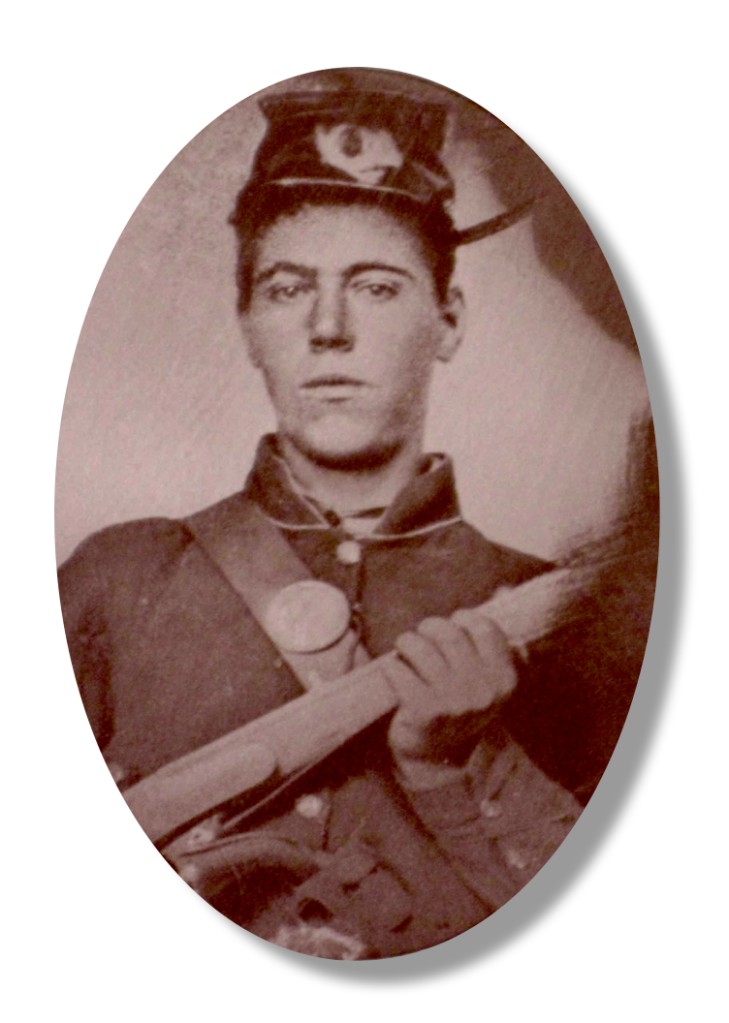
(sparedandshared23.com)
At the Battle of Martinsburg in June 1863, the regiment fought under intense pressure. Several companies, including Company B, were engaged while covering the retreat.
The history records the moment without embellishment:
“After stubborn resistance, we were compelled to fall back.”
For Company B, this meant holding position long enough to allow other units to withdraw — a task often assigned to steady, reliable companies. The subsequent retreat to the Potomac tested discipline as much as courage, as men crossed the river utterly exhausted but still under threat.
Company H: Camp Religion and Morale
Company H appears most clearly in passages related to camp life and religious observance, particularly during winter quarters near Brandy Station.
Chaplain J. K. Andrews noted that religious interest varied by company, with some responding more deeply than others:
“Several had professed conversion, and others were deeply impressed.”
Company H was among those where attendance and participation remained strong even during active campaigning. For many men, shared worship became a stabilizing force amid constant movement and uncertainty.
Why These Voices Matter
Through these quotations and personal passages, the 126th Ohio Infantry emerges not as an abstract unit, but as a community of individuals — men who marched, suffered illness, crossed rivers under fire, prayed together, and endured until the war’s end.
Their words, preserved in this modest regimental volume, allow us to hear the Civil War as they lived it: plainly, honestly, and with quiet resolve.
Sources
Primary Source
- Gilson, J. H. Concise History of the One Hundred and Twenty-Sixth Regiment, Ohio Volunteer Infantry.
Archive.org transcription:
https://dn720407.ca.archive.org/0/items/concisehistoryof00gils/concisehistoryof00gils.pdf - Research Arsenal NARA RG94 126th Ohio Volunteer Infantry Records
Supplementary / Contextual
- National Park Service & regimental summaries (for campaign context)
- Ohio in the Civil War regimental records
Additional Reading and Research
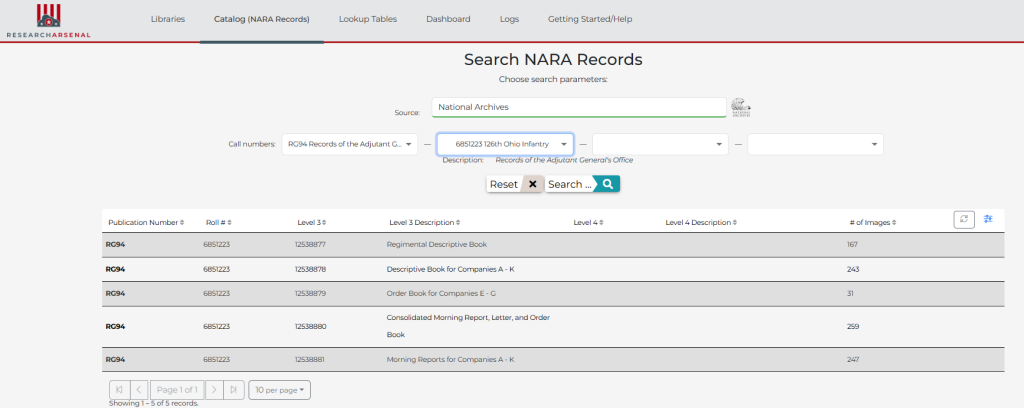
Visit the Research Arsenal database for online access to the 126th Ohio Infantry’s National Archives RG94 records
1863 Diary of David Alexander Chandler, 126th Ohio Volunteer Infantry: https://sparedshared23.com/2023/05/27/1863-diary-of-david-alexander-chandler-126th-ohio-volunteer-infantry/
