
Research Arsenal Spotlight 59: Benjamin Blatchford 2nd Massachusetts Heavy Artillery
Benjamin Blatchford was born in 1835 to William Blatchford and Mary (Gott) Blatchford of Massachusetts. He enlisted first in the 50th Massachusetts Infantry, a nine month’s regiment, where he served as first sergeant of company B. He later was commissioned as a lieutenant of company K in the 2nd Massachusetts Heavy Artillery on October 9, 1863. His occupation was given as a seaman.
Duty at Fort Norfolk, and Fort Woodruff, Virginia
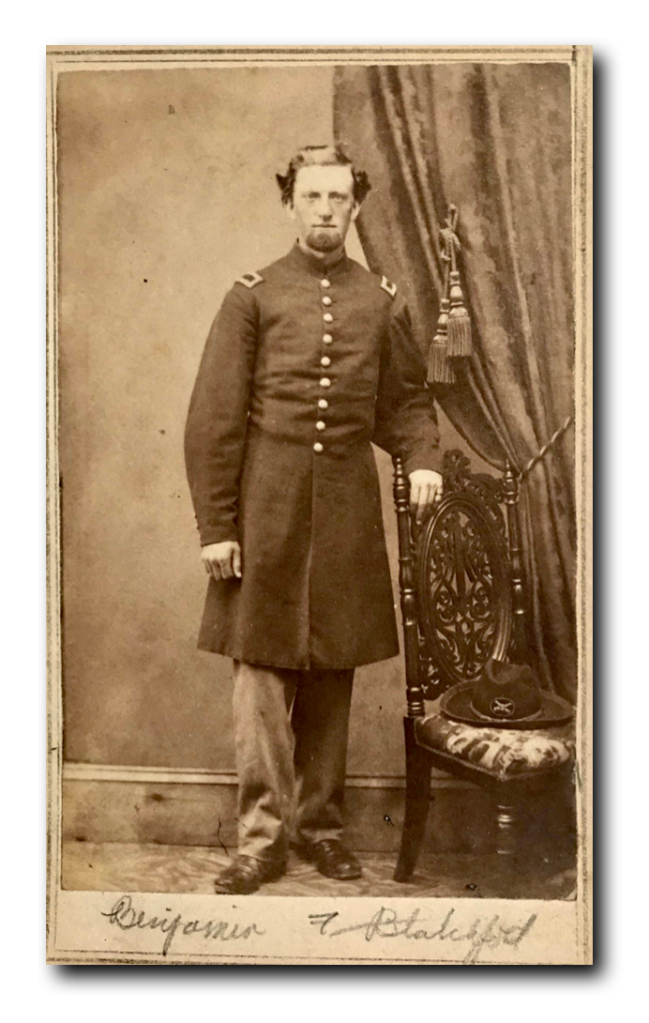
Benjamin Blatchford’s letters begin while the 2nd Massachusetts Heavy Artillery was on guard duty at Fort Norfolk, Virginia. In a letter to his parents written on January 25, 1864, Benjamin Blatchford described the Union and Confederate prisoners they were guarding and the tough measures they used to maintain order.
“We are still at Fort Norfolk and the prospect is that we will stop here some time. This fort is very pleasantly situated on the Elizabeth River and by water, not much more than a rifle shot from the City of Norfolk, but by land I should think it is about 2 miles. I can go to the City every four days. All we have to do is guard prisoners and attend to the Company Drills. The last named takes up 4 hours per day—two hours in the forenoon and two in the afternoon. The rest of the time I have to myself except every fourth day when I have to go on as Officer of the Guard and see that the prisoners are well guarded. Yesterday they brought in a very smart-looking man. He is or was a surgeon in the rebel army. He was captured over the river.
I think we have about two hundred prisoners in the fort, most of them are rebels. The Union prisoners that are in there are all soldiers and they have [sentences] all the way from three months to twenty years to serve. They are a hard set of men but we get along with them first rate. We have had no trouble with the rebel prisoners at all and all [the trouble] we ever had is with the Union prisoners. But it did not last long as we are well-armed and ready to shoot a few for an example—and [when] they found we would do it, they have backed down and don’t cause any trouble now.”
On May 29, 1864, Benjamin Blatchford wrote from Fort Woodruff, Virginia and described a recent scare where the outnumbered Union forces awaited a rebel attack that never materialized.
“We have had very easy times at Fort Woodruff. Nearly all of the troops have been taken from the defenses of Norfolk. We have not over six hundred effective men to defend two forts and about one mile of breastworks. We are in a strong position and except they come in force, they can’t start us.
We had quite a scare here about ten days ago. The report was that the rebels were marching on this place and had been seen that afternoon so we formed the two companies and went into the fort—or at least the two companies with the exception of Lieut. Smith and myself and 30 men. We went into a redoubt about four hundred yards from the fort and manned three brass guns and stood ready to give them the contents of our guns as they came down the road. We stood by our guns until after 12 o’clock midnight and made up our minds that the rebs would not attempt to trouble us that night, so we placed a guard on the outposts and laid down. We lay under the guns while the companies in the fort lay on their arms.
After we had fairly got asleep, the rain fell in torrents and as we had no tents, we got a little damp, One shower would not hardly pass before another would rise and the remainder of the night was very dark except when lit up by sharp flashes of lightning which was followed by heavy rolls of thunder.
In the morning we went back to our camp and have not heard any report of rebs advancing since, and I hardly think we will again for they have all they can attend to at Richmond. We are very pleasantly situated here. I think the Officers and men have got better quarters than I ever saw or had since I have been in the army.”
Benjamin Blatchford transfers to the 3rd US Artillery
Though duty at Fort Woodruff was rarely taxing and in general quite safe, Benjamin Blatchford longed to serve the Union cause more directly on the front lines. On August 10, 1864, he wrote to his brother-in-law, Henry Lowe, and revealed that he had applied for a transfer to the front and that it had recently been accepted.
“We have been expecting to be sent to the front but I have about given that up. I have got tired of doing nothing so I have made an application to be sent to the front and I receive an answer last Saturday—to hold myself in readiness to go at any time. I expect to take command of a section in a regular battery. They have sent for another section and if they get it, I am to have command. I have been trying to get to the front for some time but this is the first opportunity that has offered and I am sure of going if they get the section.”
Benjamin Blatchford also asked Henry to keep his transfer to the front a secret as he didn’t wish to worry his family.
“I don’t want you to let anyone know that I expect to go to the front because they might write home and Mother would hear of it and worry about it. I don’t want her to know until after I have been there some time.”
On August 22, 1864, Benjamin Blatchford wrote to his mother about his new assignment to the 3rd US Battery, but made no mention that the transfer had been at his own request.
“I have received a detail to report to the 3rd U. S. Battery which occupied a position on the line about five miles from Bermuda Hundred. This battery was in Mexico at the time of the Mexican War and was commanded by Ringgold; afterward Sherman. But it is now called Hamilton’s Battery. It is a battery that has seen a great deal of service and has a good name. I was detailed here because this battery is short of officers but how long I shall remain here is impossible to tell.
When I left Fort Woodruff my own company was short of officers and for that reason I think that they will make an application to have me sent back to my own regiment but I hope not for I think I shall like it here first rate and if I go back at all, I hope it won’t be until after Richmond is taken or we are ordered into winter quarters.
This battery is in position at the front behind the breastworks and is about 700 yards from the Rebel line. We can see the rebs anytime we look over the breastworks and could pick them off but we have little or no picket firing and both parties show themselves without fear of being shot at. I like it here first rate so far—much better that I did doing nothing at Fort Woodruff. We have not had any firing where this battery is stationed for two days and when they do fire, they don’t do any mischief.”
Benjamin Blatchford and the Second Battle of Fort Fisher
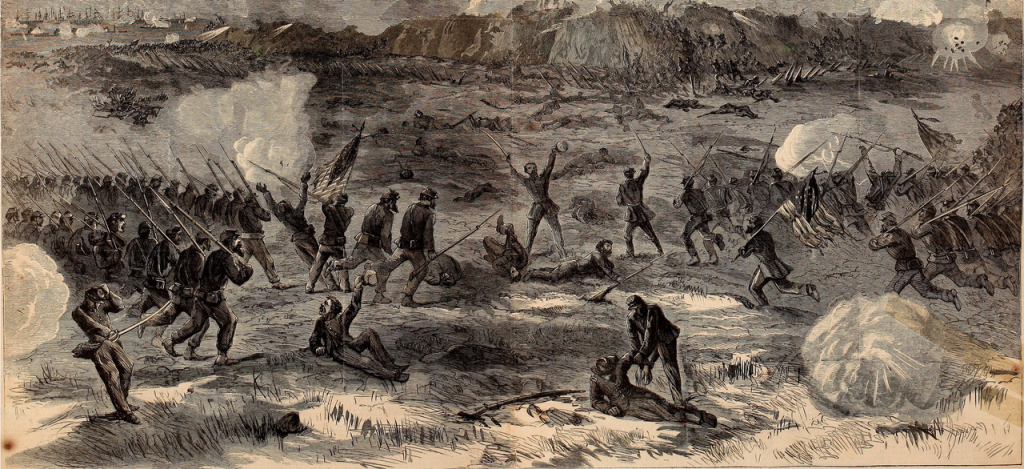
On February 16, 1865, Benjamin Blatchford wrote a letter to an unnamed friend and recounted his previous fourteen months in the military service beginning with the 2nd Massachusetts Heavy Artillery doing garrison duty at Fort Norfolk. He then described the various actions the 3rd US Artillery had been involved in, including some concluded less than a week previous. He wrote in the largest detail about the fighting to capture Fort Fisher.
“Accordingly I joined Battery E, 3rd U. S. Artillery as commander of a section, and have been with it in every march and every battle, and have not lost an hour’s duty since last July.
I was with the first expedition against Fort Fisher and was one of the number who returned to the Army of the James with a long face because we did not, nor could not, take Fort Fisher.
I was also with the 2nd Expedition against Fort Fisher. Was was unable to land our artillery the first day so I had a fine chance to witness the bombardment which was said to be the most terrific of anything of the kind on record. On the 2nd day we landed our artillery to assist in the land attack. A line of works was at once thrown up facing Wilmington, the right resting near the ocean and the left on the Cape Fear River. We knew the rebs had a strong force in our rear and knew that they intended to break our line when the assault was made on the fort. Accordingly our guns were placed in position on this line, our left—or the left of our battery, resting on the Cape Fear river.
We waited anxiously nearly all day for the rebs to come and give us a try. At length we found out they were forming to charge us. After they were formed, the commenced to advance but when they saw our artillery, they gave it up and went back. Deserters from the rebs say that they formed twice to charge us but gave it up. This battery is one that I have read about before I came to war. It was Ringgold’s Battery in the Mexican War; afterwards Sherman’s. And now Hamilton’s Battery. It is considered one of the best batteries in the United States.
Last Saturday we had a little fighting and advanced on line about two miles nearer Wilmington. The loss on the part of the line where I was was light—not over 75 killed and wounded. I think that we shall start again soon and not make much of a stop this side of Wilmington.”
Benjamin Blatchford mustered out in September 1865. He died on November 18, 1906 and was buried in Gloucester, Massachusetts.
We’d like to give a special thanks to William Griffing of Spared & Shared for his work in transcribing and sharing these letters.
To read more of Benjamin Blatchford’s letters and access thousands of other Civil War letters and documents, sign up for a Research Arsenal membership.
If you enjoyed this article, check out some of our other featured collections like Elbert Corbin of the 1st New York Light Artillery and Albert Brown of the 16th Maine Infantry.
