
RG 94 Spotlight: 30th Indiana Infantry
The Research Arsenal is proud to be digitizing and adding historical records of Civil War regiments held at the National Archives to our online database so that researchers and historians can access material that previously required a trip to Washington D.C. The 30th Indiana Infantry is one of the many regiments that has been added to our database.
The 30th Indiana Infantry: A Regiment’s Journey Through the Western Theater
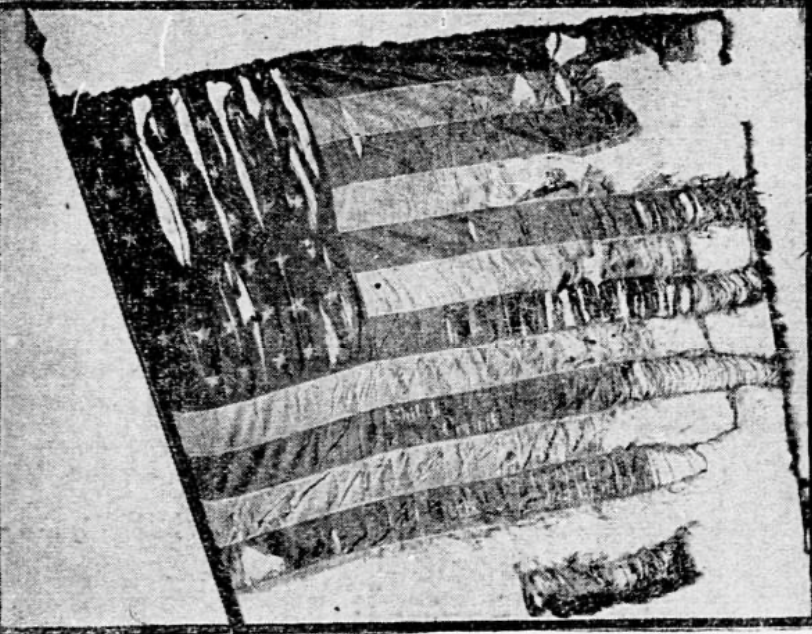
The 30th Indiana Volunteer Infantry served with distinction throughout nearly the entire Civil War, participating in many of the Western Theater’s most significant campaigns. Organized in the fall of 1861, the regiment marched from the hills of Kentucky to the fields of Tennessee, through Georgia with General William T. Sherman, and ultimately into the Carolinas before the Confederacy surrendered in 1865. Their service took them through some of the war’s bloodiest battles, including Shiloh, Stones River, Chickamauga, Chattanooga, the Atlanta Campaign, and the March to the Sea.
While official reports record troop movements and casualty figures, the true story of the 30th Indiana is best understood through the words of its soldiers. The surviving letter of Corporal Jesse L. Adams and the wartime journal of Private Thomas Hogarth offer remarkable glimpses into the everyday realities of military service—from the excitement of early campaigns to the loneliness and pain of recovering from a battlefield wound.
Organizing for War
The 30th Indiana Infantry was organized at Fort Wayne and mustered into Federal service on September 20, 1861. Commanded by Colonel Sion Bass, a lawyer and politician who had been born in Kentucky but remained steadfastly loyal to the Union, the regiment was composed of companies recruited from northeastern Indiana communities. Like thousands of other volunteers, many of its members had little military experience before answering President Abraham Lincoln’s call for troops.
Following a period of instruction at Camp Allen and Camp Wood, the regiment moved south into Kentucky as part of Major General Don Carlos Buell’s Army of the Ohio. The soldiers expected an adventure, but they soon discovered that campaigning involved far more marching than fighting. Long days on muddy roads, rough camps, unpredictable weather, and limited supplies quickly replaced the patriotic excitement that had accompanied their enlistment.
Into Kentucky
One of the regiment’s earliest firsthand accounts comes from Corporal Jesse L. Adams of Company D. Writing from Bowling Green, Kentucky, on February 24, 1862, Adams described the regiment’s advance after Confederate forces abandoned one of their strongest defensive positions in Kentucky.
“We left Camp Wood the 14th and got in Bowling Green the 25th of February. This is a wonderful place now, I tell you. The Rebels was well fortified here. It is a beautiful place. There is a considerable of a town here.”
His observations reflected the excitement many Union soldiers felt as they occupied territory that Confederates had only recently evacuated. The capture of Bowling Green represented another important step toward Nashville and the deeper South.
Adams also explained how quickly the regiment expected to move onward.
“We are encamped on the Big Barren River. We shan’t stop here long. We shall go on to Nashville soon as we can cross the river.”
Yet beneath the optimism was an honest assessment of military life. Like many volunteers, Adams had already learned that soldiering was far different from the patriotic image many civilians imagined at home.
“I think it looks a great deal better than I do for we look pretty raunchy here and we feel so too, I tell you. A soldier’s life is a dog’s life as near as you can come at it. You had better let soldier’s life alone… If you come down here once, you won’t want to leave home again very soon.”
His words remain one of the most candid descriptions of a volunteer soldier’s early experience. Endless marches, poor sleeping conditions, exposure to the elements, and uncertain meals were becoming routine for the men of the 30th Indiana.
Baptism of Fire at Shiloh
Only weeks after Adams wrote his letter, the regiment marched rapidly toward Pittsburg Landing after Confederate forces surprised General Ulysses S. Grant’s army on April 6, 1862. The 30th Indiana entered the Battle of Shiloh on the second day of fighting as Buell’s reinforcements joined the Union counterattack.
The regiment fought courageously in repeated assaults near Shiloh Church, suffering heavy casualties. Colonel Sion Bass received a mortal wound while leading his men and died several days later. Corporal Jesse Adams was also mortally wounded during the fighting. Transported to the City General Hospital in St. Louis, he died on April 21, 1862, at only nineteen years of age.
Reading his earlier letter after knowing his fate gives special meaning to the closing words he wrote to his friend:
“This from a friend as long as life remains.”
Neither Adams nor the recipient of his letter could have imagined that it would become one of the final surviving records of his life.
The War Continues
Although Shiloh proved devastating, the regiment’s service had only begun. Throughout 1862 and 1863 the 30th Indiana continued campaigning with the Army of the Ohio and later the Army of the Cumberland. The regiment fought during the Kentucky Campaign, participated in the Battle of Perryville, and endured the brutal fighting at Stones River near Murfreesboro, Tennessee.
The soldiers who survived those campaigns pressed on through the Chickamauga Campaign in 1863. Like many Union regiments in the Western Theater, the 30th Indiana experienced both victory and defeat, often marching hundreds of miles between battles. Following the Union victory at Chattanooga, the regiment joined General William T. Sherman’s Atlanta Campaign before participating in the March to the Sea and the Carolinas Campaign during the final months of the war.
These campaigns demanded remarkable endurance. More soldiers often suffered from disease, exposure, and exhaustion than from enemy bullets. The regiment’s history was therefore shaped not only by battles but also by the physical hardships that accompanied years of campaigning.
Thomas Hogarth’s Story
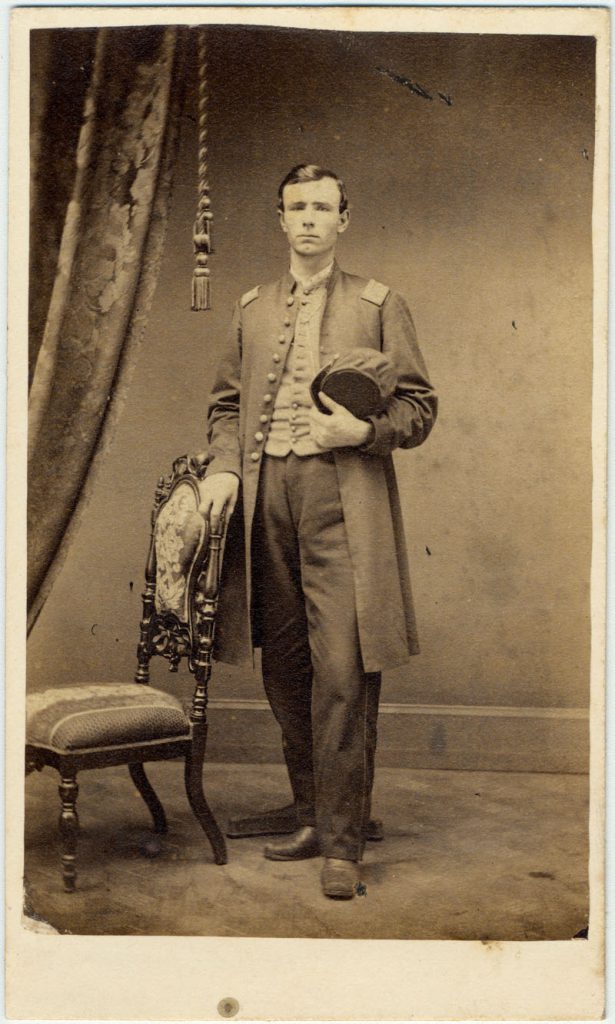
One of the most remarkable surviving records from the regiment belongs to Private Thomas Hogarth of Company H. Unlike Adams’ letter, Hogarth’s diary follows the difficult months after he was wounded during the Battle of Stones River on December 31, 1862.
His journal opens on New Year’s Day 1863, not with dramatic descriptions of combat but with the painful reality of its aftermath.
“This morning my shoulder feels quite bad… I get an ambulance and am on my way toward Nashville… I get out and walk and get left behind and go into the 4 Division Hospital and have my arm dressed up.”
The next day’s entry reveals the severity of his injury.
“The doctor takes 4 pieces of bone from the wound that I received at the Battle of Murfreesboro on the 31st of December. Nothing much to eat… Shoulder hurts quite much indeed.”
Those few sentences vividly illustrate Civil War medicine. Surgeons often removed shattered bone fragments without the benefit of modern antibiotics, while hospital diets frequently consisted of little more than coffee, broth, and whatever supplies happened to be available.
Recovering Far From Home
Rather than returning immediately to duty, Hogarth began a lengthy journey through military hospitals in Nashville, Louisville, Covington, and finally Camp Dennison, Ohio. His diary chronicles not just medical treatment but the emotional challenges of being separated from his regiment.
Simple entries convey profound loneliness.
“Quite lonesome here.”
Letters from family became the highlight of his days. Even while recovering from his wound, Hogarth devoted much of his energy to maintaining correspondence.
“I have written about 25 letters since I have been wounded.”
He eagerly anticipated packages from home and faithfully recorded every visitor, letter, and newspaper he received. A box containing a clean shirt, newspapers, and stewed apples became an event worthy of recording in his diary.
Small moments of kindness also lifted his spirits. On February 22 he described an evening that briefly allowed the wounded soldiers to forget the hardships surrounding them.
“Last night there was five ladies came in to sing to the sick soldiers some songs and we enjoyed ourselves very much.”
The entry provides a touching reminder that civilian volunteers frequently visited hospitals to comfort wounded soldiers through music, conversation, and small gifts.
Waiting to Return
As winter progressed, Hogarth’s greatest frustration became waiting. Like many recovering soldiers, he desperately wanted to rejoin his comrades, but his physicians refused to release him until they believed he was fully healed.
On February 21 he summarized his situation in one simple sentence:
“The doctor will not let me go to my regiment until it heals up completely.”
That brief observation captures an aspect of Civil War service often overlooked. For every dramatic battlefield charge, there were weeks or months of recovery, uncertainty, and patience. Thousands of wounded soldiers struggled not only with pain but with the emotional burden of watching their regiments continue campaigning without them.
A Regiment That Endured
The surviving writings of Jesse Adams and Thomas Hogarth provide two very different windows into the experience of the 30th Indiana Infantry. Adams represents the eager young volunteer marching confidently into the war’s early campaigns, while Hogarth reveals the long, often lonely road faced by those who survived serious wounds.
Together, their words remind us that the history of a Civil War regiment cannot be measured solely by battles won or lost. It is also found in muddy camps, letters home, hospital wards, friendships maintained through correspondence, and the quiet determination to recover and continue serving.
By the time the war ended in 1865, the 30th Indiana had marched hundreds of miles and participated in many of the Union Army’s greatest campaigns in the Western Theater. Their sacrifices helped preserve the Union, while the personal writings of men like Jesse Adams and Thomas Hogarth continue to preserve the human story behind the official record.
Sources
The Research Arsenal is proud to hold 830 digital scans of the 30th Indiana Infantry’s regimental history on its database. These consist of just over 800 pages of material from the National Archives Records Group 94 files. These include Regimental Descriptive books, Order books, Letter books, Morning Reports, and more. Visit the Research Arsenal, click on “Search NARA Records” then select “RG94” and “30th Indiana Infantry” from the drop-down menus. In addition, the Research Arsenal contains letters, and other forms and documents relating to the 30th Indiana Infantry.
- Adams, Jesse L. Letter to Ore H. Graves, February 24, 1862. Company D, 30th Indiana Infantry. https://app.researcharsenal.com/imageSingleView/12390
- Indiana Adjutant General’s Office. Report of the Adjutant General of the State of Indiana, Volume III.
- National Park Service. Thomas Hogarth Civil War Journal Transcription. https://www.nps.gov/stri/learn/historyculture/upload/Thos_Hogarth_Civil_War_Journal_Transcription_508.pdf
