
Research Arsenal Spotlight 73: Edwin Perry 11th Rhode Island Infantry
Edwin Perry was born in August, 1843, to Daniel Bliss Perry and Lydia Ann (Carpenter) Perry of Rehoboth, Massachusetts. Despite living in Massachusetts, Edwin Perry enlisted as a private in Company C of the 11th Rhode Island Infantry. He wrote his letters to an unnamed brother.
Edwin Perry at Miner’s Hill, Virginia and in Hospital
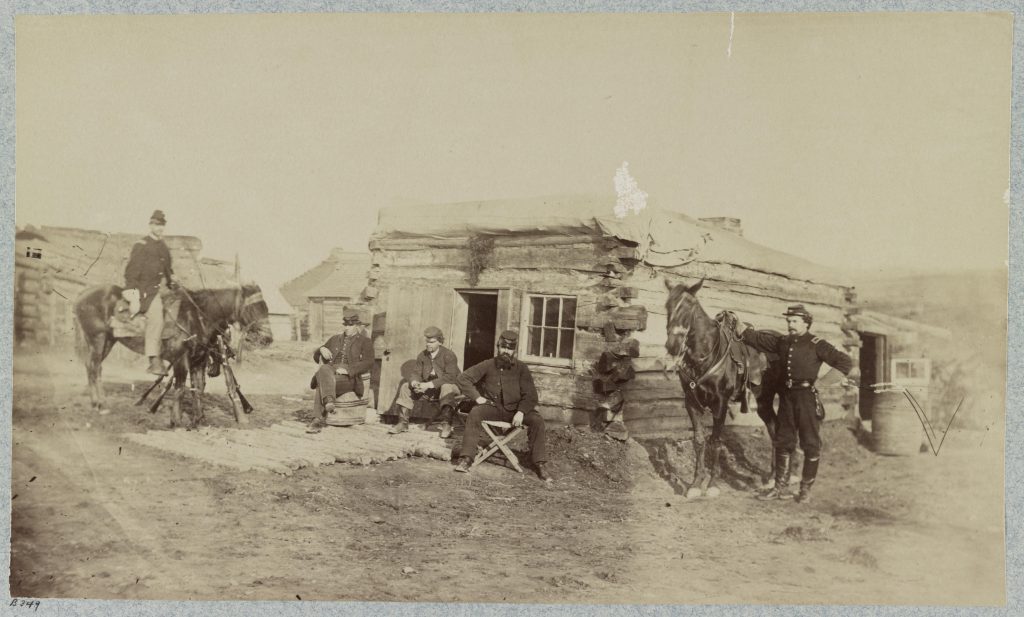
The letters in our collection begin in October, 1862 when the 11th Rhode Island Infantry was camped near Miner’s Hill, Virginia. The 11th Rhode Infantry was mustered into service on October 1, 1862 and left for Washington, D.C. on October 6.
On October 21, 1862, Edwin Perry wrote to his brother that the regiment was currently on the march though he did not know their final destination.
“Last night we received marching orders and early this morning after partaking of an early breakfast, this regiment together with the 133rd New York and 22nd Connecticut Regiments took up our line of march for this place. The weather was quite cool so that we were greatly favored in carrying our load which consisted of a well-stuffed knapsack, haversack, canteen, musket, and equipments with forty rounds of cartridges.
We reached this ground about ten o’clock this morning and after marching and countermarching for another hour at last halted on a turnip field and a orchard. By two o’clock we had our tent put up and now four o’clock all the boys excepting [Pvt. Orin F.] Munroe are asleep. He is writing like me.
We received orders not to be too particular about putting up tents as we were to march again tomorrow — some say further to the right — others toward Harpers Ferry — and others to our old camping ground and from thence to Washington and then to Port Royal. The latter seems to have the best foundation as two companies which were to go on picket duty after receiving their rations, packing their clothes, marching some distance were ordered back, and if we were going but a few miles in any direction, they would not [have] been recalled.”
In January, 1863, Edwin Perry was staying in the hospital near his regiment. He had apparently been there for some time and was working on regaining his strength. He wrote on January 8, that the Doctor had cleared him to return to duty but the head nurse wanted him to stay.
“I continue to gain strength with every effort. I have walked up to camp and back again every day for a week — some days twice as far.
The box you sent is a rich treat, I tell you. I am living high and sleeping in the hospital. Yesterday the Doctor gave me my discharge from this institution and told me to report at camp but the head nurse has took the responsibility of keeping me here a while longer. He thought I was not strong enough to endure camp life. I’d rather stay here a week longer than to go to camp [just] now. There has been another sudden change in the weather from warm to cold accompanied by high winds which are very uncomfortable on these high hills where the division is encamped.”
In the same letter, Edwin Perry detailed some of the afflictions of the other patients in the hospital.
“Yesterday they brought a man here who has had the fever and ague together with convulsions. During these times, it takes four men to hold him. This forenoon he has had one chill and four convulsions. He can not stand them a great while longer and live. When he is reasonable, he cries considerable and says he never shall get home. This a solemn sight but this is one of the fortunes of war. But a person gets used of these things seeing it continually before him. I saw a case of sympathetic mania today in the case of one of the patients. Soon after the man had passed through the convulsions, I spoke of this patient (who has the pleura pneumonia) was taken in the same way as other although not quite as hard. As I now write, one of these men is on the way to the General Hospital at Washington; the other will probably go tomorrow. They can’t go too soon for me.”
Edwin Perry at Camp Distribution
On February 8, 1863, Edwin Perry wrote from Camp Distribution near Alexandria, Virginia. At that time the 11th Rhode Island Infantry was doing guard duty at the Convalescent Camp, while Edwin Perry was on detached duty. The men at the camp had just recently been paid, leading to tighter security and to Edwin Perry sharing a joke about the greenback money they received.
“I like this detached service better than being with my regiment because here there are no dress parades, no knapsack inspections, and no guard around the camp to keep us in, besides numerous little things which we are not obliged to do here.
Since the regiment was paid off in February, the restrictions on the camp have been [made] rigid. No one can pass off or on without a pass. Bayonets will not stop the men as they would in Dexter training grounds but bullets will[…]
[…]Have you seen this conundrum? ‘Why is the government currency like the ancient Israelites?” — “Because they are the issue of Abraham’s and know not their redeemer.’”
Two days later, on February 8, 1863, Edwin Perry gave a description of the camp and the discovery of a man overrun by “strangers” which may have been a slang term for lice.
“The new camping ground is situated in a much pretty location than ever before, being located on a high table land overlooking the Potomac. Camp Distribution is situated on the north side of the road leading from Alexandria to Camp Convalescent. In a former letter, I wrote you that men sent to Camp Convalescent who are able to [perform] duty are sent from there to their regiments. This is not so, for they are first sent here and then under guard outside of the picket line to their regiments at the front. This camp we are now engaged in guarding — it is rather hard looking. It consists of common A tents, pitched on the ground with nothing but Virginia mud for the men to sleep on.
The remaining brigades of General McCall’s division arrived here yesterday morning but have not yet formed an encampment as they expect to move further. These men look rather the worse for wear. Some of them are sitting around the fire shivering with their blankets on. This morning the second and third relief were sent to take down some tents of long standing supposed to be unoccupied but inside they found a human being — if I may so call him — who was perfectly alive with many strangers. His feet were frozen and when found, he could not stand alone. I presume he had looked for a place to sleep and had crawled in here where he was attacked by these strangers who perfectly unmaned him.”
On February 15, Edwin Perry wrote about the poor conditions of the camp and how the doctor did very little to attend to the sick.
“All those in the distribution camp have to sleep on the ground. This causes a great amount of sickness. The doctor who has charge of the camp does things up in a hurry. For instance, a morning at sick call perhaps a hundred men are drawn up in line waiting their turn. The guard lets in the first man.
Dr: What the matter with you?
Soldier: I have a severe pain in my side, Sir.
Dr: Give him some liniment. Next.
Dr: What’s the matter with you?
Soldier: I have rupture, Sir.
Dr: Who told you you had a rupture. There is nothing the matter with you. Like to go to the convalescent camp again suppose! Clear out! Don’t you let me catch you here again. If I do I will put you in the guard house.
This is the way he examines perhaps sixty men in an hour. In fact, he has now [no] more mercy for a man than I would have for a beast.”
Continued Guard Duty
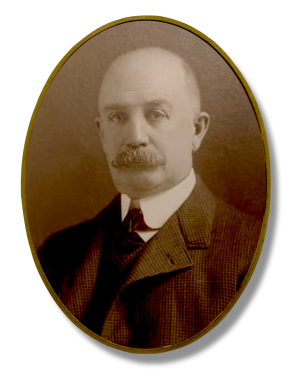
Edwin Perry wrote more about guard duty in a letter dated February 18, 1863. The prisoners he was tasked to guard were not Confederate prisoners of war but Union soldiers that had committed various offences. He also described how he was becoming more accustomed to sights that would have once made him squeamish.
“Yesterday it snowed all day and today the rain is carrying it off. I stood four hours yesterday in a snowstorm. And now let me say a word in regard to the three reliefs. The first and second go on at nine in the morning and stay until five at night at which time the third relief go on and stay until nine o’clock and are not again called out until five o’clock this morning. This gives us the whole night to sleep.
We have an odd way of keeping prisoners here. Two posts are placed firmly in the ground to which a rope is stretched across. To this the men are handcuffed. This gives them the liberty of walking back and forth perhaps ten feet.
We cannot get passes to go to Alexandria now except on business. My nerves are getting stronger so that I can look and see teeth pulled and dug out without my heart’s jumping. Dr. [Moses S.] Eldredge of our mess is doing considerable business. Yesterday he dug out a tooth while the person was under the influence of ether.”
In a letter written a week later, Edwin Perry made a rather humorous remark about the second lieutenant of his company who transferred to service in the navy.
“Our Second Lieutenant [Seth W. Cowing] left us today. He takes a position in the Navy. He could not go too soon so my best wishes are for his poor success. Lieut. [William A.] James has command here now.”
Edwin Perry continued to serve on guard duty. On March 11, 1863 he wrote about a recent visit to Fort Worth, located on Seminary Heights.
“Yesterday I paid a visit to Fort Worth beyond Fairfax Seminary. It is situated on the brow of a high hill overlooking a large valley. The fort mounts about thirty guns of which the largest throws a one hundred pound shot. The bed and carriage is constructed of solid iron. There are a number of large Parrott guns of beautiful workmanship. Besides these and some common sixty-fours, there are some eight mortars placed on massive beds of iron. There are also two pieces of light artillery bearing the inscription ‘Whitworth Guns Presented by the Loyal Americans in Europe to the Government of the U.S.’ You will remember of reading about this about a year ago. These are made of steel and are bronzed like a musket about ten feet in length and breech loading.”
Edwin Perry mustered out of the service a few months later on July 13, 1863. He married Ella Jane Moore in 1869. He died sometime after 1905.
We’d like to give a special thanks to William Griffing of Spared & Shared for his work in sharing and transcribing these letters.
To read more of Edwin Perry’s letters and access thousands of other Civil War letters and documents, sign up for a Research Arsenal membership.
If you enjoyed this article, check out some of our other featured collections like Charles Walbridge of the 100th New York Infantry and Abraham Crumbecker of the 32nd Ohio Infantry.
