
RG 94 Spotlight: 15th Illinois Infantry
The 15th Illinois Infantry: From the Hope of Home to the Hell of Shiloh and Hatchie
The Research Arsenal is proud to be digitizing and adding historical records of Civil War regiments held at the National Archives to our online database so that researchers and historians can access material that previously required a trip to Washington D.C. The 15th Illinois Infantry is one of the many regiments that has been added to our database.
When the Civil War began in 1861, thousands of Illinois men answered President Abraham Lincoln’s call for volunteers. Among them was twenty-year-old Philo Handy of Marengo, Illinois, who enlisted in Company D of the 15th Illinois Infantry on May 24, 1861. Like many of the young men who joined the regiment, Handy entered the army with a mixture of patriotism, excitement, and an expectation that the war might be over before too long.
Four years later, the surviving veterans of the 15th Illinois would have marched thousands of miles, fought in some of the bloodiest campaigns of the Western Theater, endured wounds and imprisonment, and followed William T. Sherman’s army through Georgia and the Carolinas. The young men who had left Illinois in 1861 were very different soldiers by the end of the war.
The story of the 15th Illinois is particularly well preserved through the first-hand accounts of men such as Philo Handy and Lucius W. Barber, both of Company D. Their writings allow us to see the regiment not simply as a military organization moving from one battlefield to another, but as a group of young men whose war was experienced one march, one battle, one letter, and one wounded comrade at a time.
From Illinois to Missouri
The 15th Illinois was raised under Illinois’ Ten Regiment Act and mustered into Federal service at Freeport on May 24, 1861. Its companies came from several northern Illinois counties, with Companies A, D, and F drawing volunteers from McHenry County and other companies coming from communities across the northern part of the state.
The first months of military life were filled with drilling, marching, camp construction, sickness, and seemingly endless movement. The regiment eventually moved into Missouri, where it became part of the Union effort to secure the state and prevent Confederate forces from establishing control there. The 15th Illinois spent considerable time marching through places including Rolla, Tipton, and Sedalia before eventually being ordered toward Tennessee.
For Handy, however, the war was still closely connected to home.
On November 22, 1861, while encamped near Tipton, Missouri, he wrote a letter to his friend Martha. His letter reveals a young soldier who was already tired from campaigning but still believed that the conflict might soon be over.
Handy described the regiment’s recent movements and the hardships of campaigning. The men had gone for four weeks without tents, sleeping beneath the open sky. They had made forced marches of fifty or sixty miles without sleeping or eating and had marched approximately three hundred miles in three weeks.
Yet his thoughts repeatedly returned to Illinois.
He imagined the day when the war would end and he could return home to friends. “Then Ho! for Illinois and home among friends,” he wrote, calling the prospect a “happy thought” and a “fond hope.”
It is one of the most revealing passages in the letter because Handy was still able to imagine the war as something temporary—a difficult interruption before life returned to normal.
He asked his friend Martha whether she intended to attend school that winter and imagined visiting her. He mentioned friends and acquaintances he had encountered in the army. Even while sleeping outdoors and marching hundreds of miles, he remained connected to the ordinary world he had left behind. Handy could not know how dramatically his life would change during the following year.
Toward Fort Donelson and Shiloh
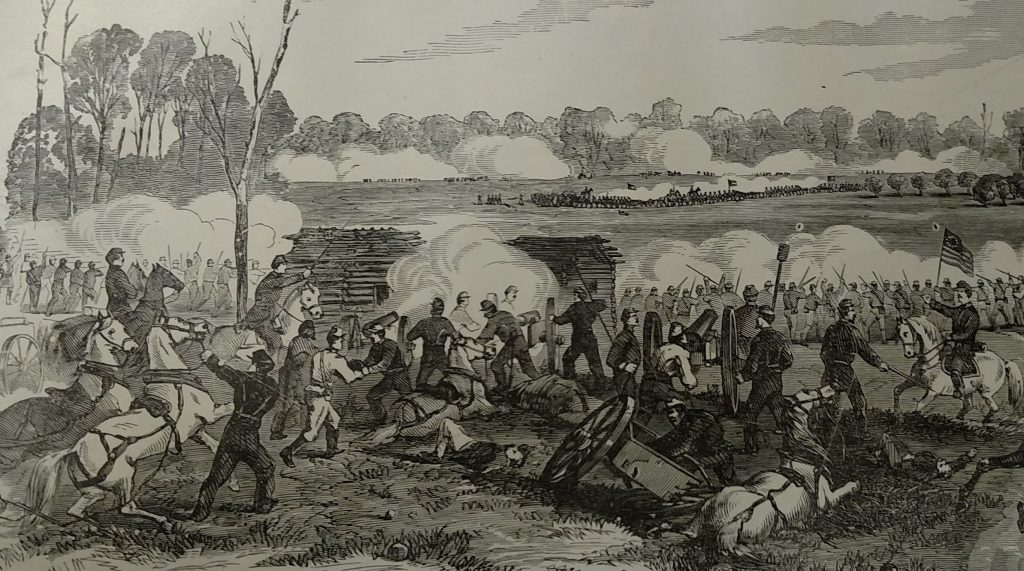
By early 1862, the 15th Illinois was moving toward the major Union campaigns in Tennessee. The regiment participated in the operations that resulted in the capture of Fort Donelson before moving toward Pittsburg Landing and joining General Stephen A. Hurlbut’s Fourth Division. In March, the regiment arrived at Pittsburg Landing.
Lucius W. Barber, another member of Company D, described the arrival in his memoirs. The area was still largely wilderness, with only a few log structures visible. Suddenly, thousands of Union soldiers arrived, transforming the quiet landscape into a massive military encampment. Barber described the sounds of marching men, drums, fifes, and bugles echoing through the previously quiet countryside.
The Union army was gathering for a confrontation with the Confederate army concentrated around Corinth.
The 15th Illinois at the Hornet’s Nest
The 15th Illinois was among the Union regiments that found themselves heavily engaged during the first day of fighting at Shiloh (April 6, 1862). Part of Hurlbut’s “Fighting Fourth Division,” the regiment was brigaded under Colonel James C. Veatch. The 15th formed part of the Union line that resisted repeated Confederate attacks in the area that became known as the Hornet’s Nest.
For the men of Company D, the battle quickly became a terrifying reality.
Barber remembered portions of the company becoming separated from the regiment during the fighting. Confederate artillery fire swept the area with grape and canister. The men were forced to cross an open field under fire in order to rejoin their comrades.
Once back with the regiment, they found themselves facing Confederate infantry concealed behind fences and thick underbrush.
Company D lost three men killed and seventeen wounded during the first day’s fighting. Among the dead were Captain Harley Wayne, Private Thompson Hardy, and Private John Spicer. Lieutenant Fred A. Smith and numerous other officers and enlisted men were wounded.
On the morning of April 7, Company D could muster only thirteen men. The regiment that had entered the battle with its full ranks had been devastated in a single day.
For Philo Handy, the experience was particularly significant. The young man who had written from Missouri about returning home had now experienced one of the most desperate battles of the Civil War. And he would soon face another.
“Hell on the Hatchie”
After Shiloh, the 15th Illinois continued campaigning in Tennessee and Mississippi. The regiment participated in the siege of Corinth and then marched through Grand Junction, Holly Springs, LaGrange, and Memphis. In September 1862, the regiment marched to Bolivar, Tennessee, before receiving orders to move toward Corinth in response to Confederate operations under Earl Van Dorn and Sterling Price.
The resulting campaign brought the regiment to the Hatchie River on October 4, 1862.
The battle became known among soldiers as “Hell on the Hatchie.”
The 15th Illinois was heavily engaged. The regiment fought at Metamora Hill, drove Confederate forces from their positions, captured a four-gun battery and approximately three hundred prisoners, and then charged across the Hatchie bridge. The 14th Illinois formed alongside the 15th, and the two regiments continued attacking Confederate positions in the woods beyond the river. The regiment ultimately suffered more than fifty killed and wounded.
Among the wounded was Philo Handy. His wound was recorded in Lucius Barber’s memoir, creating a remarkable connection between two soldiers who had served together in Company D since the beginning of the war.
Barber described the regiment’s advance after crossing the river. Confederate soldiers were concealed behind a rail fence and in dense underbrush, pouring heavy fire into the Union line. The 15th Illinois took shelter behind a long log.
Barber and another soldier attempted to get over the log but quickly decided they had chosen a dangerous position.
“The bullets pelted against the log like hailstones,” Barber recalled.
Then he saw Handy fall.
“Philo Handy, my right hand man, was shot and badly wounded.”
That brief sentence gives us something that a casualty list never could. Handy was not simply one of the regiment’s wounded. He was Barber’s “right hand man,” a comrade who had stood beside him while bullets tore through the trees.
Handy’s wound proved serious enough to end his military service. He was discharged on May 1, 1863, because of medical disability.
The Soldier Comes Home
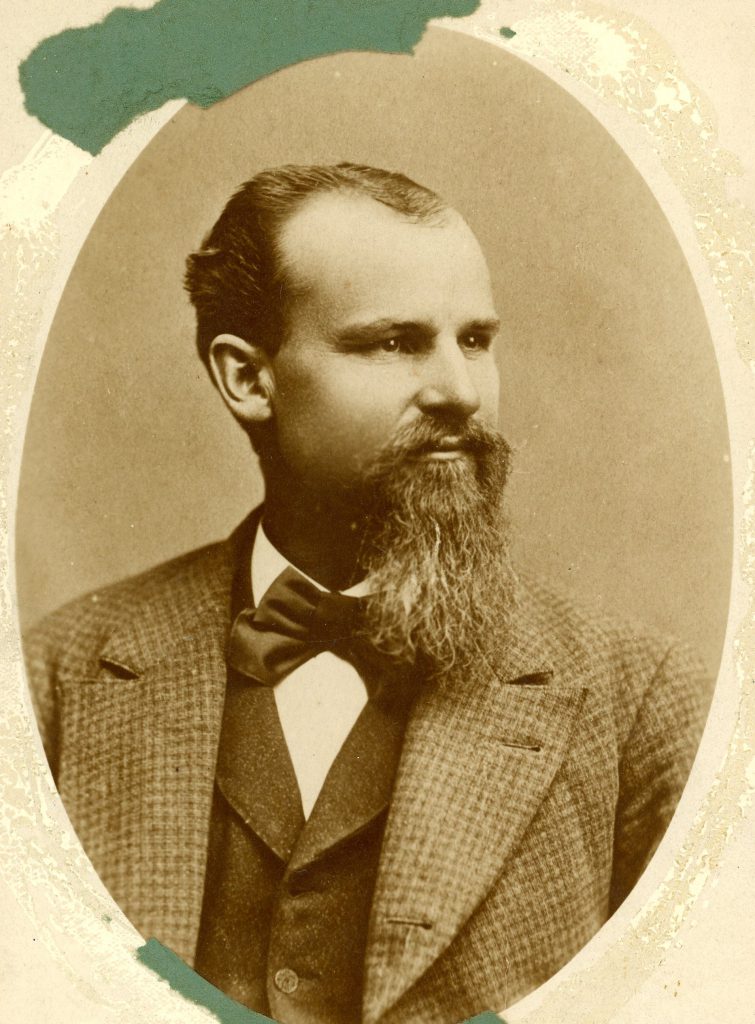
Handy’s discharge marked the end of his wartime service, but it did not mark the end of his story. In 1864, he returned home and married Laura Roper. He spent much of the rest of his life in northern California and was a pioneer of Mendocino County, even serving as undersheriff there. He died in 1923 at the age of 81.
The 15th Illinois Becomes a Veteran Regiment
While Handy’s military career ended in 1863, the 15th Illinois continued the war.
The regiment participated in the Vicksburg campaign in 1863 and fought during the siege that culminated in the surrender of Vicksburg on July 4. It subsequently participated in operations in Mississippi and later reenlisted as a veteran organization.
By 1864, the regiment was once again campaigning with Sherman’s army.
Lucius Barber was among those who reenlisted. His service record shows that he re-enlisted in January 1864 and was promoted to sergeant. The regiment moved through the campaigns in Mississippi and Georgia, participating in the fighting associated with Sherman’s advance toward Atlanta.
The 15th Illinois was eventually consolidated with the 14th Illinois, forming the 14th and 15th Illinois Veteran Battalion in July 1864. The combined veterans continued with Sherman’s army and eventually participated in the March to the Sea and the Carolinas Campaign.
Ackworth and Andersonville
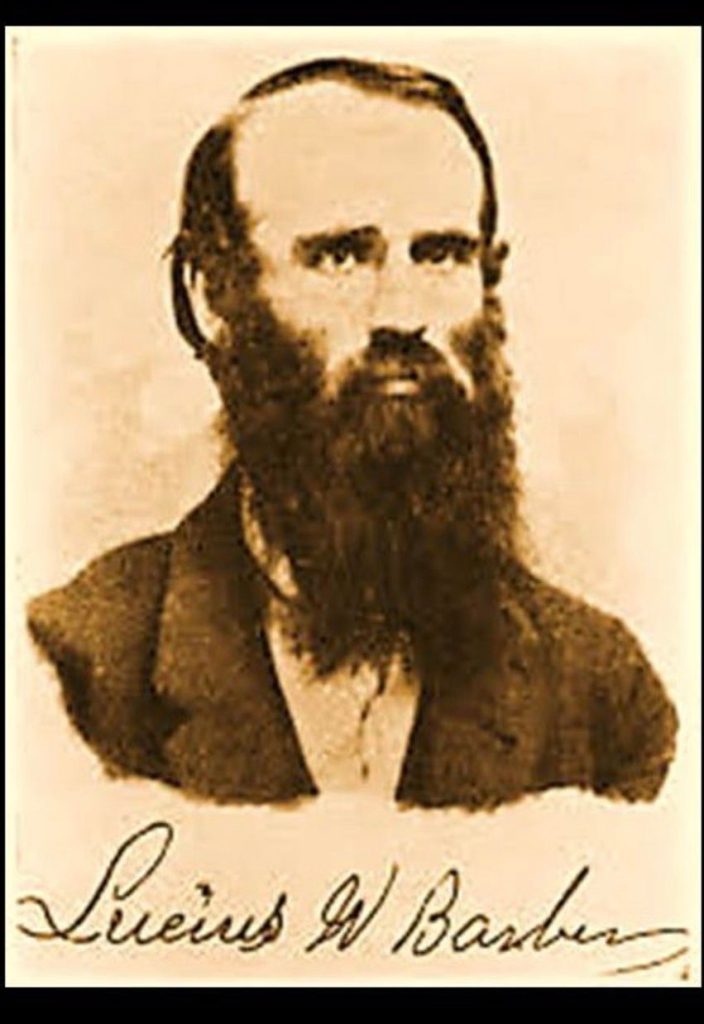
For Lucius Barber, the final year of the war brought an experience that Philo Handy had fortunately escaped. On October 4, 1864, Barber was captured at Ackworth, Georgia. His service record states that he was taken to Andersonville Prison, where he remained until being paroled on November 20. He was exchanged in January 1865 and eventually discharged in September.
Barber survived his imprisonment, but the effects followed him home. A postwar account records that he died in Riley, Illinois, in 1872 at only thirty-two years of age. The account attributed his eventual illness to the exposure and maltreatment he suffered while imprisoned at Andersonville.
His experience offers a striking contrast to Handy’s. Both men enlisted in Company D in 1861. Both experienced Shiloh and the terrible fighting of the Western Theater. Handy was wounded at Hatchie and discharged. Barber remained in service, reenlisted, was promoted to sergeant, and was eventually captured and imprisoned. Two soldiers from the same company could experience the same war in profoundly different ways.
The Long Road Home
The 15th Illinois continued through the final campaigns of the war. After Sherman’s March to the Sea, the veterans participated in the Carolinas Campaign, including the Battle of Bentonville. They marched north through the Carolinas and Virginia, eventually reaching Washington, D.C., where they participated in the Grand Review in May 1865.
But even after Confederate armies surrendered, the regiment’s service was not immediately over.
The 15th Illinois traveled west to Fort Leavenworth, Kansas, and ultimately completed its military service in September 1865. The regiment had spent more than four years in uniform. The young volunteers who had left Illinois in 1861 had traveled an extraordinary distance—physically and personally.
Sources
The Research Arsenal is proud to hold 298 digital scans of the 15th Illinois Infantry’s regimental history on its database. These consist of 244 pages of material from the National Archives Records Group 94 files. These include a Regimental Descriptive book, Morning Report book, and Regimental Order books. Visit the Research Arsenal, click on “Search NARA Records” then select “RG94” and “15th Illinois Infantry” from the drop-down menus. In addition, the Research Arsenal contains letters, and other forms and documents relating to the 15th Illinois Infantry.
- Lucius W. Barber, Army Memoirs of Lucius W. Barber, Company D, 15th Illinois Volunteer Infantry, May 24, 1861 to September 30, 1865.
- Philo Handy, Company D, 15th Illinois Infantry, letter dated November 22, 1861, Camp near Tipton, Missouri, Research Arsenal database.
- History of the 15th Illinois Infantry Regiment, Illinois Genealogy. (Illinois Genealogy)
- History of 15th Infantry Illinois Regiment, IllinoisGenWeb. (ILGenWeb)
- National Park Service, 15th Illinois Infantry Regiment. (National Park Service)
- Illinois State Archives, Regimental Histories. (Illinois Secretary of State)
- Dan Masters, “Dreaming of Powder, Musket Balls, and Bloodshed,” Dan Masters’ Civil War Chronicles. (Dan Masters blog)
- 15th Illinois Infantry Regiment, Wikipedia. (Wikipedia)
