
Research Arsenal Spotlight 79: Joseph Patterson 90th Pennsylvania Infantry
Joseph Patterson was born in December, 1847 to Robert Patterson and Elizabeth (Gilles) Patterson. He was not yet 14 years old when he enlisted as a drummer in Company I, 90th Pennsylvania Infantry on September 24, 1861. His extreme youth offers a unique perspective on the war and military life.
Joseph Patterson at Fredericksburg
The letters in our collection begin in May, 1862, when Joseph Patterson and the 90th Pennsylvania Infantry were stationed near Fredericksburg, Virginia. Joseph Patterson started his letter with an admonishment to his parents for sending him things by way of a lieutenant without telling him the lieutenant’s name or regiment.
“But you say you sent a pair of gaiters by a lieutenant. I have not seen lieutenant, letter or gaiters yet. I don’t think I will ever see them. I think it is dumb in you sending them by him. You did not tell me who he is nor where to go look for him nor what regiment he is in.”
Joseph Patterson mentioned that he met with another cousin, Bill, also serving in the Union Army.
“I seen cousin Bill a couple a days ago and you would not know [him]—he looked as old as Uncle did when he was out there. I did not know him. He says he could make more home now that where he is. Aunt died last fall or spring, I don’t know which, and he could live better now than that time. He is well now and sends his love and respects to you. He is going to Philadelphia if they get discharged in Harrisburg.”
Towards the end of the letter, Joseph Patterson revealed that he had evidently caused some trouble at home before enlisting in the army.
“Now Father, if I don’t never return home, one out of family is not any loss. I was always a bad boy [at] home, but I have changed now. I look and feel more of a man now. I am able to take care of myself [even] if I don’t have anybody to take care of me.”
He also implored his parents not to believe any rumors about him and swore he would never desert the regiment.
“What is the matter with you? Is somebody been telling you more lies about me. Don’t believe anything anybody tells you. There will be a day some time that everything will be right. What do you mean by a business hand. Won’t you know it is from me? I will put my 3 initials on the envelope. Then you will know it is from me before you open it. If you look at the papers to find me deserting the regiment, you will look forever for that is a thing I will never do—no never.”
The 90th Pennsylvania Infantry in Virginia
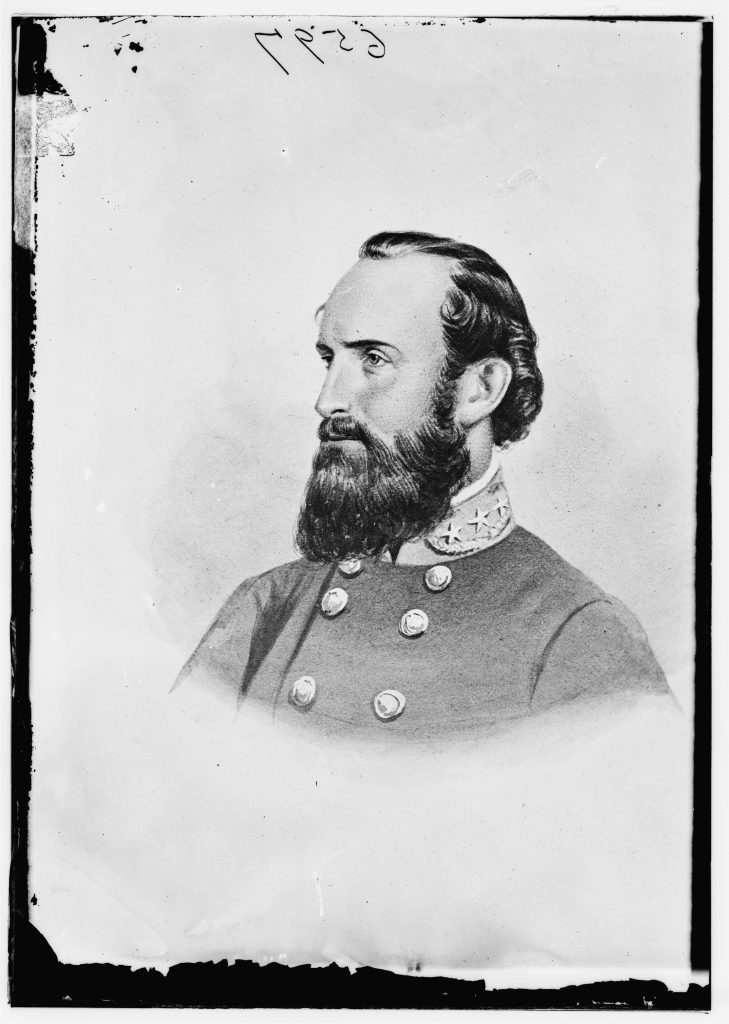
On June 3, 1862, Joseph Patterson wrote home with an account of what the 90th Pennsylvania Infantry had been up to since leaving Fredericksburg. The regiment was in pursuit of “Stonewall” Jackson and much of Joseph Patterson’s account had to do with the conduct of General James Shields who commanded the 2nd Division of the 5th Corps.
“I have been on the tramp all of this week and last week. We left Fredericksburg Sunday week and marched to Aquia Creek which is about 20 miles and then took the boat for Alexandria and then got off the boat and took the cars for Manassas. We laid at Manassas about a day and then went on the march again. We left Manassas about 5 o’clock and stopped about 7 miles from there and took up the tramp again in the morning. We kept on doing that for 5 days. It has been raining half of the time. We have been after Jackson, Johnson, [and] Ewell ever since we left Manassas. You know that time I told you Shields left Winchester, he was put under arrest for marching away from it. Just as soon as he left it, Jackson marched into and captured all he could lay his hands on. He got a great deal of provisions from what he captured. Shields left Fredericksburg in the morning and our brigade left in the afternoon.
Yesterday Shields was fighting. I could hear the cannonading as plain as if I was up at the spot. Yesterday they fetched in a lieutenant. He was shot in the arm while out on picket. Mother and Father, you need not fret. I don’t have to go on picket now. We expect to have a fight with them pretty soon. They are pretty well armed. Their best cavalry is not far from us. It is Ashby’s Cavalry. I’ve see the Colonel’s house that commanded the cavalry. When we got in Front Royal, the depot was just burning. You know how near we are to them. It is a funny thing that we can’t catch him.
They are General Banks, Fremont, Shields and McDowell after him. I hear he is beginning to smell a mouse. He thinks we got him surrounded. I think it is so. He will have to fight his way through. He wants to get going. If we only get them, we can go right on to Richmond. There are no armies between this and Richmond. Jackson is the one we want to get. He is the commander of the guerrillas. They call themselves the Mountain Tigers. They are on horses. They show no mercy. They shoot you right down. But if we had him, we would show him what he’s about.”
On June 22, 1862, Joseph Patterson wrote from Front Royal, Virginia, and informed his family about the recent accident of General Irvin McDowell.
“I suppose you heard of Gen. McDowell getting hurt. We just came here as he fell off of his horse. He did not fall off the horse, the horse reared up and he thought he would come down on his feet again but the horse fell over backward on top of the General. He made a narrow escape. The doctor did not think he would live but he is recovering. He is the one that is keeping Gen. McClellan from attacking Richmond. He won’t attack it till he finds McDowell is well fixed in Western Virginia but I think we will go down in reinforce McClellan. The Major General of our division is resigned and is now serving under Gen. Halleck out west. Our Brigadier General is Major General but I don’t know who will be Brigade General.”
In November, 1862, Joseph Patterson wrote a short letter to his brother that gave a hint at some of his dissatisfaction with his current military life.
“You talk about me learning you to play the drum if ever I get home safe. I never want to hear the sound of a drum. I am so tired hearing the drums now that I hate them. They are so unhandy to carry in a march—that is the reason I hate them—and it is hard to keep a drum in order, to keep it out of the rain. Such little tents we get, not like home, keeping a drum where you got a parlor to keep it.”
Joseph Patterson Goes AWOL
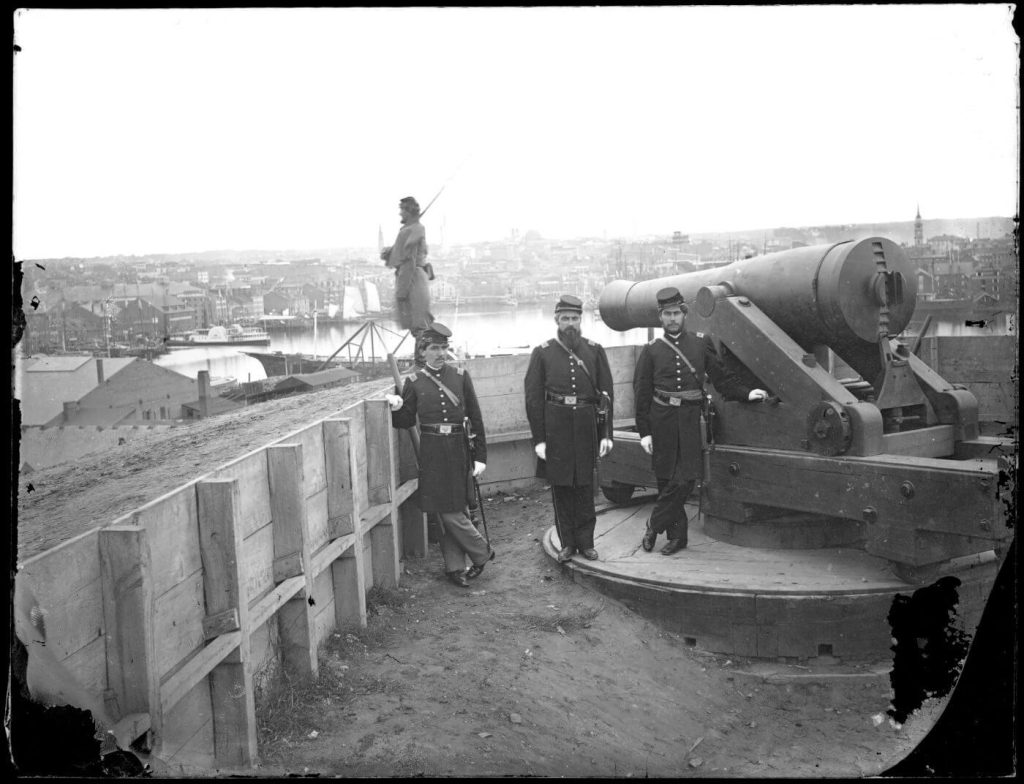
There is a gap in our collection of letters spanning the beginning half of 1863. When the letters resumed on July 22, 1863, Joseph Patterson revealed that he has currently left his regiment without leave and turned himself in to the Provost Marshal of Baltimore.
“I now sit down to write a few lines to you to let you know that I am well & enjoying good health at present & I hope you are the same. I left the regiment just as they were crossing the river to go in Virginia at Berlin. I jumped on a train of cars and came down here to Baltimore to run around town a couple of days & reported to Provost Marshal of Baltimore for transportation to the regiment again and he sent me to this camp to wait here till they send me. I left the regiment without permission and I feel a little uneasy about it & I would like to get to the regiment or else come home & wait till the army gets settled in camp. I did not feel like walking around Virginia so I did not go.
Now if you like and [want to] come down & fetch [me] a suit of [civilian] clothes, I will come up and stay home till the army gets settled, or if you don’t like it, I will stay here and wait till they send me to the regiment. But it will be a long time I think. I don’t like it in this camp and I would rather be anywhere than here. I am very sorry I ever left the regiment at all but I don’t know what ever made me come to Baltimore.
I am out of money and I hear that the Army of the Potomac is getting paid off so I think I won’t get any money this pay day and likely they will take 2 months pay off for leaving the regiment without permission. When you answer this, please send me a couple of dollars if you don’t come yourself.”
By August 13, 1863, Joseph Patterson had rejoined the 90th Pennsylvania Infantry at Rappahannock Station. In his letter home he described his disdain for the new recruits and joked about the time he and his mother had spent together in Baltimore.
“We have received 150 new substitutes tonight and a worse set than before. One died coming along on the boat and the one that was shot in the Delaware belonged to them too, so they say, but I don’t believe them. The bearer of this letter is Sergeant Hagerty. He told me he would take $20 to you so I thought I would send it being you done so much for me on that little excursion of ours. I’ll bet you I won’t forget the leaky car that night. Do you remember the sarsaparilla in Baltimore? I could drink a good glass now if I had it. I wonder what the Colonel of the Camp Bradford said when I did not return in the morning. I guess he thinks I am making a long night of it in Baltimore. If he only knowed what was in the valise that day.
How would you like to have another walk like that night?”
Joseph Patterson continued to serve in the 90th Pennsylvania Infantry until he completed his 3 year term in September 1864. He applied for a disability pension in 1865 for chronic diarrhea but was denied. He went to work in his father’s company as a shipping merchant in Philadelphia. Joseph Patterson died in 1901.
We’d like to give a special thanks to William Griffing of Spared & Shared for his work in transcribing and sharing these letters.
To read more of Joseph Patterson’s letters and access thousands of other Civil War letters and documents, sign up for a Research Arsenal membership.
If you enjoyed this article, check out some of our other featured collections like Mahlon Thatcher of the 40th Massachusetts Infantry and William Augur of the 7th Connecticut Infantry.
