
Research Arsenal Spotlight 88: Robert Greenfield 1st New York Dragoons
Robert Greenfield was born in 1838 in Lester, New York, and was listed as a hostler (a person who cares for horses or mules at a stable) when he enlisted in Company I of the 130th New York Infantry on August 16, 1862. The regiment was converted to cavalry in the summer of 1863 and initially designated the 19th New York Cavalry. A month later, it was redesignated again to the 1st New York Dragoons.
All of the letters in this collection were written by Robert Greenfield to his wife, Mary (Lowell) Greenfield. Her younger brother, George W. Lowell, also served in the 1st New York Dragoons.
Robert Greenfield at Camp Suffolk Virginia
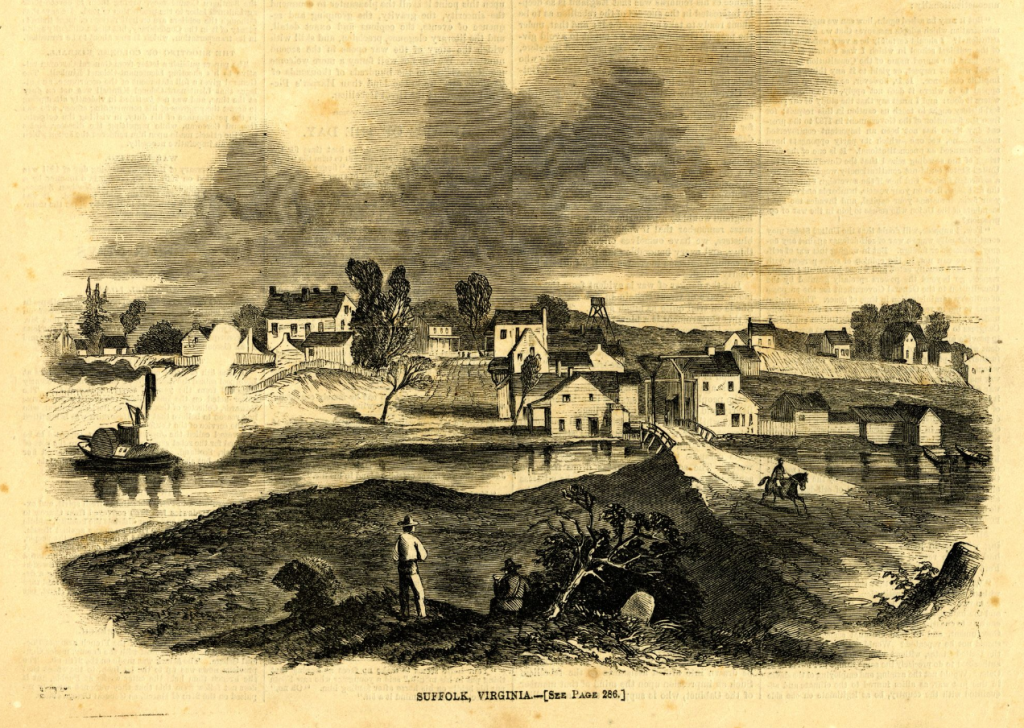
Robert Greenfield’s letters begin before the 130th New York Infantry was converted into the 1st New York Dragoons. On November 13, 1862, he wrote from Suffolk, Virginia and described a nighttime attack against the Union pickets that drove them inward.
“I received your letter last night but, Mary, I did not have time to answer it until this morning for our company went to guard a fort and I went with them so this morning I will pen you these few lines to let you know that the rebels has not taken us yet.
About one o’clock last night the news come in that the rebels had drove in our cavalry pickets. There has three regiments gone out and some cavalry. Our regiment has not had orders to march yet. We will probably have to go in two or three days. We may have to go in two or three days. We may have to go to Blackwater again.”
In the same letter, he assured his wife that he was healthy and gaining weight.
“Mary, you would hardly know me now for I have not shaved since I left home. I am heavier that I ever was before. I weigh twenty pounds more than I did when I came here. The climate agrees with me. I never had a better appetite in my life.”
On December 4, 1862, Robert Greenfield wrote about a recent battle on the Blackwater River, which resulted in the regiment regaining some of the artillery that was lost by Union forces during the Battle of Bull Run.
“We came the nearest of having a brush this time of any time yet. Our regiment was in the advance this time. There was one company of cavalry ahead of us. We got within half mile of the rebels when a brisk fire commenced between our cavalry and the rebels. Then there was another company of cavalry went out in the direction where the firing was heard and we was ordered to halt and fall in line of battle and in half an hour the cavalry came in with twenty rebels and one battery and eleven horses and forty stands of arms. The battery is one that the rebels took from our men at the first Bull Run fight. It is called the Rocket Battery with McClellan’s name on it. I tell you, Mary, they was hard-looking fellows. Some of them was badly cut to pieces. Some had their ears cut off and their faces all cut to pieces. Our men killed one of them. They was poorly dressed. One of them did not seem to care. He said to us when he passed by that we would catch hell before night, but before light [he was] to [the] Suffolk jail. I guess he changed his mind. Mary, it was a hard sight to see old men with the blood running from their wounds.
There was none killed on our side. One [was] slightly wounded in the face. He was a Pennsylvania Cavalry man. The property that our men took is estimated at sixty thousand dollars and if they would only let our regiment went when they wanted to, we could of taken them all prisoners before they would have crossed Blackwater.”
Robert Greenfield in 1863
By the Spring of 1863, the 130th New York Infantry was still stationed at Suffolk, Virginia. It was soon to be converted to a cavalry regiment, but was still acting as infantry. Skirmishes continued with Confederate forces and culminated in the end of the Siege of Suffolk.
On May 4, 1863, Robert Greenfield wrote about the rebels dispersing.
“The rebels have dispersed. We had a fight here yesterday and drove the rebels two miles. There was upwards of one hundred killed and wounded on our side. The rebels loss is not known yet. They are retreating towards Petersburg. They left last night at ten o’clock. Many deserters have come into our lines. Already forces have gone out from Suffolk on all the roads. We are in the rifle pits yet but expect to go in camp tomorrow. The rebels have made up their minds that they cannot take Suffolk. They would never have attacked Suffolk but they supposed that our brigade had gone to North Carolina to reinforce Foster. But they got mistaken this time. The woods is full of dead rebels that was killed by our shells. They lost a great many men more than we did.”
Becoming Cavalry: The 1st New York Dragoons
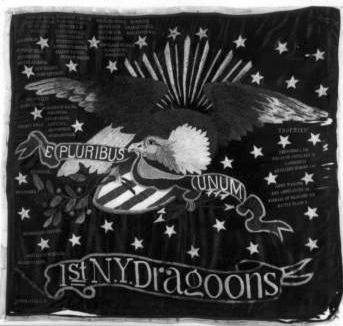
On July 15, 1863, Robert Greenfield wrote that the 130th New York Infantry was in pursuit of the Confederate forces under General Robert E. Lee, which had recently suffered significant defeat at the Battle of Gettysburg in Pennsylvania.
“I now take my pen in hand to inform you that I am well and [to let you know] where we are. We came from Yorktown to Washington and from there here. We expect to move forward tomorrow. We are about one days march from the Rebel army in Pennsylvania. We expect to see some fighting in a few days. The 136th Regiment is only twelve miles from us. The 104th [New York Regiment] has been badly cut to pieces. They are not far from us. We will probably see some of them in a few days.”
This proved to be Robert Greenfield’s last letter written while his regiment was still an infantry one. The shift from Infantry to Dragoons occurred in two stages. On August 11, 1863, the regiment was redesignated as the 19th New York Cavalry. A month later, on September 10, 1863, the designation was again changed to the 1st New York Dragoons.
The change to a cavalry regiment also brought changes to Robert Greenfield. Perhaps owing to his background as a hostler, he was appointed as a farrier for the 1st New York Dragoons.
On November 9, 1863, Robert Greenfield wrote from a camp near the Rappahannock River, about some recent fighting the 1st New York Dragoons participated in, though he himself was further back caring for the horses.
“Our brigade is across the river. The report is that they had a fight and captured 12 hundred rebel prisoners. I do not know how many of our regiment is killed yet for we have not got the General Report yet. But I think there is a good many for they had a hard fight. There was sixteen hundred prisoners went by here yesterday. They looked very hard indeed. Some barefooted and half naked. Miland is with the regiment. I have seven men here with me to help take care of my horses.”
There is a large gap in Robert Greenfield’s letter collection lasting nearly a year. On August 3, 1864, he wrote home to Mary with sad news about her brother. George Lowell had died in a hospital near New York, leaving Robert Greenfield in a state of shock.
“I just received word that George is dead. He died near N.Y. City. Captain Thorp got a dispatch that he was dead. I do not know but what you have heard of it but it is sad news to write home. But Mary, it is not my fault for I done all I could for him when he was with us. But Mary, I suppose your mother will go crazy if crying would do any good, I would cry myself to sleep. But Mary, I cannot cry—but I feel a great deal worse than if I could. I cannot make it seem possible that he is dead.”
Robert Greenfield served through the duration of the war and mustered out with the rest of the 1st New York Dragoons on June 30, 1865. Sometime after the war, Robert and Mary Greenfield moved to Nunda, New York. Robert Greenfield lived until 1912.
We’d like to give a special thanks to William Griffing of Spared & Shared for his work in transcribing and sharing these letters.
To read more of Robert Greenfield’s letters and access thousands of other Civil War letters and documents, sign up for a Research Arsenal membership.
If you enjoyed this article, check out some of our other featured collections like David Smith of the 73rd Illinois Infantry and Alexander Lyle of the 2nd New Hampshire Infantry.
