
Research Arsenal Spotlight 74: Alfred McClay 114th Pennsylvania Infantry
Alfred McClay was just 16 years old when he enlisted in Company E, 114th Pennsylvania Infantry. He was born in 1846 to Aaron and Margaret McClay. Both his parents died young and he lived with his aunt and uncle, John and Emily (McClay) Ryner. In his letters he addresses his aunt as “mother.”
The 114th Pennsylvania Infantry in Maryland and Virginia
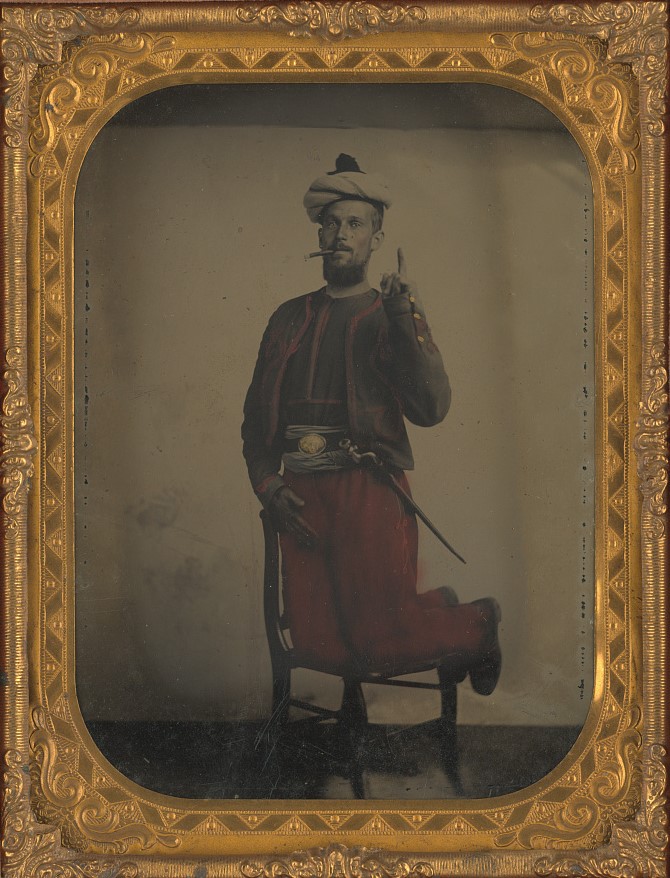
After being organized in August, 1862, the 114th Pennsylvania Infantry was sent south toward Washington, DC, passing through Baltimore along the way. On September 9, 1862, Alfred McClay wrote home about two separate incidents related to gun safety in the new regiment, one of which resulted in tragedy.
“In Saturday morning one of the men in Company H, while cleaning his revolver, one of the barrels was accidentally discharged, the ball passing through his pants tearing them to pieces but didn’t graze the skin and went into the ground. In the afternoon, Corporal [John] Bell of Co. B while cleaning his rifle in the company’s avenue, there was one of his own men standing in front of him a short distance going through the manual of arms [and] not knowing the piece was loaded, he aimed at his [Bell’s] head and pulled the trigger, and to his surprise the gun went off, the ball striking to the side of his nose and blowing out his left eye. He was taken in charge of the doctors and on Sunday morning early he was taken to the hospital and was soon after reported dead.”
On September 27, 1862, Alfred McClay wrote about his regiment traveling through northern Virginia and setting up a post near Bailey’s Crossroads.
“But after I sent the letter I found out that the whole regiment was to go out on picket on Wednesday morning. We got our great blue overcoats. We formed in line early in the morning and I tell you what it is, we looked gay with our new coats. We started off with the band and drum corps ahead and went back the road from Arlington Heights. The band left off at a short distance and then the drum corps struck up. When we got back about half a mile where some of our men were stationed on the inside picket and didn’t know that we got our coats, they asked what regiment it was when someone replied that it was the forty eleventh Smith’s Island and many other names. For the first three miles all the way back to Bailey’s Crossroads it was nothing but one big hill after another, just like the Schuylkill Hill opposite to Rockdale and such a poor, deserted country you never saw. Here and there a house with the sides all knocked in and nobody living in them and nothing but weeds and briars growing—no vegetation anywheres.
We went about two miles beyond the Crossroads and then struck off on a by-road to the left. Our company had 5 posts besides the Lieutenant’s headquarters. Each post had 5 men and 1 corporal which made the watch easy. I was on the reserve force and kept with the Lieutenant all day.”
A Spooky Time on Picket
In October, 1862, the 114th Infantry was stationed below Arlington Heights, Virginia. That month, Alfred McClay wrote home about his sergeant’s rather unorthodox method of testing the readiness of the pickets.
“When I went on at 9 o’clock, it had stopped raining and was pretty light by the moon. The corporal and the men kept close together in case of danger. We had to walk up and down the path of 60 yards. We had to keep a good look out as the posts were a good ways apart. Our sergeant came around just before 11 o’clock to try the men on guard. He has on a pair of white leggings that come way up to his knees and had his coat sleeves rolled so as to make himself look like a ghost. I saw him when he was about 15 yards off. I challenged him thus, “Halt, who comes there?!” Bringing my gun to an arms apost as we usually do, I had it loaded too. He replied, “Friend,” with the countersign. I called out, “Advance friend and give the countersign.” He came up and give it within 4 paces of me, then brought my piece to a shoulder arms to leave him pass. He thought he would try to get my gun but he wasn’t quite sharp enough. He says to me, “How do you come to an arms apost?” I brought my piece to an arms apost again to show him. He says, “Let me show you how to do it,” and he reached out for my piece but I dragged back on him and exclaimed, “No sir!” He says that is right and passed on. He tried 7 men that way and got 4 guns out of the 7 but he didn’t report them. He scared one man pretty near out of his wits. He stood in the bushes along the so as the sentinel couldn’t see him when he within twenty paces he stepped out suddenly before him in the path, the sentinel called out, “Ha, ha, ha, halt, oh mercy, how you scared me, Sergeant. The Colonel came around with the grand rounds about half past 3. He asked our corporal what he would do if the rebels shelled the woods. He said he would try to get us out quick. The Colonel told him he should put his men behind stumps and then the shells would not hit us and if cavalry come, we could pick them [off] and if infantry come, to fall back to the reserves and charge on them.”
A week later, on October 13, 1862, Alfred McClay wrote about a difficult march the regiment endured, and how his Captain helped him by carrying his gun part of the way.
“We crossed the bridge at Georgetown and passed through the town. Coming through the streets on the rough stones bruised my feet so that I could scarcely walk. At last we got on the turnpike that leads direct to Poolesville. It [took] very near all day. It was pretty cool too. We reached Rockville about half past 4 that afternoon after marching 18 miles. We encamped in a fair ground that night. After we would sit down to rest a few minutes and then get up, we [could] scarcely stand on our feet. The Captain said that my knapsack was 3 times as heavy as it ought to [be]. My woolen blanket—part of it—was soaking wet and my piece of tent was wet which made it very heavy. Each one of us carried our own piece of tent. The Captain seen that I was pretty near give out and that I tried my best to get along. He carried my gun over 2 miles for me but I hung on and got up to the regiment as it stopped. Hundreds of men gave out and straggled all along the road. Some of the men throwed away nearly everything but I held on to everything but one blue and white shirt. The road was strewn with every kind of articles that the men throwed away.”
Alfred McClay at the Battle of Fredericksburg
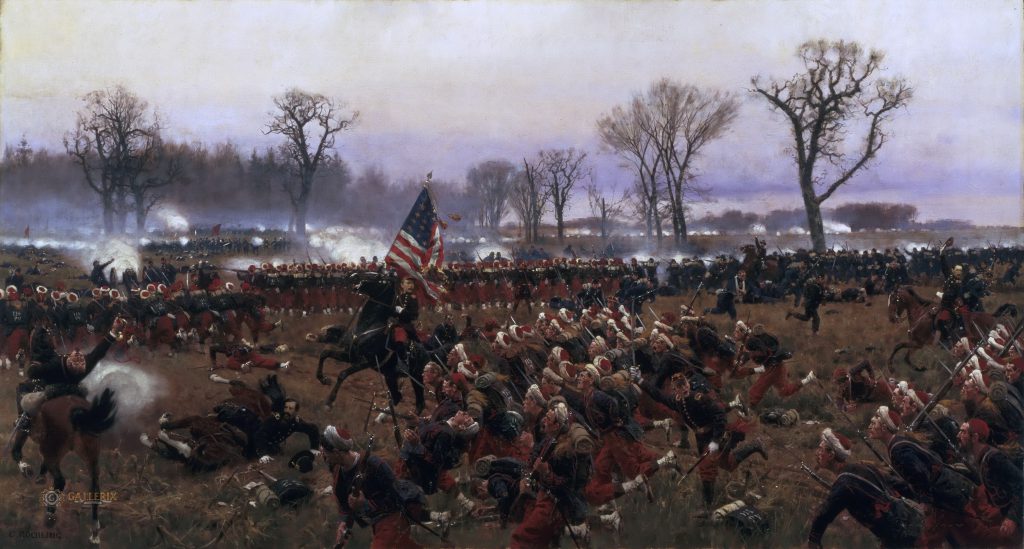
On November 20, 1862, Alfred McClay wrote a letter datelined “on the road to Fredericksburg.” In it he described the recent capture of Confederate forces and a friendly fire incident with artillery that fortunately did not result in any loss of life.
“We have captured some prisoners and horses and have got a good many things by foraging parties of the secesh. On November 7th it snowed very hard nearly all day. We marched a couple of miles and went into the woods and stood in line of battle for a long while, knapsacks and everything, still snowing until we got so cold that we had to make fires but we had to be careful and not make big ones so as the Rebs couldn’t tell where we were. The artillery went to the front on a hill. In a short time, as we were sitting around the fire, some of the men cooking meat, and one thing or another, all at once we were startled by the stunning report of one of the pieces. The boys all jumped up expecting to be taken into a fight almost every minute. For seven times boom went the gun but they soon found out their mistake as the troops we fired on knew that we were Union troops and they raised a white flag. It was some of our own cavalry. The shells bursted all around them but by the Providence of God, not a man was hurt.”
Unfortunately, the good news didn’t last. On December 18, 1862, Alfred McClay wrote a short letter revealing that he had been wounded at the Battle of Fredericksburg and taken to a hospital in Washington, DC.
“I take this opportunity of writing to you to let you know that I am in the hospital at Washington. Dear Mother, last Sunday at 3 o’clock in the afternoon. I got wounded at Fredericksburg and was sent to Washington. I came last night.
Dear Mother, I got wounded slight in the side. I don’t feel very ill. It is only but a flesh wound. Dear Mother, I have no more to say at present but I would like to be home at Christmas if I could.”
While in the hospital, Alfred McClay was visited by another uncle, Joseph Coleman, as well as the uncle who raised him, John Ryner, who he referred to as “Pap.” On January 2, 1863, Alfred wrote an update about his condition to his aunt.
“Yesterday afternoon, just before I received your letter, the doctor sounded me and examined me closely. He says I am getting along pretty well. He says that at first my wound was pretty dangerous but it is alright now. He also said that I have got the palpitation of the heart. I asked him what was the cause of it and he said it was from hard marches. I asked him if he thought I would be fit for service again. He didn’t say yes or no but asked if I would like to have my discharge. I told him yes and he said that I could get it but I won’t say anything more about it as you don’t want me to.”
Sadly, the improvement in Alfred McClay’s condition didn’t last and after another surgical operation on January 11, he died on January 24, 1863.
We’d like to give a special thanks to William Griffing of Spared & Shared for his work in transcribing and sharing these letters.
To read more of Alfred McClay’s letters and access thousands of other Civil War letters and documents, sign up for a Research Arsenal membership.
If you enjoyed this article, check out some of our other featured collections like Edwin Perry of the 11th Rhode Island Infantry and Charles Walbridge of the 100th New York Infantry.
