
Research Arsenal Spotlight 53: Gustavus Gould 17th Vermont Infantry
Gustavus Gould was born in 1843 to Joseph Gould and Lucinda (Sanders) Gould of Montpelier, Vermont. He enlisted in Company E of the 17th Vermont Infantry on February 24, 1864. The regiment finished organizing in late April, 1864 and was assigned to the 9th Corps of the Army of the Potomac.
Gustavus Gould Arrested as a Deserter
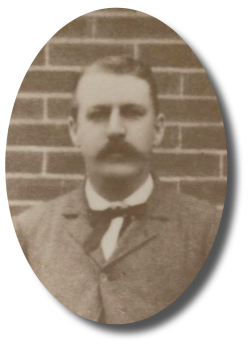
Gustavus Gould’s letters in our Research Arsenal collection begin on a serious note. On December 18, 1864 Gustavus Gould wrote home to his father from the Guard House at City Point, Virginia.
“I take this opportunity to write a few lines to you to let you know where I am. I am here in the guard house. They have sent me here as a deserter. I don’t see how they can make out desertion against me for you know that I was arrested before my furlough was out and was right there at home.”
While there aren’t any more details about how he ended up being arrested for desertion while on furlough, evidently he was able to clear things up relatively quickly because his next letter was written from Fort Davis, Virginia, in January, 1865, where he had returned to his regiment. After writing about small occurrences to his brother, Jerome, Gustavus Gould then addressed his parents.
“I suppose you and father have worried yourselves a great deal about me and I don’t wonder at it for I had a hard road to travel but never mind that. Trouble is all over with now so I hope you won’t worry anymore for I am alright now and I shall come home again sometime. Perhaps the time will not be long before I shall be there.”
The 17th Vermont Infantry at Petersburg
On February 12, 1865, Gustavus Gould wrote home to inform everyone that the 17th Vermont Infantry had moved to Petersburg, Virginia. By this time the siege of Petersburg had been ongoing since June, 1864. At least initially, Gustavus Gould found their duty there preferable to that at Fort Davis.
“We moved here yesterday morning. We have moved about two miles to the left of where we was. The order came about 1 o’clock that night for us to pack up and be ready to march at any moment. We got ready and started about 3 o’clock in the morning. We moved in the night so as to conceal it from the Rebs. The whole Army of the Potomac is on the move now. We found very good quarters here. They are good log huts. We was busy all day yesterday repairing them, Four of us tent together—Frank Taylor and two other fellows tent with me. This is a good place but I don’t know as we shall stay here long. Our duty is not near so hard as it was in the fort.”
A few days later on February 23, 1865, Gustavus Gould wrote again and mentioned the ongoing cannonading going on between Union and Confederate forces.
“They say that Charleston is taken with a heavy loss on the Reb’s side. They talk up peace pretty strong out here but I think there will be a hard campaign this summer than ever was fought. They are a fighting now on both sides of us—to the right and left we hear heavy cannonading most every day.”
The 17th Vermont Infantry continued to do duty outside of Petersburg but on March 2, 1865, Gustavus Gould had an unwelcome surprise with his pay. He wrote to his family:
“The Rebs are deserting very fast now-a-day. I see squads of them that come in most every day. They desert from the picket line. 48 came in the other morning. They says they can’t stand it much longer.
We was paid yesterday here but I did not get a damned cent. I have got money enough. The boys was owing me enough so I can get along first rate as far as that is concerned but that ain’t the thing of it. The regiment was paid four months pay—that would be 64 dollars. They stopped 30 dollars of my pay on the payrolls. I was sent here as a deserter [and] my pay was stopped while I was under arrest so of course they was only two months pay earning to me. The Adjutant told me that he would fix it so I should get the other 2 months pay next time we was paid but they will stop 30 dollars for charges of arrest. I don’t care a damn about that but that provost marshal will catch hell sometime if I live.”
As the fighting continued, desertion was a problem on both sides as Gustavus Gould revealed in a letter written on March 9, 1865.
“Four men deserted from our regiment this week. The Rebs are deserting over here fast. Frank Hoget and Wilder have got here.”
On March 13, 1865 Gustavus Gould wrote about an accident that occurred in his regiment and claimed the life of one man.
“We had a hard accident happen here in our regiment last night. When we went out on dress parade, one of the boys took his gun—as he supposed—but he made a mistake and took another man’s gun that was loaded. When the dress parade was over, we came back to our company streets as usual [when] this fellow commenced fooling with his gun. He put a cap on his gun and aimed it at this fellow’s head and fired. The ball struck him on the top of his head and came out on the back part of his head. He fell instantly and did not live but a few moments. The fellow that done it will be court-martialed and severely punished for it and perhaps fined.”
Return to City Point and Discharge
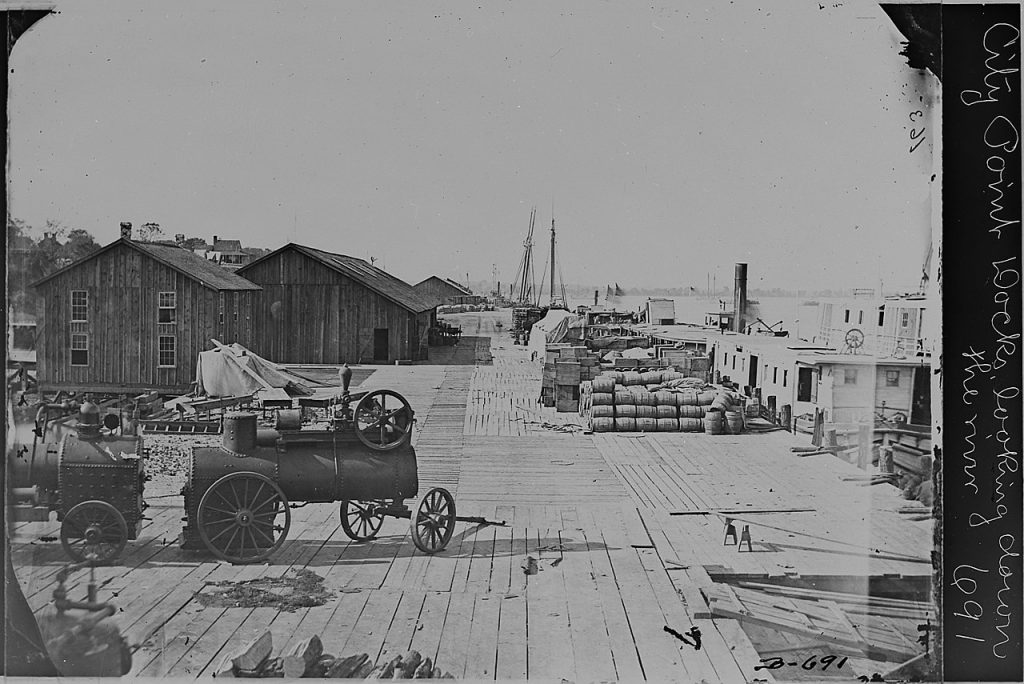
On April 23, 1865 Gustavus Gould wrote to his father after an arduous march from Petersburg back to City Point, Virginia. Despite his tiredness, he was excited by the prospect of soon being discharged.
“Well we have had a pretty hard march. We started from Burksville last Thursday morning about daylight, marched from daylight till dark everyday. Today is Sunday. We marched about 80 miles in 4 days. We got here about 3 o’clock today. We have camped here for the night. I expect we shall take the boat and go to Washington. That is the report. It is getting dark and I must close till morning.
April 24th—I will try and finish my letter this morning. I am well and feel first rate this morning. after the march I was pretty tired. Last night the order has come for us to take the transport at 2 o’clock today and go to Washington. The whole Corps is a going there. When we get there, I don’t know what will be done. A good many think we are a going home on discharged furloughs and some think we go South to Texas or some other place but none of us know where we shall go. I don’t think it would be strange if we should come home but I shan’t be disappointed. Let them go where they will.”
Gustavus Gould’s final letter was written from Alexandria, Virginia on April 29, 1865.
“We arrived here yesterday. We had a very good time on the boat coming from City Point here. We was two nights and one day on the boat.
I received your letters of the 21st and 23rd yesterday. We are getting good news here today. If it is true, I shall be at home before long. The paper states that the army is to be discharged as soon as possible. The 1st Division of the 9th Corps is at Washington and they are mustering them out as fast as possible. The 2nd Division comes next—that is ours. I need not write anymore about it for you will see it in the papers. We don’t have anything to do here except to eat and keep ourselves clean. I think we shall be mustered out before long. I think I shall be at home to go to the 4th of July at any rate.
We was mustered today for pay. They have made a hell of a mistake about my pay and if they don’t find out, I shall come out pretty well. I saw the pay rolls and they hadn’t got anything charged to me excepting what I was paid at Burlington. There is $240 dollars due me on the pay rolls bounty which ought to be 160. They hadn’t got any monthly pay charged to me. If they don’t find it out, I shall get a pretty good haul. I am acquitted of desertion and 32 dollars stopped to pay expenses of arrest.”
Gustavus Gould and the rest of the 17th Virginia Infantry musted out on July 14, 1865. He married Mary H. Adams after the war and lived in Montpelier, Virginia. He died in 1910.
We’d like to give a special thanks to William Griffing of Spared & Shared for his work in transcribing and sharing these letters.
To read more of Gustavus Gould’s letters as well as thousands of other Civil War letters and documents, sign up for a Research Arsenal membership.
If you enjoyed this article, check out some of our other highlighted collections like Theodore Vaill of the 2nd Connecticut Heavy Artillery, and Henry Chandler Smith of the 1st New York Mounted Rifles.
