
Research Arsenal Spotlight 44: Kimball Pearsons 10th New York Cavalry
Kimball Pearsons was born in Collins, New York, on October 11, 1831, to Amos and Mary (Bartlett) Pearsons. Amos died in 1850 and Mary died in 1859. Kimball Pearsons married Elizabeth “Betsey” Harris on July 4, 1861. Sadly, Betsey Harris died not long afterward of tuberculosis on June 1, 1862. Her death and Kimball Pearsons’ grief led him to enlisting in the 10th New York Cavalry shortly afterward on August 28, 1862.
Serving alongside Kimball Pearsons in Company L of the 10th New York Cavalry was his close friend Joseph Matthews. Together, Kimball Pearsons and Joseph Matthews sent over a hundred letters back home, mostly to Kimball’s sister, Harriett, and her husband William Press. Also frequently mentioned in the letters are Harriett’s young daughters, Ida and May Press.
Kimball Pearsons at Elmira, New York
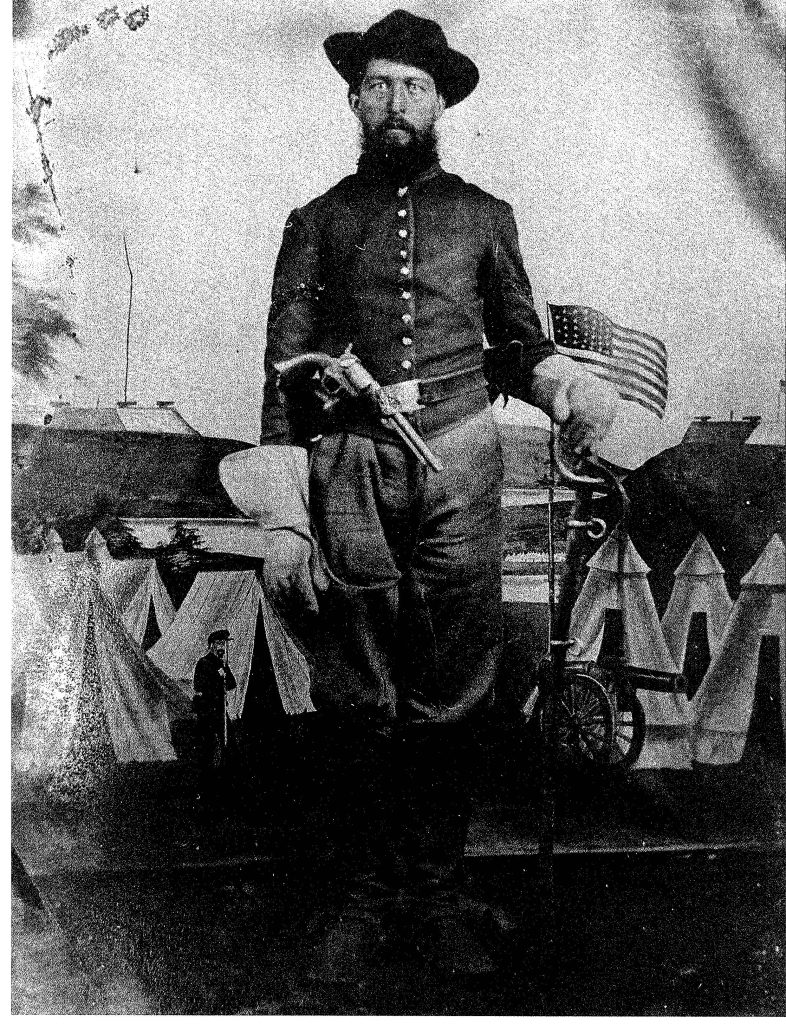
The 10th New York Cavalry was initially organized at Elmira, New York, on September 27, 1861. However, three additional companies were later organized the following year and it was the eventual Company L that Kimball Pearsons became a part of. Kimball Pearsons’ letters in this collection begin on September 12, 1862 in Elmira where the three new companies were still being organized.
On October 12, 1862, Kimball Pearsons wrote to his sister and gave her a description of how he and the other men passed the time while they waited for their company to obtain the necessary number of recruits.
“Maybe you would like to know how I have passed the day. Well in the first place I got up and washed me in a few minutes, formed in line with the rest for roll call. Then came breakfast then a few 12 or 16 played a game of ball. Then an hour or so of drill then Bela Dexter cut my hair, and I cut his, and Daniel Brown’s, then sat around and lazed around till dinner time. Then we played two games of ball after dinner, drilled an hour and lazed around until supper time. We had Potatoes, beef coffee bread and butter for breakfast, Pork & Beans beef & bread and water for dinner, Pudding and Rice and Milk and Butter for Supper, and this evening I am writing for you. We have dancing in our shanty about every other night. One of our company has a fiddle. Some play Chess some Checkers, some cards some read and some do what they are a mind to every day.”
Kimball Pearsons remained in Elmira until October 30, 1862 when he and the other recruits started south toward Virginia.
Kimball Pearsons at Fredericksburg, Virginia
In December, 1862, the 10th New York Cavalry were at Fredericksburg, Virginia. Kimball Pearsons and the rest of his company were serving as escorts and bodyguards to General William Farrar Smith and his staff. On December 15, 1862, Kimball Pearsons wrote a letter describing the recent fighting.
“Early in the morning we followed Gen. Smith & Staff to within ½ mile of the river and were stationed behind a hill where shells could not hit us. (this was the 11th) Some of our artillery was on the hill in front of us, and Shelled the woods and houses on the other side and our men Succeeded in putting a pontoon bridge across, and after Sundown there was a force of Infantry, Cavalry & Artillery thrown across and established their pickets lines about a mile from the river. This was on the left wing Franklins Grand Division 2 or 3 miles below Fredericksburg. In the latter part of the night and the next day which was the 12th most of the remainder of the troops crossed. There was some Shelling from both sides to day. The right wing which is above Frederick. and the Center at Frederick. also effected a crossing the 12th I commenced acting as Orderly for Capt. Scofield Gen. Smiths Commissary. We rode some 10 or 12 miles back to order up a herd of 160 head of cattle. Then back, and crossed the pontoon bridge to stay at Gen Smiths Head quarters, and directly Gen Burnside and a dozen or more Generals came across & Gen Smith and Staff myself included rode nearly the whole length of our lines, (I mean Franklins Division). This was after sundown, we then camped in a chestnut grove & Capt & I started before light and rode where we did the day before. O! I forgot, last night soon after we crossed the bridge a piece of shell struck within a rod of me.”
Kimball Pearsons continued his description of the battle on Saturday, December 13.
“The Battle raged fiercely all day and I don’t hear whether we [had] very decisive result on either side. At night as we were riding back to Head Quarters when within a mile of the river 8 shells struck close to us the nearest about 4 rods off. The made me scrunch a little. Yesterday and to day I am on the same route as the two days before. Some of our company have been where the bullets & shells flew so thick that they had to lie down. But I don’t hear as any of our company have been hit yet.”
Kimball Pearsons also updated his family about Joseph Matthews who had some close calls during the fight on Sunday.
“There was not much fighting nor there is not much today. Joe stayed on the other side of the river since we first went over yesterday. He said a shell struck within 10 feet of him. Twas in the grove where we slept. He said they flew thick among the tree tops and he and lots more skedaddled behind a stone barn. Joe and I are not together from before light in the morn till after dark at night. Our, or the line of battle must extend some 4 or 6 miles this is my measurement. I have several times been on the hill this side of the river where I could see the whole line of the Rebs are on elevated ground from where our Infantry and Artillery are but we have batteries on the hills on this side of the river which can reach any of their batteries. Frederick. has been shelled and set on fire in several places. The inhabitants all left.”
Continued Fighting by the 10th New York Cavalry
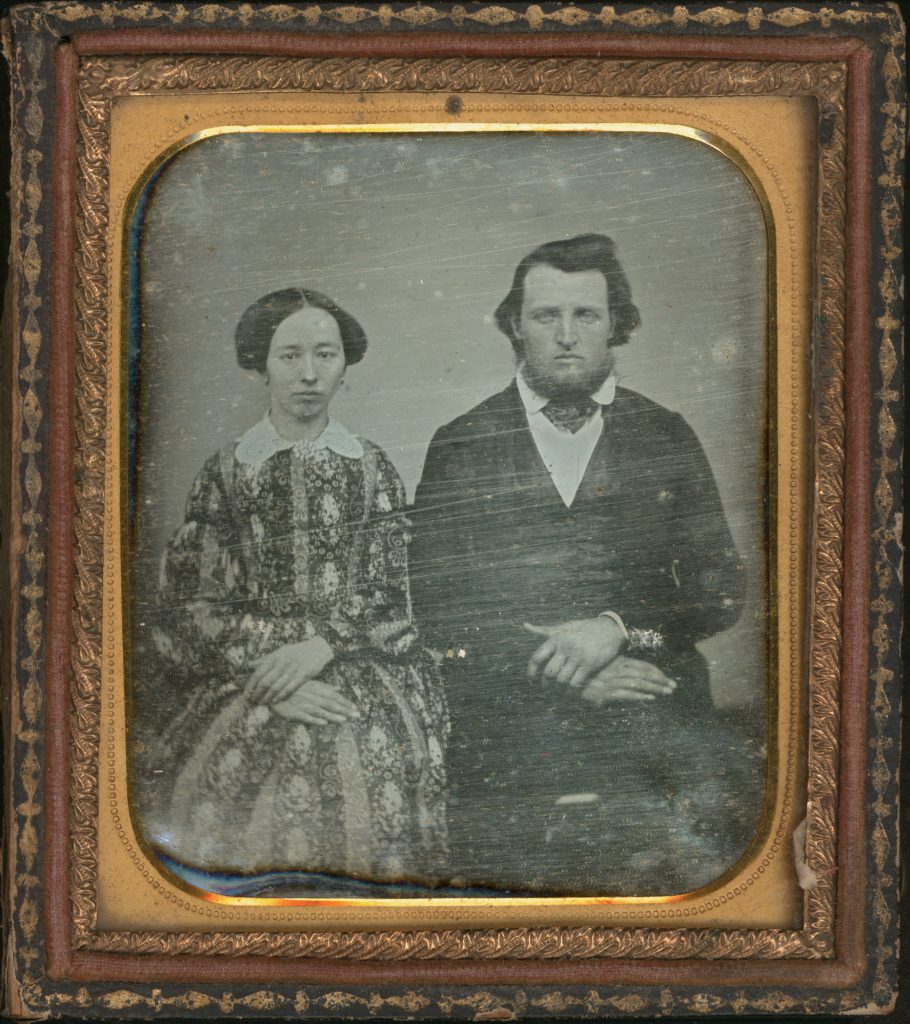
The 10th New York Cavalry fought in many battles and skirmishes throughout 1863 and 1864, including the Battle of Gettysburg. However it was at the Battle of Haw’s Shop, Virginia, in May, 1864, where Kimball Pearsons said he faced the hardest fighting of the war. He first wrote about the battle the day after it happened, on May 29, 1864.
“Yesterday the 28th we fought the enemy dismounted in the woods, both Divisions of our cavalry, we were all day fighting in the woods & between 3 & 4 PM we drove them 2 miles then halted & established a line & thew up small abatises (I guess that is the name) of logs & rails to get behind but the rebs did not advance on us again. Our regt lost 11 killed 27 wounded & 3 missing, and 2 Officers wounded making 43 in all. Sergeants John Vail of Collins Centre & — Baker of North Collins or near Shirley are both dead. Baker was shot dead. Vail was shot through the right lung and died last night. Our co had 4 wounded. I don’t know of any others that you would know that are hurt. I fired over 50 rounds at the rebs yesterday, twas as hard a days work as I ever done. I was completely tired out long before night but stayed on the skirmish line till after dark when we were withdrawn and moved back a few miles leaving our Infantry in front of us. We fought dismounted cavalry troop who had just come from S. Carolina & Georgia. I am all right, only being hit with a spent ball on my boot which did no damage.”
Kimball wrote another description of the battle on June 4, 1864 in a letter home to Harriett and William Press.
“I have been in four battles since we crossed the Pamunkey the last time the 28th was a hard fight with the cavalry, we fight in the weeds dismounted. Can’t get the Chivalry into an open field and so have to fight them where we can find them. I fired over 50 carbine shots at them the 28th while on the skirmish line (I don’t know but I wrote this before), some days lately we have fought all day then built breast works all night. I never knew what it was to be tired till I soldiered it; we laid still yesterday & are quiet now at nine oclock this morning. If I ever get out of this I can tell tales that would make a home guard shudder. I came down here to shoot rebs & I have had a good many shots at them with an excellent gun & Wm. you know whether you would like to have even so poor a marksman as me shoot at you with a rifle that will carry ½ a mile when you were 6, 10, or even 100 rods off.”
Sadly, Kimball Pearsons was killed just a week after this letter was written at the Battle of Trevilian Station on June 11, 1864. Lieutenant Frederick A. Gee of his company wrote to Harriett and William Press to let them know Kimball Pearsons final words.
“I asked him what I should tell his friends, he said “You know how I have done my duty and know what to say to them.” Tell my comrades said he, ‘To do their duty as I have done mine.’
‘I am glad I enlisted, hope our cause may succeed and firmly believe it will and that slavery will be done away with and that the old flag will again float over an undivided country, and that the result of the war will be to make us a more free and prosperous nation.’ In speaking of death he said, ‘Were it not for this terrible pain it would be pleasant to die.’ In speaking of the future he said, ‘I think different from many but believe that my spirit will live on and that I shall be happy.’ He requested me to remember the place where he fell and also where he was buried, which, no doubt, have already been described to you by Sgt. Washburn. He lived two hours after he was wounded and died at 6 P.M. was perfectly conscious to the last moment, knew and said he knew he could not live and expressed no regrets whatever, and no man was ever more reconciled to his fate or more composed than he.”
Kimball’s statement, “I think different from many but believe that my spirit will live on and that I shall be happy,” is likely a reference to his spiritualist beliefs which were also shared by his sister Harriett. Throughout his time in the service Kimball Pearsons was an avid reader of the spiritualist newspaper, the “Banner of Light”, which Harriett mailed him.
The more than 100 letters in the Kimball Pearsons collection were made possible through the generous donation of David B. Russell who allowed the Research Arsenal to digitize these letters in conjunction with St. Bonaventure University. His book, “Tough & Hearty: Kimball Pearsons, Civil War Cavalryman, Co. L, 10th Regiment of Cavalry, New York State Volunteers,” contains transcriptions of most of Kimball’s letters, as well as diary entries and a history of Kimball Pearsons’ family.
To read all of Kimball Pearsons’ letters as well as thousands of other Civil War letters and documents, sign up for a Research Arsenal membership.
If you enjoyed this article, check out some of our other featured collections like Joseph Maitland of the 95th Ohio Infantry and Henry Cole Smith of the 8th Connecticut Infantry.
