
Research Arsenal Spotlight 80: Perry Farlow 29th Wisconsin Infantry
Perry Farlow was born in 1842 to Alfred and Anna Marie (Taylor) Farlow of Dodge County, Wisconsin. He enlisted in Company K of the 29th Wisconsin Infantry on August 21, 1862. The regiment was organized at Camp Randall in Madison, Wisconsin, and mustered into United States service on September 27, 1862.
The 29th Wisconsin Infantry at Camp Randall
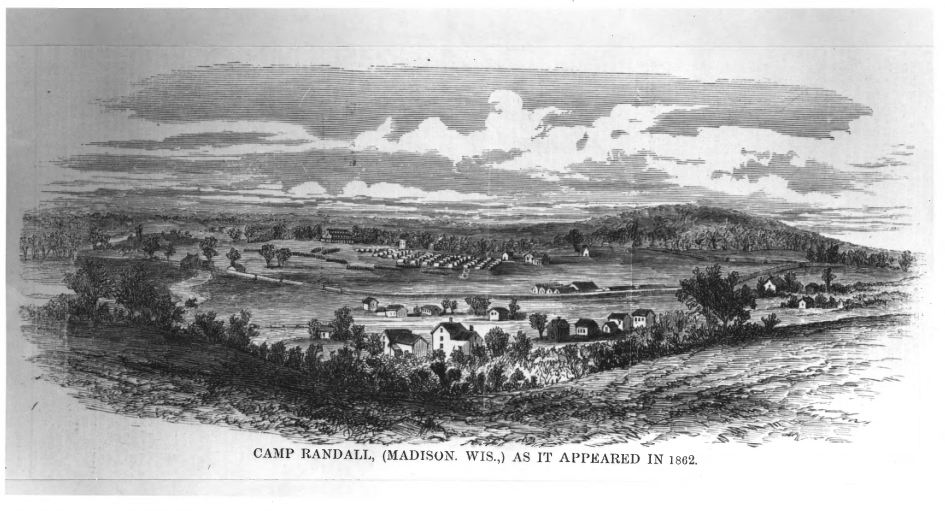
Perry Farlow began his letters while the 29th Wisconsin Infantry was still organizing at Camp Randall. Before leaving for the south, he was eager for his loved ones to visit and see him off. On September 4, 1862, he wrote a very short note to his mother asking her to let him know if she was coming.
“I wish you would make me a small party next Saturday as the Captain will not let us off any other night except Saturday and if you will ask the boys to come, let me know how many to ask and send back word by Robert McCracken and oblige your much loved son.”
On October 14, 1862, the 29th Wisconsin Infantry was still at Camp Randall and Perry Farlow again asked his family to come.
“I got through all right and drawed my overcoat and pants after I got here and am going to draw our undercoats and knapsacks tomorrow. Our guns will be here in a few days. And if you want to see us before we go, you will have to come down here right off for we will not stay here more than a week, if we do that. Our cooks had orders last night to cook three days rations so to be ready to start but I don’t think we will go inside of a week. But the Colonel said we would not stay here more than ten days more, if we do that. And I wish you would come out here and tell the folks round there to come for I have not got time to write to all of them.”
Perry Farlow in Arkansas
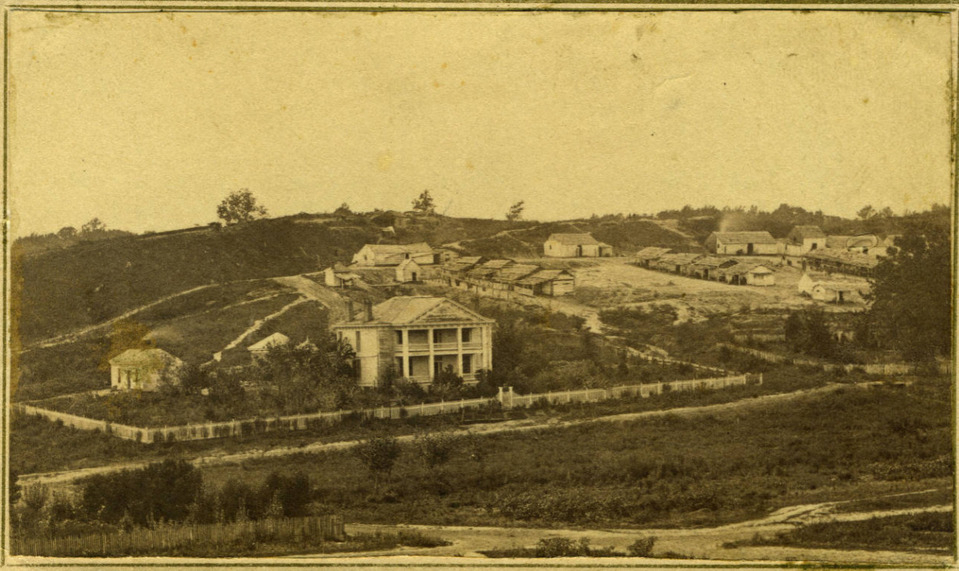
When Perry Farlow next wrote home to his parents, it was from Arkansas. On November 9, 1862 he detailed the regiment’s travel south.
“It is Sunday once more but if I had not heard someone say [it], I would not know from the way things go round here. We do not have any Sundays here in camp, It is an awful wicked place for a man if he does not look out for himself. I will not tell you the whole story from Camp Randall here for I wrote the whole thing in Frank’s letter and told him to let you read it and so I begin where I left off in his letter for I have got a good deal of writing to do and I want to do it today.
As I said, we got here in the morning just at sunrise. It was a nice day and we had nice weather all the way down here. We landed in Helena, Arkansas, but there was a good many men on that side of the river and the Colonel thought it would be better to cross where there was not any and so we are on the opposite side from Helena and all alone. But we expect two or three more regiments in a few days. We did not get off the boat till most noon that day and then we went to work and cleared off the camp ground and a little before sundown. We got our tents and set them up and was ready for sleep for the first time in Rebeldom for we did not sleep much on the boat for it was so cold we could not.
Talk about going south to a warmer climate—it is a little warmer in the daytime but it is not any warmer at night. But the first night I was here I slept pretty good and in the morning I found out that I had to go out as Corporal of the Picket Guard and had to go up the river three miles. There was 29 out six of the companies that had to go up there so we had quite a little army with us. We went up in a boat. Our company was the first to come on [duty]. We went on from eight till ten and then we did not have to go on again till 8 o’clock at night.”
In November, part of the 29th Wisconsin Infantry was sent on an expedition up the White River but Perry Farlow was selected to stay behind, as he wrote in a letter dated November 20, 1862.
“There has 400 out of our regiment gone from here. I don’t know where they have gone to. Kib went with them. The Captain would not let me go but maybe it is just as well for I think the boys will smell powder before they get back. There was 8 thousand went from the other side of the river. They left last Saturday night about five o’clock. They went down the river.”
In the same letter he detailed what had occurred on a recent picket duty.
“I have not been sick a day since I enlisted and I never felt better in my life than I do now. We have pretty hard times standing picket since the boys went away. The last time I was on picket, I took one guerrilla and fetched him into camp and yesterday there was two came in under a flag of truce. Their business was to go across the river to exchange prisoners.”
On November 23, Perry Farlow wrote about the results of the expedition when the regiment returned.
“The boys that went out on that expedition have got back. They went down to White River and the river was so low they could not go up. They was calculating to go up White River to Little Rock but they could not and so they had to come back. They said they was not off of the boat but two hours while they was gone. They was just a week. It made a good many of them sick. Mr. Perry has been sick most all the while since he was gone but he has got some better since he came back and there was two others out of our company that had to be carried from the boat to the hospital on a bed. There is three out of our company in the hospital and a few more that is not very well. But if the boys had stayed down there another week, there would have been some of them that would never come back and a good many of them sick.”
Sickness in the 29th Wisconsin Infantry
Perry Farlow’s comments about the many men sickened during the expedition hinted at more trouble to come, though at the time Perry Farlow didn’t understand the gravity of it. On November 30, 1862, he wrote home about Thanksgiving celebrations at the camp and mentioned the camp’s source of water.
“I suppose you had great times up there last Thursday Thanksgiving and talked a great deal about us and wished we had some of your victuals to eat but we did not think so for we have plenty to eat and good river water to drink. It is a little muddy but that is nothing as long as it tastes good. It is better than the spring or well water is down here. We have beans and rice every day and sometimes potatoes and plenty of hard crackers. We are going to have flour so we can make bread and pancakes now. We have eat all together till day before yesterday when we divided up in squads of twenty-four each which I like much better.”
Contaminated water was a major source of illness throughout the war it is likely the river water Perry Farlow described as “a little muddy” was also more than a little unhealthy.
On December 9, 1862, Perry Farlow wrote home and listed some of the men in his company who had gotten very sick.
“There is several of our boys that are unwell and some that are very sick. B[enjamin L.] Hales, Mr. [Sumner G.] Sanders, Simon [A.] Terwilliger, [and] J[ames] P. Tripp is in the hospital and [Samuel] James Hodge is in there too. There was one of our boys died tonight a little after four o’clock. He was well and up round last Friday and Sunday night he went to the hospital and tonight he died. His heart was affected. His name is John Nash. You can see that record. He is as good a boy as there is in the camp. Mr. [William V.] Perry is very sick. I don’t know what ails him. Alvin [W.] Hamilton has got the measles. He was taken with them last Sunday.”
Not long after, Perry Farlow himself became sick with typhoid, a disease that spreads through contaminated food or water. On January 30, 1863, Perry was too sick to write a letter himself, so Sergeant Kilburn Clifford wrote to his family for him instead.
“Mr. Farlow, Sir,
It is with regret that I seat myself this morning to write you a few lines for Perry. He don’t get no better as I can see. He wanted that I should write to you for he was not able and let you know all about it. I tell you, sir, it is a hard place to be sick in. Even the sick that are in the hospital have to lay on the ground—only one blanket under them for three or four days after we have been moving. One thing certain, the more medicine one takes from our doctors, the worse they are off. I don’t know [what] the trouble is with Perry but I should think that he has got a fever of some kind.”
Less than a week later, on February 5, 1863, Perry Farlow died. In all, the 29th Wisconsin Infantry lost 3 officers and 242 enlisted men to disease during the war.
We’d like to give a special thanks to William Griffing of Spared & Shared for his work in transcribing and sharing these letters.
To read more of Perry Farlow’s letters and access thousands of other Civil War letters and documents, sign up for a Research Arsenal membership.
If you enjoyed this article, check out some of our other featured collections like Joseph Patterson of the 90th Pennsylvania Infantry and Mahlon Thatcher of the 40th Massachusetts Infantry.
