
RG 94 Spotlight: 49th Indiana Infantry
The Research Arsenal is proud to be digitizing and adding historical records of Civil War regiments held at the National Archives to our online database so that researchers and historians can access material that previously required a trip to Washington D.C. The 49th Indiana Infantry is one of the many regiments that has been added to our database.
The 49th Indiana Infantry: From the Mountains of Kentucky to the Gulf Coast
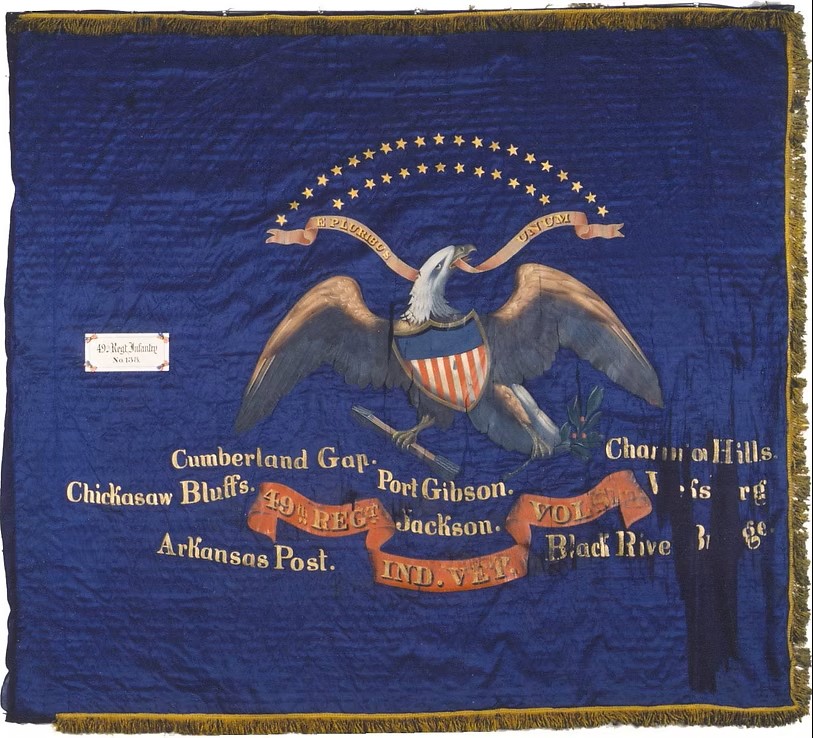
When the Civil War erupted in 1861, Indiana answered President Abraham Lincoln’s call for volunteers with remarkable enthusiasm. Among the regiments raised was the 49th Indiana Volunteer Infantry, organized at Jeffersonville and mustered into Federal service on November 21, 1861, under the command of Colonel John W. Ray. During nearly four years of service, the regiment marched thousands of miles through Kentucky, Tennessee, Mississippi, Louisiana, Texas, and finally back to Kentucky. Its soldiers endured disease, difficult marches, mountain campaigning, major battles, lengthy sieges, and occupation duty before finally returning home in September 1865. Although the regiment lost relatively few men in combat compared to some units, disease proved to be a relentless enemy, claiming nearly five times as many lives as Confederate bullets.
Learning Soldiering in Kentucky
The regiment’s first months were spent learning the routines of military life in Kentucky. After leaving Indiana in December 1861, the 49th established camps near Bardstown before moving toward Cumberland Ford, where Union forces sought to secure the strategic Cumberland Gap region. The harsh winter weather quickly became one of the regiment’s greatest adversaries.
One of the best surviving accounts from this early period comes from Captain John Alexander Ritter of Company G, whose wartime correspondence provides a vivid glimpse into camp life. Writing to his wife Margaret on February 16, 1862, Ritter described moving camp after a heavy snowfall:
“The snow fell about 4 inches deep night before last. We shook the snow off of our tents as best we could… At our new camp we had to scrape off the snow. We went up on the side of the mountain, got a lot cedar brush and put over the ground which looked very well.”
The simple description reminds readers that campaigning involved far more than fighting. Soldiers spent countless hours building camps, gathering firewood, constructing shelters, and trying to remain warm and healthy in miserable weather.
Witnessing the Cost of War
Stationed near the Tennessee border, the 49th Indiana quickly encountered refugees and Union sympathizers fleeing Confederate-controlled territory. Ritter’s letter conveys both his outrage and his belief that the conflict had become a struggle over justice as much as military victory.
He wrote:
“If there is a just God, the day of vengeance is not far ahead.”
Describing stories he had heard from loyal Tennesseans, Ritter continued:
“The tenth part has never been told… Men have been hung… Women have been shamefully treated. When oh when shall these things cease? My prayer is for my country that I love.”
Whether every story was accurate or reflected wartime rumor, Ritter’s words reveal how Union soldiers interpreted the conflict. Many increasingly viewed the war not merely as a campaign to preserve the Union but as a moral struggle against rebellion and violence.
The Cumberland Gap Campaign
Throughout the spring and summer of 1862, the regiment participated in operations surrounding Cumberland Gap, one of the most strategically important mountain passes in the Appalachians. Union control of the Gap promised easier movement between Kentucky, Tennessee, and Virginia. Although major battles were relatively few during this campaign, the soldiers faced exhausting marches across rugged terrain. Poor roads, steep mountains, shortages of supplies, and constant exposure proved nearly as dangerous as Confederate fire. Disease spread rapidly through the camps, becoming the regiment’s deadliest foe during its service in eastern Kentucky.
Into the Mississippi Valley
Late in 1862, the 49th Indiana was transferred west to participate in operations along the Mississippi River. The regiment joined Major General William T. Sherman’s Yazoo Expedition and fought in the unsuccessful assault at Chickasaw Bayou in December. Only weeks later, however, Union fortunes improved dramatically. In January 1863, the regiment helped capture Fort Hindman during the Battle of Arkansas Post, an important Confederate stronghold that had threatened Union river traffic. The victory boosted morale and prepared the army for the larger campaign that would soon determine control of the Mississippi River.
The Vicksburg Campaign
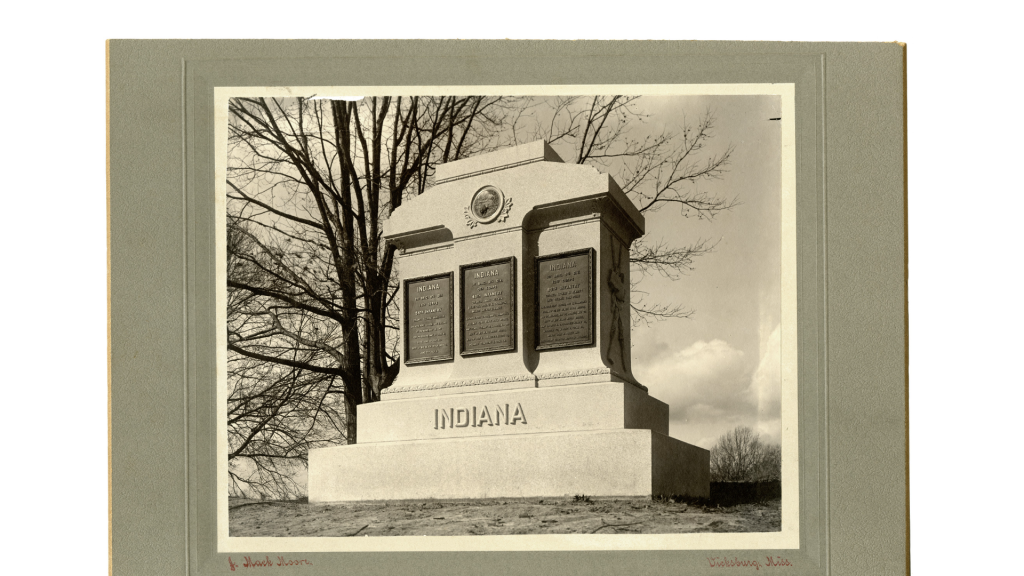
The defining chapter of the 49th Indiana’s wartime service came during General Ulysses S. Grant’s Vicksburg Campaign in the spring and summer of 1863. The regiment crossed the Mississippi River with Grant’s army and fought in several of the campaign’s decisive engagements, including Port Gibson, Champion Hill, and Big Black River Bridge. These victories steadily forced Confederate Lieutenant General John C. Pemberton’s army back into the defenses of Vicksburg.
The 49th then participated in both of Grant’s costly assaults on May 19 and May 22 before settling into the long siege. For nearly seven weeks the soldiers dug trenches, exchanged fire with Confederate defenders, and endured the oppressive Mississippi heat until the city finally surrendered on July 4, 1863. The fall of Vicksburg split the Confederacy in two and secured Union control of the Mississippi River, making it one of the Civil War’s greatest strategic victories.
Service Along the Gulf Coast
Following the victory at Vicksburg, the regiment transferred to Louisiana, where it spent months performing occupation and expeditionary duty. During the Western Louisiana or “Teche” Campaign, the men conducted marches across difficult terrain before moving to Texas late in 1863. The soldiers spent several months stationed on Matagorda Island and near Indianola, helping secure the Gulf Coast against Confederate activity. In 1864 they returned to Louisiana to participate in the Red River Campaign, including fighting at Graham’s Plantation before withdrawing with Union forces after the campaign failed to achieve its objectives.
Veteran Service and Final Muster Out
Many members of the regiment reenlisted as veteran volunteers during 1864, earning a furlough home before returning to active service. Rather than participating in Sherman’s march through Georgia, the 49th spent its final months performing garrison duty in Kentucky, protecting transportation routes and maintaining order until the war officially ended. The regiment remained on duty for several months after Confederate armies surrendered before finally mustering out at Louisville on September 13, 1865. By that point, its soldiers had served almost four full years across much of the Western Theater.
Remembering the 49th Indiana
The service record of the 49th Indiana reflects the experience of many Western Theater regiments. While famous battles such as Vicksburg occupy an important place in its history, much of the regiment’s service consisted of long marches, camp life, occupation duty, and simply surviving the hardships of military service.
Captain John Ritter’s letters help preserve the human side of that experience. His observations about snowy camps, weary soldiers, and the suffering he believed civilians endured remind us that the Civil War was lived one day at a time by ordinary men trying to fulfill extraordinary duties.
The regiment paid a heavy price for that service. During the war, 1 officer and 40 enlisted men were killed or mortally wounded in combat, while 3 officers and 192 enlisted men died from disease, for a total loss of 236 men. Their sacrifice serves as a reminder that illness often proved as deadly as the battlefield itself, particularly in the armies operating across the South’s harsh climate and difficult campaigning conditions.
Sources
The Research Arsenal is proud to hold 580 digital scans of the 49th Indiana Infantry’s regimental history on its database. These consist of over 550 pages of material from the National Archives Records Group 94 files. These include a Regimental Descriptive book, Morning Report book, and Regimental Order books. Visit the Research Arsenal, click on “Search NARA Records” then select “RG94” and “49th Indiana Infantry” from the drop-down menus. In addition, the Research Arsenal contains letters, and other forms and documents relating to the 49th Indiana Infantry.
- National Park Service. 49th Regiment, Indiana Infantry. https://www.nps.gov/civilwar/search-battle-units-detail.htm?battleUnitCode=UIN0049RI
- Indiana in the Civil War. 49th Indiana Infantry. https://sites.rootsweb.com/~inscott/49thIN.html
- Spared & Shared. 1862: John Alexander Ritter to Wife. https://sparedandshared19.wordpress.com/2019/06/20/1862-john-alexander-ritter-to-wife/
- CivilWarIndex.com. 49th Indiana Infantry in the American Civil War. https://civilwarindex.com/in-049th-infantry/
