
RG 94 Spotlight: The 76th Ohio Infantry
The 76th Ohio Infantry: A Regiment Forged in the Western Theater
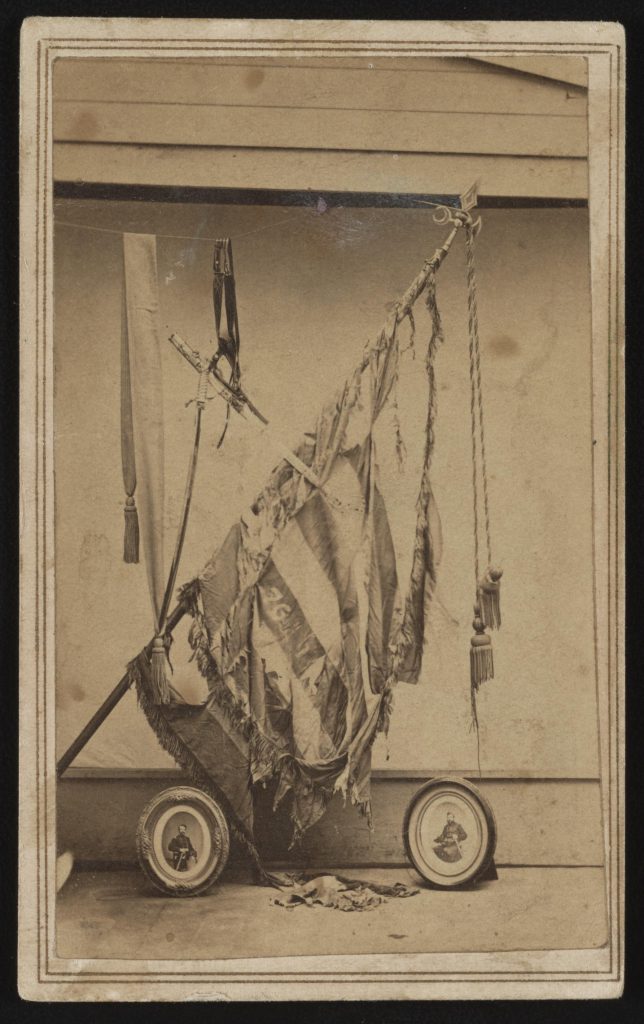
The Research Arsenal is proud to be digitizing and adding historical records of Civil War regiments held at the National Archives to our online database so that researchers and historians can access material that previously required a trip to Washington D.C. The 76th Ohio Infantry is one of the many regiments that has been added to our database.
The 76th Ohio Infantry Regiment was one of the many volunteer units raised in Ohio during the early months of the American Civil War. Organized in late 1861 and early 1862, the regiment served almost entirely in the Western Theater and became part of General William T. Sherman’s veteran army. Over the course of the war the men of the 76th Ohio fought in some of the most significant campaigns of the conflict, including Shiloh, the Vicksburg Campaign, Chattanooga, and Sherman’s later operations across the South.
Their story is preserved not only in official records but in the vivid recollections of the soldiers themselves. Through memoirs and personal narratives we can glimpse the hardships, dangers, and emotions experienced by the young men who marched under the regiment’s banner.
“Boys” Who Became Soldiers
The 76th Ohio Infantry was largely recruited in Massillon and surrounding communities in Stark County, Ohio. Like many Civil War regiments, it was composed primarily of very young men. One veteran later reflected on the youth of the soldiers who filled its ranks:
“Glancing over their muster roll… one would be impressed with the large proportion only eighteen years old… I have felt safe to conclude that the average age of all the volunteers in this company during the war did not exceed twenty years.”
Many of these recruits had come directly from farms, schools, and small-town businesses. They had little military experience when they enlisted, yet they quickly found themselves thrust into a vast and brutal war. Despite their inexperience, the soldiers remembered their comrades with admiration. According to one recollection, the company consisted of:
“An intelligent, steady, sturdy lot of men—‘boys’ most of them would be called at home.”
Learning War the Hard Way
The regiment quickly entered the active campaigns of the Western Theater. Early operations in Tennessee and Mississippi included participation in the campaigns surrounding Fort Donelson, Shiloh, and Corinth. For the new soldiers, the transition from civilian life to army life was abrupt and often confusing. Military organization was still evolving, and many mistakes were made in the early stages of the war. One soldier later summarized the learning curve faced by the Union army:
“Everything had to be learned—mostly through dearly bought and disastrous experience.”
Early in the war, soldiers were burdened with heavy equipment and large wagon trains filled with supplies and tents. As the conflict continued, the army learned that mobility was far more important.
A veteran recalled the transformation that occurred as the war progressed:
“One has but to compare the soldier of the earlier period… expecting the government to make his life comfortable, with the same individual a year or two later… content to possess a change of clothing, a blanket or rubber poncho, a meal of bacon and hard-tack in his haversack and a bed of leaves or fence rails.”
These hardships gradually turned inexperienced recruits into seasoned veterans.
Camp Life and Army Equipment
The daily life of the infantryman was physically demanding. Each soldier carried a large amount of equipment, including clothing, rations, ammunition, and bedding.
A soldier from the 76th Ohio described the standard equipment carried by a Union infantryman:
“Clothing consisted of a dark blue blouse, light blue pants, forage caps, low broad-soled shoes… Each soldier carried a gray woolen blanket and a rubber blanket. Food was carried in an oilcloth haversack… and water in a round, flat tin canteen.”
Their early weapons were heavy Belgian rifles that were unpopular among the troops. One soldier remembered them vividly:
“Our first guns were old second-hand Belgian rifles… short, heavy, clumsy arms with a vicious recoil… they always let us know without question when we fired them, for mine kicked hard enough to bruise my shoulder.”
Eventually the regiment received new Springfield rifles, which were far more accurate and reliable.
Hardship on the Mississippi: The Vicksburg Campaign
One of the most important chapters in the history of the 76th Ohio came during the Vicksburg Campaign of 1863. Before the final assault on the Confederate stronghold, the regiment spent months encamped in unhealthy swampy ground near the Mississippi River. Conditions at Young’s Point were miserable and dangerous.
One soldier remembered the gloomy environment:
“Sanitary conditions were unhealthy to an extreme from lack of good drinking water, bad drainage, and malarial surroundings… The whole atmosphere of the place was gloomy and depressing.”
Disease took a heavy toll. In one company alone, several men died during the short time they remained there. Despite the suffering, the soldiers continued preparing for the campaign that would ultimately seal the fate of Vicksburg.
Under Fire at Vicksburg
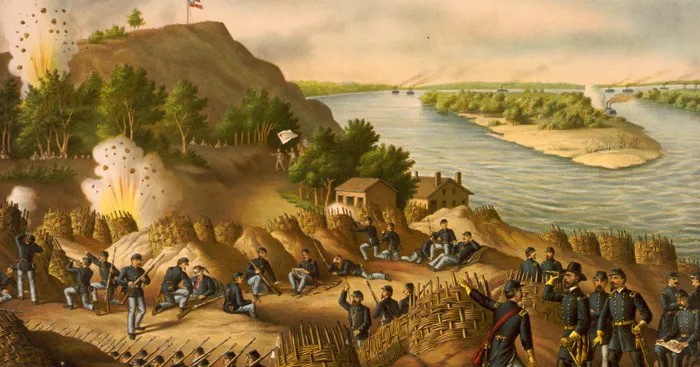
When Union forces finally advanced on the city, the 76th Ohio helped occupy the high ground overlooking the Mississippi River north of the city.
The siege exposed soldiers to constant artillery fire. One veteran described the terrifying experience of enduring Confederate shells:
“We got the benefit of the return fire… without any protection; consequently had to take some of the worst shelling we were ever under… One twenty-pounder Parrott shell scattered a rail shelter under which a quartette of our boys were playing cards, without injuring any of them.”
Another shell landed nearby while a soldier rested beneath a haystack:
“Another tore a furrow alongside a hay-rick under which one was lying… they tore the limbs off the oak tree under which I made my bed of fence-rails.”
Even with the constant danger, the soldiers developed a grim sense of endurance.
After weeks of siege, the Confederate garrison surrendered on July 4, 1863. The victory was one of the greatest triumphs of the Union war effort.
A soldier of the 76th Ohio wrote simply:
“Our exultation was unbounded at the glorious termination of our hard, long and disastrous campaigning.”
The March to Chattanooga
Soon after Vicksburg, the regiment joined Sherman’s forces in a long march to relieve Union troops trapped at Chattanooga. The march was exhausting. Roads were clogged with wagons and artillery, rain turned the ground into mud, and food was scarce. Soldiers often marched nearly without rest.
One veteran recalled the desperate hunger during this movement:
“For the last three days our haversacks were practically empty… I remember how gratefully and eagerly I ‘snailed on’ to a coarse brown biscuit I found in a haversack one of the Johnnies had thrown away.”
Despite exhaustion, the regiment reached the battlefield in time to participate in the dramatic victories at Lookout Mountain and Missionary Ridge, which drove Confederate forces from their strong positions around Chattanooga.
The Horror of Battle
Later fighting during the Chattanooga operations revealed the brutal reality of Civil War combat. One soldier described a terrible moment when Union troops advanced into heavy fire:
“They were in unobstructed and easy range of the batteries posted on the ridge… and were mowed down in swathes by the grape and canister that swept the field. It was simply murderous, and horrifying to look at, but the brave survivors closed up their ranks and kept forward.”
Scenes like this were repeated again and again throughout the war.
The Final Victory
The 76th Ohio continued serving with Sherman’s forces through the remainder of the war. When the Confederacy finally collapsed in 1865, the regiment traveled to Washington, D.C., where Union armies gathered for the Grand Review.
The spectacle left a powerful impression on the veterans who witnessed it. One soldier remembered the cheers that greeted Sherman and his battle-hardened troops:
“Who that saw it can ever forget the tremendous ovation that greeted Sherman as he appeared at the head of his column… his bronzed, travel-stained veterans filing past in company front with their faded uniforms but proud bearing.”
Shortly afterward the regiment was mustered out of service.
Reflecting on his wartime experience, one soldier concluded:
“Thus ended about as strenuous a three years’ experience as could well fall to the lot of youth. I was a veteran at nineteen.”
Remembering the 76th Ohio
Like many Civil War regiments, the 76th Ohio Infantry was composed largely of ordinary citizens who answered their country’s call in a time of crisis. Over the course of the war they marched thousands of miles, endured sickness and hunger, faced artillery and rifle fire, and helped secure Union victory. Today their voices—preserved in memoirs and regimental histories—allow us to understand the Civil War not only as a series of campaigns and battles but as a deeply personal experience lived by thousands of young men who carried the war on their shoulders.
Sources
The Research Arsenal is proud to hold digital scans of the 76th Ohio’s regimental records on its database. These consist of over 1000 pages of material from the National Archives Records Group 94 files. These include Regimental Descriptive books, Order books, Morning Reports, and more. Visit the Research Arsenal, click on “Search NARA Records” then select “RG94” and “76th Ohio Infantry” from the drop-down menus. In addition, the Research Arsenal contains photographs, letters, and other forms and documents relating to the 76th Ohio Infantry.
- Charles A. Willison, Reminiscences of a Boy’s Service with the 76th Ohio Infantry
https://ppolinks.com/lclibrary/CWHistory1.pdf - 76th Ohio Infantry Regimental History – Ohio Voyager Civil War Pages
http://my.ohio.voyager.net/~lstevens/civwar/ - National Park Service – 76th Ohio Infantry Regiment Unit Details
https://www.nps.gov/civilwar/search-battle-units-detail.htm?battleUnitCode=UOH0076RI - Ohio Civil War Central – 76th Ohio Volunteer Infantry
https://www.ohiocivilwar.com/cw76.html - 76th Ohio Infantry Regiment – Wikipedia
https://en.wikipedia.org/wiki/76th_Ohio_Infantry_Regiment
