
RG 94 Spotlight: The 89th Illinois Infantry
The 89th Illinois Infantry: The Railroad Regiment’s Hard Road from Stones River to Nashville
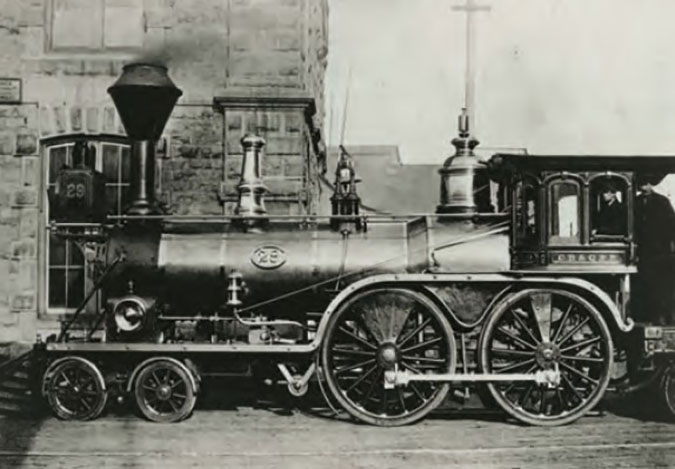
The Research Arsenal is proud to be digitizing and adding historical records of Civil War regiments held at the National Archives to our online database so that researchers and historians can access material that previously required a trip to Washington D.C. The 89th Illinois Infantry is one of the many regiments that has been added to our database.
Among the many Illinois regiments that served in the Civil War, few compiled a combat record as extensive as the 89th Illinois Infantry. Known as the “Railroad Regiment” because it was organized with the support of Illinois railroad companies, the regiment entered Federal service in August 1862 and spent nearly its entire existence in the Western Theater. From Perryville and Stones River to Chickamauga, Missionary Ridge, Atlanta, Franklin, and Nashville, the men of the 89th marched and fought across hundreds of miles of contested territory. Their story is one of endurance as much as battlefield heroism, and fortunately it survives through the letters of soldiers such as Charles C. Capron and William Harkness, whose firsthand accounts reveal what life was like inside one of the Army of the Cumberland’s hard-fighting regiments.
Organization of the Railroad Regiment
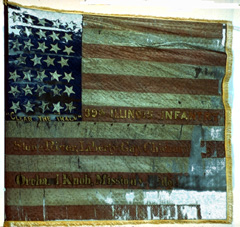
The 89th Illinois was organized at Chicago on August 27, 1862, under Colonel John Christopher and Lieutenant Colonel Charles T. Hotchkiss. It earned its nickname the “Railroad Regiment” because it was raised, funded, and heavily rostered by the executives and employees of the major Chicago-area railway companies–The Chicago, Burlington & Quincy, Chicago & North Western, and Illinois Central railroads. Many officers and enlisted men, such as Company C’s Lieutenant Joel Kinney, worked as station agents and rail operators before enlisting. The men famously stitched their motto, “Clear the Tracks,” onto their national flag.
Almost immediately after entering service, the regiment was sent to Kentucky and thrown into the campaign against Confederate General Braxton Bragg. The men had scarcely learned the routines of army life before finding themselves marching through Kentucky in pursuit of an elusive enemy. Like many new soldiers, they quickly discovered that war involved far more marching than fighting. Lieutenant William Harkness described the regiment’s early movements in a letter home, explaining that they had been “on the move all the time.” The regiment marched through Shelbyville, Frankfort, Lawrenceburg, Perryville, and Crab Orchard, often under difficult conditions and with little certainty about where the campaign would lead.
The campaign exposed the soldiers to the grim realities of war even before they entered major combat. Harkness remembered Perryville after the battle as a place overflowing with suffering. “Every house seemed to me to be filled with wounded men,” he wrote, estimating that thousands of wounded Union and Confederate soldiers remained in the town. He also described the constant struggle for food, noting that soldiers often left the ranks in search of chickens, potatoes, honey, and bread because army rations became monotonous after weeks of marching. Such observations reveal how quickly idealized notions of military glory gave way to the daily hardships of campaigning.
Battle of Stones River
The regiment’s true baptism of fire came at the Battle of Stones River at the end of 1862. Although only four months old, the 89th Illinois performed well enough that it quickly earned a reputation as a veteran organization. The cost was severe. The regiment suffered 142 casualties killed, wounded, and captured during the battle. Among the dead was Captain Henry S. Willett of Company H. Stones River demonstrated that the regiment could stand in battle, but it also introduced the men to the heavy losses that would become a recurring theme throughout their service.
For many recruits, the first experience under fire never faded from memory. One of the regiment’s most vivid chroniclers was Charles C. Capron, who enlisted in the 89th Illinois in 1863 at the age of seventeen. By joining an experienced regiment, Capron entered a unit that had already fought its way through Kentucky and Tennessee. Before his first battle at Chickamauga, he admitted his fear but also his determination to prove himself. Looking back, he recalled that on the morning of battle he took his place in the ranks “resolved to see what they done.” Those simple words capture the mindset of countless young Civil War soldiers who entered combat with equal measures of apprehension and curiosity.
The regiment continued to gain experience during the Tullahoma Campaign, including fighting at Liberty Gap, where Captain Herbert M. Blake of Company K was mortally wounded. Yet the greatest test of the regiment’s courage lay ahead at Chickamauga in September 1863. There, amid one of the bloodiest battles fought in the Western Theater, the 89th Illinois suffered devastating losses. Lieutenant Colonel Duncan J. Hall was killed, along with Captains Rice, Spink, and Whiting, Lieutenant Ellis, and many enlisted men. The regimental history later observed that Chickamauga seemed to place “the seal of its devotion” upon the regiment.
For Capron, Chickamauga was unforgettable. Years later he still remembered the terror and confusion of his first major engagement. The regiment lost 14 men killed, 88 wounded, and 30 missing. Veteran soldiers disappeared from the ranks, leaving painful gaps among comrades who had marched and campaigned together for months. The battle stripped away any lingering illusions about war and left survivors with memories that would remain vivid long after the conflict ended.
Following Chickamauga, the regiment participated in the Chattanooga Campaign. Under General August Willich’s brigade, the 89th Illinois joined the assault on Missionary Ridge. In one of the most dramatic attacks of the war, Union soldiers stormed the Confederate positions overlooking Chattanooga and drove the defenders from their works. The regiment paid for its success with additional casualties, including Lieutenant E. O. Young and Captain Henry L. Rowell. Yet Missionary Ridge helped reverse the Union’s fortunes in Tennessee and opened the door for future operations into Georgia.
Atlanta Campaign
The year 1864 proved to be the regiment’s most demanding period of service. The 89th Illinois marched south with General William T. Sherman’s army and participated in nearly every major engagement of the Atlanta Campaign. The regiment fought at Rocky Face Ridge, Resaca, Pickett’s Mill, Kennesaw Mountain, Peachtree Creek, Atlanta, Jonesboro, and numerous lesser actions. Casualties mounted steadily. Lieutenant Nathaniel Street and Captain William Harkness both lost their lives during the campaign.
Harkness’s surviving letters reveal a thoughtful and educated officer who viewed military service through both patriotic and religious lenses. Friends who knew him remembered him as a devoted Christian and respected leader. After his death near Atlanta in 1864, one comrade wrote to his family that “he was a brave man and a good soldier for his country.” The same writer added that Harkness appeared to be “full in the faith” and believed he was now reunited with his deceased child in heaven. Such letters remind modern readers that behind casualty statistics were families receiving heartbreaking news from distant battlefields.
The Atlanta Campaign inflicted some of the heaviest losses suffered by the regiment during the war. According to the regimental history, 211 men were killed, wounded, or captured during the operations around Atlanta. Yet even when not engaged in direct combat, the regiment found itself performing dangerous and essential work. Because of its railroad connections and experience, the “Railroad Regiment” was assigned important duties repairing rail lines damaged by Confederate raids. Maintaining Sherman’s supply network was crucial to the success of the campaign, and the regiment’s work helped keep the army moving forward.
After the fall of Atlanta, the 89th Illinois was sent back to Tennessee in time to participate in the final destruction of General John Bell Hood’s army. The regiment fought at Spring Hill, Franklin, and Nashville. At Nashville, Lieutenant P. G. Taite was killed when struck by a cannonball. The battle shattered Hood’s army and effectively ended major Confederate operations in Tennessee. The regiment then joined the pursuit of the retreating Confederates before settling into winter quarters.
The Toll of War
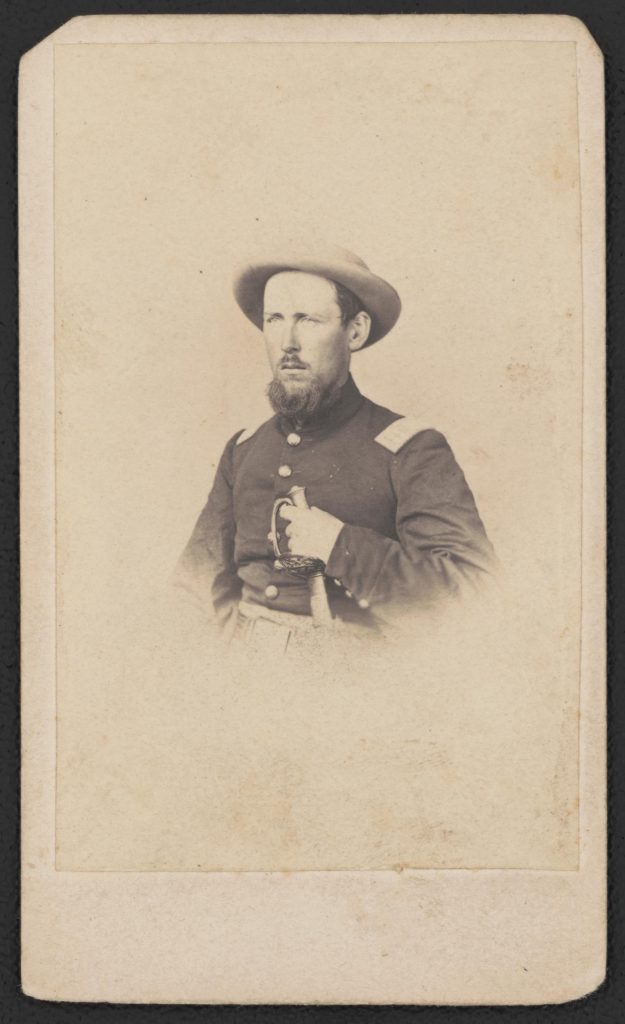
By war’s end, the 89th Illinois had accumulated a remarkable combat record. The regiment had participated in nearly every major campaign fought by the Army of the Cumberland after 1862. It had endured losses at Stones River, Chickamauga, Missionary Ridge, Atlanta, and Nashville. Out of 1,403 men who served on its rolls, only 381 remained to be mustered out with the regiment. The remainder had been killed, wounded, disabled, transferred, or otherwise lost to service. The casualty figures alone testify to the severity of the regiment’s experience.
For Charles Capron, survival brought little reward. When the regiment was mustered out in June 1865, he still had time remaining on his enlistment and was transferred to another unit. Writing home, he lamented, “The old boys has returned home and it is very lonesome here.” He feared that disease might prove more deadly than bullets, observing that “disease is some times worse than the bullet.” Tragically, his prediction proved correct. Having survived Chickamauga, Missionary Ridge, Atlanta, Franklin, and Nashville, Capron died of fever in Texas in August 1865.
Perhaps the most fitting tribute to the 89th Illinois came from Colonel Charles T. Hotchkiss, who reflected on the regiment’s wartime service after the conflict ended. “Our history is written on the head-boards of rudely-made graves from Stone River to Atlanta,” he said. Those words captured both the pride and the sacrifice of the Railroad Regiment. The men of the 89th Illinois helped secure Union victory across the Western Theater, but they paid dearly for that achievement. Their story survives not only in official records and battle reports, but also in the letters of ordinary soldiers who endured the marches, hardships, fears, and sacrifices that defined the Civil War soldier’s experience.
Sources
The Research Arsenal is proud to hold 723 digital scans of the 89th Illinois Infantry’s regimental history on its database. These consist of 708 pages of material from the National Archives Records Group 94 files. These include Regimental Descriptive books, Morning Reports, Morning Reports and Letter Books and more. Visit the Research Arsenal, click on “Search NARA Records” then select “RG94” and “89th Illinois Infantry” from the drop-down menus. In addition, the Research Arsenal contains photographs, letters, and other forms and documents relating to the 89th Illinois Infantry.
- “Been Front and Seen the Elephant,” Mississippi Confederates. (Mississippians in the Confederate Army)
- “Wading Through Blood: The Charles C. Capron Letters, Part II,” Mississippi Confederates.
- “Under Fire: ‘I Never Witnessed a Battle Field Before’,” Emerging Civil War. (Emerging Civil War)
- William Harkness Letters, Kendall County Illinois Genealogical Society. (kendallkin.org)
- 89th Illinois Infantry Regiment overview. (Wikipedia)
- Illinois Adjutant General’s Report, regimental history and casualty record (https://www.ilsos.gov/content/dam/departments/archives/databases/reghist.pdf)
