
The Importance of a Well-Documented Private Collection: Part 1
The Importance of a Well-Documented Private Collection: Part 1
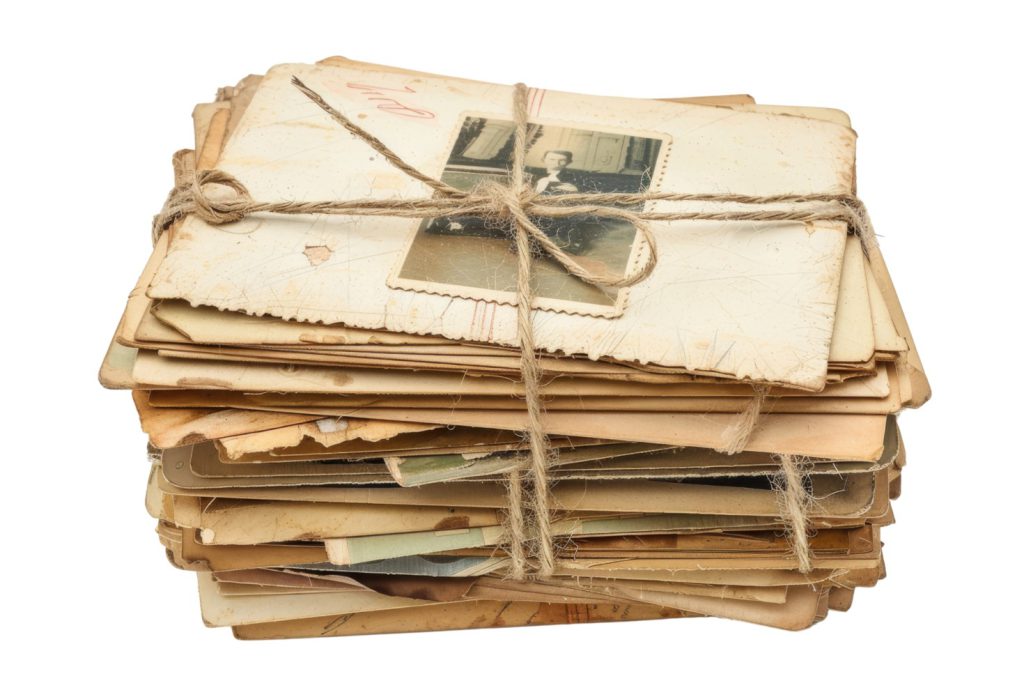
I have discussed the importance of cataloging your collection over the course of a few blog posts in the past, and today I want to highlight the importance of having a well-documented private collection.
As collectors, we often know our collections inside and out—where and when we got something, who we got it from, what we paid for it, the significance of it, why we got it, etc. But what we often don’t take into account, is that there may come a day when we can’t remember that information. And there also will come a day when we’re gone from this earth, and unless we’ve written that information down somewhere, it dies with us.
How many of you have come across an old CDV and written on the back is “mother”? Who’s mother? What was her name? That information is just plain gone. Sift through the box of vintage photos at your local antique store and you’ll find pictures like that in droves, or the ones that are just blank on the back. They often sell for only a few dollars each because the context of who these people were is totally gone. That context gave them their value. Without it, they just become random old photographs. Just for fun, I went to eBay and entered the search term “unidentified photo” and got 220,000+ results. I then input “identified photo” and got only 6,100+. Clearly, there is a problem with people losing the identifying information over time.
The same is true with objects. How often do you see the words “ID’d” or “named collection” with items in an auction listing? That always drives up the price, doesn’t it? It does, because the names add value. Now you know who this belonged to and the items take on additional meanings. Without it, they are reduced to nothing more than the physical object itself—a Model 1850 foot officer’s sword, haversack, etc.
At one time for all of these objects, they had identities. There was someone alive who knew all those people in those unlabeled photographs, and someone who knew who owned that sword and that haversack. Unfortunately, that information did not travel with the object that outlived them. This is where we as collectors need to keep information whenever it is available.
Since this is the start of a new year, it’s a good time to start keeping track of your collection information if you are not already. This month, I’ll be writing blog posts on what to keep and why, as well as the best ways to keep it.
Step 1: Collection Assessment Project
Take a look at your private collection and just broadly assess if you’ve kept any of the following: purchase info (date of purchase, from whom, for how much, etc.), any research documentation (did you look things up on your phone without saving links or copying information down anywhere?), storage location (do you know where all your items are and how they are stored?), and lastly, condition (do you know the condition of your collection items and which ones are damaged and needing conservation, or better storage?).
And one last thing, how easily were you able to find this information? Was it at your fingertips with a few keystrokes on the computer, or did you have to go digging through boxes or files? And how easily would your partner or loved ones be able to find all of this information if you weren’t there?
This is all just some food for thought as you go through and assess your private collection. But we’ll use this information as we discuss ways to begin to keep track of it all and organize it. Check back next week for the next blog (step) in this series.
