
Research Arsenal Spotlight 76: Martin Culver 16th Connecticut Infantry
Martin Culver was born in 1833 to Martin Culver and Lucy P. (Bailey) Culver of Portland, Connecticut. He enlisted in company A of the 16th Connecticut Infantry in 1862. The letters in the Research Arsenal collection were all written to his sister, Harriet “Hattie” Culver.
Martin Culver in 1862
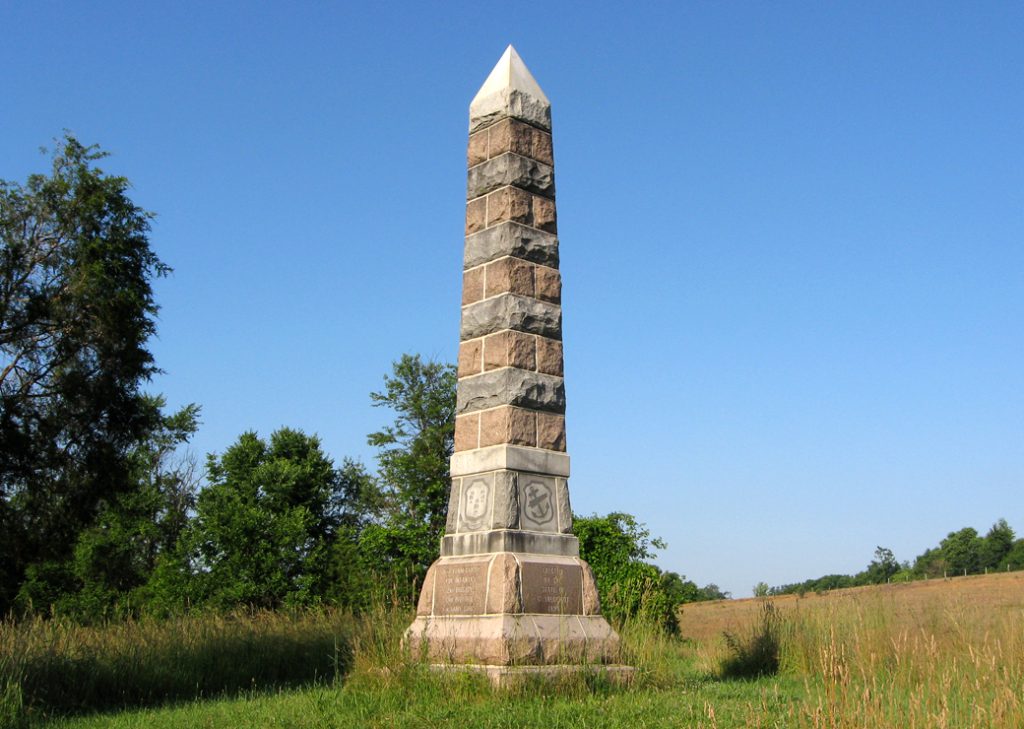
Martin Culver’s letters begin on September 10, 1862, when the 16th Connecticut Infantry was at Pleasant Valley, Maryland. Humorously, he found himself greatly annoyed at the large number of bands around him. Regimental bands had been ordered to disband by General McClellan on August 9, 1862, but evidently still remained active a month later when Martin Culver wrote his letter.
“I should like to be out of the hearing of music for one day and see if I could not hear myself think. We have got about 50 bands of different kinds all around us and they are a thrashing all the time. But that is not all. There has been heavy firing on our right center all this forenoon in the direction of Harper’s Ferry. I have not found out what forces have been engaged but I think it is part of Maeclenans [McClellan’s]. We are very strong here. We don’t know as we have got to move at present. I think that we shall not stay here much longer in this place but we may. You can’t find out anything here.”
Only a few days after this letter was written, the 16th Connecticut Infantry fought at the Battle of Antietam (Sharpsburg) where they faced devastating losses with nearly a quarter of the men killed or wounded. Martin Culver alluded to the many casualties of the battle in an undated letter believed to have been written sometime in early October, 1862, citing the many recent promotions in the regiment, including their Colonel, Frank Beach, acting as brigadier general.
“We are in Burnside’s 9th Army Corps under Brig. General [Isaac P.] Rodman. He was wounded in the Battle of Sharpsburg and our Colonel [Frank] Beach takes his place for awhile. There has been a good many promotions in the regiment since the battle and there is to be some more. There is no news to write here now as I know of.”
The 16th Connecticut Infantry moved to Fredericksburg, Virginia, and on November 27, 1862, Martin Culver wrote his sister about how he spent his first Thanksgiving in the army.
“Being that this is Thanksgiving and that I was on guard last night rather I don’t have much to do today, I thought that I would write you a few lines to let you know that I am well. I have got most over my cold and if I can keep from getting more, I shall get along.”
Later in the letter, he gave a brief description of their rather lackluster Thanksgiving Day meal.
“For our Thanksgiving out her we have got for supper some salt horse and hard tack and coffee but we have not got anything to make it sweet with so that will have to be our supper for this time. But I hope that this the last one that I shall see out here.”
The 16th Connecticut Infantry in Virginia
The 16th Connecticut Infantry fought at the Battle of Fredericksburg and was still stationed in the vicinity into January, 1863. While making no reference to the fighting the previous month, Martin Culver assured Hattie that he was well and only wished for some tobacco to block out the smell when cleaning the camp.
“We have lived very well now for a few days for there was a man from Hartford that brought on boxes and the boys that I tent with had 2. We had chicken pie and roast beef. The Express company brings them through now. We have got a very good tent in dry weather but it rains almost as much as if we had no tent. It rains here today. It rained here all night last night. I had to get up and put our rubber blankets on to keep from floating off. We have got a fire place and chimney so we keep warm. It is not very cold here. The wind is blowing hard from the south.
The 8th got paid off yesterday. They say that we shall get another 2 months pay Saturday. If we do, I shall send some home and I want you to write and let me know as soon as you get it. I wrote to Jon to see if the Express would take a box and if they would, to get some money at home and get some things that I sent for — some tobacco of both kinds, smoking and chewing, for it good to keep off the smell when we have to clean up the camp.”
In March, 1863, the regiment moved to Suffolk, Virginia, a locale Martin Culver was less than impressed with, as he revealed in his letter written March 18, 1863.
“We are close to the city — if you may call it a city. But the rest of the country I have not had time to look at only it is all woods as far as I can see. We are about 20 miles from the Black Water. We came on with the wagon train and had to march 20 miles. We came to Portsmouth on the boat. Wednesday noon we started on the march. We came on 12 miles, put up to a farm house for the night and this morning came on to the regiment. 12 miles of our march was through a swamp so that we could not see our way out. I do not know what the movement is without we are to strengthen the force here.”
The 16th Connecticut Infantry stayed in Virginia into the summer, later relocating to Portsmouth, Virginia. On July 28, 1863, Martin Culver wrote about a difficult march the regiment made on the 4th of July an how he was surviving the scalding summer heat.
“I don’t know whether we had been on our raid or not when I wrote to you before. If we had not, I will give you a description of it next time I write.
Our 4th of July was on a hard march and with the thermometer about 120. I never suffered so much in the 3 weeks that we were away from the camp.
I have not been out of my tent hardly for this week. I have got 3 or 4 of Job’s comforters [boils] on me and I have to keep pretty still. I managed to get to the river and get some oysters yesterday and some crab — they are like lobsters, and some of them most as large.”
The 16th Connecticut Infantry in North Carolina
On September 14, 1863, Martin Culver wrote his first letter from North Carolina. While he thought little of the size of Suffolk, Virginia, his opinion of South Mills, North Carolina was even worse.
“5 companies of the regiment came here last week Wednesday. We are to stay 3 or 4 weeks. We are on picket and have to look out for bushwackers. It is about 30 miles from our old camp. We are in Camden County on the Dismal Swamp Canal. You think that it is lonesome out our way at home but this is the most God forsaken country that I ever saw. It is all swamp and pine woods for hundreds of miles. There are all kinds of animals here — coons, wildcats, snakes, what we call at home red eyes. We don’t get a mail without some of our men come down and I shall be glad when we get out of it.
We have but 96 men — half of the regiment that are reported for duty. We have had two thunder showers. You don’t get any of the kind North.”
The 16th Connecticut returned to Portsmouth, Virginia a few weeks later. In 1864, the regiment returned to North Carolina for a much longer stay.
On March 18, 1864, Martin Culver wrote from New Bern, North Carolina, and revealed a rather unusual souvenir he had obtained for his sister.
“I have got a piece of wood from the gunboat Underwriter that was boarded and taken by the rebels here in the river about 4 weeks ago. They tried to get away with her but she was fired into from our fort, blown up and burnt. She is now close by the shore at low water. I suppose you have seen the account of it in the paper. I have made a cross of it and if you get it, I want you to keep it.”
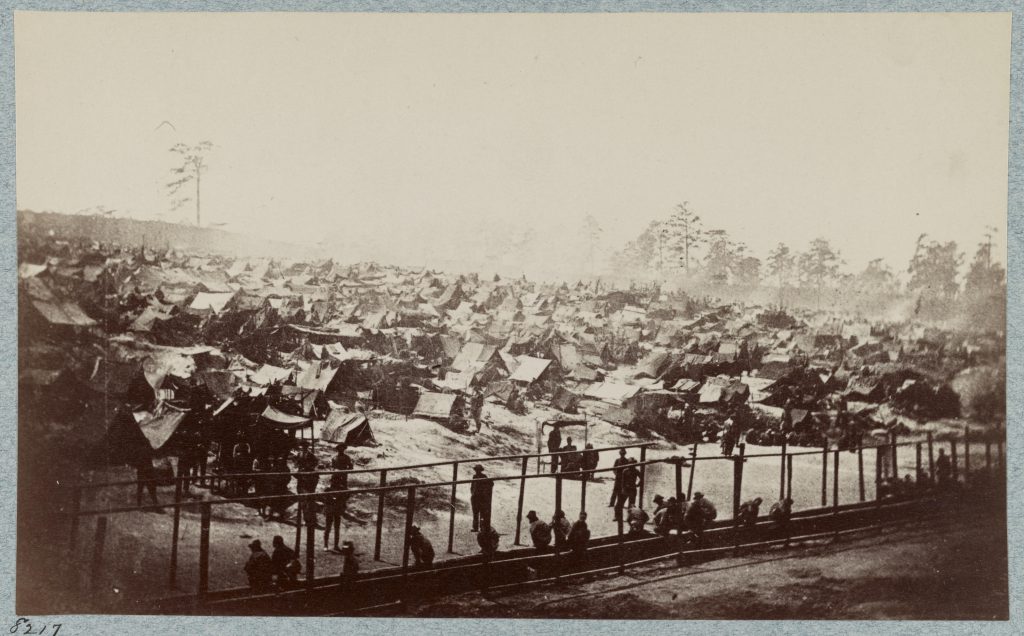
A month after this letter was written, the 16th Connecticut Infantry was on duty as part of the garrison of Plymouth, North Carolina, when it fell under overwhelming attack by Confederate forces under General Robert F. Hoke. The garrison surrendered on April 20, 1864 and much of the 16th Connecticut Infantry was then imprisoned at Andersonville. Martin Culver survived his imprisonment and was paroled on November 30, 1864. On May 7, 1865, wrote one final letter from New Bern, North Carolina.
“I received your letter the 2nd of the month but have been busy till today. I am at work in the carpenter shop now. There is not much to do here. The boys are on guard at the depot and have to go on the cars and boat to Fort Monroe, Washington, and other places to guard prisoners and other things. Civil law commences here the 16th of the month and then I suppose that we shall have to leave and I think that it will be for home when we do start.”
Martin Culver died on April 19, 1907 in Portland Connecticut.
We’d like to give a special thanks to William Griffing of Spared & Shared for his work in transcribing and sharing these letters.
To read more of Martin Culver’s letters and access thousands of other Civil War letters and documents, sign up for a Research Arsenal membership.
If you enjoyed this article, check out some of our other featured collections like Joseph Philp of the 161st New York Infantry and Alfred McClay of the 114th Pennsylvania Infantry.
