
Research Arsenal Spotlight 82: Thomas Conley 33rd Ohio Infantry
Thomas Conley was born around 1843 in Ohio. His father’s name isn’t known but his mother’s name was Margaret and she was born in Ireland. Thomas Conley enlisted on August 18, 1861 in Company B of the 33rd Ohio Infantry. He wrote the letters in this collection to his sister, Catherine (“Kate”), who married Joel C. Gabriel on March 13, 1861. His brother, James, is also frequently mentioned in the letters and resided with his mother.
The 33rd Ohio Infantry in Kentucky and Alabama
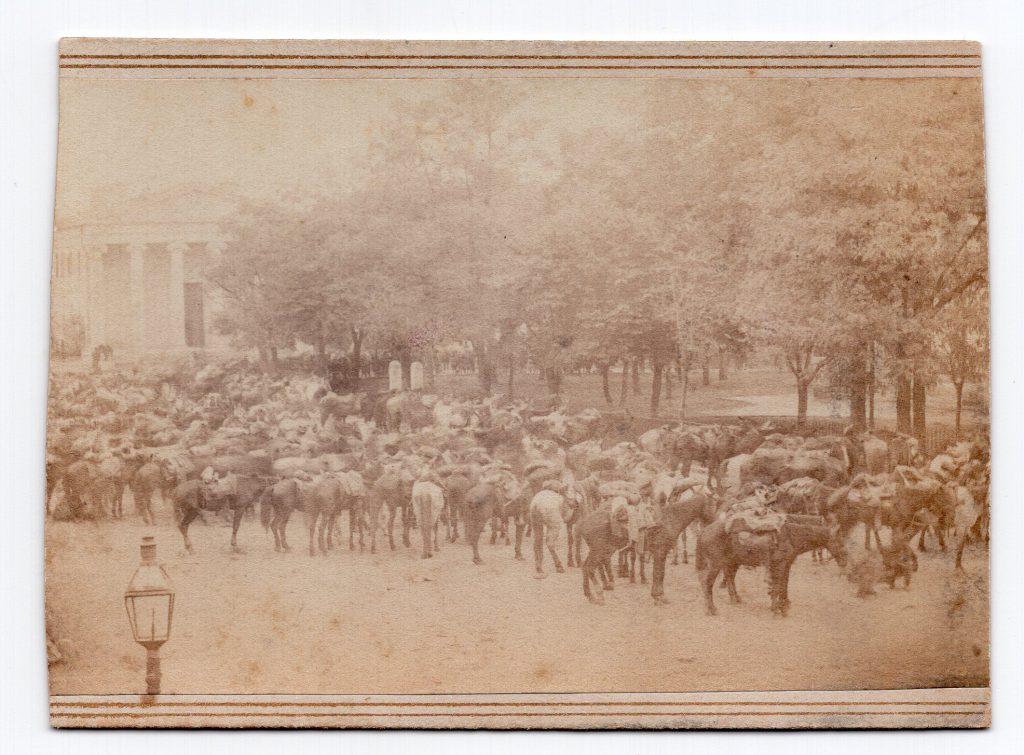
The first letter written by Thomas Conley in our collection was written on January 28, 1862 from Camp Jefferson, Kentucky. After being mustered into service in September 1861, the 33rd Ohio Infantry spent its first months in Kentucky. Thomas Conley wrote his letter while avoiding dress parade by hiding in a tent used to the store the arms of sick soldiers. He also revealed that he had just recently gotten over having the mumps.
“I received your letter 2 hours ago and was so glad to hear from you [that] I stopped writing a letter to Mary Jane. I received your letter and then finished writing her letter and against I got it done it was drill time and I had to go out and drill 2 hours. I have just got in from drill and am writing in an old tent where no one stays. It is used to keep the sick men’s guns in. I get in here so no one will trouble me while I am writing. I cannot write when there is so many around me. I am well now and hope these few lines may find you enjoying the same blessing.
I have got well of the mumps. They made me very sick for 2 days. I was not able to get out of the tent. I sent for the doctor. He came and gave me a puke. It made me sick for a little while but I soon got over that and as soon as I got over that the mumps was all right.
They have gone on dress parade. I slipped them this time but if the captain knew I was writing he would have me in dress parade but I am too sharp for him.”
In the same letter Thomas Conley revealed the strained dynamics of his company, with his captain, Ephraim Ellis, and 2nd lieutenant, Ellis Ramsey, frequently at odds with 1st Lieutenant Edwin De Bruin.
“Ramsey is just like he was at home. He is as quarrelsome as ever and a heap more big feeling. The captain is the same way but him and Ramsey has always treated me with respect and I treated them the same way. But DeBruin has not got the living of a cat in hell with them. They quarrel with him all the time. But he is the best fellow that ever lived. He treats me like a father and I treat him like a son. When the war is over, it will be like breaking up families and that is bad to part one another.”
On June 2, 1862, the 33rd Ohio Infantry was in Huntsville, Alabama. Thomas Conley wrote very positively of the war’s current condition to his sister and assured her that they had the rebels on the run.
“The rebels were plenty when we came here but we made them get up and dust. They don’t like the looks of the Yankees and they run so we can’t get to see them—only them that we can outrun and take prisoners.”
In the same letter he also wrote to his brother-in-law, Joel Gabriel, about the war.
“Well Joel, I must write you something about warfare. We are in the sunny clime of the South now. We are at Huntsville, 12 miles from the Tennessee River. We can hear the boats whistle plain here. We have a nice camp. It is in a grove and we have the ground clean. We don’t know how long we will stay here. It is a pretty country here. We get plenty to eat here and think the war will soon be over. The news came here that Jeff Davis was taken prisoner at Richmond and Beauregard with him. I wish the was was over till I get home once more and see all the folks and get to run around some once more, I think in the course of 2 months I will be at home all right again and I can come and see you living in a farm and having plenty of everything good to eat. That is the main thing now-a-days.”
His news about Jefferson Davis and General Beauregard of course proved false.
Thomas Conley’s Thoughts on the War
On May 12, 1863, Thomas Conley was at Murfreesboro, Tennessee. In a letter home to his sister, he revealed how the war had altered his thoughts on slavery. Before the war he considered himself a democrat and was against ending slavery, but he now found himself fighting to end it.
“But now I am in for putting down this rebellion. No man can be in the army now without acting out the abolition principles but they are not my choice but the nature of the case compels me and a good many others to differ in principles. We are not of the same opinion here as we are when we are at home but I am down on the abolition wherever they may be—that is, them at home who are the first to tell everybody to go but they will not go themselves nor their friends if they can help it. This thing of neighbors not being sociable on account of politics is nonsense for they ought to be friendly and go to church together for if they should happen to go to Heaven. they would not be friendly there.
But as for my part, the abolitions will have to mend their ways or they will never see the happy shore. I suppose you know as much about Vallandingham’s case as I do. There is great rejoicing over it here. Well that is about all about politics.”
Thomas Conley Writes About Morgan’s Raid
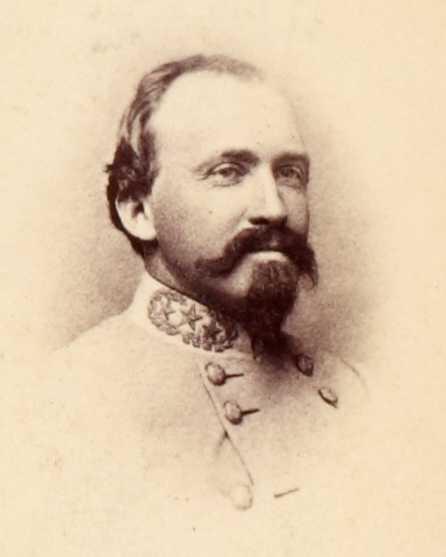
By August, 1863, the 33rd Ohio Infantry was back in Alabama. On August 12, 1863, Thomas Conley wrote from Crow Creek, Alabama, to talk with his sister about Confederate General John Hunt Morgan’s raid into several northern states, including Ohio, and the terror it caused the civilians there. Much of his news about it seems to have come from his mother, Margaret.
“Well Kate, from what mother wrote to me, if Morgan had come back through there again, Joel would’ve been without a wife for he was at mothers nearly crazy hunting you. That is another reason you had for not writing for when we get among the enemy, we cannot write but aim to write before we get in with the enemy.
Well Kate, I suppose you was frightened when you heard Morgan was in the country. I know I would if I had been there but I would liked to been there to seen the fun. But I have seen him once and that is enough for anyone.”
A couple weeks later Thomas Conley wrote again from Crow Creek on August 25, 1863, and talked about receiving corn with his rations and stealing other food from local farmers.
“I had plenty of green corn to eat July here. They issue corn to us like other rations. Six ears a day. Peaches are ripe here and sweet potatoes are large enough to eat. I went about 2 miles last night and stole a bushel of them and while I was digging them the old woman came out and cried out to get out of that patch you damned thieves. You are the raking of God’s earth and all I said was for the old lady, “‘Keep your shirt on.’”
Thomas Conley’s final letter in our collection was written on May 21, 1865 from Alexandria, Virginia. In this letter he hoped to be mustered out soon, but wasn’t sure when veterans like him would be.
“I wish I could see all you and mother more than all. I don’t know whether I will get home soon or not as is reported the Veterans are going to be kept and if they are, I am going to North Carolina with a captain on Gen. Kilpatrick’s staff but it is supposition about the Veterans. Gen. Sherman says he is going to have his army mustered out soon as they get their papers made out. Gen. Sherman’s army is going to be reviewed on the 24th of this month in Washington City. It is going to be one of the grandest things of the war.”
Thomas Conley mustered out on July 12, 1865. He died sometime before 1886. He was buried at Ashridge Cemetery in Ash Ridge, Ohio. His mother, brother James, and sister Ann (Conley) Rhoten were buried at the same cemetery.
We’d like to give a special thanks to William Griffing of Spared & Shared for transcribing and sharing these records.
To read more of Thomas Conley’s letters and access thousands of other Civil War letters and documents, sign up for a Research Arsenal membership.
If you enjoyed this article, check out our other featured collections like Seth Bishop of the 4th Vermont Infantry and Perry Farlow of the 29th Wisconsin Infantry.
