
Research Arsenal Spotlight 84: Uriah Massena 6th West Virginia Infantry
Uriah Massena was born in 1842 in Pennsylanvia to Samuel Massena and Barbara (Cramer)Massena. The Messena family relocated to Cameron, Virginia (later to become part of West Virginia) before the start of the war. Uriah Massena enlisted in Company L of the 6th West Virginia Infantry. (Note: The regiment was originally called the 6th Virginia Infantry (Union) before West Virginia was made a state in 1863, but for clarity will be referred to as the 6th West Virginia throughout this article.)
West Virginia secedes from Virginia
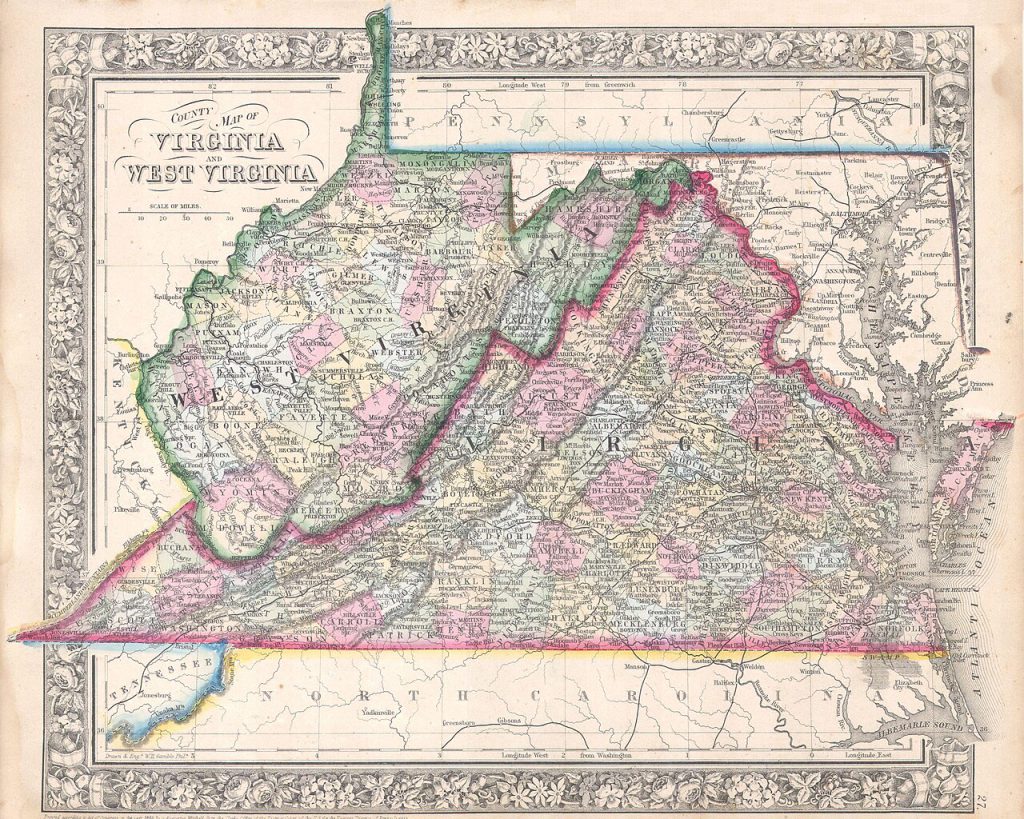
When Virginia seceded from the United States in 1861, not everyone residing in the state agreed with that decision. The western part of the state had a large concentration of Unionists, and almost as soon as Virginia seceded from the Union they began making their own plans to secede from Virginia and develop a government still loyal to the United States. This government became known as the Restored Government of Virginia, which became the government of West Virginia after it was granted statehood in 1863.
Uriah Massena and his family were Unionists living in Marshall County, Virginia, when the war broke out. In a joint letter, Uriah Massena and his mother, Barbara, wrote to Barbara’s sister about the state of things in Virginia on August 10, 1861.
“I like the country well. All I have against it, there is too much war here. We can hear the cannons plain where we live. The soldiers are standing guard within two miles off from where we live. The 29th of July there was one hundred and 24 fires shot at our Union boys in Cameron two miles from where we live.”
After Barbara’s message above, Uriah wrote a short letter to his cousin, Christian.
“I enlisted and joined a light horse company. As soon as my time is out, I am coming to see you if I don’t get killed.”
Uriah Massena’s family in the Civil War
When Uriah Massena enlisted in the 6th West Virginia Infantry, he was not the only member of his family to join the Union army. His father, Samuel Massena, enlisted in Company D of the 11th Virginia Infantry. Uriah regularly updated his Aunt about his father’s whereabouts in his letters, too.
On May 12, 1862, Uriah Massena wrote a letter containing much grim news, he had just survived a skirmish with Confederate forces that saw 15 of his regiment killed. He’d also received news that his father had been captured.
“I must tell you my great troubles and trials. We have had great trouble with the rebels. On last Saturday [6 May 1862], they came to Arnoldsburg and took it & killed most all our men from there. They came to the Burning Springs and took it [Fort Hill]. General [Benjamin F.] Kelley took our regiment [and] marched up to the Springs which is about 5 miles from Parkersburg. There we had a fight. We lost 15 men killed and several wounded. God knows it was a hot time. There was but 300 hundred of us against one thousand rebels. We killed 30 of them and wounded 60 and took 20 prisoners. We drove them from the Springs. We expect another fight on the Big Bend of the west fork of the Kanawha [river].
Dear aunt, I am in great trouble. Oh Lord, would that I was out of the war. My friends that I love so well I never will see anymore but there is one thing—if we never meet in this world, we may meet in the next. My dear father was captured by the infernal rebels. He was took prisoner at Williamsburg, Virginia, last Monday. I have never been at home since the first of October last. There is one thing, dear Aunt, I must tell you. I got my fortune told to me and I am to get killed by the rebels. Oh, remember me. Keep this letter as long as you can. My eyes are filled with tears and my heart ready to burst. The Lord save me in endless days.”
On June 9, 1862, Uriah Massena wrote again from Parkersburg, Virginia, and revealed that his father had been released from Confederate imprisonment after taking an oath not to fight anymore. He also mentioned that his brother, Jackson, was also considering enlisting.
“I have the pleasure if telling you that we hain’t [had no] fight since the [one] up on Kanawha river and I hope that we won’t although [Gen. John B.] Floyd’s Army lays within ten miles of us. I think he will evacuate the place without fighting.
I have the best kind of news to tell you. My Pap has got home again. The rebels swore him not to fight against them any more and sent him home. I got a letter from him last week he said while he was in Richmond in the rebel jail, all he got for four days rations was four sea crackers and small pieces of old bacon. He hain’t going back to the army anymore. You said that you got a letter from mother dated April the 29th. Also you stated that she said [my brother] Jackson wanted to join the army too. I have now got furlough for ten days to go home and I know if I tell him how hard I have it and Pap tells him the same, he won’t try it. This is the first furlough that I have got yet since I have been in the U. S. A. service.
This morning we got a flag that cost two hundred dollars and we all took an oath to never let the rebels tramp it in the dust.”
Uriah Massena separates from the 6th West Virginia Infantry
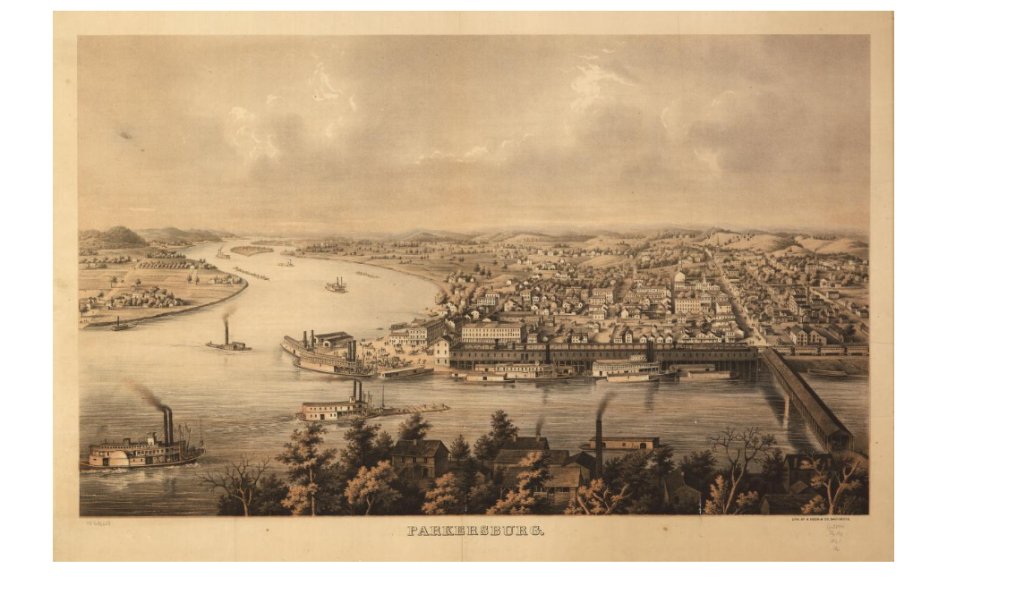
On August 19, 1862, Uriah Massena was still in Parkersburg. The 6th West Virginia Infantry, however, had been sent to Tennessee. Uriah stayed behind to work at the hospital.
“Our regiment is gone to Tennessee. I don’t [know] how long it will stay there. The talk is that it will be sent to Washington City soon. I hain’t been with my regiment for one month. I am at the post hospital at Parkersburg a tending on the sick and wounded. I have good times here. I have got a chance to study medicine. I have got fifty-two medical receipts that I paid 75 dollars for. If I live till the war is over, I will practice some. I will stay at the hospital until my regiment comes back.”
It is not clear exactly what caused Uriah Massena to go to the hospital, but in the same letter he mentions that, “My arm is about well,” so it likely was some injury to his arm.
On October 23, 1862, Uriah Massena again wrote to his aunt, this time revealing that his father had returned to the 12th Virginia Infantry and that he (Uriah) was suffering from continued ill health and looking forward to his discharge.
“Pap has enlisted [again]. He is in the 12th Virginia Regiment. They are stationed on Buchanon River 34 miles from where part of our regiment is at. If God spares my life, you can look for me about the 1st of April 1863. I am awaiting my discharge and it may not be before that time. But as soon as I get it, I am coming right straight to your house. I hain’t able for my duty anymore. I have been nearly blind with the sore eyes and I had a hard spell of the fever and my wound all together has made me unfit for the service. Soldiering is a hard life to live, let me tell you, my aunt. It takes hearty and stout men to stand it. Dear aunt, I have seen a heap of bloodshed and seen hundreds and thousands of men killed. You can’t imagine how a battlefield looks. It is awful to tell.”
He also informed his aunt that his brother, Jackson, had enlisted.
“I almost forgot to tell you that [my little brother] Jackson in in the 11th Virginia Regiment Infantry that are stationed with us at this time. I don’t think the war will last long any for the rebels are starving now and have been for a good while. Those starving are plenty in this country yet there must be good stuff in the rascals that could not stand it so long. I have been in the U. S. service 13 months and out of the 13 months, I have been at home 4 days and don’t expect to go home until I see you first, if I live.”
Uriah Massena married Nancy Jane Madden in 1864 and moved to Jasper County, Indiana. He died in 1908.
We’d like to give a special thanks to William Griffing of Spared & Shared for his work in transcribing and sharing these letters.
To read more of Uriah Massena’s letters and access thousands of other Civil War letters and documents, sign up for a Research Arsenal membership.
If you enjoyed this article, check out some of our other featured collections, like Isaac Mead of the 17th Connecticut Infantry and Thomas Conley of the 33rd Ohio Infantry.
