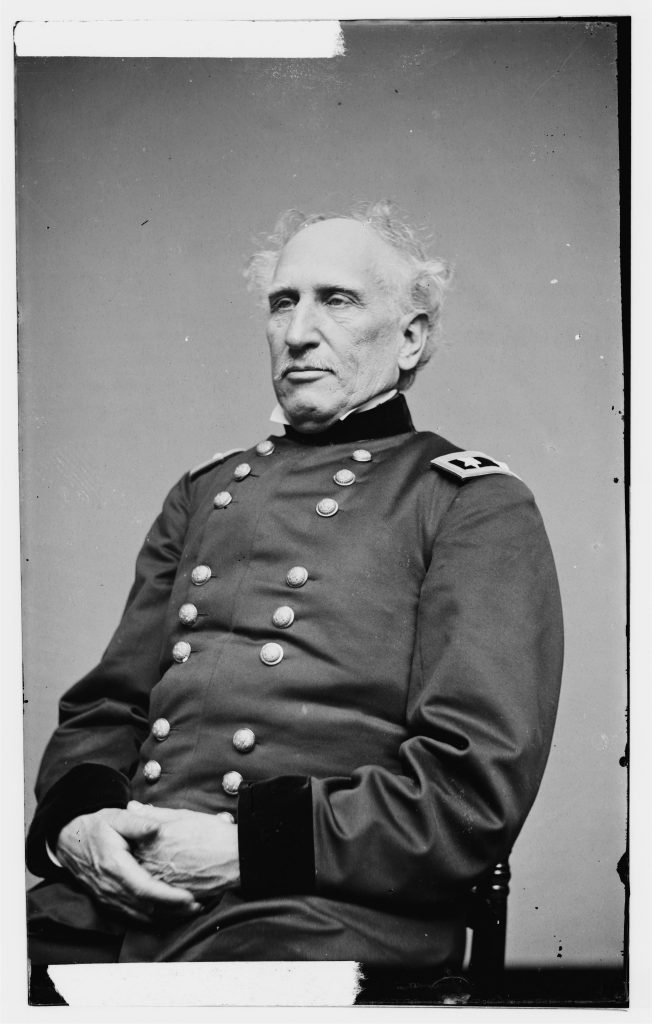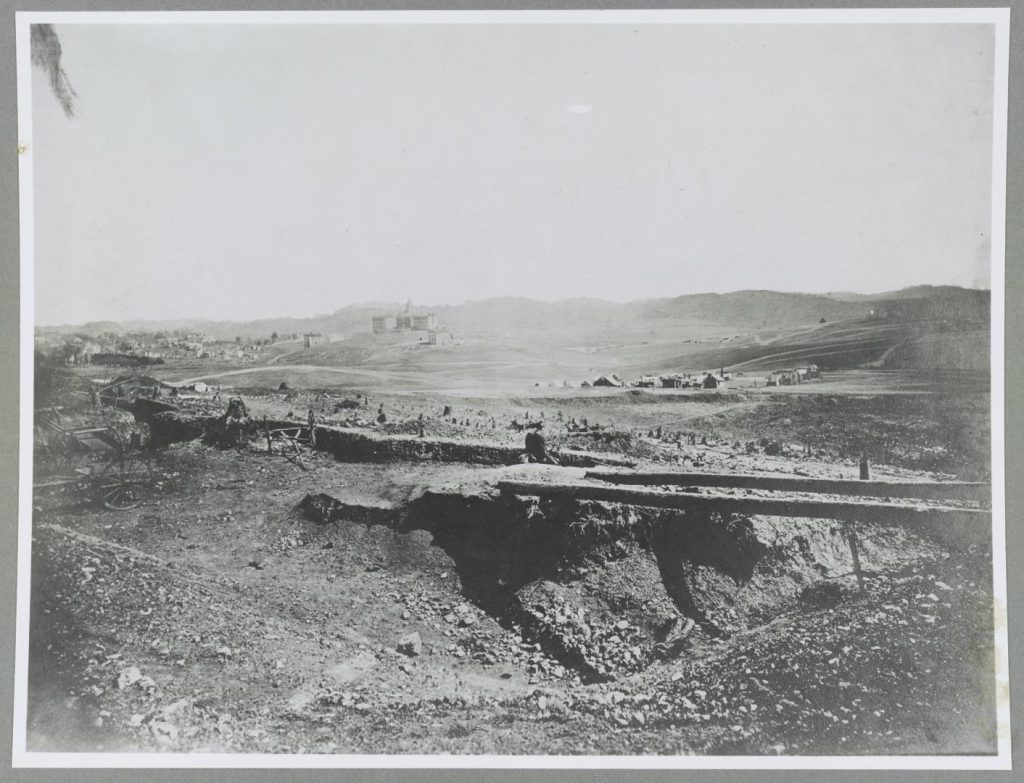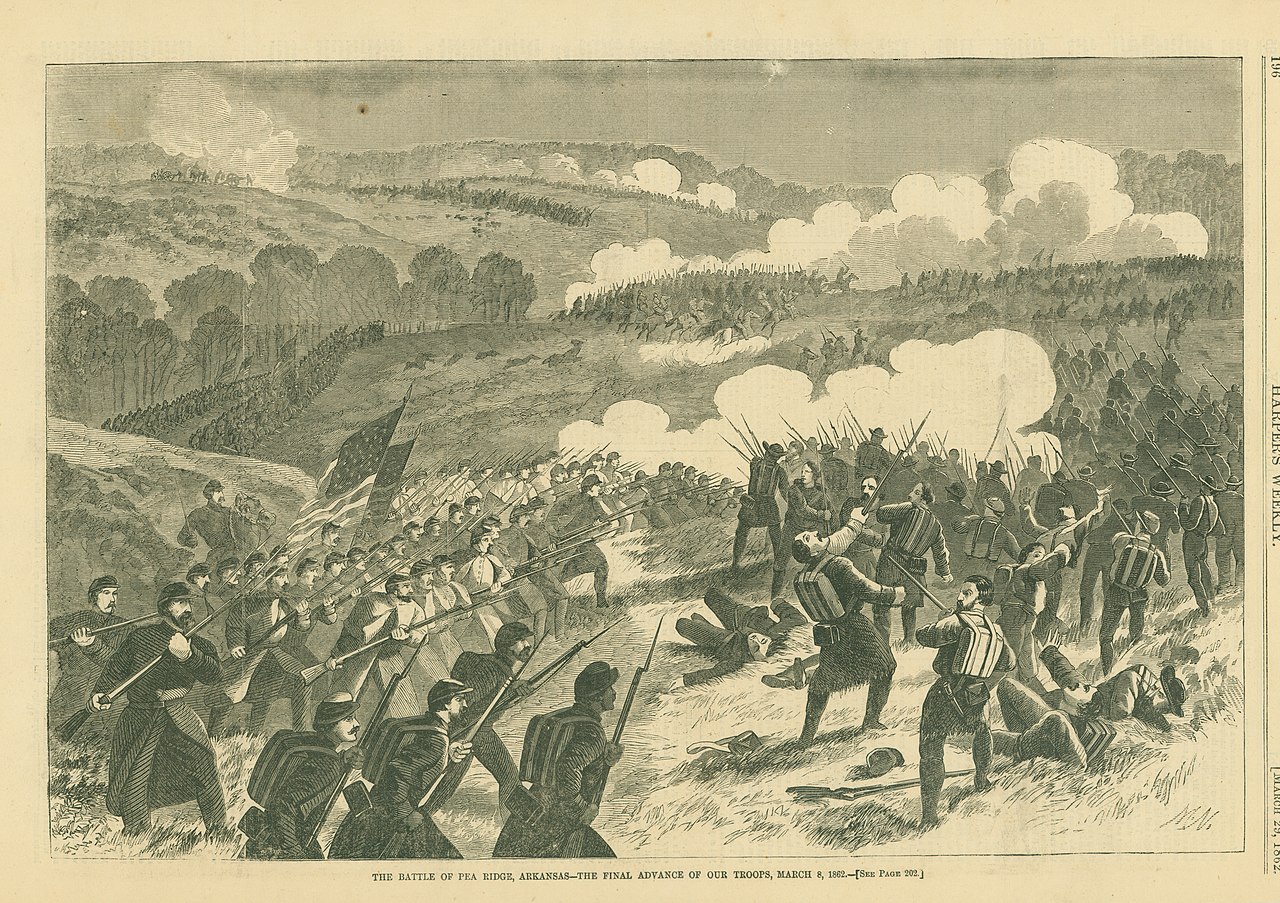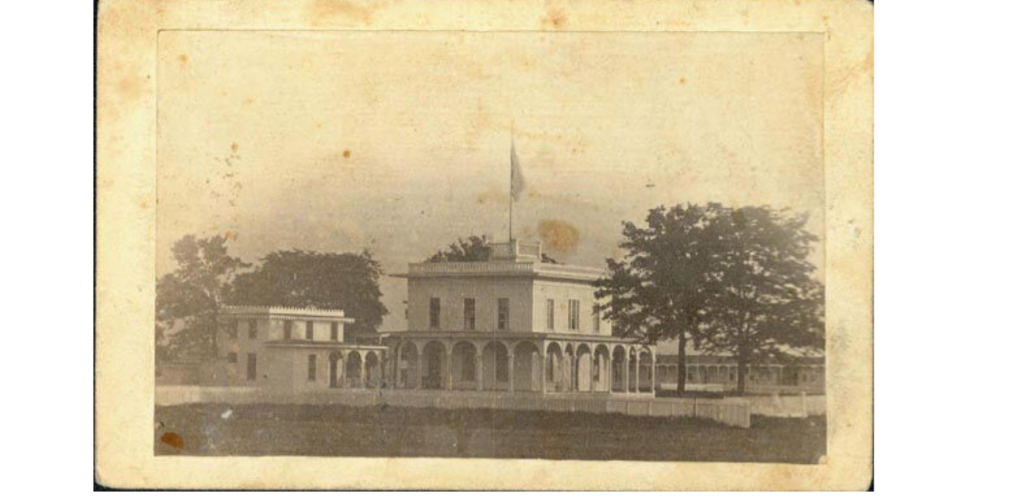
Research Arsenal Spotlight 18: George P. Jarvis of the 3rd Ohio Infantry

George P. Jarvis was born in 1842 to Leonard R. Jarvis and Susan (Thomas) Jarvis of New England, Athens County, Ohio. He also had a sister, Leonora Jarvis, born in 1850. George P. Jarvis served as a corporal in Company C of the 3rd Ohio Infantry, first in enlisting in the 3 months version of the regiment and then afterward enlisting for three years.

In our collection, we have eight letters written by George P. Jarvis during his service with the 3rd Ohio Infantry during 1862 and 1863. The first letter was written May 13, 1862, from Huntsville, Alabama, where George P. Jarvis was already suffering for the effects of the warm, southern climate, which he described to his family:

“The weather is very hot here now although it is only May and the Devil only knows how hot it will be next month. I think, however, that six or eight months will close this thing up.

Everything looks beautiful here as the season is quite forward. Corn is in some places waist high while in Ohio they can’t be more than just planting. Cotton is coming up finely and planters say looks well. I would not know anything about it if not told. The planters are generally very rich here — some of them own as many as six hundred slaves.”

In the same letter, he also described a letter written by a Confederate soldier serving in Hindman’s Legion, which he found and forwarded to his parents:

“The enclosed letter is one that I picked up. The writer, it seems, was a member of Hindman’s Legion — the same we shelled at Bowling Green. It seems from his letter that they were not whipped, they only ran to prevent such a catastrophe. He is wrong as regards the number killed as there was not a person killed during the whole cannonade. It will give you a pretty good idea of Southern intellect.”

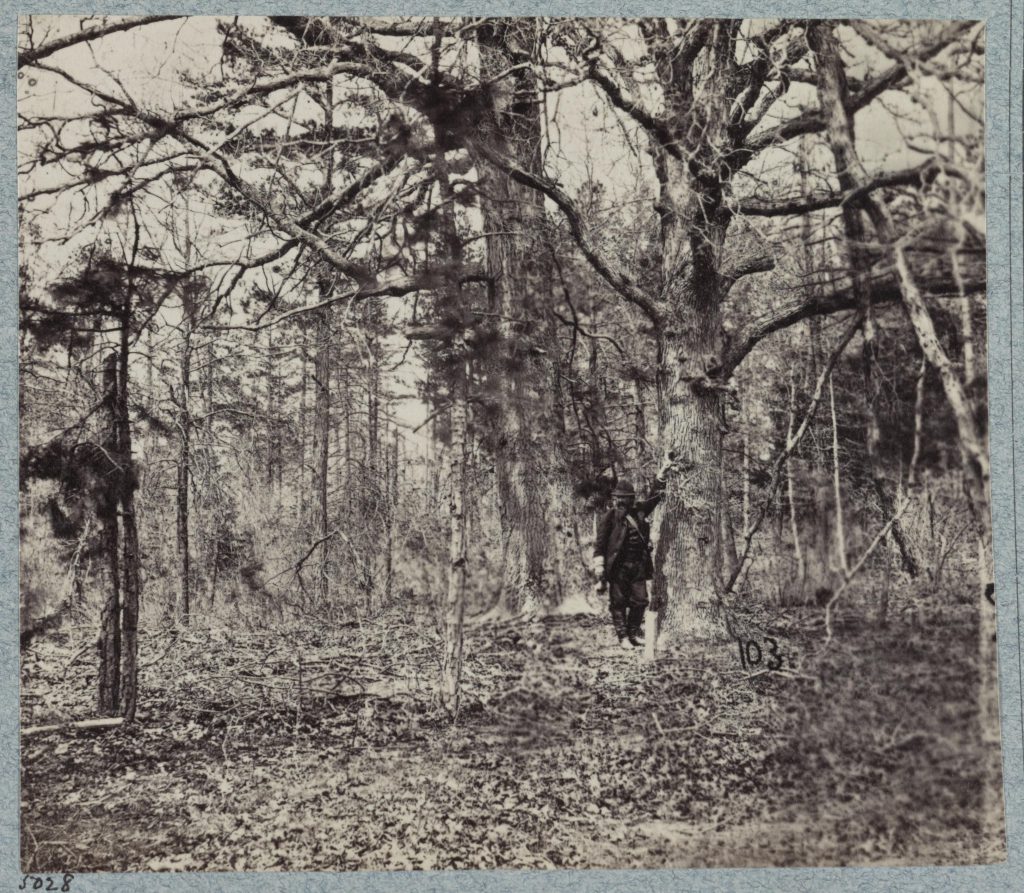
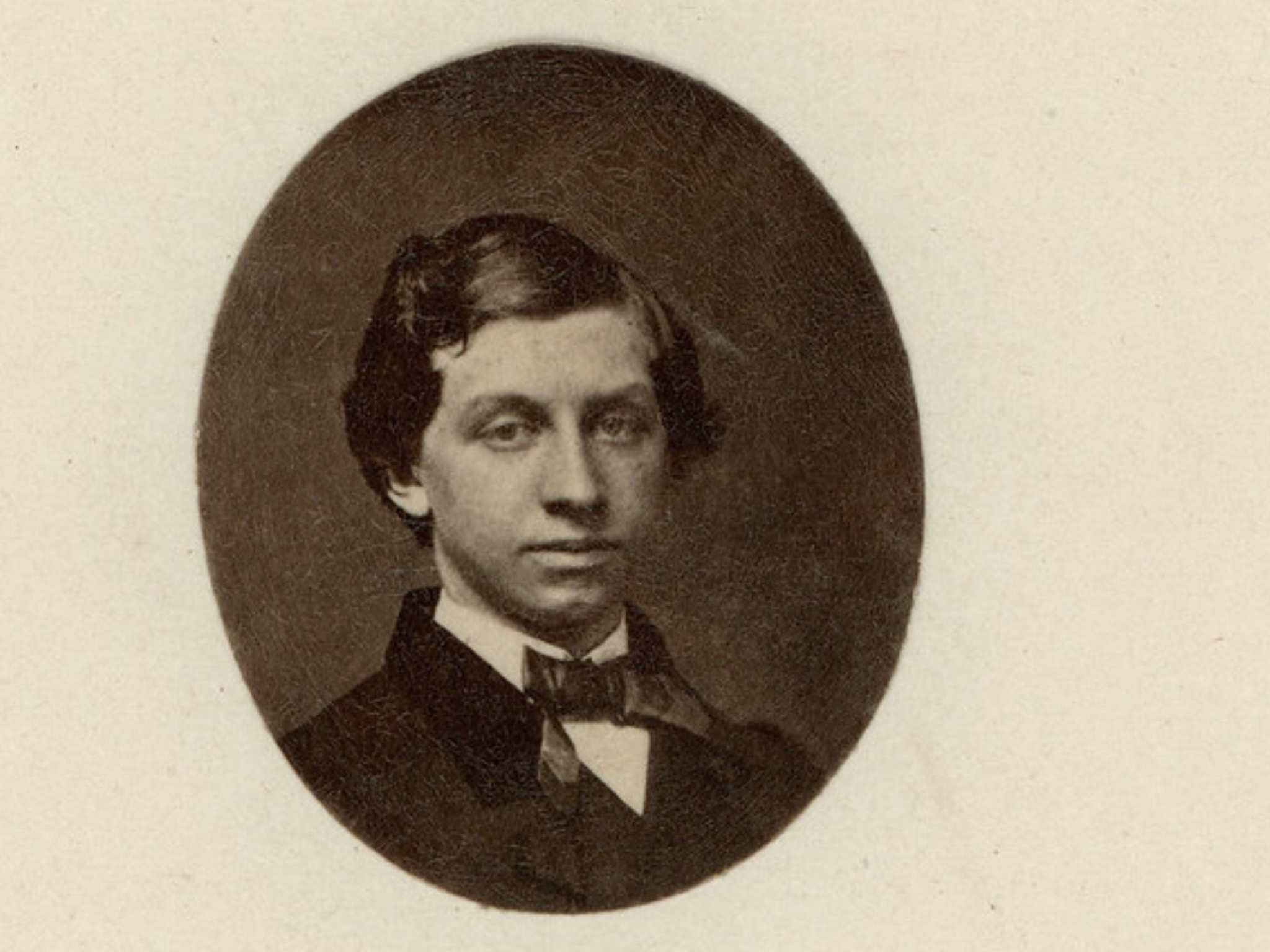
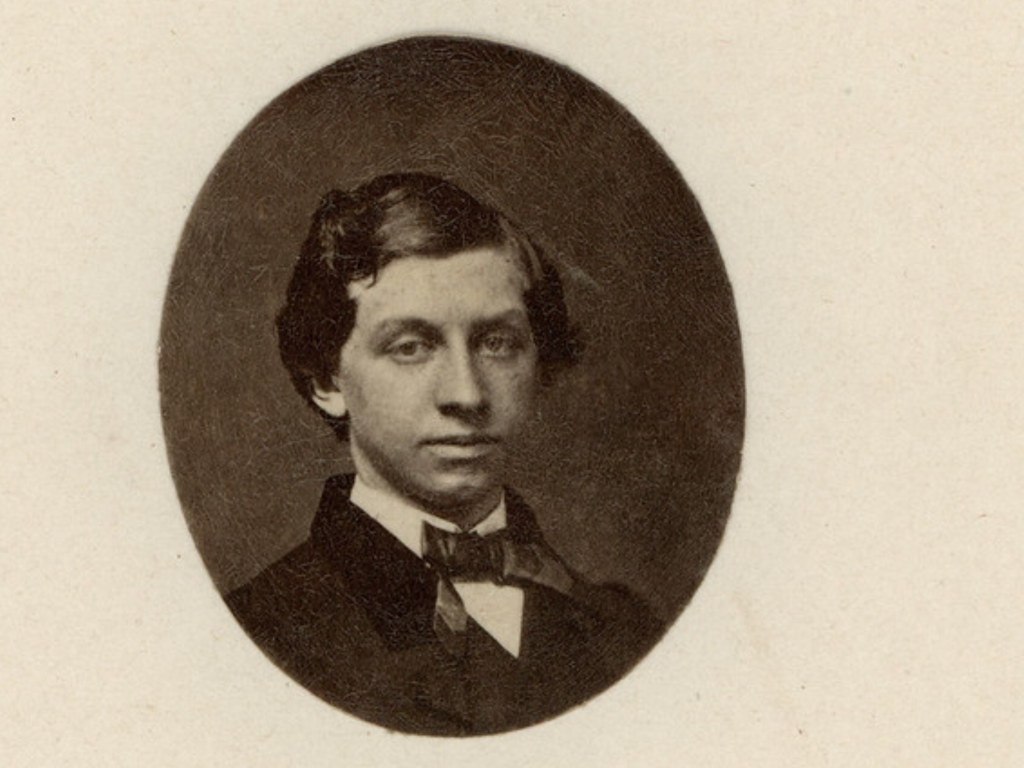
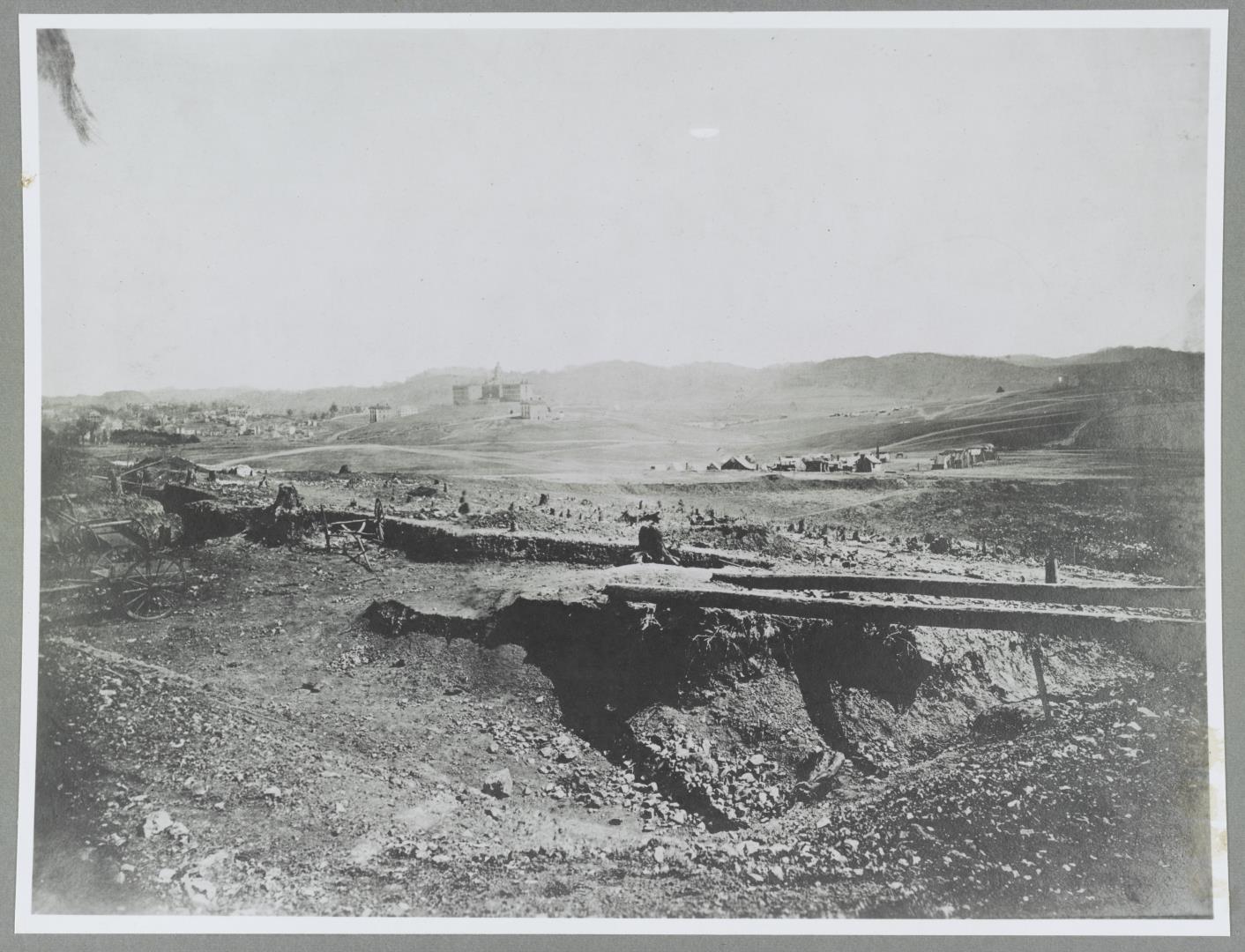
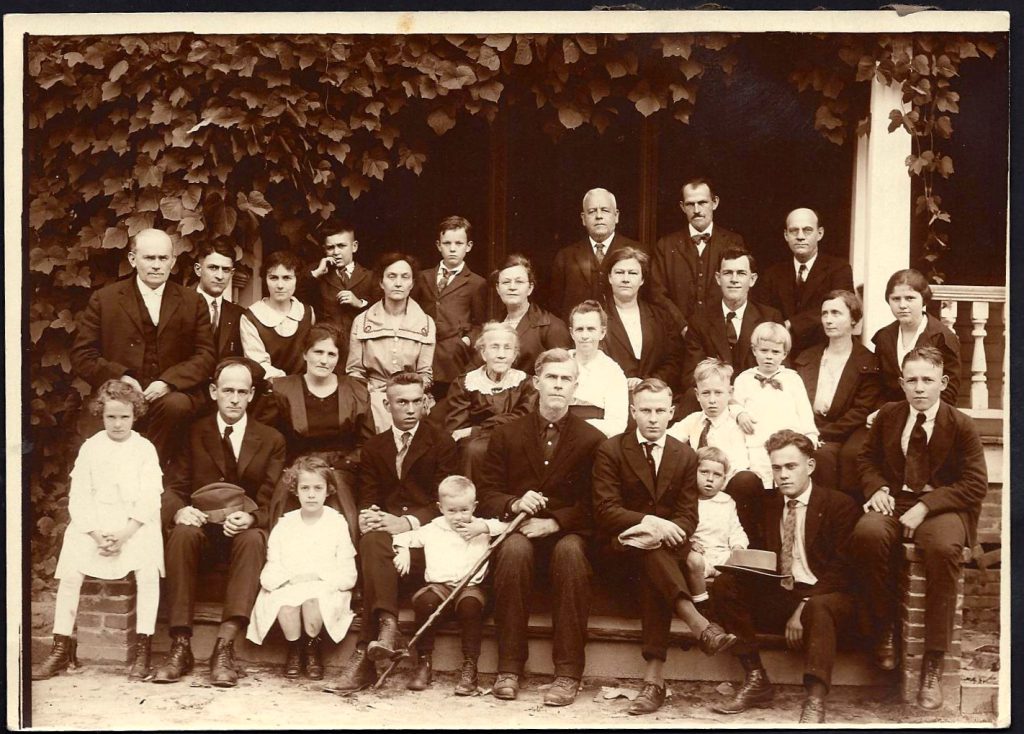
George P. Jarvis in Murfreesboro, Tennessee.

Letter written by George P. Jarvis from Murfreesboro showing writing both horizontally and vertically across the page.

In February of 1863, the 3rd Ohio Infantry was doing duty at Murfreesboro, Tennessee. George P. Jarvis had been away from the regiment for quite some time after being wounded at the Battle of Perryville in October, 1862. Upon his arrival he was very satisfied with the fortifications around Murfreesboro, writing:

“I wish I could give you an adequate idea of the strength of the fortifications here but I cannot. In the first place, I could not if I dared, and in the second place, I dare not if I could. Suffice it to say that should the enemy attack us here with the recent acquisition of forces we have received, they would most certainly be defeated.”

He also went on to describe the current state of the area around Murfreesboro and Nashville after prolonged fighting, and how much it had been ravaged by the war since he had last seen it:

“Last night Dan and I went over to the 18th Ohio and stayed all night. Had a very pleasant time. Got back this morn at ten o’clock. I was surprised to find the appearance of the country so materially changed from what it was one year ago or even since last Autumn when we passed over the country last. Then the fences were all up and everything betokened a thriving and industrious people. Now the whole aspect is changed. There is not a fence to be seen between Murfreesboro and Nashville and everything shows plainly the devastation and ruin that has been visited upon it.  Yet such is the fortune of war while the people of our own neighborhood — which by the way is not the most wealthy position of creation — are living in comparative opulence and ease, the people of this country — a county which in civil times ranked among the highest for wealth, opulence, and industry — are many of them wanting the most common necessities of life, and many are living on what in former times their own slaves would have denounced as unfit to eat. Would you like to have the war brought to your own door? I know well what your answer is. For my part, I would rather serve in this army for the term of my natural existence than have you suffer for one short six months the privations and trials of having a hostile force in your midst.”

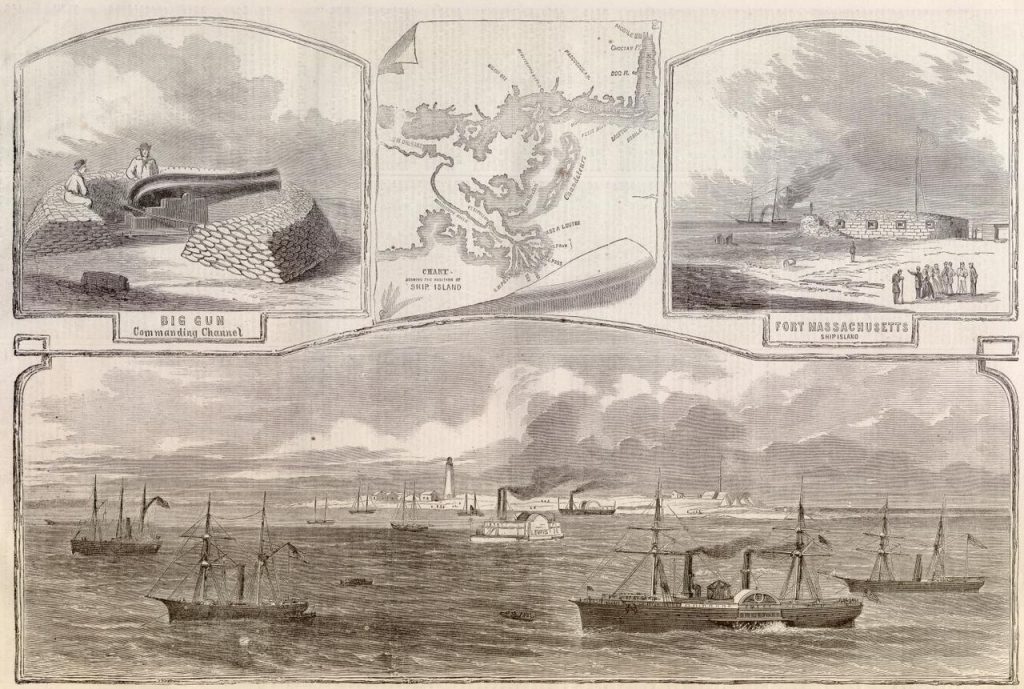
The 3rd Ohio Infantry Captured by Confederate Forces.

The 3rd Ohio Infantry participated in Streight’s Raid in late April and early May, 1863 and were nearly all captured outside of Rome, Georgia on May 3, 1863. At the time, George P. Jarvis was serving as a clerk in the hospital, and consequently was one of the few not captured. In a letter written May 18, from Corinth, Mississippi, he expressed his belief that his regiment would soon be exchanged and reunite. Humorously, he believed that this would likely lead to him being sent home temporarily to save the government money while the regiment reorganized:

“Suppose I should be at home soon. Would it not surprise you? It would not me since I know that our entire regiment is captured with the exceptions of the twenty-two that are here now. They will of course be paroled and go to Columbus and of course there being so few of us will be ordered to join them, and the Gov. — not wishing to pay our board bill while we are doing nothing — will send us home. Now do not make up your minds to see me for this is only my opinion, but just consider me as absent till my time is out and then if I get home before, why! you will be disappointed, that’s all.”

George P. Jarvis in Chattanooga, Tennessee

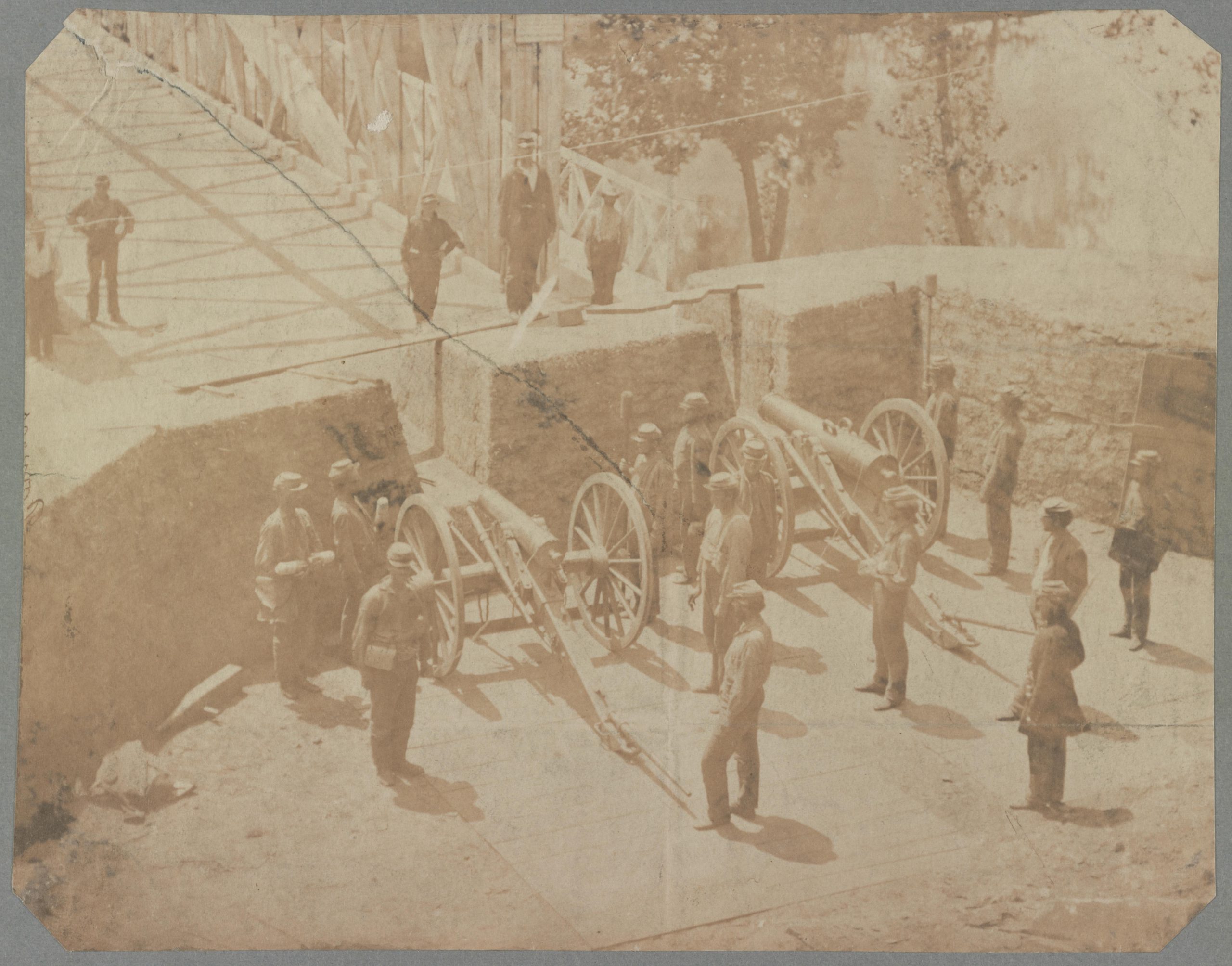
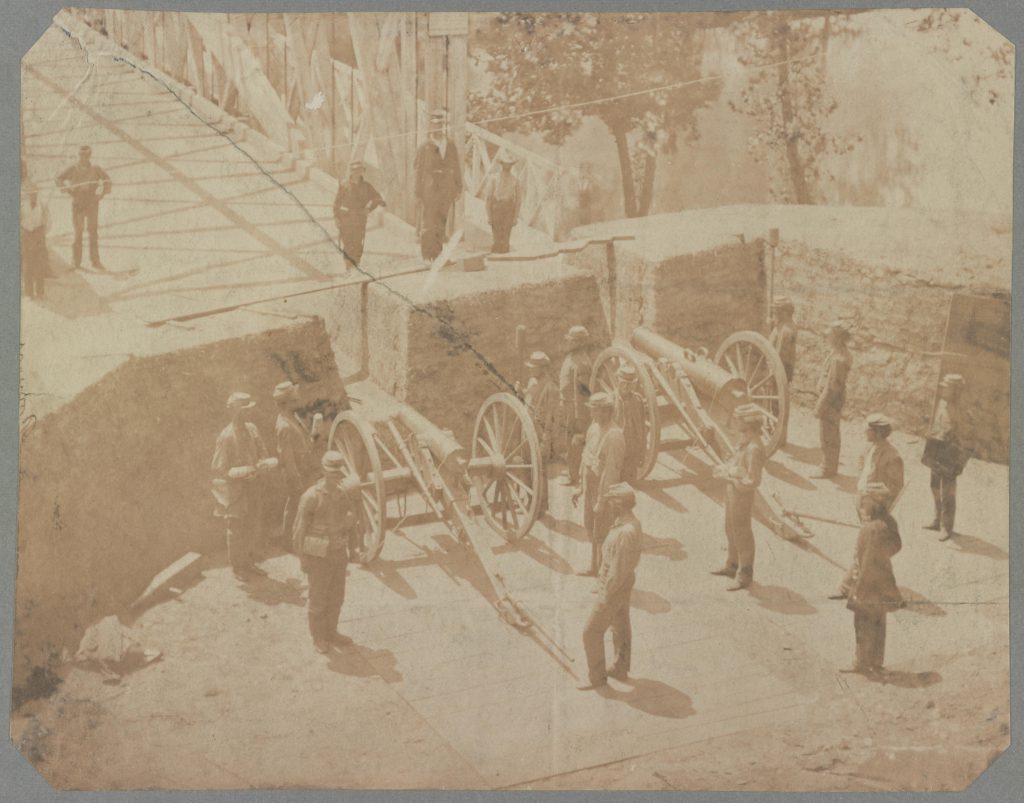
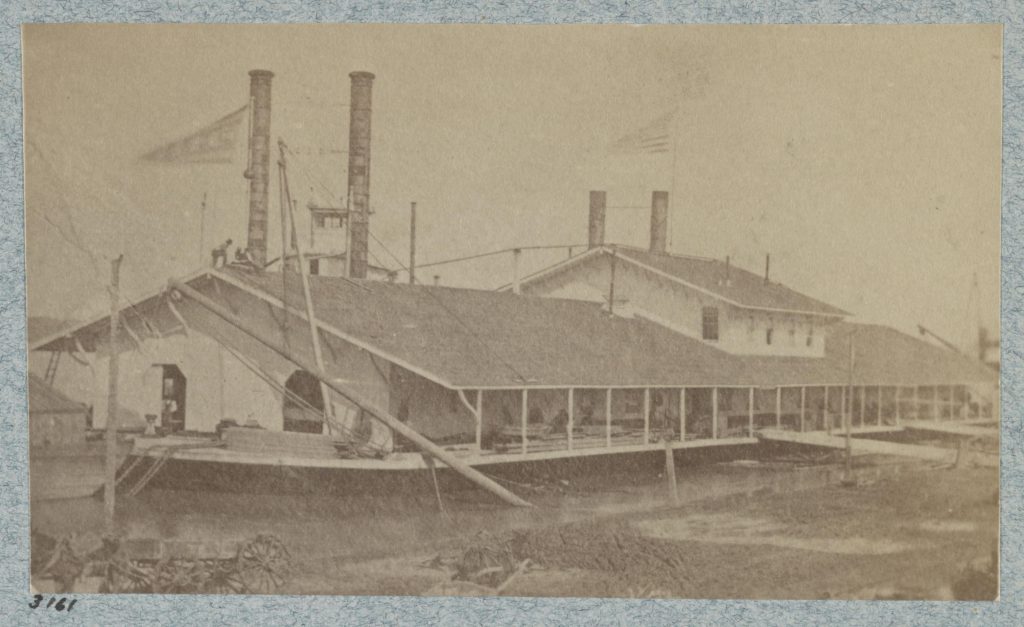
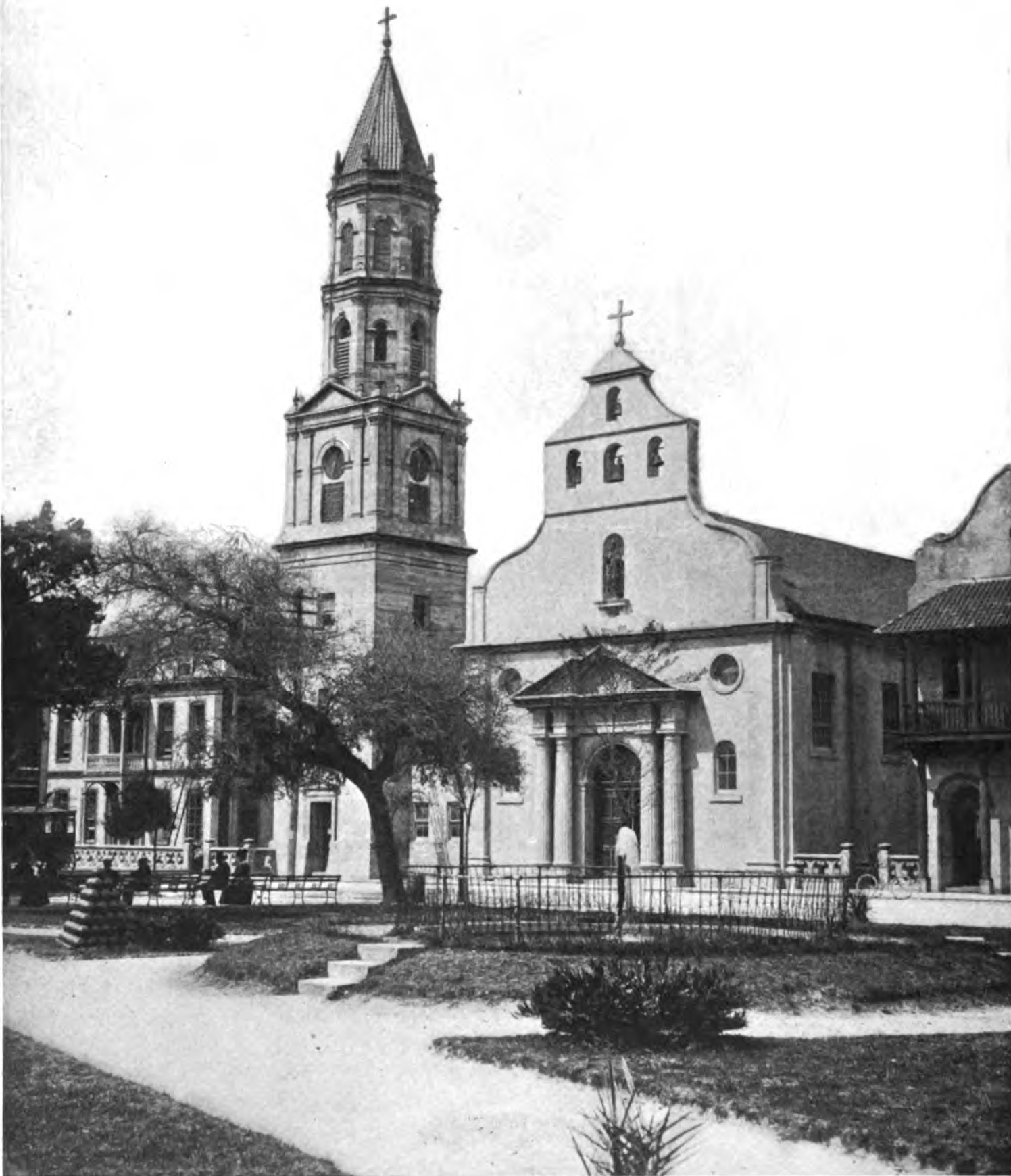
Headquarters of Provost Marshal, Chattanooga, Tennessee.

The final letter written by George P. Jarvis in the Research Arsenal collection is datelined from Chattanooga, Tennessee and was written on October 10, 1863. By this time the 3rd Ohio Infantry had been exchanged and reorganized before being sent back out to duty.

In his letter, George P. Jarvis described some of the situation outside of Chattanooga as he awaited another clash with the Confederate Army:

“Matters at the front seem unchanged. They still appear to occupy the same ground they have occupied all along since the battle, and for the past two or three days they have shown no disposition to shell us. A part of their force is nearly in plain sight. I saw them today. They seem to be throwing up new works in the position they now hold. And they are so very near us that with some heavy guns they might do us considerable damage. Several times their sharpshooters have thrown minnie balls whizzing about our ears but no one hurt yet from them. One contraband was killed and one soldier wounded the other day by shells, but I don’t know but that I spoke of this in a previous letter. You ought to be here and see them sometimes. They look quite well at a distance, but in this case “distance” surely “lends enchantment to the view.” I had much rather behold them at that distance than have them any closer. They have a peculiar way of making themselves very unpleasant visitors.”

George P. Jarvis also boasted about the high opinion some of the Confederate Forces of Longstreet’s Corps held of the 3rd Ohio Infantry saying:

“The men of Longstreet’s Corps were very greatly surprised when they came here and found that we did not run at the first fire and those of them that I have seen say there is a vast difference between fighting us and the eastern army. They don’t call us Yankees at all. We are the “western men” and those of the eastern army are the ‘yankees.’”

In June, 1864, George P. Jarvis mustered out of the 3rd Ohio Infantry with the rest of the regiment. He went on to enlist as a quartermaster sergeant in the 18th Ohio Infantry in November, 1864 and served until the end of the war, finally mustering out for good on September 4, 1865 with the rank of 2nd lieutenant.

In 1873 George P. Jarvis married Roxavilla Beebe. He passed away in Parkersburg, West Virginia, on July 30, 1920.

We’d like to extend a special thanks to William Griffing of Spared & Shared for transcribing and sharing these letters.

To read the rest of George P. Jarvis’ letters and access thousands of other Civil War documents, sign up for a Research Arsenal membership.

Check out some of our other spotlight collections like Robert Alexander Garner of the 21st South Carolina Infantry and Andrew Jackson Clark of the 23rd Massachusetts Infantry.


Research Arsenal Spotlight 17: Robert Alexander Garner of the 21st South Carolina Infantry

Our focus this week is on a collection of 14 documents related to Robert Alexander Garner of the 21st South Carolina Infantry. Robert Alexander Garner was born in 1843 to Charles Wesley Garner and Winifred (Parrott) Garner of Darlington, South Carolina.  The collection begins with one letter written before the start of the Civil War, in December, 1860, and another from September, 1861, shortly before he enlisted in the 21st South Carolina Infantry.

Writing on December 19, 1860, Robert Alexander Garner told his sister about some of the home news from Philadelphia, South Carolina. His letter paints a picture of a life untroubled by the war which was soon to come and change everyone’s lives forever:

“As I have neglected answering your letter so long, I will answer it today as it is raining and I have nothing else to do. It has been raining all day and looks very much like snow. We have had snow aplenty ever since last Friday night, but it is about all melted this morning.

Joe and myself have Just got through washing out our guns to take a hunt tomorrow. We went out the other evening and killed seven squirrels and one partridge, and could have more if we had time. Julia Sue and Jane is stuffing sausages today for Christmas.

Mr. Warren is learning Mr. Jordan how to take types [daguerreotypes or ambrotypes]. I expect Pa will sell his chemicals to him. He went over today to get them from him.”

Robert Alexander Garner and the 21st South Carolina Infantry

In November, 1861, the 21st South Carolina Infantry was organized. Robert Alexander Garner enlisted in Company B of the regiment, under command of Samuel Hugh Wilds. The company was also known as “Wild’s Rifles.” Throughout his letters written in 1862, Robert Alexander Garner is mostly concerned with small updates about camp life and the men serving alongside him.

In a letter written on February 14, 1862, Robert Alexander Garner shared some rumors he heard about Union troops landing at the mouth of the Santee River in South Carolina, as well as his opinion on one of the other captains in the 21st South Carolina Infantry:

“Captain [J. W.] Owen’s and seventy-five of his men [from Co. K] are gone to guard Pee Dee Bridge. We heard that the Yankees had landed at the mouth of Santee. Miller is quite sick with the measles. He has just sent for me to go over and see him so I will close for tonight.

Saturday morning. Miller is some better this morning than he was last night. Stockton made him go out yesterday and sweep the street. Said he was lying up pretending that he was sick when he was not and he commenced getting worse right off. All or the most of Stockton’s men says he is the meanest captain on the field.”

In a short letter written on April 19, 1862, Robert Alexander Garner told his father about a flag that had been presented to the 21st South Carolina Infantry, saying, “ The ladies presented our regiment a flag the other day—think a quite pretty [one]. On one side is a hornets nest and cannon. On the opposite side is the rising sun.”

The 21st South Carolina Infantry at Petersburg

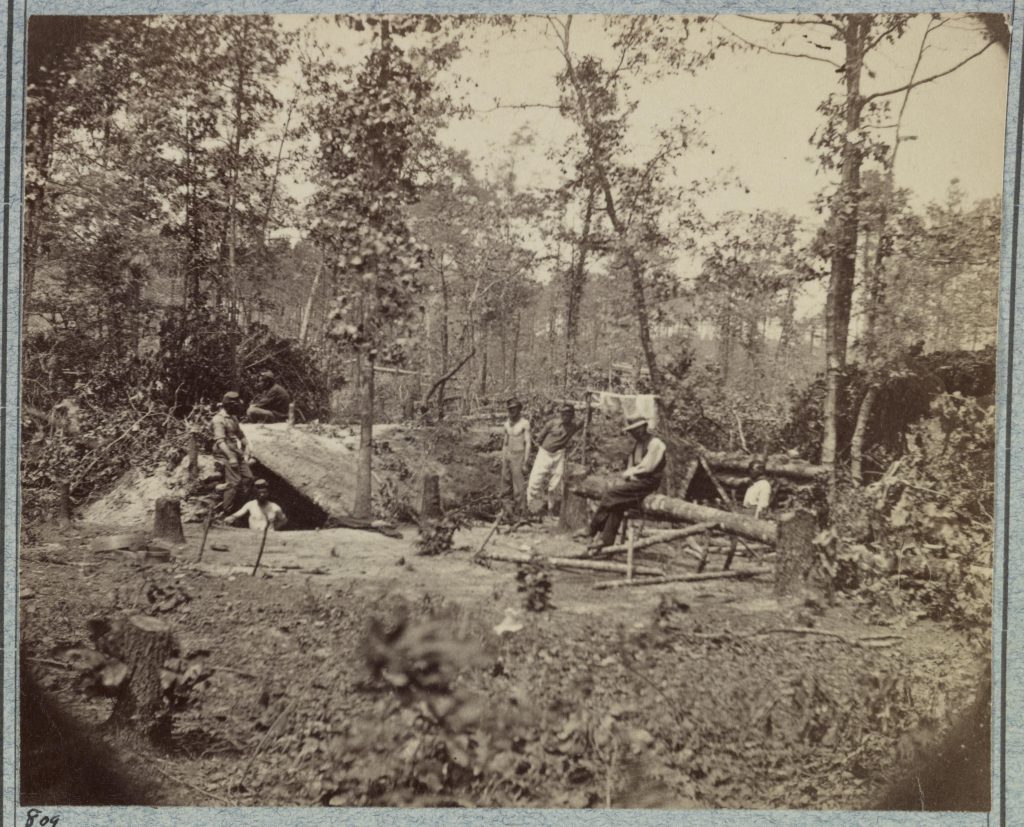
Petersburg fortifications like the ones shown here were once manned by soldiers of the 21st South Carolina Infantry including Robert Alexander Garner.
Outer line of Confederate fortifications, in front of Petersburg, Va. captured by 18th Army Corps, June 15, 1864.

In the Spring of 1864, the 21st South Carolina Infantry was moved to Petersburg, Virginia after having been stationed near Charleston, South Carolina for quite some time. For Robert Alexander Garner, this meant a shift to very hard fighting. Unlike his earlier letters focused more on camp life, in 1864 Robert Alexander Garner’s correspondence was focused on the battlefield.

On May 8, 1864, Robert Alexander Garner wrote to his father about some of the recent fighting in front of Petersburg, Virginia:

“We landed here Friday evening about three o’clock and ordered in line of battle. Met the enemy about half past four. Fought them about an hour. I think we gave them a decent thrashing. They retired with much confusion. We lost three killed and about twenty wounded from our regiment the twenty-fifth, which numbered (600) six hundred together. The Yankees carried off their dead and wounded except five dead and wounded. We went after dark and found them. Colonel [Robert F.] Graham was in command of our forces. The Yankees force was very heavy. Looked like there was about seven regiments. Yesterday they pitched again about eleven o’clock [and] continued until about three o’clock.

Our company and Capt. Owens’ was not in it yesterday. We were thrown out as skirmishers but the regiment was in it all and suffered a good deal. [Lt.] Col. [Alonzo T.] Dargan was killed. Col. [Robert F.] Graham got two wounds. Capt. [Hannibal] Legette got two or three wounds. Capt. [J. A. W.] Thomas was wounded. [1st Sgt.] Evander White was killed. This is about all the names I have learned yet the loss on both sides is heavy. They [have] taken the railroad from us once but we charged them and taken it back again. We hold the battle ground.”

Ten days later, Robert Alexander Garner wrote to his father again with a grim update about the recent Battle of Drewry’s Bluff which saw the 21st South Carolina Infantry take heavy casualties:

“Since I wrote to you last I have seen hard times and I’m afraid will see worse soon. We left Petersburg last Thursday [12 May], went about 6 or 7 miles on the Richmond road to our fortifications and made a stand there. The enemy came up that night. Had some fighting Saturday and Sunday between the pickets. Monday morning [16 May] by ten we charged on their fortifications, drove them out of them, killing, wounding and capturing numbers of them. I never saw the like of dead and wounded before. I don’t know their loss—only what I have heard. Have not seen any account of it in the papers yet. We will get it today or tomorrow, I guess.

The general opinion is that their loss is not less than five thousand killed, wounded, and prisoners. Our loss is not more than five hundred. We have followed them [with]in three miles of their gunboats in the James River. Very heavy firing going on now between the pickets now. I think General Beauregard intends on advancing on them again today. I hope if he does, we will give them another decent beating as we did Monday.

Our Brigade was cut up badly although we captured five pieces of artillery from them (our Brigade). Jeff Davis was there during the fight. Our company had 5 killed—Lt. [John L.] Hart, Mr. Coats, Caleb Beck, Robert Haguewood, Joe Rhodes; and eleven wounded—Jesse Parrott (thigh broke—think it will have to be taken off), Harrison Kelly in leg (since amputated), James Kelly in arm, Joel Harrell in arm, W[illiam] Stewart [in] hand, E[mory] Galloway [in] foot, W. [Blackman] in thigh, Ed[ward] DuBose [in] foot, [Augusta E.] Guss Law [in] face, W[illiam] Beck [in] thigh [unreadable] and heart [or breast?]. A. J. [Rhodes].”

The letter was written on a torn piece of paper printed for making monthly returns, illustrating the shortage of paper that was common in Confederate regiments.

Robert Alexander Garner and the Battle of Cold Harbor

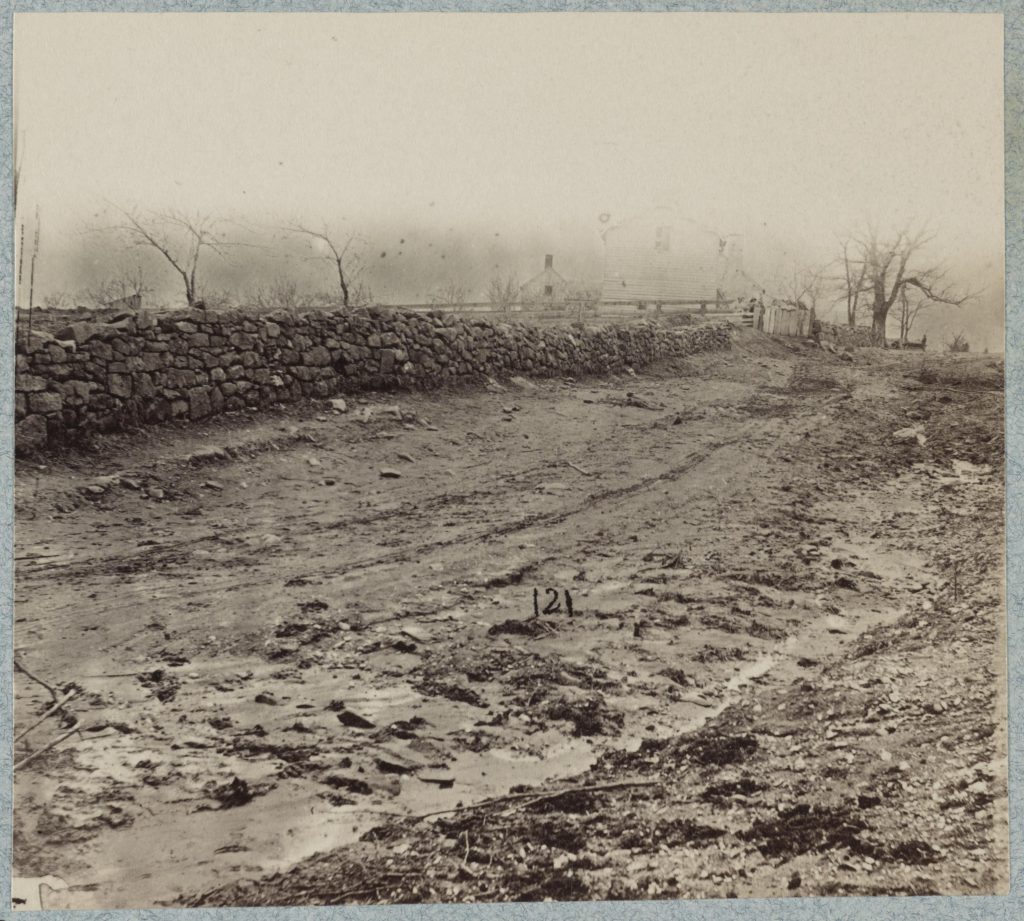
Confederate lines at Cold Harbor, Virginia. Robert Alexander was killed during the Battle of Cold Harbor on June 6, 1864.
Confederate lines at Cold Harbor, Virginia.

Robert Alexander Garner’s final letter in the collection was written on June 4, 1864, in the midst of the Battle of Cold Harbor. He datelined it from the “Lines of Gen. Lee’s Army” which was then engaged in defending the city of Richmond, Virginia, from the Union forces under General Ulysses S. Grant. In his letter, Robert Alexander first gives a summary of the fighting so far and the losses the 21st South Carolina Infantry suffered. He concluded with a description of the recent fighting and his hope for the future:

“The Yankees made a charge all along our lines yesterday. Tis reported that they were defeated all along the lines but I don’t know how true it is. I can speak for the lines in front of us; they were driven back with a big loss. I think we will keep Old Grant out of Richmond yet. I went by home as we came here. Stayed five days as we have to go to work on entrenchments. I will have to close. Let me hear from you soon.”

Tragically, Robert Alexander Garner was killed in battle on June 6, 1864, just two days after this letter was written.

We’d like to give a special thanks to William Griffing of Spared & Shared for his work in transcribing and sharing these letters.

To read the full collection of these letters, as well as access thousands more letters and Civil War documents, sign up for a Research Arsenal membership.

If you enjoyed this spotlight, check out some of our other features on Andrew Jackson Clark of the 23rd Massachusetts Infantry and David Walker Beatty of the 63rd Pennsylvania Infantry.

Research Arsenal Spotlight 16: Andrew Jackson Clark of the 23rd Massachusetts Infantry

Andrew Jackson Clark was born in 1837 to Melzar Wentworth Clark and Sabina Hobart (Lincoln) Clark of Hingham, Massachusetts. Before the Civil War, Andrew Jackson Clark worked as a painter and was a volunteer fireman. He first served in the Lincoln Light Infantry (also known as Company I of the 14th Massachusetts) at the outbreak of the war for three months. He then served in Company H of the 23rd Massachusetts Infantry and during that service composed the twenty-eight letters in our Research Arsenal collection.

Andrew Jackson Clark first enrolled in the 23rd Massachusetts Infantry on October 9, 1861. His letters in this collection begin on December 13, 1861 while in Annapolis, Maryland and mostly pertain to matters at home as he waits for his regiment to be sent out. In a letter from December 14, 1861, he gave a brief account of his camp and the vicinity:

“On our extreme is the camp of the D’Epineuil Zouaves. Nearly opposite is the 51st Pennsylvania which is trimmed up with arches and festoons of evergreens & flags, & looks like a vast amphitheater arranged for some great holiday. On the left are the camps of the 25th & 27th Mass., & the 8th & 16th Conn., all trimmed in truly [royal] style. Then while guard mounting or on dress parade on their numerous parade grounds with the bands a playing, the scene is truly beautiful—especially in the eyes of a soldier.”

The 23rd Massachusetts Infantry and New Bern, North Carolina

Scenes of New Bern, North Carolina where the 23rd Massachusetts Infantry was stationed.
Illustration of the Burnside Expedition including scenes of New Bern, North Carolina from Harper’s Weekly April 19, 1862 via University of North Carolina.

By June, 1862, the 23rd Massachusetts had been assigned to provost duty in the city of New Bern, North Carolina. On July 27, 1862, Andrew Jackson Clark wrote  home to his sister Ada about an incident of their regiment being fired on while acting as guards in the city and their manner of revenge:

“The monotony of the past few weeks has been somewhat disturbed within the past few days. Some fiends in human flesh have under cover of dark & stormy nights taken the advantage & fired upon several of our sentries which are stationed on the corners of the streets in different parts of the city. Double guards were posted & every attempt was made to ferret out the villains who perpetrated these diabolical acts. On Thursday night the guard on post [ ] of the 3rd District was fired upon & an arrest was made in the following manner. The guard was posted as usual while a second sentry [hid] himself and his arms in the vicinity. In this way he surprised & arrested a person who was prowling around there. A pistol & a large dirk knife was found upon his person. On Friday night the guard [Michael A. Galvin] on Post 5, 3rd District, was fired upon and shot through the fleshy part of his thigh (he belongs to Co. C of Glocester). Col. Kurtz instantly turned out the whole guard and went up there & arrested seven persons that night. A negro who was secreted nearby saw the flash of the gun which proceeded from the door of a large two-story house opposite.

The next morning without giving them any previous warning, the whole regiment armed with arms, axes, ropes, &c. marched up there & surrounded the house, placed everything in it out in the street, turned out the women & children & then commenced the work of destruction of all the property on the place. They leveled the house with several others which were connected with it, tore down the fences and out buildings, cut down the fruit trees, destroyed the products of a nice kitchen garden, leveled a splendid field of corn, and in fact, destroyed everything of value belonging to the estate. It was some fun for the boys maddened by the numerous attempts at their lives. The regiment went in with a will and worked like tigers until everything lay in ruins. A large crowd of citizens & soldiers were present & saw the just chastisement administered. It was not severe enough for the men—or fiends, for they do not deserve the name of men who will thus attempt to murder & assassinate the guards who are stationed about this city for the sole protection of the citizens & their property. They deserve to be hung at the nearest lamp post & should they be caught in the act, they will not meet with a much better fall to further their infernal designs. The street gas lights have several times been extinguished. A small field piece now sits half loaded in front of the guard house & should they attempt it again, they will get blowed to where they belong with little warning.”

In the same letter, Andrew Jackson Clark provided an update of the incident written on July 29:

“Since writing the above, I learn that the fiend who fired upon & shot the sentry was arrested Sunday morning & thrown into jail. He will have a trial & probably he may be hung. A thorough search has been made & arms of all description have been found secreted in different parts of the town consisting mostly of rifles, double & single barreled muskets, &c., besides powder & balls. Most of them were loaded. A splendid rifle & a double-barreled gun was found in the house from where the shot was fired Friday night. Both were loaded. There has been no more firing since then.”

Andrew Jackson Clark reflects on recruitment and the treatment of soldiers

In a letter from September 14, 1862, Andrew Jackson Clark wrote to his brother, George Clark, some of his thoughts about the government’s various bounties and incentives to get more men to enlist in the army. While he understood the need for more soldiers quite clearly, the poor treatment of soldiers whenever they returned home during furloughs, and the government’s methods to prevent desertion during that time, left a sour taste in his mouth:

“I don’t know what to make of this government & the people at this time. They offer every inducement to men to enlist, paying them exorbitant prices as bounty money & getting a better class (as the paper says) for their money. Yet they treat the men who have stood the brunt of a year & a half’s campaign like criminals or worse. Should a soldier from the hardships he has had to endure get sick, broken down and perhaps discouraged, get a furlough from his surgeon and goes home to recruit his exhausted strength, the minute he steps his foot in Northern soil a price is set upon his head, hunt him down [and is told] he has no business here—send him back to face the rebel bullets without one word of consolation from his friends. Should they live in a neighboring town & he should attempt to visit them, the police will be put upon his back & he will be arrested like a common felon. Some sneaking coward will give them the wink & get five dollars for his trouble should he be taken prisoner & let off on his parole. He must be confined—yes, held a prisoner by our own government far from the friends he has earned a right to see, whose benignant smiles & tender care he needs to refit him for active service. Oh, consistency, thou art a jewel. I have long wished to speak of these things & call them to the mind of the people in their true light but I find I am inadequate to the task.

It would break the patriotism of a man whose love of country was as strong & unbending as steel itself to see the harm of all the things heaped upon the poor soldiers of the army of the Union. Did I not know I was doing my duty, not to individuals but to my country so far as lies in m power, humble though it may be. Did I not believe that we are right & through the mercy of God will triumph over our enemies who seek to tear down as fair a government as ever existed (& if it is right conducted can do a great deal of good to suffering humanity), I should grow sick at heart & despair of any good coming out of this sinful world. I should wish myself dead before I had enlisted in the U. S. service. But I will say no more. I do not dare to write the truth as it exists. Suffice it that as long as I retain my health & strength, I shall struggle against the enemies of my country wherever they exist until this rebellion is ended. Should I be called upon to sacrifice my life in her defense, I shall die knowing that I have done my whole duty.”

Return of Andrew Jackson Clark and the 23rd Massachusetts Infantry

Image of Fortress Monroe. Andrew Jackson Clark was quarantined on ship outside of the Fort while awaiting their mustering out.
Image of Fortress Monroe. The 23rd Massachusetts was quarantined on ship outside of the Fort while awaiting their mustering out.

Though he battled some sickness throughout his service and toward the end of his term was working at a nurse at the US General Hospital in Hampton, Virginia, Andrew Jackson Clark remained healthy enough to serve out his original three year term and be discharged with the rest of the members of the 23rd Massachusetts Infantry that did not reenlist. On their way home, they faced a delay due to an outbreak of yellow fever in New Bern which forced their ship to be quarantined off of Fortress Monroe. In a letter dated September 30, 1864, Andrew Jackson Clark wrote to his brother about the delay:

“I expected to answer your letter in person but am prevented from doing so by an unforeseen delay. Here we are on our way home after an absence of three years delayed for ten days why what, you will ask. Why we are in quarantine. Have we got the yellow fever on board? Not a bit of it but it is in Newbern, therefore every vessel hailing from the woebegone place is ordered in quarantine.

The regiment has not been in Newbern and most of it not within ten miles of there. Had we come five days sooner (which but for the want of a little spunk in our officers we might have done) or had we come by the way of Beaufort, North Carolina, or had not taken any citizens aboard, we might have passed all right. But as it is, I don’t see but we have got to stop here on a crowded transport with constant exposure of the men to bad air, wet dampness, &c. which is enough to bring on the fever if nothing more. Here we have to get to lie for 8 days longer. Possibly we may get off before that time as every exertion is being made to that effect. At any rate to be put ashore somewhere where we will be alright. To make the matter worse, a man belonging to Co. F died last night of consumption and his body still lays in the long boat alongside because no one can go ashore until someone comes out to us.”

When the quarantine ended, Andrew Jackson Clark mustered out of the 23rd Massachusetts Infantry on October 13, 1864. He returned to civilian life in Massachusetts and in 1869 married Evelina M. Caine. He passed away in 1927.

We’d like to give a special thanks to William Griffing of Spared & Shared for his work in sharing and transcribing these letters.

If you’d like to read more of Andrew Jackson Clark’s letters, as well as thousands of other Civil War letters, sign up for a Research Arsenal membership.

You can also check out some of our other recently featured collections, like David Walker Beatty of the 63rd Pennsylvania Infantry and Alfred Homer Johnson of the 30th Georgia Infantry.


Research Arsenal Spotlight 15: David Walker Beatty of the 63rd Pennsylvania Infantry

This week we’re going to focus on a collection of 48 letters written by Private David Walker Beatty of Company K, 63rd Pennsylvania Infantry. David Walker Beatty was born 1844 to parents Samuel Brown Beatty and Susan M. (Walker) Beatty. He had at least seven siblings.

David Walker Beatty mustered into the 63rd Pennsylvania Infantry on August 1, 1861. In October, 1861, his father, Samuel, enlisted in Company E of the 57th Pennsylvania Infantry. While beyond the scope of this spotlight, the Research Arsenal also contains an archive of over 40 letters written by Samuel Brown Beatty to his wife, Susan. In Samuel’s letters, David Walker Beatty was frequently referred to as “Walker.”

The 63rd Pennsylvania Infantry at Washington

Civil War era Newspaper Vender and cart at Culpeper, Virginia in 1863.
Newspaper vender and cart at Culpeper, Virginia in 1863.

David Walker Beatty’s letters begin in September, 1861 while still in Pennsylvania. By October, 1861, the regiment was full and had been sent down to Washington. The 63rd Pennsylvania Infantry was under the command of Colonel Alexander Hays and the captain of David Walker Beatty’s company was Charles W. Chapman.

In a humorous letter to his mother written on October 12, 1861, David Walker Beatty addressed the newspaper’s propensity for exaggeration:

“I see it stated in the Pittsburgh papers that Col. Hays’ Regiment has all been killed and taken prisoners. We knew nothing of it until yesterday [when] we happened to see the Pittsburgh papers with an account of it. The paper stated that on the 5th we went down to the river to take a wash and the Rebels came on us and killed and took us all prisoners—what they did not kill, they took prisoners. That is a great story and no doubt many will believe it but it is too big a story to be true. On last Saturday the Colonel marched us all down to the river to take a wash but we seen no rebels. If we did, they were disguised for we did not know anything of the great defeat until we heard of it in the paper. You need not be scared about any such reports as that because we will not be killed without making some effort to save your lives. If the rebels get that close to us, we will know something about it and if they come in force, you may expect to hear of a battle.”

A couple weeks later David Walker Beatty learned his father had enlisted in the army and was quite upset and worried about it. He wrote about his fears to his mother in a letter  dated October 27, 1861:

“I received a letter yesterday from Father dated Camp Curtin, October 24th, and was much surprised to hear of his being in the army and I felt very sorry for you. I do not see how you are to get along with such a large family to support. You never can get along without there is some better fix than when I was at home.

Mother, why did you let him go? You ought to have used all means in your power to have kept him at home. He had no business to go when there is so many that have no family to support and could leave home far better than he could. I think he will rue it yet. He said in his letter he has no cause for complaint yet but after he has been in the service about two months, he will find out a thing or two that he does not yet know. But he may stand it better than I think he will. Still, a man like him has no business in such a place as this.”

David Walker Beatty and the Battle of Seven Pines

The Battle of Seven Pines, also called the Battle of Fair Oaks, took place between May 31 and June 1, 1862. During the battle, both David Walker Beatty and his father Samuel Brown Beatty were part of the First Brigade of General Philip Kearny’s Third Division of the Third Corps.

David Walker Beatty gave a brief account of the battle to his mother in a letter dated June 2, 1862:

“We have had a big fight [Battle of Fair Oaks] and I suppose you will be a little uneasy about me but the most of us are safe. The battle came off on the 31st of May and the 1st of June. We gained nothing the first day but the second day we drove them back.

Our regiment was not in the fight the second day. Our regiment lost one hundred and forty men in killed, wounded, and missing. There was none killed in our company that we know of. There was three wounded and there is five missing yet. We suppose they are taken prisoners.”

A couple weeks later, David Walker Beatty wrote about the present duty his regiment was doing as pickets, and his belief another battle was near:

“We are now acting as a reserve for the pickets. We have been out since yesterday morning and will be here till tomorrow morning. It is pretty hard business as we do not get sleeping very much on account of the firing among the pickets. They are firing nearly all the time. We thought last night that we was going to have another battle as there was an attack made on our pickets and it continued nearly all night but our boys held their ground and captured about two hundred prisoners.

We were in the rifle pits all night and what little sleep we did get we had to sleep with our guns beside us. We had to get up about a dozen times on account of the heavy firing on the picket lines and the whole of our Division was moved up to the front in expectation of a fight. We are today stationed about a hundred yards in front of the rifle pits among some fallen timber and are waiting patiently for the Rebs to attack us as Sunday is their fighting day. We never make any attacks on Sunday.”

As it turned out, David Walker Beatty only had to wait a few more days. On June 25, 1862 the Battle of Oak Grove commenced.

Death of Samuel Brown Beatty

Surgeon W. H. Worthington of the 63rd Pennsylvania Infantry
Photo of W. H. Worthington, a surgeon of the 63rd Pennsylvania Infantry until his transfer to the 99th Pennsylvania Infantry in February, 1862.

In the winter of 1862, Both the 63rd Pennsylvania Infantry and the 57th Pennsylvania Infantry fought in the Battle of Fredericksburg. At the time, David Walker Beatty was already in the hospital suffering from chronic diarrhea and did not participate in the battle.

In a letter from December 23, 1862, David Walker Beatty informed his mother of the sad results of the battle:

“I came here just the day before the fight commenced at this place and was therefore not in the fight. Our regiment was engaged but did not suffer very much. The 57th [Pennsylvania] suffered a great deal. Father was wounded in the leg but I guess not very severely. I did not see him after he was wounded. He was sent away to Washington to the hospital. The doctor of the 57th tell me that his leg will soon be well.”

Despite the optimistic prognosis, Samuel Brown Beatty had trouble recovering from his wound. Additionally, David Walker Beatty’s own condition continued to deteriorate. On January 25, 1863, he wrote wishing he could visit his father:

“I was very sorry to hear that Father is so poorly. I wish I was where I could get to see him. I should like to see him get home. I hope Uncle David will get him home if he can. Mother, I do not think you had better try to go down to see him unless you think there is no possibility of his getting well.”

After hearing of his father’s passing in early February, David Walker Beatty wrote a letter to his mother about the loss and imploring her not to apprentice out any of his siblings regardless of circumstances:

“Again I seat myself to write a few lines to you in answer to a letter which I received from you yesterday evening giving me the sad news of Father’s death. I heard of it several days ago and I feel very sorry but I hope he is better off. I hope he has gone where pain and sorrow are no more. Mother, bear up under the great affliction as well as you can. Was he buried at Salem or at Coolspring? But Mother, what do you intend to do. Will you try and keep the family at home yet or not? But one thing I want to tell you—don’t you bind out any of the children, whatever you do. If you have to let any of them go, let them go free.”

Tragically, this was very likely the last letter David Walker Beatty ever wrote. He died three days after it was written, on February 7, 1863 and was buried at the Soldiers’ Home cemetery in Washington, D.C.

We’d like to extend a special thanks to William Griffing of Spared & Shared for transcribing and sharing these letters.

If you’d like to read more of David Walker Beatty’s letters, or any of the thousands of others in our collection, you can do so with a Research Arsenal membership.

You can check out some of our other spotlight collections like Alfred Homer Johnson of the 30th Georgia Infantry and a photo album of members of the 25th Ohio Infantry.

Research Arsenal Spotlight 14: Alfred Homer Johnson of the 30th Georgia Infantry

This week our spotlight is on a collection of five letters related to Alfred Homer Johnson who served as a private in Company F of the 30th Georgia Infantry. Alfred Homer Johnson was the son of Handy William Johnson and Frances Matilda (McKneeley) Johnson and was born in Griffin, Georgia. During the war, Handy William Johnson was part of the 2nd Georgia Reserves, while four of his sons, including Alfred Homer Johnson, also joined the Confederate army.

Alfred Homer Johnson first enlisted for one year in Company C of the 39th Georgia Infantry on September 25, 1861. Around May, 1862, he enlisted for the duration of the war in the 30th Georgia Infantry, this time in Company F. Two of his brothers served in the same regiment: James Archibald Johnson and William Gilben “Gip” “Dill” Johnson. A third brother, O. Sidney Johnson, served in the 3rd Georgia Reserves until also transferring to Company F of the 30th Georgia Infantry in May, 1864.

The 30th Georgia Infantry in South Carolina

View of Charleston, South Carolina.

The first letter in our collection written by Alfred Homer Johnson on April 8, 1863. By this time he had already been serving in the 30th Georgia Infantry for about a year. His brothers, James Archibald Johnson, and William Gilben “Gip” Johnson were also serving with him. His youngest brother, O. Sidney Johnson, was about 15 years old and still to young to join the regiment.

The 30th Georgia Infantry had already served duty in Florida, Georgia, and North Carolina. At the present moment they were part of the defenses of Charleston, South Carolina. And in his letter, Alfred Homer Johnson wrote that he expected a fight soon:

“We are well. I hant got any news to write—only we are here waiting for a fight. We are expecting to be ordered to the battlefield every hour. The Yankees has 9 ironclads inside of the bar now and 40 standing just below the bar now and 75 transports down in the river. That is the news we get out here. I don’t know how true it may be.

We left Gip at Savannah. He is well. We will go back to Savannah just as soon as the excitement is over here at Charleston.”

Despite Alfred Homer Johnson’s fears of an imminent battle, the 30th Georgia Infantry was soon removed from Charleston and sent to Mississippi. It was there that he faced a much more trying moment at the Battle of Jackson.

Alfred Homer Johnson and the Battle of Jackson, Mississippi

Illustration of the Battle of Jackson, Mississippi by A. E. Mathews of the 31st Ohio Infantry via Wikimedia.

In May of 1863, the 30th Georgia Infantry was stationed in Mississippi and facing off against General Ulysses S. Grant’s Vicksburg Campaign. In between the Union Army and Vicksburg was the city of Jackson, Mississippi, and Confederate Forces under command of General Joseph E. Johnston.

Believing that the city could not be defended, General Johnston had his forces withdraw, and his rear guard clashed with Union forces on May 14, 1863. In a letter written on May 23, Alfred Homer Johnson detailed the battle to his parents and the whereabouts of his brothers serving with him:

“There has been a fight at Jackson. We was there in time of the fight. I can’t say that we was in it although all of the boys think we was in it. It is true we was on the battlefield. I only shot three times and if they had come in sight of me, I would have shot more but I wanted to see them. The [buns?] and balls fell very thick around us. I was not scared a bit—more than if it had a been hail. James was not there in the time of the fight, nor Gip. I sent him off in the rear. The Yankees would have taken every one of us if we’ens hadn’t got away just as we did. General Johnston did not intend to fight there. Our force commenced retreating in the night before the fight came next morning. We was left there to hold them in check so our force could get away.

We lost everything we had at Jackson—our clothes, knapsacks, and blankets. We hant got anything, only what we have got on. We lie on the ground every night by the fire. I done about as well with[out] blankets as I done with them. We will get some clothes and blankets I reckon before long. We have been marching every day since we have been here through the mud and it has been raining a great deal. The water is bad and hard to get.

The Yankees got three of our company—William Johnson and William Willis and Arch Head. It is some spoken that Head let the Yankees take him on purpose. I can’t say whether he did or not.”

Death of O. Sidney Johnson

In July, 1864 tragedy repeatedly struck the Johnson family. A short note sent to Handy Johnson at that time revealed grim news about three of his four sons in the Confederate Army:

“Mr. Johnson,

I will send you a word about your boys. I brought a letter from Lieut. J. M. Wise last night. Dilly are wounded in the foot very bad—left foot. Alfred in the face. Sidney are dead. He died on the 30th of June in Atlanta. — L. J. Foster”

Alfred Homer Johnson was wounded during the fighting at Kennesaw Mountain on or around June 27, 1864. His brother, O. Sidney Johnson, died from disease. William Gilben “Dilly” Johnson’s wound in the foot was recoverable, and he not only survived the war but lived until 1920.

On July 14, 1864, Alfred Homer Johnson had recovered enough from his own wounds to write to his family about the sad loss:

“Dear and beloved Mother and Father,

I seat myself to drop a few lines which will inform you of my troubles that is inflicted on me. The solemn and sad news that has come to my ear is this—that I have lost one of my brothers. I heard today that Sidney is passed from time to eternity. Oh! that the poor boy is better off than he was before. He departed from this life to another world. I was impressed that the poor boy could not stand a camp life. I hope the poor boy is better off. I hope he is where there is no war and trouble to be with him.

— Alfred H. Johnson”

Alfred Homer Johnson survived until the end of the Civil War, but finally succumbed to his wounds in 1866. His brother, James Archibald Johnson, also died of wounds received earlier on September 7, 1864.

You can read more of the Alfred Homer Johnson’s letters as well as letters by his brother, James Archibald Johnson, with a Research Arsenal membership.

We’d like to extend a special thanks to William Griffing of Spared & Shared for his work in transcribing and sharing these documents.

If you enjoyed this spotlight, you might want to check out some of our other features, like this post on a photo album of the 25th Ohio Infantry and our collection of letters by Rufus P. Staniels of the 13th New Hampshire Infantry.


Research Arsenal Spotlight 13: 25th Ohio Infantry Photo Album

This week, we’re taking a look at a photo album of members of the 25th Ohio Infantry. The album contains fifteen cartes de visite (CDVs) of men in the regiment and most of those identified belonged to Company E. Five of the soldiers remain unidentified and consist of two privates, two corporals and a first lieutenant. Many of the CDVs were made in South Carolina. The regiment was stationed in South Carolina for much of the war after 1863, so it is likely the photos were taken sometime between August 1863, and 1865.

History of the 25th Ohio Infantry

The 25th Ohio Infantry was organized at Camp Chase, Ohio and mustered into service on June 28, 1861. It initially did duty in western Virginia before becoming part of the 1st Corps of the Army of the Virginia. While part of the Army of the Virginia, the 25th Ohio Infantry fought at the Battle of Cedar Mountain as well as the Second Battle of Bull Run.

In late 1862, the 25th Ohio Infantry became part of the 11th Corps of the Army of the Potomac. As part of the Army of the Potomac, the regiment fought in the Battle of Chancellorsville and the Battle of Gettysburg. It was at the Battle of Gettysburg that one of the soldiers in the album, Nathanial Haughton was wounded. Haughton recovered and went on to become a Brevet Brigadier General before the close of the war.

CDV of Lieutenant Colonel Nathaniel Haughton, taken at Columbia, South Carolina.

After the Battle of Gettysburg, the 25th Ohio Infantry was transferred to the 10th Army Corps and the Department of the South. The regiment did duty at Hilton Head as well as Folly and Morris Islands. The 25th Ohio Infantry also fought at the Battle of Honey Hill as part of Sherman’s march to the sea. At that battle another of the men in the album was wounded, Private Daniel Knisely of Company E.

CDV of Private Daniel Knisely of Company E, 25th Ohio Infantry taken at Columbus, Ohio.

The 25th Ohio Infantry continued serving in the Department of the South long past the close of the Civil War. The regiment finally mustered out at Todd’s Barracks, Ohio on June 18, 1866.

The Men of the 25th Ohio Infantry

Nathaniel Haughton

The first CDV in the album is of the above mentioned Nathaniel Haughton, taken at Columbia, South Carolina when he was serving as a Lieutenant Colonel. Haughton was born in 1833 and joined the 25th Ohio Infantry on June 5, 1861 as a first lieutenant of Company K. On July 30, 1862, he was promoted to Captain of Company A. About a month after being wounded at the Battle of Gettysburg, he was promoted to Major of the regiment on August 4, 1863, then promoted to Lieutenant Colonel on July 13, 1864. In March 1865, he was promoted to Brevet Brigadier General. Nathaniel Haughton died from a fever after falling into a canal on January 31, 1899 at the age of 65 and was buried at Woodlawn Cemetery in Toledo, Ohio. The Daily Sentinel-Tribune of Bowling Green, Ohio, published February 1, 1899 mentioned the eerie coincidence that Nathaniel Haughton’s brother had been murdered in Toledo several years earlier by being tossed into a canal and drowning.

Edward C. Culp

CDV of Major Edward C. Culp of the 25th Ohio Infantry taken at Columbia, Ohio.

Edward C. Culp was born in Plymouth, Ohio on Mar 23, 1843. At the age of 18, he enlisted in the 25th Ohio Infantry as a sergeant in Company D.  He was promoted to sergeant major on November 1, 1861, second lieutenant of Company C on May 6, 1862, first lieutenant of Company F on September 11, 1862, Captain of Company A on March 15, 1864, Major on January 6, 1865 and then finally Lieutenant Colonel on May 25, 1866, just a few weeks before the regiment was mustered out.

After the war Edward C. Culp went on to serve as a sheriff of Norwalk, Ohio for two terms starting in 1868. He helped organize both the 1893 Chicago World’s Fair and the Louisiana Purchase Exposition in St. Louis, Missouri by serving as the secretary of the committee on ceremonies for both events. Later he moved to Salina, Kansas where he lived until his death in 1904.

Edward C. Culp also wrote a history of the 25th Ohio Infantry published 1885.

Michael Murray

CDV of Captain Michael Murray of Company E, 25th Ohio Infantry taken at Columbus, South Carolina.

Michael Murray enlisted in Company A of the 25th Ohio Infantry as a private in June, 1861. In March, 1862, some of the officers in his company including First Lieutenant Arthur Higgins and Captain James F. Charlesworth wrote to Governor David Tod recommending Michael Murray be promoted to Second Lieutenant in the Company.  According to Edward C. Culp’s history of the 25th Ohio Infantry, Michael Murray was wounded at the Battle of Gettysburg in 1863. On October 17, 1864, he was promoted to Captain of Company E. He mustered out with the regiment on June 18, 1866.

Oliver P. Hershey

CDV of Second Lieutenant Oliver P. Hershey of Company E, 25th Ohio Infantry taken at Fremont, Ohio.

Oliver P. Hershey enlisted as a private in in Company E of the 25th Ohio Infantry. In December of 1861, a detachment of the the 25th Ohio Infantry participated in the Huntersville expedition, led by Major George Webster of the 25th Ohio Infantry and who would later become colonel of the 98th Ohio Infantry. During this expedition, Private Oliver P. Hershey was the only casualty from his regiment, being severely wounded in his arm.

A few months after the expedition, in March, 1862, Oliver P. Hershey was promoted to corporal. In August 1863, he received a promotion to sergeant and then to first sergeant on May 4, 1864. He was commissioned as second lieutenant on October 17, 1864, and promoted to first lieutenant of Company H on May 18, 1865. He mustered out with the regiment on June 18, 1866.

Byron Hutchins

CDV of Private Byron Newton Hutchins of Company E, 25th Ohio Infantry taken at Columbia, South Carolina.

Byron Newton Hutchins was born at Prairie Depot, Ohio on September 3, 1844. Unlike the other men profiled above, Byron Hutchins enlisted in the 25th Ohio Infantry on February 23, 1864, at the age of 19. He served in the regiment until it mustered out of service in June, 1866, for a total time of two years and four months.

According to his obituary, Byron Hutchins suffered from heart disease and passed away on June 6, 1911, at the age of 66 years.

Conclusion

CDV of unknown lieutenant in the 25th Ohio Infantry taken at Columbus, Ohio.

A regiment has as many unique stories as it has names on its roster. When browsing an album of CDVs you can get the sense of the bonds that tied these men together and memorialized an important time in each of their lives. Although not every soldier’s name is recorded among these photos, their images will continue to be preserved and remembered to remind new generations of their deeds.

You can access the full photo album, as well as thousands of other Civil War photographs with a Research Arsenal membership.

If you enjoyed this spotlight on our collection, be sure to check out our other posts on Rufus P. Staniels of the 13th New Hampshire Infantry and deep dive into what makes up a US Cavalry Return.


Research Arsenal Spotlight 12: Rufus P. Staniels 13th New Hampshire Infantry

Photo of Rufus P. Staniels via findagrave.com.

Rufus Putnam Staniels was born in 1833 in Chichester, New Hampshire to Charles Herbert Staniels and Elizabeth N. (Johnson) Staniels. He enlisted in Co. C of the 13th New Hampshire Infantry as a private in August, 1862, and was mustered in as a second lieutenant in the same company. On February 20, 1863, he was appointed first lieutenant of Company H. Rufus P. Staniels wrote most of his letters to Selina Aiken Cook, whom he married after the war on November 28, 1865. The vast majority of the letters in this collection were written during 1864, though there are also a few from 1862.

Changes in the 13th New Hampshire Infantry

While Rufus P. Staniels joined the 13th New Hampshire when it was first formed in 1862, by February, 1864 it was undergoing some drastic changes in the men that made it up. In a letter  to Selina Cook dated February 5, 1864, he outlined a few of those changes. The first of the changes was the addition of substitutes into the service, some of which were very unreliable, as Rufus P. Staniels described:

“One of the men of old “H” came in to see me last night (one of the subs). Said he had lost every cent of his money ($76.00). Another sub, his tent mate, got it away from him by gambling. He did not even pay the sutler whom he owes I found today $15.00. He wanted to know if there was not some way by which he could get his money back again, but the one who won it from him went away yesterday A. M. & we have not seen him since — presume he has deserted. The introduction of these subs & new recruits into the regiment has changed it very much & not for the better.”

A second source of changing personnel was that many of the regiment’s initial soldiers and non-commissioned officers were leaving for appointments as commissioned officers in the various US Colored Troops regiments that had begun forming.

“Quite a number of non-commissioned officers & privates from this regiment have been up to Washington and been examined for positions as officers in negro regiments & the most of them have been successful, receiving appointments as captains, & 1st and 2nd lieutenants. I think as many as a dozen have already received appointments from this regiment. One of the sergeants of old “H” went up the other day & got an appointment as captain. The orderly sergeant is going up the first of the week to be examined.”

In a letter from February 18, 1864, Rufus P. Staniels related another story of substitute who was coerced into enlisting under promise of a bounty that never fully materialized and wanted to get his discharge.

“He says that when they arrived at Concord, he went to a saloon together with the man who had engaged him & also met another man there. Was invited to drink liquor several times but refused and was finally told by them that business was dull & he had better enlist & he finally yielded on condition that they should pay him $275.00. They paid him $175.00 & told him they would pay the other hundred in ten days since which he has seen neither men or money. And what they did pay him was stolen from him a few days after coming into camp. His age is 16 last May but he gave it as twenty through their influence. So you can see by this the manner in which many of the subs were obtained last fall. He is a pretty smart boy, wholly uneducated, & seems disposed to do his duty & is not very anxious to get out of the service — only on account of his mother, he says. I do not think they will succeed in getting his discharge.”

Rufus P. Staniels Wounded at Cold Harbor

Stereoscopic view of Cold Harbor Battlefield.

On June 1st, 1864, Lieutenant Rufus P. Staniels was severely wounded at the Battle of Cold Harbor. While advancing with a line of skirmishers, he was struck in the right clavicle by a minié ball which shattered the bone and lodged in the lower part of his right lung. There is a long account of Rufus P. Staniels’ injury in the regimental history  of the 13th New Hampshire Infantry based on letter he wrote in 1887 to the book’s author, S. Millet Thompson.

Salina Cook received a rather alarming letter a few days after the battle, written by Quartermaster Sergeant Charlie Ames of the 13th New Hampshire Infantry.

“Miss Cook,

At the request of Lt. Staniels I write you a few lines this morning to inform you of his safe arrival here in the hospital. In a recent engagement upon the 1st of June at Cold Harbor during a charge made by the 2nd Brigade he received quite a severe wound in the right shoulder which prevents him from writing you, but do not give yourself any uneasiness concerning him — his wound is not dangerous, has been dressed and is doing nicely. He is in the best of spirits & sitting near me on the bed. He will doubtless go from here to some general hospital in a day or two and requests me to say that he will write to you again as soon as he is located. The 13th N. H. lost quite heavily. The Col. was slightly wounded by a spent ball. Two Captains & two lieutenants wounded. Number killed about 15, wounded 50, missing 15.”

On the 9th of June, 1864, Rufus P. Staniels was able to write a short note to Salina of his own:

“I arrived here last night in good condition. My wound is pretty painful but I think is doing well. We are resting good here. I shall try & start for home in a day or two. I would love to be there now. Please do not give grounds for any uneasiness. Excuse brevity.

Yours as ever, — Rufus.”

Rufus P. Staniels’ Promotion to Captain and Service as Assistant Adjutant General

On July 15, 1864 Rufus P. Staniels was promoted to captain of company H, though he remailed in the hospital. After several weeks recovering from his wound, Rufus P. Staniels paid a visit to his regiment on July 31, 1864 which he then detailed in a letter to Selina on August 3, 1864. He was met with a grizzly sight of wounded men from both armies being left on the field while commanders tried without success to arrange for a flag of truce to remove and care for them:

“On Sunday [31 July] I started out again as our regiment had not come in & found it after awhile occupying the front line of works & directly in front of the ruins of the fort. The reb lines run along about 25 to 35 rods [140-200 yards] in front & on a line with the destroyed fort. The field between the two lines was literally strewn with the dead & wounded which had been left upon the field & in some places near the fort they lay in piles. Several flags of truce went out from our line during the P. M. & were met midway between the lines by a reb truce & our officers made every effort to arrange for the burial of the dead & care of the wounded, but for some reason or other it could not be satisfactorily arranged & consequently the wounded men still left to suffer until agony from hunger & thirst & the scorching rays of the sun. When the flags were out, it was of course a signal for a cessation of hostilities & we would mount the works & look over the field & at the rebs & the rebs would look at us. The smell of the dead was very offensive & it was enough to make one sick at heart to look over that field & see the poor sufferers moving their handkerchiefs or caps & trying to drive away the flies & we could well imagine the condition of their wounds. I believe that early in the morning they had run out a flag of truce & had supplied some of them with water & our boys observed several instances where the rebs carefully raised & gave water to our wounded negro soldiers who had been left upon the field.”

After the visit, Rufus P. Staniels returned to the hospital to continue his recovery. On November 19, 1864 he was appointed as an Acting Assistant Adjutant General for the 1st Brigade, 1st Division, 18th Army Corps. He mustered out on June 21, 1865 and died January, 4, 1890.

We’d like to give a special thanks to William Griffing of Spared & Shared for transcribing and sharing these documents.

The full collection of Rufus P. Staniels, as well as thousands of other Civil War letters and documents can be accessed with a Research Arsenal membership.

If you enjoyed this article, check out some of our other spotlight collections like the US Cavalry Returns and the collection of letters from Edward Horatio Graves of the 10th Massachusetts Infantry.

5 Easy Tips for Using the Research Arsenal


To get the most out of your Research Arsenal membership, it can help to know the quickest and most effective ways to search for the information you’re looking for. To help you out, we’ve prepared a short list of tips and tricks for searching the Research Arsenal database and finding the Civil War documents you’ve been looking for.

Tip #1: Choose a tile

Research Arsenal Libraries page.

The fastest way to get started with your search on the Research Arsenal is to choose a tile reflecting the library of documents you’d like from our Libraries screen. These tiles include: Photographs & Images, Letters & Diaries, Ordnance Returns, and much more.

The red number under each tile tells you how many documents of that type we currently have available to access and our collection is always growing.

What if I want to look at multiple record types at once?

If you’re interested in viewing records from every tile, have no worries. You can view all of our documents at once by clicking the “view all” button at the bottom of the screen.

Tip #2: Start broad, then narrow as needed

When searching the Research Arsenal database, we recommend that you start with a broad search first and then narrow it down depending on how many results your initial search brings. Starting broad ensures that you don’t accidentally prune away relevant results before you get a chance to look them over.

Here are a few examples of starting with a broad search and narrowing it down.

Ex. 1) Start by searching with a year or a year and a month.

Dates filter set to show all records from February, 1864.

Using the dates filter can help you find documents from a specific time, or time range. If you select “1864” for the date filter, you can view all records from 1864 in the Research Arsenal database. To view a range of dates, you can select multiple years, like “1862,” “1863,” and “1864” to see records with any of those years tagged.

In many cases, bringing up a whole year might give you too many results. In that case, you can narrow them by selecting a year and a month like “1864, February.” If that’s still too big, you can further search to see documents only from a specific day like “1864, February, 28.”

In other cases, you might be looking for documents written at a specific time, like a holiday, regardless of the particular year. For example, if you wanted to see all documents written on Christmas regardless of the year, you could leave the year field blank and search “December, 25.”

Ex 2) Start with a regiment number and state

Units filter set to show all results containing “12th Illinois.”

Another way to search the Research Arsenal database is to start by searching for a regiment, or regiments, using the units filter. Once again, we recommend starting broad first, and then narrowing the results as needed.

To start with, we recommend filling in the Regiment # and State categories. One possible choice would be “12th, Illinois,” and seeing how many results you get. If the number of results is too high, or if you get results from a branch of service that doesn’t interest you, you can get more specific and search “12th, Illinois, Infantry” or “12th, Illinois, Cavalry” to hone in on what you want.

You can also search by a specific company or companies like “12th, Illinois, Cavalry, A.” This can be great for finding records like letters or clothing ledgers from specific companies, but would leave out some records from field officers who have no company designation.

You can also search more broadly by selecting only a branch of service like “Cavalry” and seeing all cavalry records from both Union and Confederate armies. Or select “US” or “CS” under army to see only Union or Confederate records.

Ex 3) Start with a location state before a city

Filter by state menu allowing you to limit results to a single state or show multiple states by checking boxes.

The State filter allows you to sort documents by the state in which the document was written. There is also a “Locations” filter that lets you filter by specific cities and towns like “Richmond” or “Atlanta.” As in the previous cases, we recommend that you search by a state first and then narrow your results as needed.

Ex 4) Combining Filters

Finally, you can combine several categories of filters to refine your search. For example, you could search “12th, Illinois, Cavalry” and then select “Virginia (VA)” as a state and see only documents from the 12th Illinois Cavalry written in Virginia. Or you could search a regiment and limit the results to a specific year or month, like “12th, Illinois, Cavalry” and “1863.”

Use the filters in whatever combinations you’d like, just remember to start broad and then narrow down.

Tip #3: Search a keyword first

Sometimes the documents you’re looking for aren’t related to a specific regiment, time period, or location. In that case, start with a keyword search.

Keyword search box.

Keyword searches search the entire transcription, notes, and tags of a document for your search terms and bring you all the relevant results. To do a keyword search, first select a tile as described in in Tip #1, or select “view all” to search through all documents at the same time.

With a keyword search, you can search for a specific term like “coffee” and bring up all results with the word “coffee” somewhere in them. If this search is too broad, you can refine it by clicking the three dots to the right of the search button and deselecting some categories.

Refine search options showing all categories selected.

By default, all of the search fields are included. To exclude some fields, click the blue toggle so that it turns gray.

Refine search box with “Image Notes” in gray indicating that the search will exclude checking the image notes category for your keyword.

You can also combine keyword searches with the filters discussed in Tip #2 to narrow down your results.

Finally, it’s important to remember that keyword searches won’t work as effectively on documents that haven’t yet been transcribed in the Research Arsenal database. While we’re working hard to complete transcriptions as soon as possible, in the meantime you can still use the filters discussed in Tip #2 to browse the records and read the scanned images. You can also use the “Request Transcription” button on a document to let our librarians know to prioritize transcribing it and get to get an email notification when its ready.

Tip #4: Check out documents in related sets

Sometimes when searching you’ll come across a document that’s part of a related set (or sets). Related sets are displayed at the top of your search results along with a description of how many times your search term shows up in the set out of the total number of documents in the set.

Search results page showing related sets containing the search term “coffee.” In the “Benjamin Jay Cushing” set, the term coffee appears in 23 records out of 138 total records in the set.

You can also view a related set from any individual document in the set by clicking on the set name on the gray bar at the bottom of the screen.

Gray bar showing the “Letters of Heyward Glover Emmel to family” set.

Clicking the set name lets you quickly view all of the documents in the set and clicking “view in gallery” will replace your current search filters and bring you to a new gallery view containing all the images in the set.

Expanded view of related set items after clicking the set name on the gray bar.

Even if a document in a related set doesn’t have your particular search term, they can often provide additional context to the other documents in the set and are worth checking out.

Tip #5: Search by Source at the Research Arsenal

Sometimes the easiest way to find a document can be knowing where it came from. We have a growing collection of documents from the National Archives and if you’re familiar with their catalog system you can use it to find the documents you’re looking for just by selecting its call number.

To access the search by source function, you can click the “search by source/call #” tile or click the “Search” tab on the top of the screen.

After selecting a source, like “National Archives” for example, you can view a list of records available from that source below. The listing also tells you how many images are available in that listing. Double clicking on any of the listings will take you to a results page with all of the images in that call number.

Search by source page showing results for the National Archives.

After selecting a source, you can also use the call numbers dropdown menus to narrow your results. For example, you could select “RG94” to limit your results from the National Archives to just those from Records Group 94.

Conclusion:

With these five tips we hope you can have a smoother searching experience at the Research Arsenal. The best way to get the most out of your search results is to be flexible with the search terms and filters you use and to start with broad searches and then narrow down to specifics.

If you don’t have a Research Arsenal membership, consider signing up for one.

If you’d like more tips about researching documents you might enjoy this post about identifying authors of Civil War documents.

You may also enjoy our spotlight on reading and understanding US Cavalry Returns.

Research Arsenal Spotlight 11: US Cavalry Returns

Union Cavalry soldier.

The Research Arsenal is proud to announce that we recently uploaded all of the Civil War era cavalry returns for the 1st-6th US Cavalry. These returns encompass rolls 4, 5, 18, 29, 40, 41, 51, 52, and 61 of the National Archives’ M-744 microfilm collection.

What are US Cavalry Returns?

The US Cavalry returns are documents that were filed monthly by regimental commanders about the status of their regiments. During the Civil War era, US Cavalry returns contained information about the officers and enlisted men present and absent from a regiment and how those numbers changed from the previous month’s return.

The US Cavalry returns also list the regiment’s current station or post and often contain a record of events for the past month. These events are usually a list of the regiment’s movements and any skirmishes or battles it participated in. Finally, they list the names of men on extra duty and the duty they were assigned.

In addition to the monthly US Cavalry returns, there are also annual (and sometimes quarterly) reports of alterations in the regiment which can serve as a summary of the changes that occurred throughout the year (or quarter). There are also casualty reports listing the names of soldiers killed, wounded, and captured during battles.

How Can I Access the US Cavalry Returns?

You can access all of the Civil War era US Cavalry Returns for the 1st-6th US Cavalry with a Research Arsenal membership. Once you have an active membership, follow the steps below to access the US Cavalry Returns.

  1. On the Libraries screen, click the “Search NARA Microfilm” tile on the bottom row.
Research Arsenal libraries screen showing the NARA microfilm tile.
  1. On the “call numbers” dropdown menu, select “M-744″
Search NARA microfilm screen showing M-744 highlighted in blue.
  1. Double click a microfilm roll from the list below to view that particular roll of microfilm or click the “search” button to view all the rolls at once.
Results page showing all available M-744 microfilm rolls. Note that the results per page has been set to 10 per page rather than the default 5.
  1. Enjoy browsing the microfilm collection.

What information is on US Cavalry Returns?

The purpose of the US Cavalry returns was to keep an accurate record of the strength of each regiment in terms of manpower. It also provided a detailed account of where any officers and enlisted men not on duty actually were, whether it was serving on some sort of extra duty, absent sick, deserted, or any other reason.

US Cavalry returns are useful to researcher and historians because they can give a bird’s eye view of the regiment as a whole, while also giving details about individuals in it. While men on regular duty aren’t listed by name, anyone absent for any reason is listed in the remarks section along with an explanation of why they are absent.

Let’s take a look at a return to dive deeper into all they contain.

Return for the 1st US Cavalry dated November 1864 (page 1).

The first page of the US Cavalry Returns can be roughly divided into four sections: the top section listing the numbers of men present and absent and how those number changed since the last return, the box for listing the enlisted men on extra or daily duty, an accounting of all the absent enlisted men, and a small box at the bottom for identifying the regiment and its station.

Men Present and Absent: Taking up the entire top half of the paper, this gives an accounting of officers and enlisted men present and absent from the regiment and is broken down by company.

Return showing a break down of the number of men present and absent in each company of the 1st US Cavalry.

The “Present” category is broken down into several subcategories: “For duty,” “On extra or daily duty,” “Sick,” and “In arrest, or suspension.”

Similarly, there are several subcategories of absences: “On detached service,” “[absent] with leave,” “[absent] without leave,” “sick,” and “in arrest, or confinement.” There were also blanks left for commanders to fill out additional reasons for absences, and the image above shows the handwritten categories “Prisoner of War” and “Missing in Action.”

At the bottom of the box, a running total of each subcategory across all the companies can be found.

The right half of the box showing alterations since the last return.

The second half of the box on the right half of the page is dedicated to tabulating all the changes between the current return and that of the previous month. It is broken down first into the categories of men gained or lost, and then further subdivided into the reason the men joined or left the regiment.

Reasons for gaining men include: (officers) “by appointment,” “by transfer,” “recruits from depot,” “enlisted in the regiment,” “re-enlisted,” “from missing in action,” and “from desertion.”

Reasons for the loss of men include: (officers) “Resigned, or disbanded,” “dismissed,” “transferred,” “missing in action,” “died in action or of wounds received there,” “died of disease, etc,” “discharge for expiration of service,” “discharge for disability,” “discharge by sentence of general court martial,” “discharge by order,” “discharge by civil authority,” “missing in action,” and “desertion.

Finally, in the memoranda section on the far right of the page there is a small section to account for horses and artillery in the regiment.

Enlisted Men on extra duty: The bottom left of the front page contains a section for all of the enlisted men serving on extra duty to be accounted for by name with a description of the duty they’re performing.

Extra duty section of the 1st US Cavalry’s November, 1864 return. Note that no men are listed on being on extra duty.

As shown in the image above, not every month saw enlisted men doing extra duty. The space was frequently used instead for writing a summary of the regiment’s actions and movements in the last month, as seen in the example above which states:

“The regiment was encamped near Strausburg, Va November 2d. Moved to Charlestown, to guard the Rail Road then in construction. November 8 Moved camp about 6 miles, and Nov. 14 moved to Summit Point. Nov 18 Moved to Wadesville near the Opequon Creek. Nov 22/ Moved camp to Stevenson’s Station. Nov 29 Left camp on a Raid through the Loudon Valley. Killed or drove in all Cattle, burned Mills, Grain &c. Captured a few prisoners and returned to Camp near Kernsville.

Our loss was one man killed, 2 men wounded, and one man missing.”

Absent Enlisted Men: The last major section on the first page is an account of all enlisted men absent from the regiment.

Enlisted men absent from the regiment.

This section of the return is frequently very dense with information about the absent men from a regiment. The boxes on the left help organize the long list by company and by keeping count of the various ranks of the men absent.

The first line of the page is representative of what a typical entry looks like: “Saddle Serg. Oliver, Chief Bugler Peasner, and Musician Rerrot Abs. Sick at Carlisle Barracks Pa since Aug. 1864”

Regiment and Station: The final section on the first page of the return is a small section for the regiment, it’s station, and the date of the return. It’s a quick and easy way to identify the return you’re looking at.

1st US Cavalry return showing the regiment, it’s station, and the date it was signed by the commander of the regiment.

The second page of the US Cavalry Return contains two principal sections: Commissioned officers present and absent accounted for by name, and the alterations among enlisted men since the last return.

Second page of return for 1st US Cavalry dated November, 1864.

Commissioned Officers Present and Absent: The first half of page 2 of the US Cavalry Return leaves space for every officer in the regiment to be accounted for by name.

Partial section of the 1st US Cavalry November, 1864, return showing the blanks for each officer of the regiment to be accounted for.

This section of the return shows the name of every officer and their present whereabouts, whether that’s commanding a company, on detached service elsewhere, or taken as a prisoner of war. The special order putting an officer on detached service is also frequently listed, but not always.

Alterations among enlisted men: This final section of the return accounts for all the changes in the enlisted men from the previous month by name.

Alterations by name.

While the front of the return enumerated the gains and losses to the regiment numerically, the back of the form gives space for the individuals gained and lost to be written. Similarly to the front, the names are organized by gain and loss, and then subcategorized by the manner in which they left or returned to the regiment.

What if I have trouble reading a US Cavalry Return?

Reading US Cavalry Returns can sometimes be difficult given the small print and variable handwriting. Viewing the image in full screen mode and zooming in on one section at time can help make it easier to read.

If you still feel stuck, you can always send a transcription request and one of our librarians will get to work on transcribing the page and uploading it. You’ll also receive an email notification when the transcription is uploaded and ready to view.

To request a transcription, simply click the “Request Transcription” button at the top right of the page.

To see more of what the Research Arsenal has to offer, check out some of our other spotlights, like Edward Horatio Graves of the 10th Massachusetts Infantry and James Webster Carr of the 2nd New Hampshire Infantry.

Research Arsenal Spotlight 10: Edward Horatio Graves and the 10th Massachusetts Infantry

Edward Horatio Graves was born in Easthampton, Massachusetts in 1839, the son of Horatio Nelson Graves and Martha (Arms) Graves. His father died in 1852. The Research Arsenal collection contains 24 letters pertaining to Edward Horatio Graves. 9 were written by Edward Horatio Graves to his mother, and the remaining 15 were received by Graves from his family and friends. The letters begin in 1857 and end in June 1864.

Edward Horatio Graves enlisted in the 10th Massachusetts Infantry on June 21, 1861. He served as quartermaster sergeant before being commissioned as a lieutenant in 1863. He corresponded frequently with his mother, Martha (Arms) Graves, his siblings, and with a few different women friends.

Enlisting in the 10th Massachusetts Infantry

Edward Horatio Graves’ first letter to his mother was written on June 26, 1861. In it he describes his arrival at his regiment’s camp and the less-than-stellar accommodations they were provided, though his spirits were still high:

“We arrived here Sunday noon and marched immediately to Hampden Park where we have remained ever since. As soon as we arrived we commenced making preparations to sleep and get some straw and placed in our Bunks. I am now quartered in what used to be the Barn occupied by the horses at Horse Shows.”

The enlistment ceremony also saw some excitement, with several volunteers getting cold feet and being dealt with in a harsh manner:

“When we were sworn in we being the right were sworn in first and the N. Adams Company when their turn came to be sworn in some fifteen backed out and you ought to have seen the rest of the Co. take those poor men and strip their uniform off and drum them out with scarcely no clothing at all on and one man a kind of ring leader they shaved half his hair and whiskers off and then drummed him out without any hat. I felt sorry for him but he ought not to have volunteered his services.”

In the fall of 1861, the 10th Massachusetts Infantry was stationed at Brightwood in Washington, D.C. The regiment saw many of its members suffering from fever, and two women came to them from Massachusetts to aid in the hospital as nurses.

One of the women, a widow by the name of Anne Sophia (Clapp) Merrick, seems to have been known by Edward Horatio Graves, and is mentioned by him in a letter to his mother written on October 22, 1861, but the exact nature of their relationship was never revealed. Martha (Arms) Graves does refer to a “Mr. Bigheaded Clapp” in one of her letters, which is likely some relative of Anne Sophia (Clapp) Merrick. Mrs. Merrick was held in much higher esteem than her male relative:

“Mrs. Merrick is very much liked and I believe she is pleased with her position. I have not as yet claimed any relationship and shall not until I am placed under her charge which I trust I shall never be. I have been unusually healthy but we have been quite sickly here having had the Typhoid fever and about ten have died.”

Photo of Mrs. Anna Sophia Merrick and Miss Helena Wolcott, two women who served as nurses for the 10th Massachusetts Infantry in the fall of 1861. via Archive.org

Edward Horatio Graves in 1862

In August of 1862, the 10th Massachusetts Infantry was stationed at Harrison’s Landing, where Edward Horatio Graves wrote to his mother about some recent excitement in an August 3rd letter:

“We were aroused the other night about 12:00 by a furious cannonading coming from the River and the next morning I found upon enquiring down by the wharf that the Rebels had erected several batteries across the James River for the purpose of destroying the transports in the stream but the Capts of the transports had presence of mind enough to raise their lanterns to the top of their masts and thus deranged their fire and their shots went over some of them falling into the camp and doing some damage. Killed 8 or 10 men and several horses. Our heavy siege guns soon silenced them and yesterday when our forces went over they found that the Rebs had skedaddled and left several of their artillery which proved that they were in a hurry. It created some excitement necessarily as we thought that it might be a blind to draw our attention while they attacked us in front. All our reconnaissances have failed to find the enemy in force yet and many are the conjectures as to where they have gone.”

By the end of the month, Edward Horatio Graves had fallen ill and wrote to his family from the hospital:

“My Dear Mother,

Your kind letter came duly to hand and found me flat upon my back.

I was brought here to this Hospital 4 days ago in an ambulance completely worn out with our retreat from Harrison’s Landing. We left Harrison’s L. on Friday and I was comparatively well when we started but was seized with a sudden faintness and was obliged to leave my horse and get into one of the Baggage wagons where I stayed until we got to Williamsburg.”

Battle of the Wilderness

Camp of the 10th Massachusetts Infantry near Washington, D.C.

By 1864, Edward Horatio Graves had been promoted to 1st lieutenant of company K. In May, 1864, the 10th Massachusetts Infantry fought in the Battle of the Wilderness and Edward Horatio Graves was seriously wounded.

Martha (Arms) Graves wrote to her son on May 31, 1864, after hearing that he had been wounded. Her letter reflects her strongly religious nature:

“I hope you are very thankful as we are that “that bullet” did not take life. It was sent by an unerring hand. There was no chance in the matter at all and now don’t forget that your spared life is a consecrated life from the first I have only asked your life that it might honor God. You have nobly honored him in serving your Country Suffering bleeding for Freedom the second best gift of God to man. We believe our nation will be justified by its own blood. Let us believe that the blood of Jesus Christ can purify us + that is the highest honor we can give to God.”

Edward Horatio Graves replied to his mother’s letter on June 2, and gave her a few further details on his health:

“You see that I am still here and I cannot see much improvement yet although I am now able to sit up 5 minutes to a time which will tend I think to strengthen me. I have strong notion of coming home as I am how would that do. I don’t suppose you could have two invalids in the home at the same time but I have got so tired and sick of the place that I think it hinders me from getting well as fast as I might. The Dr. told me this morning that he did not think it would harm me much to go.”

Despite his serious wound, Edward Horatio Graves eventually recovered and returned home. He passed away in 1880 at the age of 41. To read the full collection of letters, sign up for a Research Arsenal membership.

Learn about other collections in our spotlight such as James Webster Carr of the 2nd New Hampshire Infantry and Asa “Frank” Chester of the 20th Illinois Infantry.


JOIN THE RESEARCH ARSENAL COMMUNITY TODAY.