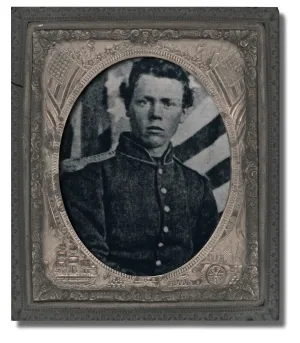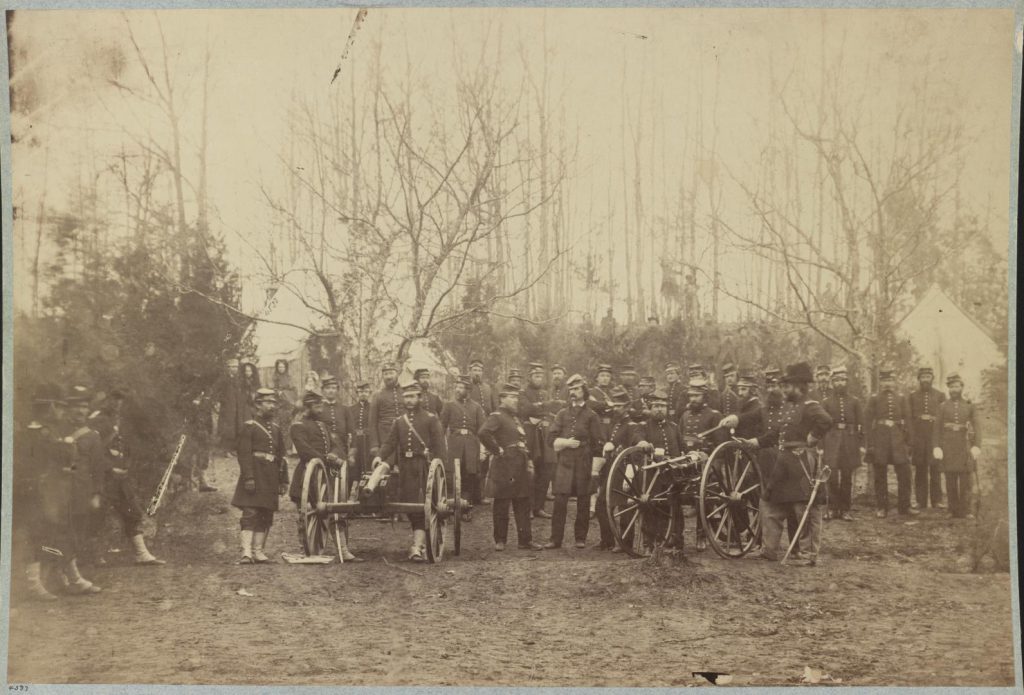
Research Arsenal Spotlight 68: Robert Browne 100th Pennsylvania Infantry

Robert Browne was born in 1821 in Steubenville, Ohio, but grew up in Pittsburg, Pennsylvania. He attended the Theological Seminary at Alleghany, Pennsylvania and was ordained as a minister at the age of 23. On August 28, 1861 he entered the service of the 100th Pennsylvania Infantry as a chaplain. He married Mary Eichbaum and addressed his letters to her. For part of his service his son, William Eichbaum Browne, accompanied him. William was born in 1847 and would have been around 14 years old at the start of Robert Browne’s letters.

Voyage on the Steamer “Ocean Queen”

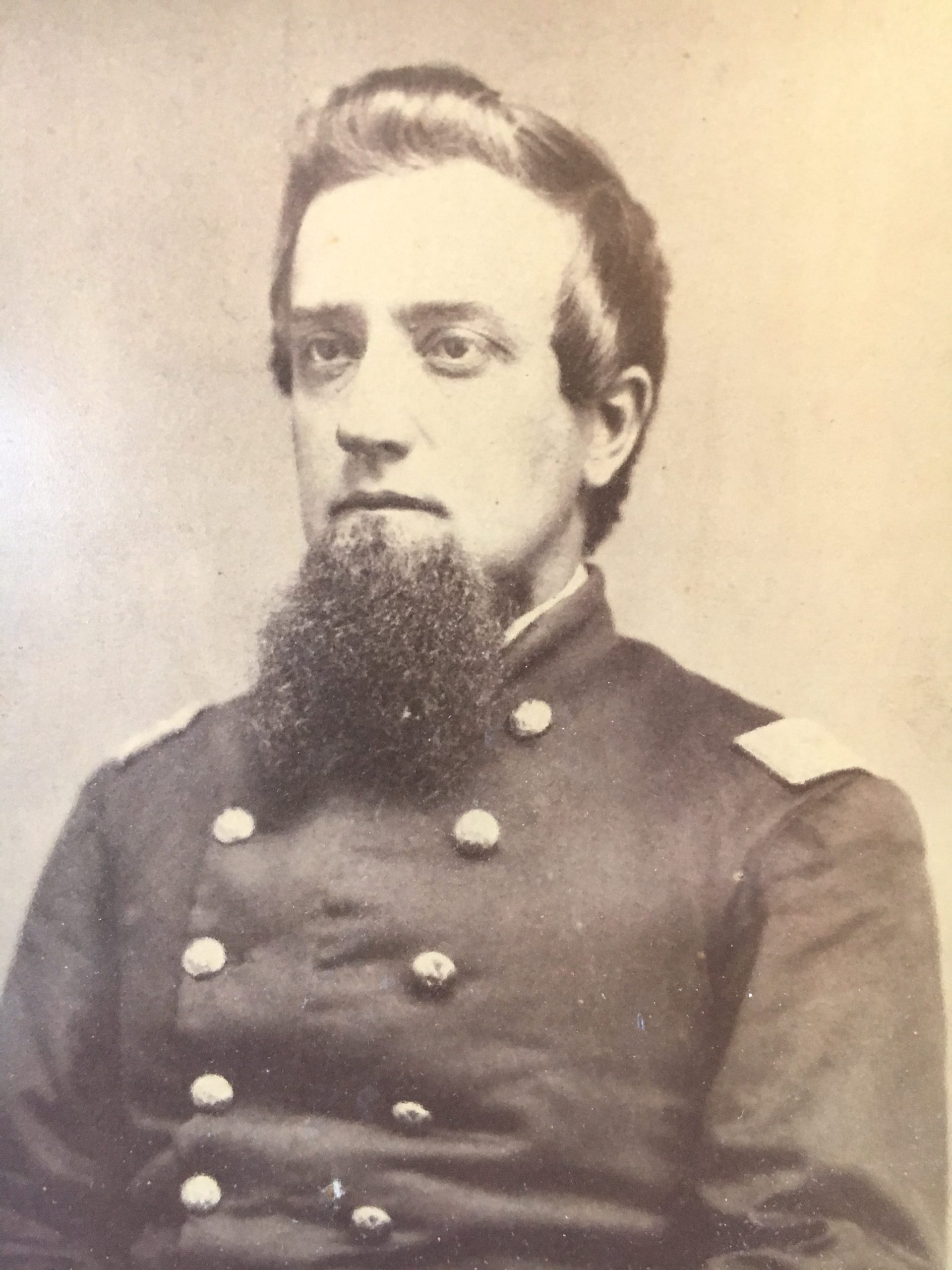
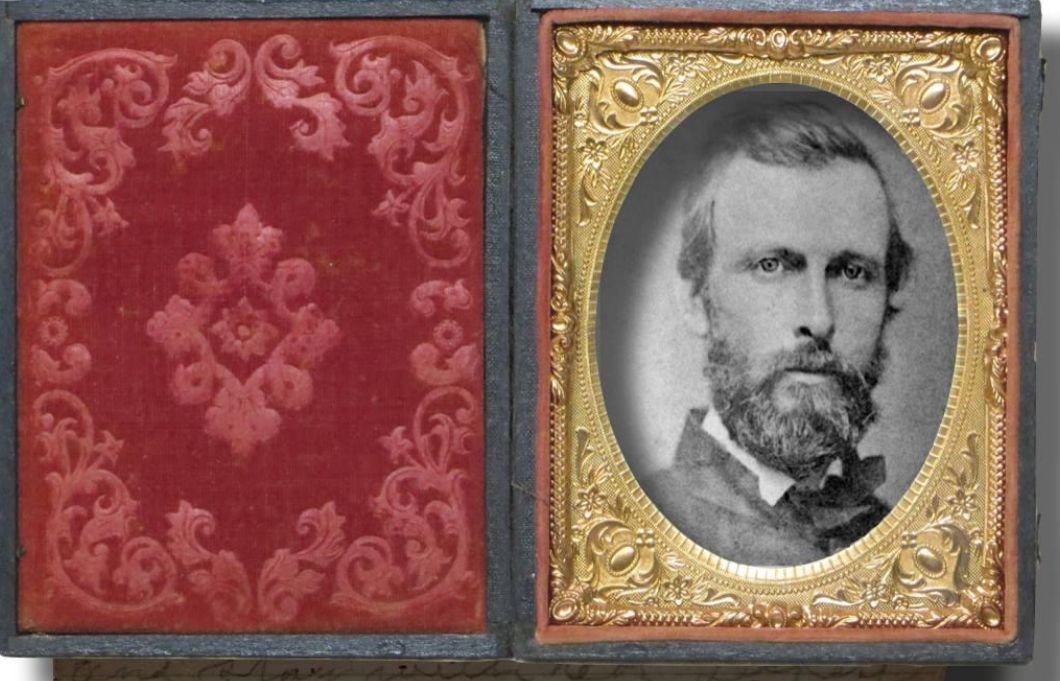
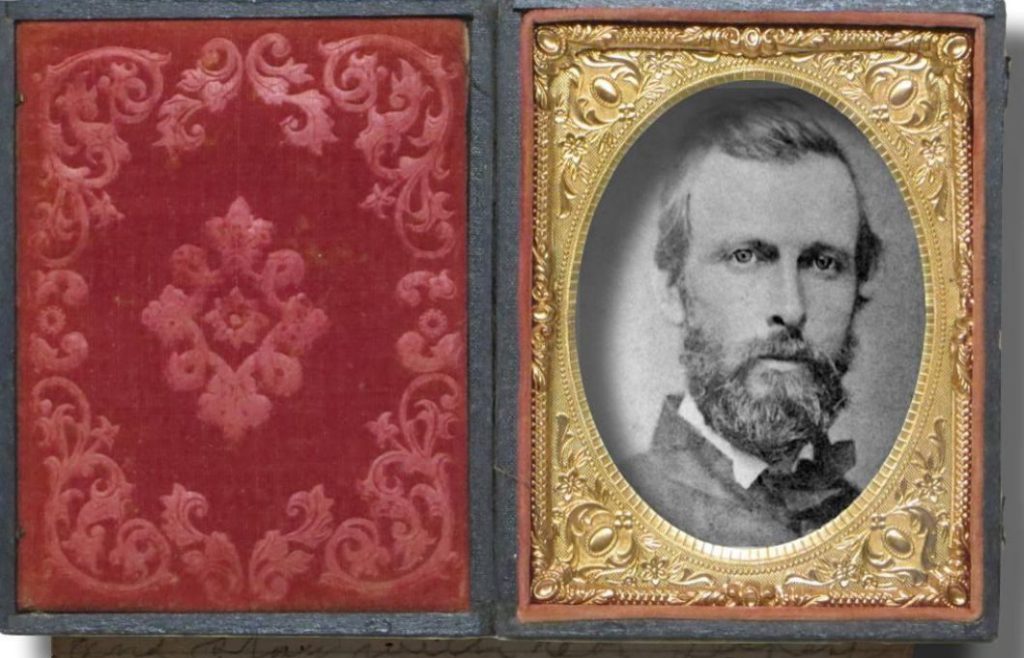
Image of Robert Browne of the 100th Pennsylvania Infantry.
Image of Robert Browne of the 100th Pennsylvania Infantry via Findagrave.com

Robert Browne’s letters begin on October 20, 1861 while waiting to travel with the 100th Pennsylvania Infantry on the steamer “Ocean Queen.” The regiment was on its way to Fortress Monroe, though Robert Browne did not know when exactly they would embark.

“The curry & bustle of such and embarkation as ours even up till the Sabbath noon, you cannot conceive. Happily we can hope we have seen the most trying part of it. When we come to sail, if the weather is fair everyday afterwards, will be orderly & comparatively comfortable. Imagine 16 or 1800 men aboard of our immense vessel which immense as it is, is crowded. The ordinary distance between decks is divided into 3 or 4 tiers of sleeping platforms made of pine lumber. There are also of course many staterooms. But all are crowded. You may ask when we will sail. I do not know. The order may come at any time. Then, we rendezvous at Fortress Monroe whence you will hear from me again.”

On October 24, Robert Browne sent another letter from the “Ocean Queen.” By this time the ship had reached Fortress Monroe, but was waiting offshore rather than letting the 100th Pennsylvania disembark, leading Robert Browne to speculate that their final destination might be New Orleans.

“You see we are still at anchor here. The reason, I presume, is that the steamers are coaling. We presume from this a long voyage is intended. We will probably touch the tropics, double Florida, navigate the Gulf, and visit New Orleans. But we don’t know. At all events, one sees these little schooners drawn up along side these immense steamers hugging them close. I was up on deck this morning—a bright, cool morning—& noticed that nearly every steamer had a little schooner buckled to it.”

In fact, the regiment only went as far as South Carolina where it participated in the capture of Fort Wagner and Fort Beauregard and was then assigned to the occupation of Beaufort. The 100th Pennsylvania Infantry and other regiments in the area continued to get in small skirmishes with Confederate forces as detailed in a letter written by Robert Brown on December 6, 1861.

“The order to break camp came to us about bed time last night and by daybreak our camp was a busy scene. Some of the boys who cannot get fighting out of their heads on such occasions could not sleep but must be up in the night working with their guns—some of which went off but did no harm.

Last night there was a skirmish at Beaufort (as I have been told since coming down to the beach) resulting in the enemy leaving some earthworks in our possession which they had been putting up since the former visit of our gunboats. As our troops are in possession, we expect no trouble. But we will be now farther from the Post Office & the postal arrangements, & again your dear mother & all the rest of you will be liable to anxiety on our account.”

The 100th Pennsylvania Infantry and the Battle of Chantilly

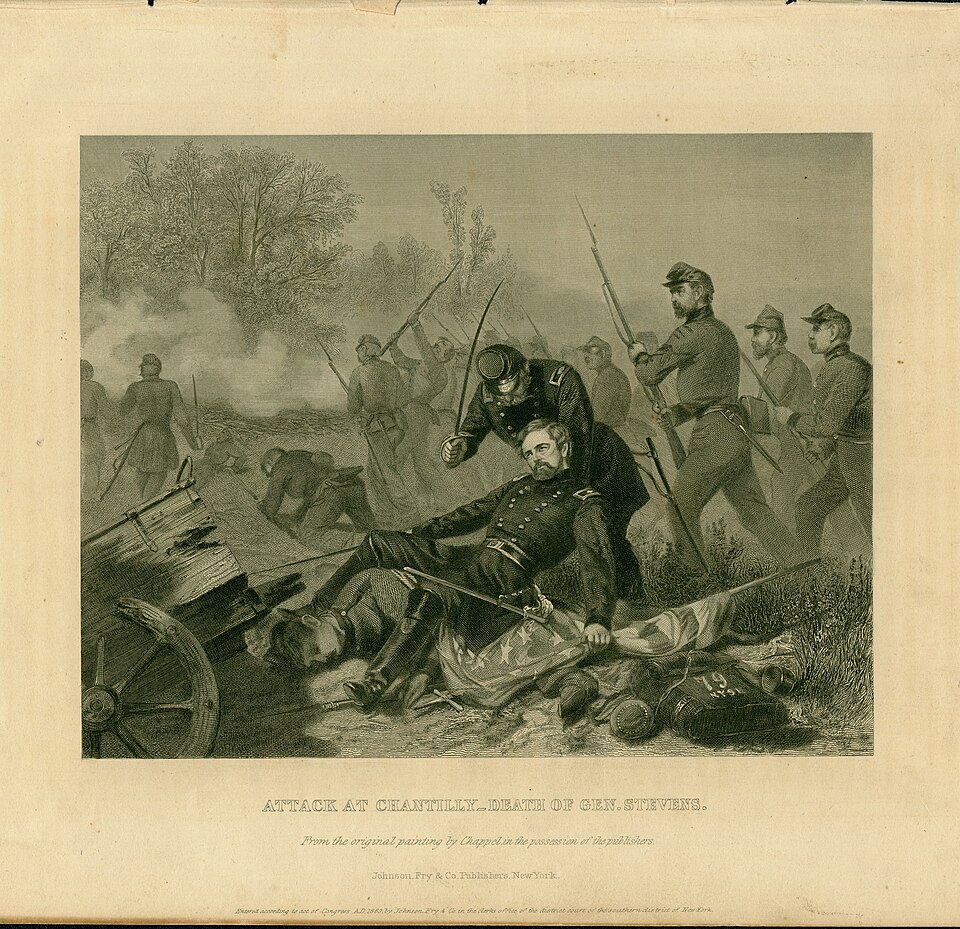
Illustration depicting the death of General Stevens at the Battle of Chantilly.
Illustration depicting the death of General Stevens at the Battle of Chantilly via Wikimedia Commons.

In July of 1862 the 100th Pennsylvania Infantry was sent north to join the 9th Army Corps as part of the Army of the Potomac. On September 5, 1862, Robert Browne wrote to his wife about the recent Battle of Chantilly which occurred after the Second Battle of Bull Run and resulted in the death of General Isaac Stevens. Robert Browne remained with the wounded in the hospital which was taken over by Confederate forces, though they were soon allowed to transfer their wounded back to Union lines under a flag of truce.

“In our battle of Monday, 1st, Gen. Stevens was killed. The last I saw of him was when he asked me to take back his son, Col. S., who had just been wounded. As I returned to the field I met our wounded being carried off. It was now dark and there was a piteous rain. I saw the regiment which had just come back from its engaging the enemy and were being formed in line of battle anew. Gen. Kearney rode up and addressing me, inquired who we were and where was Col. (Leckey), and, when I had brought Col. Leasure to him, asked if we would support his battery just posted in an advanced position. The men answered with a cheer, and supported it amid the whistling balls till the enemy were driven off by the artillery and other divisions of infantry.

I have since visited the battlefield, and seen where the dead of our army lay in a cornfield. They maintained the desperate struggle with the foe within a rod or two of each other. We gained the field, but did not hold it. The evacuation of Centreville, I presume, was necessity; and about 1 or 2 o’clock, A. M. our three divisions fell back, leaving their wounded in hospitals. I concluded with others, to remain and attend to the wounded, of whom we had about 150. Thirty-eight, I believe died before we left – which we did under a flag of truce about 6 o’clock last evening. We had to wait the arrival of our ambulances; they did not come till our provisions had run out and we were in a state of great destitution.

On the 2d a regiment of cavalry, 1st Va., Col. Brien came in, also one of infantry. The former promised us rations on arrival of his own supply, but was ordered away without their arrival as was also the other. We had a beautiful night for the trip with our wounded—23 or 24 white covered ambulances, wagons, drawn by 2 horses, pursuing their way by midnight. We had to leave about 50 or 60 behind to be brought down to-day. We reached the general hospital at Alexandria, about 3 o’clock A. M. I lay down with a portion of the wounded on the floor, the more serious cases being sent to another hospital in which were spare beds. Previous to lying down we all had coffee and soft bread.”

Robert Browne and Further Battles

On October 26, 1862, Robert Browne wrote from Maryland about a recent troop movement carried out in pouring rain.

“The 9th Army Corps are crossing into Virginia on a pontoon bridge. Long lines of cavalry & artillery have preceded us. Now the infantry of Whipple’s Division are going. So will our own do soon. They & a large assemblage of infantry besides are walking here for their turn—all wet as barnyard fowls in a full day of rain. All this I see with my eyes here but not exactly from where I write for I am seated on some rude wash house furniture under a back porch (with an earthen floor) of a Berlin dwelling of a 4th rate character whose door opens right on the canal. The drip of a roof without a gutter comes down in big drops steadily.”

A few months later, on December 15, 1862, Robert Browne wrote a very brief letter from Fredericksburg, Virginia. His son, William, who was around 15 years old and accompanying him with the regiment added additional lines.

“We crossed the river on Friday. Saturday a portion of the army had a very bloody battle. We saw it but were not called to take any part. The 134th [Pennsylvania] were in the fight & lost 50 killed & a number wounded.

Dear Mother,

I have just been over the river and as the regiment was waving, I started for it and Father had to quit writing. There has been some terrible fighting but our regiment has not been in it yet and the worst of it is over. Our regiment moved out of the town just as I came away and will not fight tonight. Father is well…”

Summer found the 100th Pennsylvania Infantry camped outside of Vicksburg, Mississippi. Robert Browne wrote a bit about their location and the ongoing siege in a letter dated June 23, 1863.

“I drop you a few lines at 7 A.M. There is nothing specially important. We are camped where we hear the pounding at Vicksburg which is about 10 miles southwest of this. We are near the Yazoo [river] and about 12 miles perhaps up that river & 3 miles out from the river at what I believe is called Snyder’s Bluff—not as far up as Haines’ Bluff. Last night we got orders to be ready to march on 3 or 4 hours notice with 3 days cooked rations. This morning we find a column has been going past in a south-easterly direction for 3 or 4 hours—said to be to meet Johnston with his army that have come up somewhere near the Big Black for the relief of Vicksburg. Of course all this may be so or may not. A very large amount of artillery went out with this moving column this morning.”

Robert Browne continued to serve with the 100th Pennsylvania Infantry until his resignation on December 28, 1863. He later became a state senator in Pennsylvania and the president of Westminster College. He died in 1902.

We’d like to give a special thanks to William Griffing of Spared & Shared for his work in transcribing and sharing these letters.

To read more of Robert Browne’s letters as well as access thousands of other Civil War letters and documents, sign up for a Research Arsenal membership.

If you enjoyed this article, check out some of our other featured collections like Charles Johnson of the 16th Massachusetts Infantry and Theodore Harman of the 153rd Pennsylvania Infantry.

Research Arsenal Spotlight 67: Charles Johnson 16th Massachusetts Infantry

Charles Johnson was born in 1836 and was living in Boston when he was commissioned as a captain in the 16th Massachusetts Infantry. He was married to Ellen “Nellie” Shepard Albree and the two had a son, Charles Berkley “Berk” Johnson, born in 1859. Charles Johnson joined the 16th Massachusetts Infantry very early in the war, receiving his commission in July, 1861. All of the letters in this collection were addressed to his wife, Nellie, though he frequently asked her to pass on messages to his father and mother.

The 16th Massachusetts Infantry at Camp Hamilton, Virginia

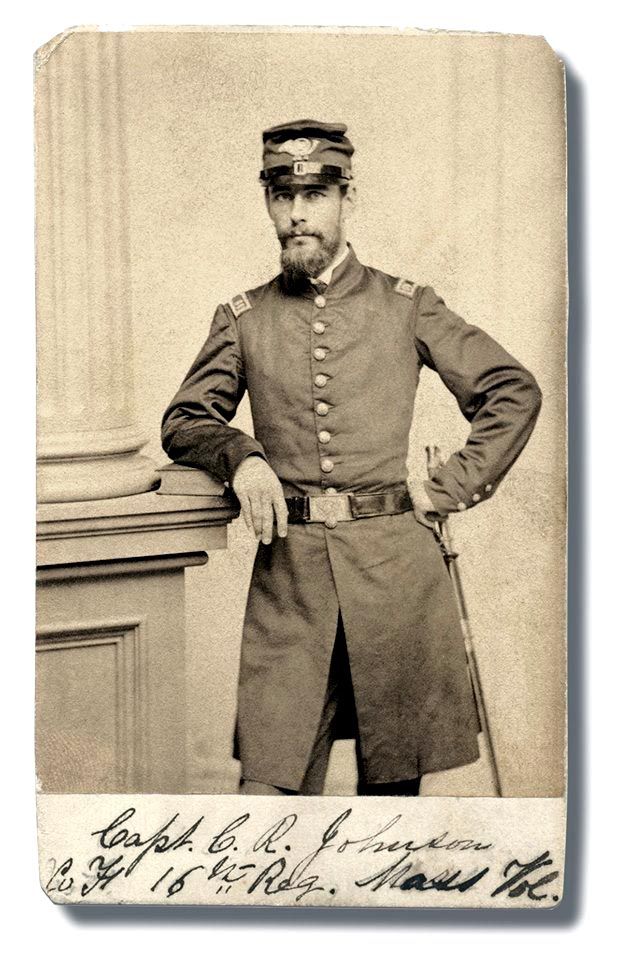
Captain Charles Johnson of Company F, 16th Massachusetts Infantry.
Captain Charles Johnson of Company F, 16th Massachusetts Infantry via findagrave.org

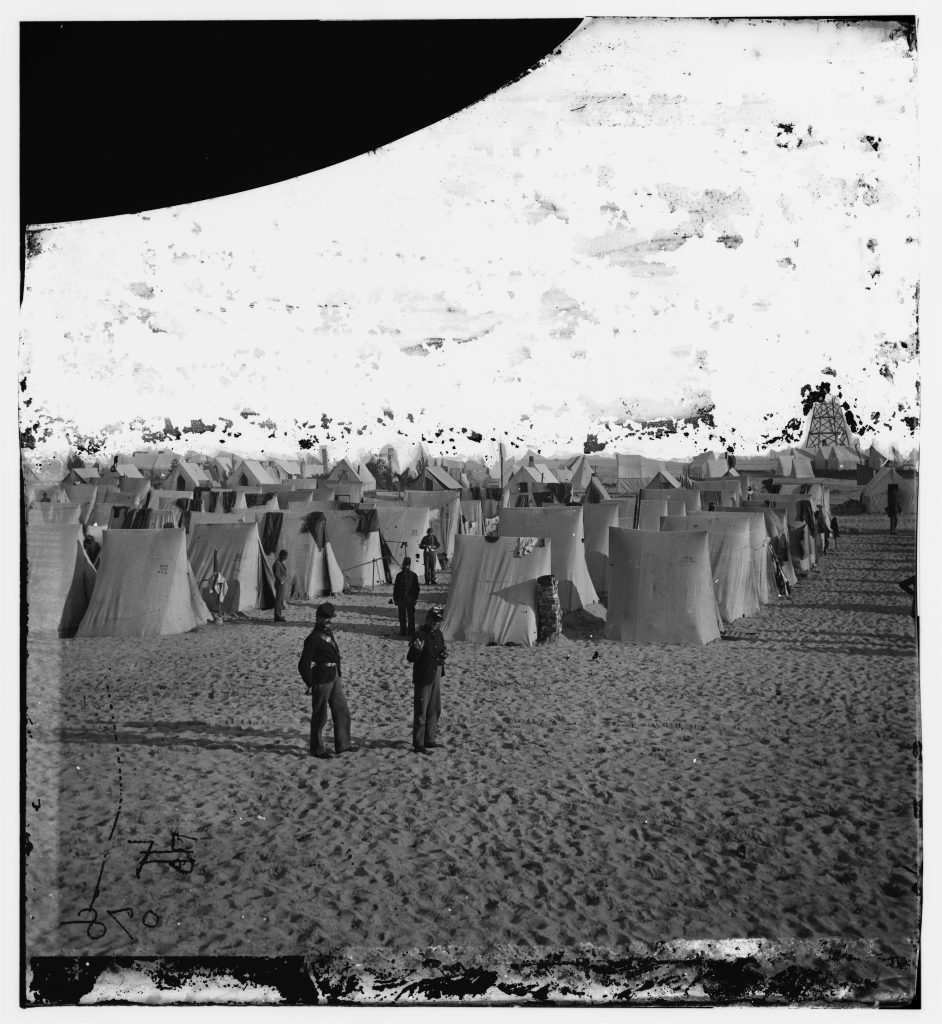
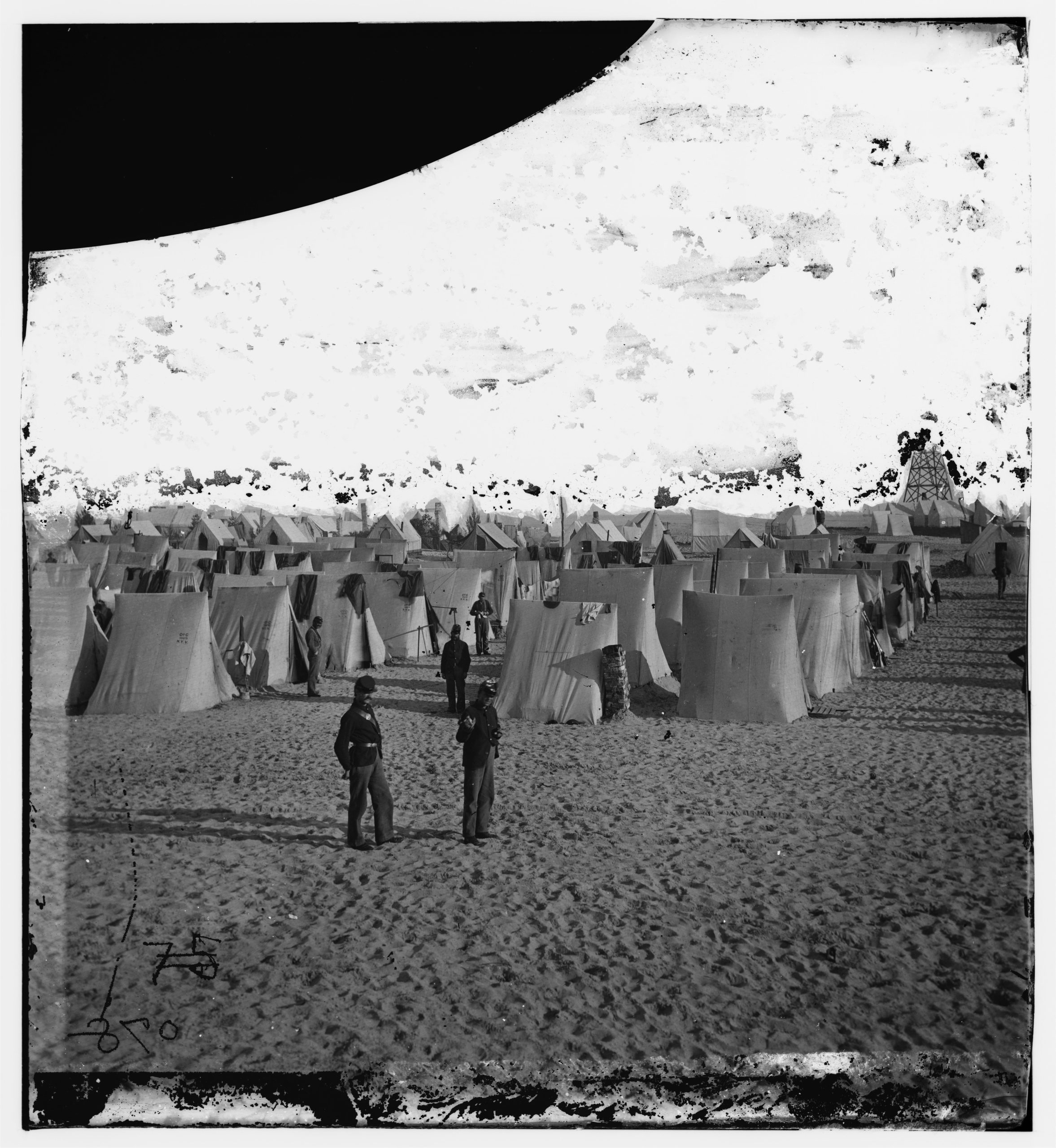
The letters in our collection begin in November, 1861, while the 16th Massachusetts Infantry was stationed at Camp Hamilton, Virginia. The first letter was written on November 4, 1861 and in it Charles Johnson mentions rumors about a disastrous battle at Ball’s Bluff, though he has not received official details yet.

“There are a large number of rumors about. Those in relation to the Naval Expedition are bad; rumor says the fleet landed its forces at Ball Bluff or someplace 25 miles this side of Charleston, S. Carolina. You will hear of it by the newspapers before this reaches you if it be true.”

The Battle of Ball’s Bluff, fought on October 21, 1861, did prove to be another humiliating defeat for Union forces, brought about in part because of the disorganized crossing of Union forces across the Potomac River and the inability to withdraw them quickly after facing Confederate resistance, eventually leading the Union forces to be routed.

However, given that Captain Charles Johnson mentions the Naval Expedition outside Charleston, South Carolina, he may have been conflating the then ongoing Battle of Port Royal with the previous fight at Ball’s Bluff or may have been drawing a comparison to the scattered arrival of ships at Port Royal caused by a violent storm to the disorganized crossing of the Potomac. Unlike the Battle of Ball’s Bluff, the Battle of Port Royal did result in a Union victory and the capture of Fort Walker and Fort Beauregard, though this did not occur until after Charles Johnson’s letter had been written.

Charles Johnson wrote to Nellie again on November 17, 1861, and this time revealed some of the circumstances and difficulties of camp life at Camp Hamilton.

“Last day and night have been quite cold but my company have in each tent a brick furnace, most of which work well, keeping their tents warm through the night. Mice are getting to be quite thick and troublesome. They completely—I almost thought so—spoiled my best coat eating two great holes in the back. One of the holes was three inches long by two wide but a tailor in my company succeeded in getting cloth enough inside of my coat to piece it and it will not show much now.”

A week later, Charles Johnson wrote again and mentioned a large build up of forces in the area, perhaps preparing for an expedition.

“There has been within the last week a great addition to our numbers and troops are continually arriving. We shall have in a fortnight a large army if reports are true. We don’t know whether they are intended for a naval expedition or to make an approach from here which if we do, we shall have the support of the Navy. Four gunboats night before last shelled a Virginia regiment lately encamped causing them to evacuate.”

Winter at Camp Hamilton

After his November 24 letter, there is a gap in Charles Johnson’s letters until January 1862. Now heavy into the winter season, Charles Johnson’s thoughts turned from upcoming expeditions to making it through the cold season as comfortably as possible. On January 16, 1862, he wrote about one surprising planned improvement to their camp: a gymnasium. He also responded to a wish from his wife that she could come down and visit or stay with him.

“We are building a gymnasium for the men of the regiment for their health and amusement during the rainy season. I am afraid that I shall have to say no to your wish as I have not any accommodations. We shall have wet and bad weather for moving about during the next two or three months.”

With the weather making most large scale actions impossible, Charles Johnson instead wrote about gifts from home and the poor conditions of the area, as shown in this except from a letter written January 22, 1862.

“I received from home a large box containing sack from Mrs. Glidden and some gingerbread from Mrs. Leeds. Also peanuts, cake, gelatin, and two bottles currant wine which has not improved any. The weather is and will be unpleasant for the next two months. The roads are in a horrible condition.”

Finally in March the improving weather brought rumors of upcoming movements, though in Charles Johnson’s case it also meant that there would be no chance of him traveling home on a furlough.

“I am sorry to disappoint father but I may stay here. The reasons are against our moving. All the regiments arriving are brigaded and unless we form a brigade of the regiments here, we shall probably remain for some time at least. You need not be surprised to hear that General McClellan has arrived at Fort Monroe. I don’t know nor can I conjecture the number of troops arrived or to come but they are here in large numbers and are continually coming. I saw sixteen large river steamboats entering Hampton Roads together. It was a magnificent sight.”

Charles Johnson at Alexandria, Virginia

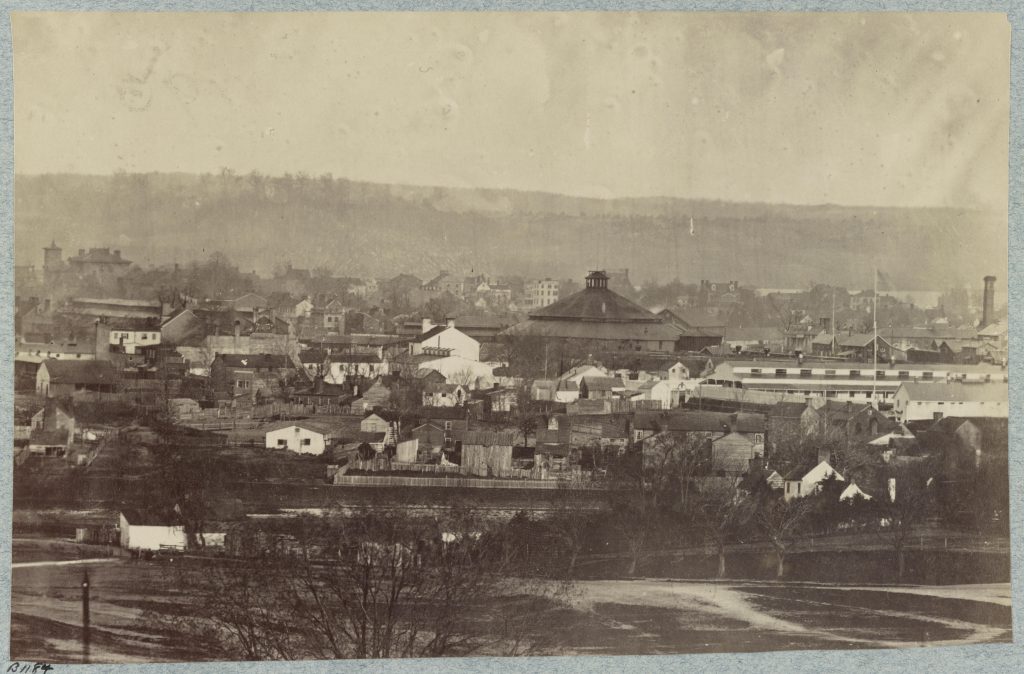
Photo of Alexandria, Virginia.

In the fall of 1862, Charles Johnson wrote to Nellie from Alexandria, Virginia, where the 16th Massachusetts Infantry. Unlike his objections in January, Charles Johnson now welcomed a visit from Nellie to their new quarters, provided the regiment stayed at Alexandria.

“In case I had no objection to your paying me a visit what would you have to pay Lottie while you were with me—say you were with me a month either with or without Berk. If we should stay here through the winter, I might be willing you should pay me a visit but you would be obliged to undergo a great deal of inconvenience more than you can imagine. For twenty-five dollars, I imagine I can prepare a place where you would be warm, equal in. size to two wall tents. This is only what I think of it now. I may change my mind when the time comes.

Quartermaster Copeland would have his wife here perhaps at the same time. I bought a few boards today to floor my tent. I hope soon to know whether we shall stay or not. Three weeks will decide the question.”

Unfortunately, it is not clear from subsequent letters whether Nellie ever came to visit Charles Johnson.

In the final letter in our collection, written on March 26, 1863, Charles Johnson wrote that he expected the 16th Massachusetts Infantry to move out soon.

“I will write you a few hurried lines. Indications seem to point to an early move. Officers are to have an opportunity to send all baggage over twenty lbs. for storage. There is also a rumor that they will stop granting leaves of absence after the 1st of April which will prevent my coming.”

Charles Johnson was wounded at the Battle of Chancellorsville in May, 1863, and then again at the Battle of Gettysburg in July, 1863. After being hit in the thigh and limping three quarters of a mile to the rear, Captain Johnson spent several days in a field hospital with inadequate sanitary conditions. He returned home to Boston and Nellie and spent three days with her before dying of his wounds on July 17, 1863.

We’d like to give a special thanks to William Griffing of Spared & Shared for his work in transcribing and sharing these letters.

To read more of Captain Charles Johnson’s letters as well as access thousands of other Civil War letters and documents, sign up fore a Research Arsenal membership.

If you enjoyed this article, check out some of our other featured collections, like Theodore Harman of the 153rd Pennsylvania Infantry and Henry Beckwith of the USS New Ironsides and USS Yantic.

Research Arsenal Spotlight 66: Theodore Harman 153rd Pennsylvania Infantry

Theodore Harman was born January 29, 1836 to George Harman and Mary Ann (Steinmetz) Harman of Pennsylvania. On February 2, 1862, he married Louisa Moyer. Only a few months later, on October 11, 1862, Theodore Harmon enlisted in the 153rd Pennsylvania Infantry as a sergeant in company I. His brother, Peter, also served in the same regiment in company A.

Theodore Harman’s Entrepreneurship

Ambrotype of Theodore Harman taken in March 1863 at Brooks Station, Virginia. Theodore mentions getting this picture taken in a letter written March 14, 1863.
Ambrotype of Theodore Harman taken in March 1863 at Brooks Station, Virginia via Spared & Shared. Theodore mentions getting this picture taken in a letter written March 14, 1863.

Theodore Harman wrote his first letters to his wife while at camp at Harrisburg, Pennsylvania, before the regiment was formally mustered into service. His first letter in our collection was written on September 29, 1862 and gave a very brief summary of camp life.

“And now I will let you know a little about our soldiering that we have. We sit in the tents but [it] is so very hot we hardly can stand it. And some is a writing and some is a looking and some a sleeping and some a reading & some a praying & so they are all busy. And now I will let you know a little about our grub. We get pork, beef, beans, & rice, very good bread & crackers, coffee as much as we want. We don’t suffer.”

The next day, Theodore Harman revealed that he was going to be a sergeant in his company and was already earning some extra money by working as a barber.

“And now I let you know that I hain’t cook anymore. I resigned. They put me in for sergeant. I like it better. It hain’t quite so greasy and I am very busy every day. I am barber. I cut very many hair. I charge 5 cents apiece.

And now I let you know that we get our bounty today but I tell you this is fun for the fellows to get their money. But I won’t keep one dollar. I will send you five and send father 45. I can earn every day as much as I want for spending money with cutting hair.”

After waiting several weeks for their uniforms to arrive, Theodore Harman wrote  on October 12, 1862, that the uniforms had finally come and that he was earning even more money by charging money to sew on epaulets.

“And now I must close. I am very sleepy. I didn’t sleep much in two nights and my hand hurts so bad. I sowed epaulets on the soldier’s coats. I got eight cents a piece. I earned 71 cents today.”

Soon after, the regiment traveled down to Virginia and was assigned to Franz Sigel’s brigade.

The Battle of Fredericksburg

While the 153rd Pennsylvania Infantry did not participate directly in the Battle of Fredericksburg, they were on their way there when the fighting occurred. On December 14, 1862, Theodore Harman wrote about being on the way to Fredericksburg and the large number of Union soldiers he encountered on the way.

“And now I must let you know that we had a very hard march and hain’t done marching yet. We have marched now for days through the mud and dirt till over our shoes. That was the hardest job that I ever had but this morning I feel good. I am ready for another march and I think we will march off very shortly. I thought we would take off already but we wait for our rations. They are all we just got two crackers and one pound of steak for one day and that was rare but the men ate it raw. But I can’t do that. I just threw my steak in the fire till it was roasted, then I ate it. I tell you, Louisa, soldiering is a hard life but I like it better than I did. I think we will be down in Fredericksburg tomorrow. Then we will have some fighting to do. But that is just what I like.

I seen more soldiers this morning than I ever seen [before]. They are all moving down to Fredericksburg. They’ve been marching through this place since this morning daylight but I think we will start pretty soon too and I think they are about 30 thousand of soldiers that camped here last night and they are all going down to Fredericksburg. And if we are all down, they are about three hundred thousand soldiers there.”

While the 153rd Pennsylvania was spared from the fighting, the 129th Pennsylvania was not. The brother of Theodore Harman’s wife served in the 129th Pennsylvania, and on December 20, 1862, Theodore Harman wrote to her about what he learned after visiting the regiment.

The first thing Theodore Harman reported was that her brother, Josiah Moyer, had been wounded.

“…I asked where Josiah was and then they told me that was wounded and was in the hospital. Then that broke my heart to hear such news but they said he was just slightly wounded. The doctor dressed the wound and took the ball out and then he felt better again. But the doctor said that it weren’t dangerous with him.”

After the assurance that her brother would be alright, Theodore Harman then shared more details about the battle.

“They say it was awful to see our men fall and the balls came just like hail and killed our men like flies. The loss [in] killed, wounded, and taken prisoner of that regiment was about one hundred and forty men and out of Company D was twelve wounded and two killed and four taken prisoner and a few missing.

But they told me that they have seen enough of fighting. They don’t want to see more of it. War is a bad thing to hear of but it is worse to see it. I think I have seen enough of it too. I don’t want to see more of it either. I am just seen enough of it if I only wouldn’t never see more of it. It is nothing but humbug and money machine. Our officers is too dumb to fight. They know how to take the men in the fight but they don’t know how to get them out. I think our loss is about ten thousand killed and wounded and the rebels is about twenty-five hundred killed and wounded. That’s what the rebel paper says.”

The modern estimates for Union losses are 1,284 killed, 9,600 wounded and 1,769 captured and missing. Confederate forces suffered about half as many casualties.

The Battle of Chancellorsville

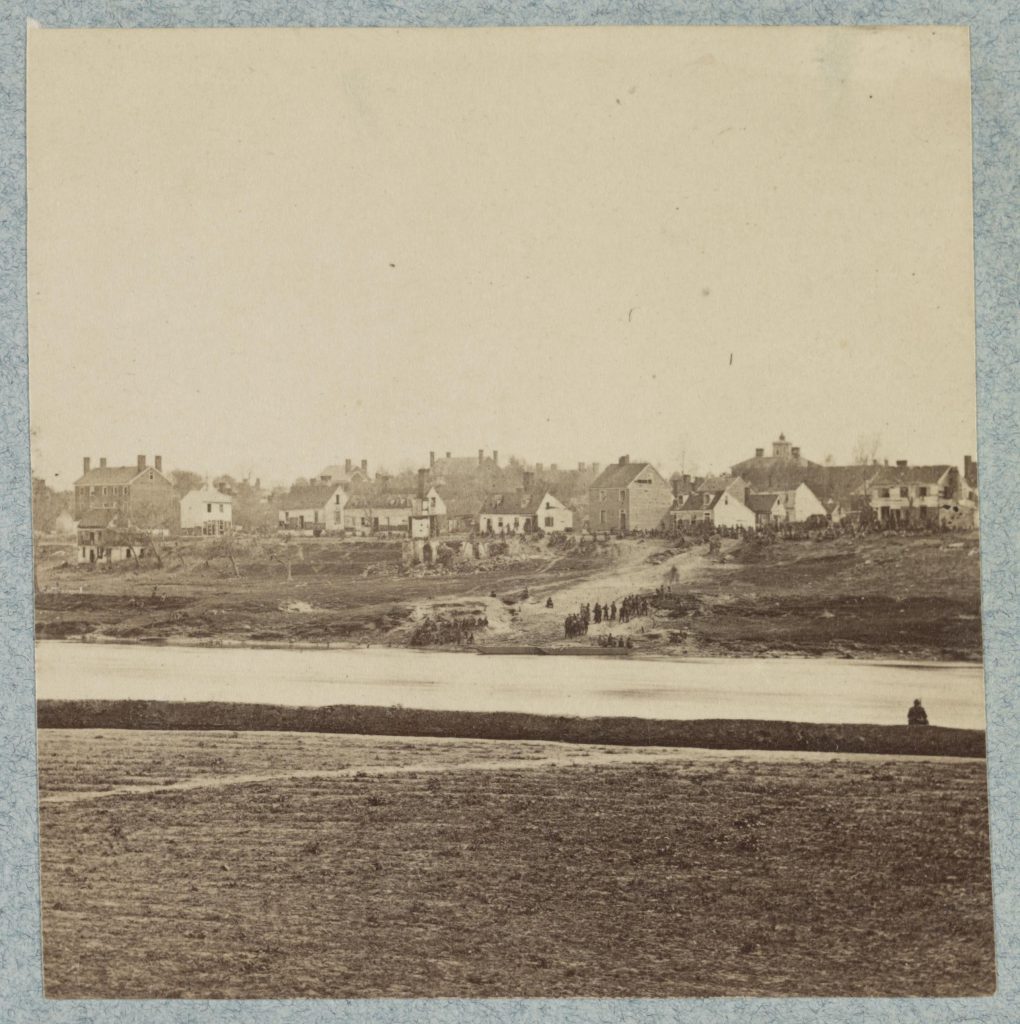
Image of wounded soldiers being moved across the Rappahannock River under flag of truce after the Battle of Chancellorsville.

On May 5, 1863, Theodore Harman wrote to his wife, Louisa, about the recent Battle of Chancellorsville.

“I again take the opportunity to address a few lines to let you know that I am safe so far. And further I let you know that we left our old camp on the 27th of April and marched down towards Kelley’s Ford and then we crossed the Rappahannock on the 28th at about midnight and then we laid down and slept till morning. And then we marched again and so we marched day and night till on the first of May the Rebels made an attack on us. We was in the woods and had formed a line of battle and the Rebs made a charge on us and we commenced to fire on them and fought about five minutes. And then the balls came just like a hail storm and then we got orders to retreat. And then the knapsacks flew and we run through the woods and the balls flew around our heads. I thought every minute one would hit me but thank God, I am safe.

And so they kept on fighting till about midnight and then on Sunday morning they commenced to fight again and so they fought most all day, but [by] then we wasn’t in [the fight] anymore. They fight every day along our line [at] the time I am writing this letter. They have [had] a pretty hard skirmishing but we [continue to] drive them back. I think the Rebels lost [a] great many more than we did. I hope we will lick them this time.

Our regiment didn’t lose very many. I don’t think that our company lost any killed but five wounded — namely Joseph Breidinger shot in the face, and Samuel Drach shot in the back, and Moses Warner shot in the leg, and George Howell shot in the neck and a horse ran over Israel Kocher but he hain’t hurt very bad. But there is several of our men missing — Lewis Clewell and some others — but then they will come to the regiment yet. And further I let you know that [brother] Peter is amongst the missing too but I think he will come to the regiment again.”

On May 10, 1863, Theodore Harman wrote another letter and revealed that his brother was still missing.

“Time seems very long and lonesome now. Since the battle was [fought], I feel quite lost being I don’t know where Peter is, but I hope he will come to the regiment yet. I don’t hope that he is killed or wounded but I think he sticks somewheres yet. Some told me that they seen him on this side of the river and Harry [Harrison] Gross [of Co. A] is lost too. But I seen Harry on our retreat and then he was alright yet. There is some twenty missing of Company A but perhaps they are taken prisoner. I feel very sorry for the boys but I hope we will see them yet.”

In another letter written on May 18, Theodore Harman revealed that his own survival in the battle was from being able to quickly retreat.

“I never thought I would come safe out of that fight [at Chancellorsville] but God and my legs spared me there. My intention wasn’t to run but I had no other way to get out but to run. And further I let you know that Peter is not here yet. The report is that they were taken prisoner but I am glad if it is true because Louisa [Peter’s wife], she troubles herself about him. I received a letter from her last night and she is in great trouble. But I wrote to her that she shouldn’t trouble herself about him because he is alright. Some of our men told me that he and Harry Gross and George Fritz was taken prisoner but I think we will find out more about it before long.”

Sadly, Theodore Harman got sick with typhoid fever in June, 1863 and died at Columbia College Hospital on June 29, 1863. His brother, Peter, was indeed captured at the Battle of Chancellorsville and was taken to Libby Prison until he was exchanged on May 30, 1863. Peter survived the war and lived until 1927.

We’d like to give a special thanks to William Griffing of Spared & Shared for his work in transcribing and sharing these letters.

To read more of Theodore Harman’s letters and access thousands of other Civil War letters and documents, sign up for a Research Arsenal membership.

If you enjoyed this article, check out some of our other featured collections like Henry Beckwith of the USS New Ironsides and Thomas Griffith of the 116th New York Infantry.


Research Arsenal Spotlight 65: Henry Beckwith USS New Ironsides

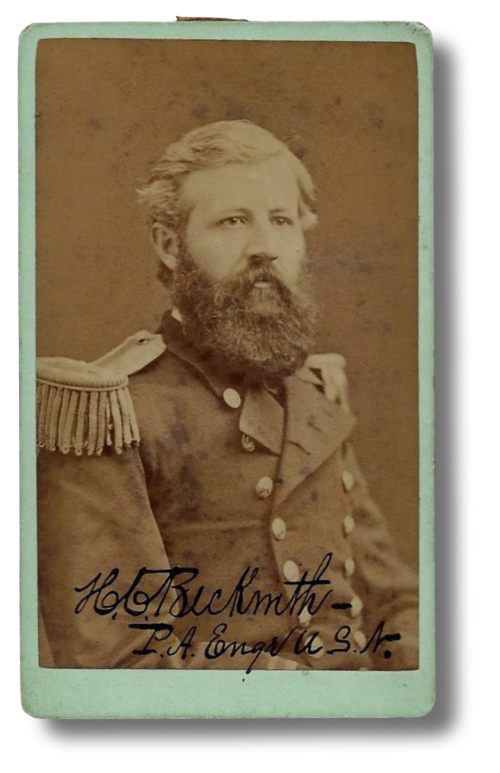
Henry Beckwith was born in 1839 to David Beckwith and Eliza (Rathbone) Beckwith of Chesterfield, Connecticut.  He enlisted in the US Navy on June 27, 1862 and served as the Third Assistant Engineer on the USS New Ironsides.

Henry Beckwith Third Assistant Engineer

Postwar CDV of Henry Beckwith.

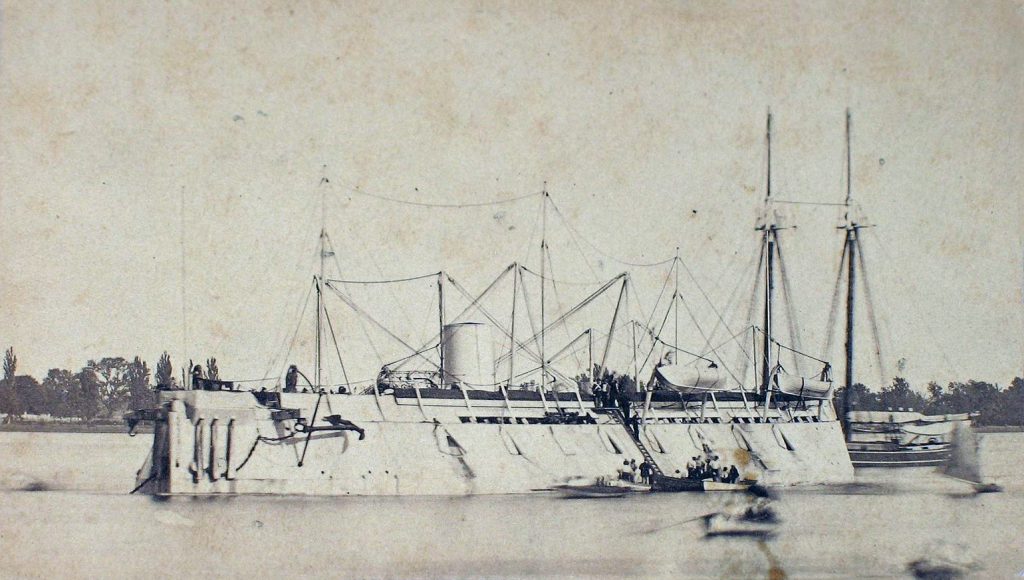
The first letter in our collection was written by Henry Beckwith on October 13, 1862 while the USS New Ironsides was near Hampton Roads, Virginia. The USS New Ironsides was a broadside ironclad ship constructed in 1862. In the letter Beckwith described some of his duties as the Third Assistant Engineer of the ship as well as the large amount of coal required to keep it running.

“We have the same duties to do on a Sunday that we have any other day which are not usually very tedious when laying under banked fires as we are at present. But sometimes at sea we see little different times. I mean by banked fires that they are piled up with coal & lays in smothering state but can be raked & in a few minutes will become a good fire. When running, we burn 25 tons of coal per day. Under banked fire, [only] 4 tons. Our engines are sixteen hundred (1600) horse power—that is, they will draw as much as 1600 horses like “Old Tom” on level ground, up or down hill.”

The nature of his duty also meant that Henry Beckwith spent a great deal of time on the ship below decks.

“We arrived here the 27th ultimo & strange to say I haven’t set foot on land since. No, I haven’t since the 23rd ultimo. Sometimes for twenty-four hours I don’t see daylight. I have been writing all the time since we arrived here & by candlelight at that. We are obliged to do almost everything by the said light such as writing, studying, eating &c. &c. In fact, our quarters are just about as dark as our cellar without a light.”

Henry Beckwith closed the letter with an announcement that he had to prepare for battle, though he himself was a noncombatant.

“Oh! I must stop writing very soon to go to quarters—that is, to arrange ourselves in the proper position for battle. I, you know, am classed with the non-combatants. Am in the same general class as doctors from the fact that I am not obliged & not expected to do any fighting. When I spoke of quarters on the opposite page, I meant our room in which we stay the most of the time which is about 12 feet by 9. I would [pay] $10 per month if I could have one all to myself with good windows in it but such luxuries are unknown to us on board ship. In fact, no officer in the ship except the captain can read either a book or paper on the Quarter Deck—one at first very naturally says that is very hard—over and above exact; but this is a man-of-war and that is a fair sample of the rules of the U.S. Navy.”

The USS New Ironsides in South Carolina

Photo of the USS New Ironsides taken between 1863 and 1865.
Photo of the USS New Ironsides taken between 1863 and 1865 via Wikimedia Commons.

On February 2, 1863, Henry Beckwith wrote from outside Charleston, South Carolina.

“We arrived off this place and are now laying here on the blockade. I am as well as usual which is exceedingly well. You may know by this that I am in a great hurry which is owing to the fact that the mail leaves ship in about ten minutes. I expect that we shall lay here for a long time.”

On February 21, 1863, the New Ironsides was still outside Charleston and Henry Beckwith wrote to his mother and told her that he had adjusted well to having a life at sea.

“I have seen the time when if I had some pleasant employment on shore I had as soon be there as anywhere, but at present, give me the life of a sailor. I at first was afraid of the deep blue sea but since it has been so parental to me, I pass without a murmur its former chidings to my race by. I wish that you could look in upon me sometimes when vessel rolls so much that I could not lay in my berth without holding on at the sides which is often the case—or when we cannot keep anything on the table. You would think that I had a very hard time. I doubt not but that you would advise me to come home. Ah! such things did annoy me, but not now.”

On April 11, 1863, Henry Beckwith gave a short account of the First Battle of Charleston Harbor which occurred several days early on April 7, 1863.

“We made an attack on Charleston the 7th instant & neither whipped or was whipped & no one on board of this ship was either killed or wounded.

I should have written before but I considered it a very trivial affair. Consequently you will please pardon me for the neglect. I will not give you an account of the fight for I consider it an insignificant thing. We were struck only 49 times during the whole & I am of the opinion that none of their shot were more than ten inch.”

The USS New Ironsides continued to do duty around Charleston Harbor. On October 8, 1863, Henry Beckwith wrote from off Morris Island, South Carolina, and revealed that he had not been off the ship in over eight months.

“Charleston has not been occupied by the Union forces and consequently I am not on my way home. Everything is progressing well here & the general health of the fleet is excellent—mine unsurpassed. Very probable I have letters from you on the way for I have not received any for several weeks. I went on shore a few days since—the first time since the 1st of February which was about eight months.”

Henry Beckwith and the USS Yantic

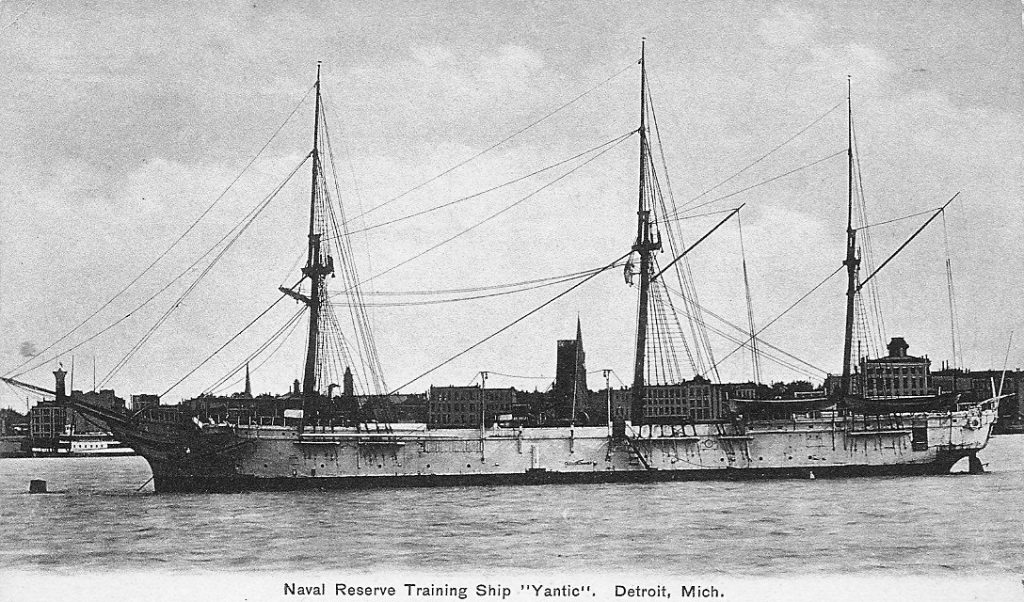
Image of the USS Yantic.
Image of the USS Yantic via Wikimedia Commons.

Henry Beckwith and the USS New Ironsides remained in South Carolina throughout the first half of 1864. On August 19, 1864, Henry Beckwith wrote  home from Fort Delaware and revealed he had transferred to another, much smaller, ship, the USS Yantic.

“I have been detached from the New Ironsides & attached to this ship. I am very much pleased with the change. The New Ironsides was a very large & effective vessel. This is a wooden gunboat & of the smallest class—is a very fast & pleasant ship. I was suited when I was ordered to the Ironsides & am now pleased with my situation. The Chief Engineer of the Philadelphia Navy Yard applied for me to come to the Yard with him in which case I would have been ashore all the time but I did not want to come & was not slow to express myself against it & I was finally ordered on board this vessel.

We started from Philadelphia on this vessel on the 13th inst. on a trial trip. We have been cruising up to the present time along the Jersey coast, the southern shore of Long Island, Block and Nantucket Islands. We are now on our way to Philadelphia where we will arrive tomorrow where we expect to remain 10 days or a fortnight & then we expect to make our final departure on a cruise.”

On September 9, 1864, Henry Beckworth revealed that the USS Yantic was now on duty protecting against possible Confederate piracy around Massachusetts. He also gave an update on what his old ship, the USS Ironsides, was doing.

“We are on our way to “Woods Hole” which is on the coast of Massachusetts near Nantucket. We are going there for the purpose of protecting the shipping at that place against attacks of rebel pirates. We have no idea how long we are to remain there.

I received a letter from you a week or two since for which I am greatly obliged. The New Ironsides is still North but expects to leave in a few days for her station “off Charleston.” She was expecting to go to Mobile but under the circumstances of Farragut’s success she will not be needed.”

Henry Beckwith continued to serve on the USS Yantic through the end of the war and until June 5, 1866 when he transferred to the US Naval Academy. After a one year assignment at the academy he served on board the USS Saco and USS Franklin. He retired from active service in 1873 and died of consumption on July 12, 1885.

We’d like to give a special thanks to William Griffing of Spared & Shared for his work in transcribing and sharing these letters.

To read more of Henry Beckwith’s letters and access thousands of other Civil War letters and documents, sign up for a Research Arsenal membership.

If you enjoyed this article, check out some of our other featured collections like Thomas Griffith of the 116th New York Infantry and Josiah Osgood of the 24th Massachusetts Infantry.

Research Arsenal Spotlight 64: Thomas Griffith 116th New York Infantry

Thomas Griffith was born in 1846 to William and Clarinda Griffith of Gowanda, New York. He was very young when he enlisted in August, 1862, around the age of 15 or 16 years old, although he gave his age as older on the muster rolls. In this collection of six letters to an unnamed aunt, Thomas Griffith details the twisted path that led to his enlistment in the 116th New York Infantry.

Thomas Griffith’s Enlistment Story

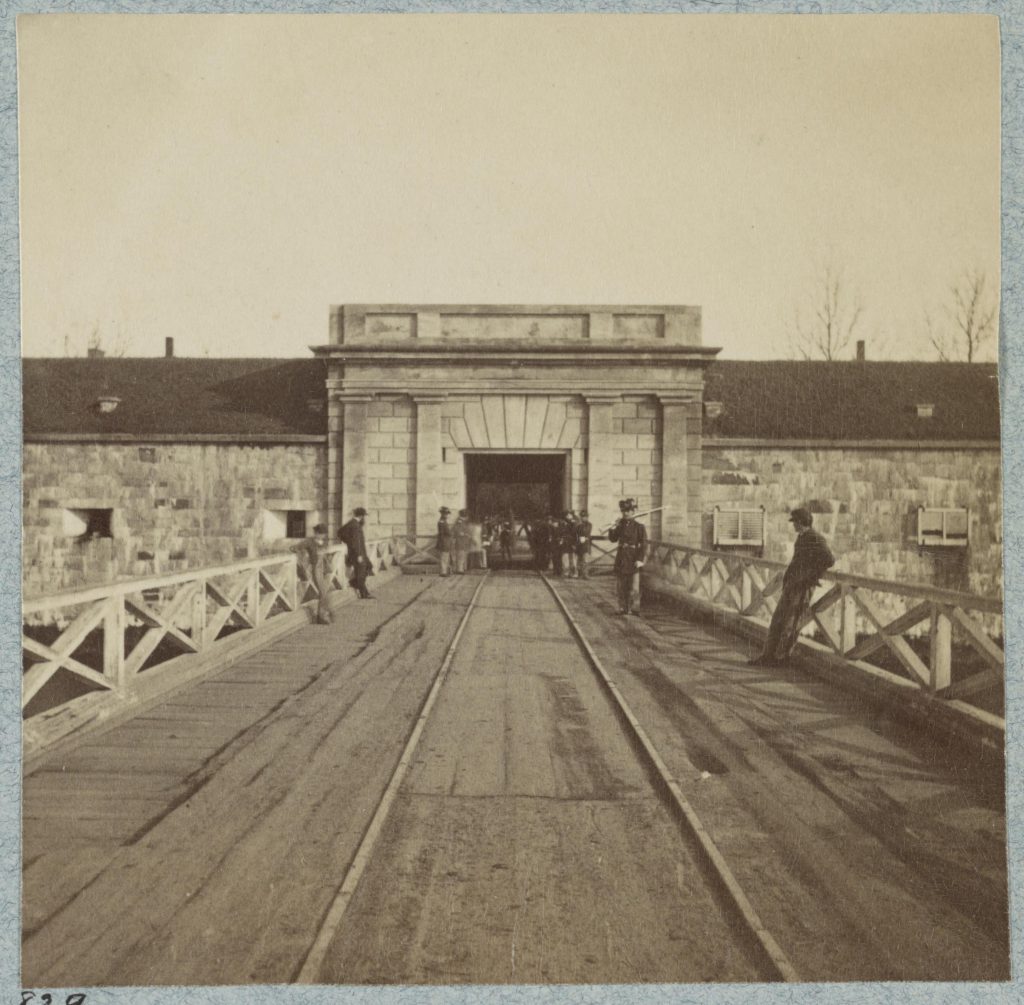
Photograph shows Union guards among a group of men at the entrance to Fortress Monroe where one of Thomas Griffith’s first letters was datelined.

A frequent topic of the letters Thomas Griffith wrote was how he came to be enlisted in the 116th New York Infantry, along with his hope that he would soon be able to get a discharge. In his first letter written on September 1, 1862, Thomas Griffith made the sad declaration of, “My father is dead. He died about four months ago.”

In another letter written on March 14, 1863, Thomas Griffith gave an account that suggests his enlistment was related to the death of his father and a relative named John whom he did not want to live with. The girls mentioned in the passage are Thomas Griffith’s three younger sisters, Anna, Louisa, and Rosa.

“About the girls coming up there, I should think that John would send them up there. He has had the care of all the stuff that was left and I think he has sold a good deal of the things. He wanted me to come and live with him but I would not do it after he had acted so mean to me. He hired Quint for him and then he wanted me but I would not go. I will never step inside of his door so long as I live. He has acted mean to me. He never noticed [me] till he wanted me to go and work for him. He thought that I was of no account but he found out that I was for I had as good a suit of clothes as any boy in Gowanda that work and fought.

I went to Buffalo, went on board the Towanda and went on one trip to Chicago and then I—like a fool—enlisted. I could of got out of the regiment if I had a mind to. I wish I had. I thought first that I would enlist [in] the Irish Brigade.”

Though Thomas Griffith did not enlist in the Irish Brigade, he didn’t enlist directly in the 116th New York Infantry either. He explained the several regiments he served with in a letter written on January 15, 1863.

“I enlisted first in the Eagle Brigade [100th NYSV] for a drummer. I then got into the Fire Zouaves [73rd New York Infantry] and then I got to exchange in the 116th [New York] which I have been with for 5 months. I wish I could get my discharge and I would come up there. I do not like it at all.”

It was almost certainly Thomas Griffith’s young age that had him enlisting initially as a drummer but by the time he transferred to the 116th New York Infantry he was listed on the rolls as 19 years old (despite actually being around 17) and he served as regular private.

Thomas Griffith and Skirmishes with Confederates

While the story of how he came to be enlisted unfolded over several letters written by Thomas Griffith, he wrote much more often about various skirmishes his fought in. In his first letter to his aunt written September 1, 1862, he wrote from Fortress Monroe and mentioned that he had already been in skirmishes.

“We have not seen a regular battle but we have seen some hard skirmishing. We went out in Pennsylvania and drove the rebels out of there. The new Monitor is going with us and a lot of other gunboats. The two largest guns in the world is lying at the fort—the ‘Union’ and the ‘Lincoln.’ We went out ashore and pitched our tents and expected to camp there for about two weeks but the orders came that we had all have to strike the tents and go aboard the ships and so we did.”

On January 15, 1863, Thomas Griffith wrote his second letter and explained what the regiment had been doing for the past few months.

“We left Fortress Monroe and set sail for Ship Island where we arrived after about ten days sail past the coast of Florida and through the Gulf of Mexico. We went to Ship Island two weeks when we set sail and came up the Mississippi river. We are about ten miles from New Orleans.

We have had a hard battle. There is about one half of the regiment killed and a good many wounded. There is not more than three hundred fit for duty. I was in the battle but I did not get hurt much—I was knocked down though. But I am thankful that I did not get hurt worse.”

Two days later Thomas Griffith wrote slightly more about the recent fight.

“There is not over three hundred men able to do duty. Some are sick and others wounded and the rest is dead. I got out of there pretty good. I had my ramrod knocked out of my hand when I was loading my gun with a bullet. We then charged on them and a got knocked down again. We drove them back. We are bound to open the Mississippi river. All say that they have took Vicksburg and I think that they are going to send us up there. I hope they will send us up there.”

Thomas Griffith was misinformed about Vicksburg. The city was not taken until July 1863.

The 116th New York Infantry at Baton Rouge, Louisiana

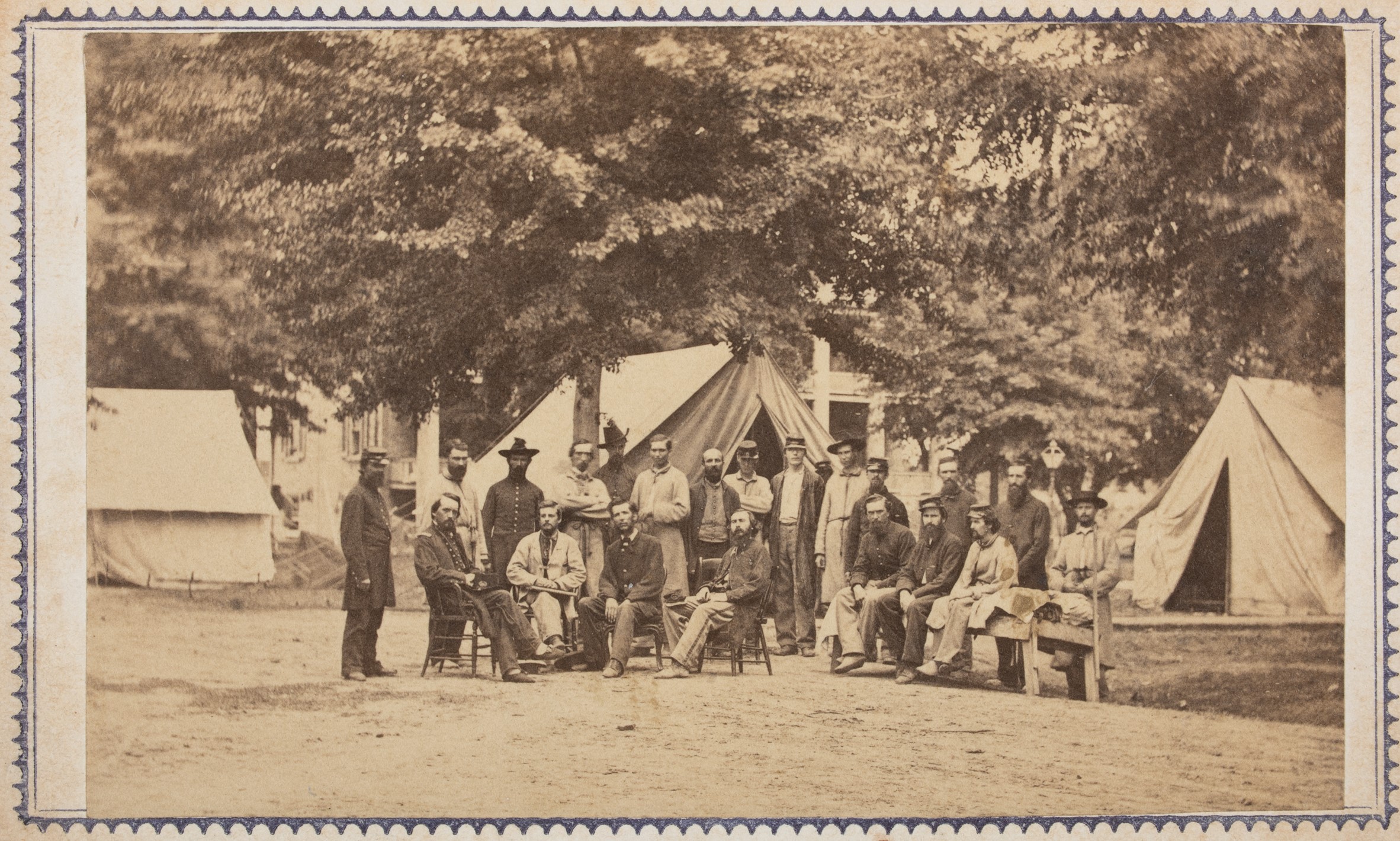
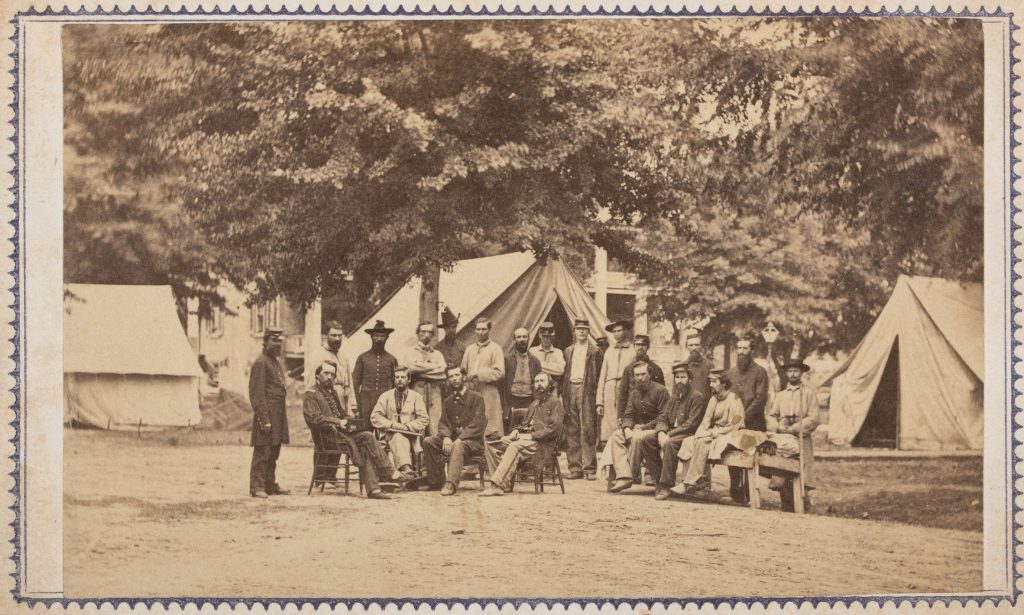
CDV of Medical Staff at Baton Rouge in 1863.
CDV of Medical Staff at Baton Rouge in 1863.

Beginning in March, 1863, Thomas Griffith’s letters were datelined from Baton Rouge, Louisiana. In a letter written on March 14, 1863, Thomas Griffith revealed that he spent several weeks in the hospital with a bad fever. Despite that, he was still up to date on the movements of the 116th New York Infantry.

“Our regiment left this morning and lots of other regiments too. I think that they are going up to Port Hudson. There was some gunboats and mortar boats went up the river today. I saw General Banks and his staff riding around. There was a grand [review] the other day and I saw him go by.”

In a letter fragment dated to sometime around March, 1863, Thomas Griffith wrote more about the 116th New York Infantry’s operations in Louisiana.

“We was a going up to Red River but it was so swampy that we could not go any further so we went back and went on board the boat and come back and went out to our camp. Then we got orders the next day to go out to the pontoon bridge and build it up so that we could cross it to go up to Port Hudson. We went out there and commenced to work when the rebel cavalry came and drove us back. We had no guards out so they took all of the things that we had to work with and a good many guns.”

On April 27, 1863 Thomas Griffith wrote another letter and by this time he was back with his regiment. He described his regiment’s location and duties in Baton Rouge.

“Our regiment is stationed at Baton Rouge inside of the breastworks where we are doing picket and guard duty. We expect to go to Donaldsonville in a little while. It’s awful hot here in the daytime and at night the mosquitoes bite. We have all drawn mosquito bars. The boats are up to Port Hudson still. We can hear firing all the while.

We have been out chopping down the trees all around so that the guns can take a good range of the enemy if they attack us. They say that they are going to take Baton Rouge from us. There is six mortar boats lying alongside of the river so that they can shell them out.”

A bit later in the letter he added some more detail.

“We have some hard times on picket with the Tennessee Cavalry. They come inside of our lines and try to steal and plunder. There is lots of guerrillas all around in the woods. We have three lines of pickets and one line of cavalry.”

Sadly, Thomas Griffith was killed a month after this letter was written while fighting at the Battle of Port Hudson.

We’d like to give a special thanks to William Griffing of Spared & Shared for his work in transcribing and sharing these letters.

To read more Thomas Griffith’s letters as well as access thousands of other Civil War letters and documents, sign up for a Research Arsenal membership.

If you enjoyed this article, check out some of our other featured collections like Josiah Osgood of the 24th Massachusetts Infantry and Otis Whitney of the 27th Iowa Infantry.

Finally, we previously highlighted a collection from another soldier in the 116th New York Infantry, Albert Jenkins Barnard.

Research Arsenal Spotlight 63: Josiah Osgood 24th Massachusetts Infantry

Josiah Osgood was born in 1842 to Hamilton Osgood and Adaline (Stevens) Osgood of Chelsea, Massachusetts. He enlisted as a corporal in Company C of the 24th Massachusetts Infantry in October, 1861. He later became the color guard of his company.

From Boston to Maryland

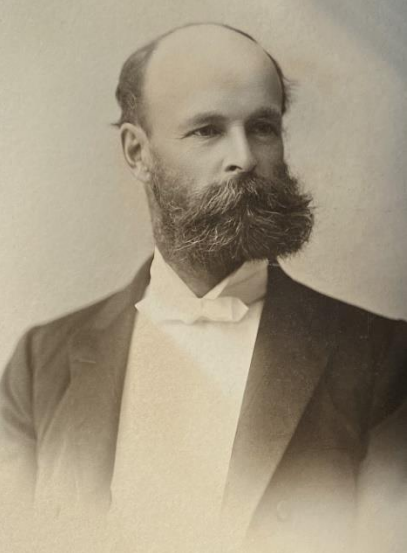
Postwar photo of Josiah Osgood.
Postwar photo of Josiah Osgood via The Bulletin of the Society of Colonial Wars in the State of California. Vol. 51.

After his initial enlistment, Josiah Osgood spent some time waiting for the regiment to go south and join the war effort. His earliest letters are from Boston, Massachusetts. In one written  on November 26, 1861 to his mother, he described his mess and company, both of which he had positive feelings toward. He also explained how the men passed the time while waiting to eventually be sent south.

“In our mess there is less profanity I think than in any other company in the regiment. The men like our captain very much. We may lose him if he takes the position of adjutant of the regiment. Marshall Kane, having a parole was prevented from leaving the fort (most on parole have only the liberty of the island). He probably intended the sentry on the wharf at which the boat stops recognized him and told the officer of the day. Said officer sung out and stopped the boat just as she was leaving the wharf. He has since been kept quite close. Last night, I understand, he was taken with the cholera. My opinion is that the man was little to be trusted, is confined.

Last night in our mess we made fifteen pans of molasses candy—anything to amuse ourselves with an evening. The Nantucket which is to bring a company here just passed. The captain of the boat sung out that they would be here at eleven o’clock this a.m.”

On December 26, 1861, Josiah Osgood wrote home about how the regiment spent Christmas. By this time they had been sent south to Annapolis, Maryland but had not yet participated in any fighting.

“Our Christmas Day we had what the sailors called duff—a very nice pudding. Also oysters (which here are very fine) for dinner. Several of Gen. Burnsides staff were with the colonel at dinner. Our adjutant has been attached to Gen. Burnside’s staff. Tell Mr. Monroe that our colonel is troubled by disorder in his throat.

Today a number of companies practiced in firing at a basket. Our regiment is winning a good name for its fine appearance when on review, and in drilling in the manual of arms. In the latter, the regiment has won great praise. Our band also has attained great attention. They nightly delight us by their beautiful music. If the men are ill-natured, music at once smooths over every rough feeling. Our privilege in hearing such a band as [Patrick] Gilmore’s is you can be assured felt to be very great.

Tomorrow our company practice at target shooting. I see the manual of arms is making their own cigars from the leaves taken from a neighboring plantation.”

Josiah Osgood and the Battle of New Bern

The Battle of New Bern took place on March 14, 1862 and resulted in Union forces taking control of the city for the remainder of the war. On March 23, 1862, Josiah Osgood wrote a letter describing his role in the battle and detailed a fellow color guard getting shot in the shoulder.

“On Thursday (13th) a.m. a landing was made some fifteen miles from New Bern. The 24th Regiment was in part of the first to land. The Colonel came first, then the colors with guard. I understand that General Burnside was the first to land having in his hand the colors of the 25th. It is of small importance at all event.

Our march—or rather half wade—was very tiresome. Clay predominated in the composition of the mud making a sticky, putty-like mud sometimes to the depth of ten and twelve inches. On our first day’s march, we passed through a rebel entrenchment of some length, not fortified. Here a halt was made at about one o’clock at noon. Our resting place, after a few more miles march, was a piece of swampy woods, which we afterwards found to be about one mile from a rebel entrenchment, well fortified and garrisoned, report says by ten thousand rebels. In our damp bed we slept soundly till morning, the rain merrily dripping on our rubber blankets.

An early march was made. The 24th was halted, then filed to the right into a field where we formed in line of battle. We then advanced a short distance into some woods before us. Just then a cannon shot came whiffing down the road we had just left, burying itself by the side of it. Soon firing was commenced by the 27th Massachusetts on our left. We now advanced to the edge of he woods in front of a clearing made by the rebels’ felling trees before their fortification. A bullet whipped between two of the color guard, burying itself with a strange “thud” in a fellow’s shoulder on my right. At the order, “Down!” the regiment dropped on their stomachs and firing commenced.

As you have probably heard ere this, the 24th did its duty. The men were, most of them, very cool, aiming for the artillery horses and gunners. The firing of the rebels was mostly done in volleys unlike the scattering and more destructive fire our own regiments. Ours was the victory after a charge over the muddy sides of the fortification. As we scrambled over the embankment, I could not help thinking of one of our old cats as she once tried almost in vain to go up a pile of coal. The 24th was subjected to a fire from other points—from the rebel battery in front, from one on our left (rebel), [and] also from our gunboats as our position was not known by the commanders of the boats until the 24th’s colors were planted on the rebel battery.

After a short rest, our march was resumed. We came to the banks of the river Trent late in the afternoon. Our men were very tired. The gunboat Delaware landed upon the New Bern side of the river as the fine bridge to the city was burnt by the rebels. The importance of our victory is great. Communication between Goldsboro and Beaufort is now cut off. Quite an enormous amount of ordnance stores, artillery, &c. are ours.”

The 24th Massachusetts Infantry remained camped at New Bern for several months, regularly going out on picket and sometimes engaging in small skirmishes against Confederate forces.

The 24th Massachusetts Infantry and the Battle of Tranter’s Creek

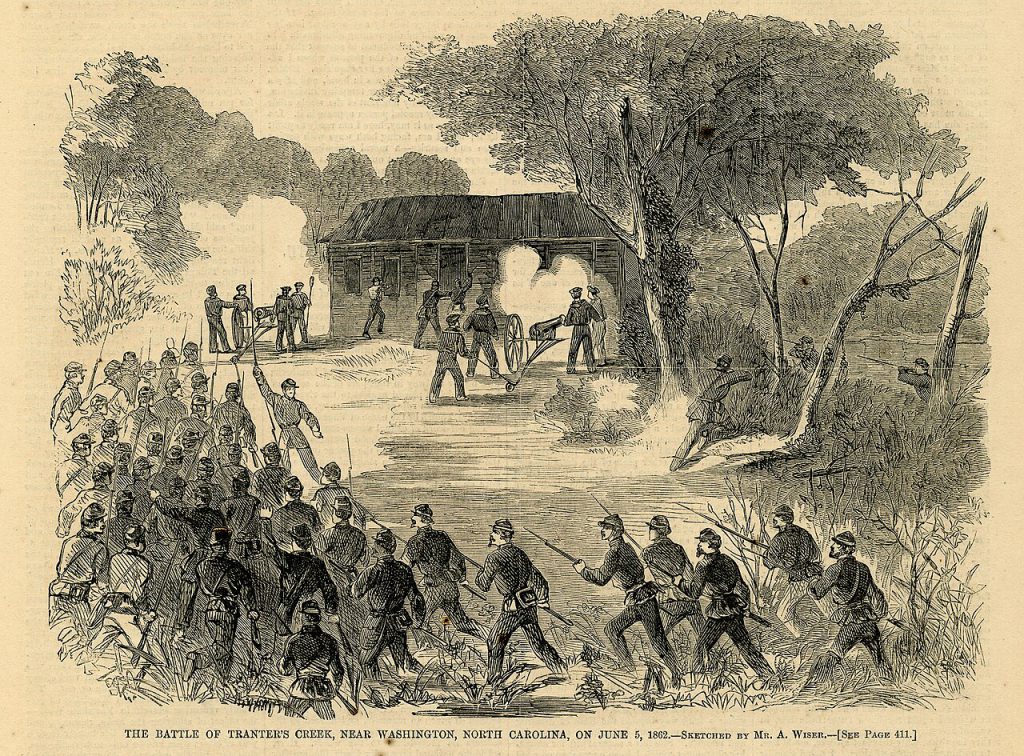
Illustration of the Battle of Tranter’s Creek made by A. Wiser.
Illustration of the Battle of Tranter’s Creek made by A. Wiser via Wikimedia Commons.

On June 6, 1862, Josiah Osgood wrote a quick letter detailing the Battle of Tranter’s Creek which had been fought one day previous as part of General Burnside’s North Carolina Expedition. He was so rushed that he included his signature midway through the letter before returning to add a few more sentences.

“We left at about eight. Companies C & D were left as guard for the city. After a very warm march through a beautiful country, our advance came up with the enemy some nine miles from Washington. Our artillery were rushed to the front, the gallant sailors unlimbered their guns directly in front of our concealed enemy and blazed away. Before the gun could be sponged, two sailors of the first gun dropped. The mail goes at once.

Some twelve wounded and killed is the result. Seven are dead. Our place was a most difficult one for a fight.

I am well, — Si

Some twelve of our enemy are thought to have been killed. One fellow’s head laid by the road side as we rushed on. The bridge over the creek where we fought was destroyed so we are unable to follow them in time for their capture. Of course we were completely successful. Lu [Lieutenant] Javele’s [Jarves] of Co. A, also the captain of same company are wounded. I again thank God for my preservation.

Tranter’s Mills Creek was the scene of our battle. Marched twenty miles that day.”

On June 8, 1862, Josiah Osgood wrote a more detailed account of the battle. He also included information he learned afterward, such as the death of Colonel George B. Singletary of the 44th North Carolina in the battle.

“Our advance company came up with the traitors only one fourth of a mile from her house. They were fired upon. A halt was made. The artillery ordered forward. The lieutenant of the cavalry came riding from the front and sung out, “We have scared up the game, boys!” The brave sailors gave a cheer, rushed forward, and unlimbered the gun directly in front of the enemy who were posted behind a mill or several of them and in trees beyond the stream.

Before the gun could be sponged, two fine fellows dropped. We then rushed forward down a small hill in the road and halted before the mills within one hundred yards of the enemy. The guns before us now blazed away, showering shell and canister among the trees in which the sharpshooters were placed and scattering death among the rebel ranks. Meanwhile we were ordered to lie down with the exception of Co. F as but one company could operate at a time and the bullets were whistling a little too thick and close for sport. One company was now ordered to the left of the road to fire over the river, each side of which was covered by a thick growth of timber. Not a man of the enemy could be seen by us except as they moved from some cover to get sight of us.

We fought forty minutes by Mr. Blake’s time. The traitors then gave a yell. Afore that, not a shot was fired from their side. We now went forward, found the first bridge destroyed, put up a temporary one and rushed on. About thirty yards from the first was another bridge; at the same distance another. The delay caused by the building of a bridge made us too late for a farther pursuit without the aid of cavalry and artillery, neither of which could be crossed over the slight board bridge. One rebel head lay near us. Also a dead whole rebel. The loss of the enemy has not been ascertained but must have been heavy as the appearance of the ground where they had been indicated. The earth around them was very bloody We hear by negroes who have come in since that the force of the traitors was from ten to fifteen hundred men but this seems too large. We have seven men killed including one sailor. Some eight are wounded.

We marched back to Washington [N. C.] after the wounded and killed were placed on carts. We got back at nine, pretty well drenched and tired. This movement was probably made to stop the picket shooting which has been so constant here. Their Colonel [George B. Singletary, 44th North Carolina] was killed we learn by a letter which came through our pickets to his brother in New York. He saw a man aiming at him and snatched a double gun from one of his men saying, ‘A man is aiming at me.’ At that moment, he fell dead—a shot having pierced his forehead.”

In November, 1862 Josiah Osgood was discharged from the 24th Massachusetts Infantry to accept a commission as an officer. He then served as captain of Company K in the 47th Massachusetts Infantry. After the war he moved to Michigan. He died in 1927.

We’d like to give a special thanks to William Griffing of Spared & Shared for his work in transcribing and sharing these letters.

To read more of Josiah Osgood’s letters and access thousands of other Civil War letters and documents, sign up for a Research Arsenal membership.

If you enjoyed this article, check out some of our other featured collections like Otis Whitney of the 27th Iowa Infantry and Constantine Hege of the 48th North Carolina Infantry.


Research Arsenal Spotlight 62: Otis Whitney 27th Iowa Infantry

Otis Whitney was born in 1821 in Seneca, New York to Otis Whitney and Betsy (Hawley) Whitney. He married Harriett Newell Barnes in 1854 and the pair moved out west to Iowa. He served as a law clerk and acting justice of the peace until becoming the 1st lieutenant of Company H, 27th Iowa Infantry in the fall of 1862.

Initial Organization and Muster of the 27th Iowa Infantry

Tintype Photo of Otis Whitney of the 27th Iowa Infantry.
Tintype Photo of Otis Whitney of the 27th Iowa Infantry via findagrave.com.

After completing its organization, the 27th Iowa Infantry was initially sent to St. Paul, Minnesota, in October, 1862. The journey ended up more perilous than expected. In a letter written on October 15, 1862, Otis Whitney described a serious accident during their voyage north.

“We embarked Sunday morning & had a pleasant trip with some little adventure. Sunday night, just at dark, a snag (a large tree trunk) smashed through the guard deck near the bow of the boat & came very near throwing some of the boys overboard. A few minutes before there were several standing on the very spot where the crash was made. Last night a steamer coming down undertook for some unexplained reason to run our boat down but by the skill of our pilot, we avoided being struck but in doing so, the stern of the boat was thrown so near the shore that a tree on the shore crashed through the side of the boat & tore out the entire side of the barber shop to the great fright of several men who were sleeping on the floor & in chairs. The fright was not without cause as it came near sweeping off several men.”

The 27th Iowa Infantry was then sent south to Cairo, Illinois, a place Otis Whitney had a less than favorable opinion of.

“You say you hope we will go into winter quarters here. If you could look around & see the position we occupy, you would soon change your mind. It would be difficult selecting as bad a place for quartering soldiers in the state of Iowa as this. It is mud everywhere and such mud as you do not see in Quasqueton. It sticks fast to one’s boots until they are completely loaded down. But this is not the worst of our position. It is very unhealthy. Dr. Hastings is afraid there will not be well ones enough by Saturday night to take care of the sick.

Several of us officers occupy an old shanty on the top of the embankment that keeps the Mississippi and Ohio from overflowing the town in high water. The boys and many of the officers sleep on a level with the Mississippi in ordinary stage of water. The place, Cairo, is one of the most God-forsaken places it has ever been my misfortune to visit. Almost every place is a drinking saloon. The place boasts a theatre all on the ground floor. Steamboats and gunboats swarm.”

27th Iowa Infantry in Mississippi

On November 29, 1862, Otis Whitney wrote to his wife that the regiment had arrived in Mississippi and was currently in pursuit of Confederate forces under the command of General Sterling Price.

“We have an object in view. That is to cut off Van Dorn and Price from forming a junction with Bragg. We look for a battle tomorrow or next day—a severe one. We have had pale cheeks in camp already. I do not intend to say anything to excite your fears. This may be the last letter I can write you & yet I may be spared to write many more & come home to stay for many happy years. God only knows.

It is very possible that Price may run too fast to be caught. If we do intercept him, we shall have a battle.”

When Otis Whitney next wrote on December 6, 1862, they were still pursuing Price, but the likelihood of a battle involving the 27th Iowa Infantry had decreased.

“One thing, however, seems probably certain and that is that we are not very likely to have an action with Price’s forces for the present. I dare say you are glad of it & so am I, although I would try not to flinch from any duty. Price seems to be the prince of Generals at retreat & a middling good fighter when he can engage an enemy far inferior to him in numbers.

The cannonading I wrote you about was Gen. Grant shelling Price out of some fortifications on the Tallahatchie river about four miles from our present camp. Price evacuated in the night precipitously leaving sixteen of his heaviest guns spiked. His night retreat saved his army from being cut off or our division from a defeat. We make no calculations for defeat & with an equal force numerically I think we need not.”

A few weeks later, one December 23, 1862, Otis Whitney described the recent Confederate raid on Holly Springs, Mississippi.

“On Saturday morning (the 20th, I believe) report came into camp that Holly Springs was attacked and taken by the secesh and that a body of their cavalry were on the way to either attack us or pass nearby to destroy a bridge below us. We were accordingly hurried out of quarters with no baggage or provision to march some mile or two, resist the passage, and then return to stay over night. It was afternoon when we started. Reached the post, formed line of battle, stacked arms—built a great high rail fence 30 or 40 rods long (of old rails handy by) then took positions by companies & waited for the enemy. No enemy came, and after waiting two or three hours, word was received to march for Holly Springs by way of Waterford whole distance about 15 miles.”

Otis then briefly backed up his account in order to give more detail.

“On Saturday morning at daylight, 14 secession cavalrymen rushed upon a hospital a mile from our camp, made prisoners of the guards—some 12 in number, took what horses they could find (among them Doctor Hasting’s horse) and left in a hurry. No one in our company had the misfortune to be taken. Doctor Hastings can owe his freedom to the comfortable habit of waiting for the sun to rise first. However, the boys are all paroled as we hear today—out of the service until exchanged.

On Sunday morning early we commenced the march for Holly Springs, nine miles distant, which we reached about 2 p.m. The rebels fled Saturday night after destroying immense army supplies, railroad cars, and burning some of the best blocks in the town. They also destroyed a heavy mail and ransacked the Post Office. They also took some 1000 [prisoners], most of who, they immediately paroled, not having time to parole all. Several were killed and wounded. We cannot learn how many. You can learn by the papers long before we shall know. That is the only way we have of learning what we have done.”

Otis Whitney and the Battle of Nashville

January 1865 Illustration in Harper’s Weekly of the Battle of Nashville.
January 1865 Illustration in Harper’s Weekly of the Battle of Nashville via Wikimedia Commons.

The 27th Iowa Infantry continued to serve throughout the south in 1863, including participating in the capture of Fort DeRussy and the Battle of Tupelo. In December, 1864, the 27th Iowa Infantry was outside of Nashville awaiting an imminent attack by Confederate forces under General John Bell Hood. In a letter written on December 6, 1864, Otis Whitney described the regiment’s readiness for the attack.

“I have seated myself on my roll of blankets & commenced a letter to you not knowing whether I shall have an opportunity to finish before having to fall into line to repel Gen. Hood’s army. We are entrenched behind strong temporary works which we have thrown up since the 3rd inst. We are on a high and commanding hill with a section of a battery planted on it. Cannonading has been going on almost all the time since we took our position with the exception of part of the night & it has just now commenced again 8:30 a.m.

We have no fears of an attack in the daytime, nor much in the night. But a night attack would to a great extent deprive us of the use of our artillery. It is no doubt the intention & policy of the rebels to attack us in the night & then by force of numbers to overwhelm us—precipitating themselves upon us in massed columns with insane and reckless fury, hoping to break our lines. We have a force large enough to whip the rebels in the field, I think, but it is not the intention of our commander to move outside our works to fight. Gen. Hood cannot afford to remain long before the city & if he attempts to retreat, that retreat must soon be converted into a flight. The rebels do not reply to our artillery & have not except once the first afternoon when they planted a section of a battery (2 guns) and attempted to shell us but soon gave up the attempt as useless as they could not reach us with their shell. Judging from appearances, they are short of artillery ammunition. We have a line of entrenchments 7 miles long that is the outside line. Inside are rifle pits and two formidable & very commanding forts full of heavy siege guns.”

Hood’s forces finally attacked and were repelled on December 15 and 16, 1864. On December 20, 1864, Otis Whitney wrote home about the battle and the aftermath.

“You have probably heard long before this all the particulars of the two days fight before Nashville & how the Federal forces defeated Hood’s forces. The battles were on the 15th and 16th. On the 17th our forces commenced the pursuit—that is, the infantry. The cavalry were in pursuit the night after the fight. The roads were very bad & it rained most of the day. The 18th continued the chase & camped long after dark on the battlefield of Franklin with the evidences of the sanguinary contest all around us—cast away knapsacks, haversacks, blankets, cartridge boxes, and various kinds of small arms. Dead horses lay scattered around and new made graves were in the midst of our camp & long rows in sight near our fortifications.”

He also described the fatigue he experienced on the second day of the fight.

“I passed through the battles unharmed but was dreadfully fatigued. In the charge on the 16th, I had a full haversack & canteen, a rubber blanket, and my overcoat which was wet and very heavy. Although not carrying near so much load as many others, I gave out with fatigue for a time and fell behind apiece but regained the front before the line permanently halted.”

Otis Whitney was discharged with his regiment on August 8, 1865. He later moved Oswego, Kansas and died in 1901.

We’d like to give a special thanks to William Griffing of Spared & Shared for transcribing and sharing these letters.

To read more of Otis Whitney’s letters and access thousands of other Civil War letters, sign up for a Research Arsenal membership.

If you enjoyed this article, check out some of our other featured collections like Constantine Hege of the 48th North Carolina Infantry and Gustavus Williams of the 51st Massachusetts Infantry.

Research Arsenal Spotlight 61: Constantine Hege 48th North Carolina Infantry

Constantine Hege was born in 1843 to Solomon Hege and Catharine (Guenther) Hege of Davidson County, North Carolina. The Hege family were Moravians, an early Protestant religion originating from the Bohemian Reformation in the late 1400s. Religiously, they were opposed to war, but nevertheless Constantine Hege was conscripted into Company H of the 48th North Carolina Infantry in the summer of 1862.

Constantine Hege Arrives at Camp

Constantine Hege’s letters begin on August 8, 1862 at Camp Holmes outside Raleigh, North Carolina. Though he opens his letter with a description of his trip, from the beginning its clear that he finds camp life difficult and is less than thrilled to be there.

“I enjoyed my ride tolerably well. I saw a great many things that interested me very much. I counted 14 engines at the company shops. I also saw the state house and many other fine buildings. We are now in Camp Holmes about 4 miles from Raleigh. We have good tents and a beautiful grove to camp in. There are also several wells of good water in the camp. We are guarded all round by stout looking guards with muskets well loaded.

I will now tell you what I think of camp life. I think it is a very hard life. We drawed 440 lbs. of flour for 4 days. We also drawed 3 skillets & 1 pot for about 20 men to prepare their victuals in. I do not like such fare nor I am not content at present. I feel very much downcast but I think that several of my tent mates are very nice men and I hope that I can after a while do better if I must stay in camp.”

In a letter to his father on August 13, 1862, Constantine Hege implored him to try and find a substitute for him if at all possible.

“It fell to my lot to go in Capt. [John H.] Michael’s company. I there saw very many of my acquaintances which I had not seen for several months which revived me somewhat but I am not satisfied here. I do not like to hear of going to face the cannons and the muskets. I would be very glad if you could hire a substitute in my place because I cannot stand such a life with any enjoyment at all. I went over to see the flying artillery. There were 12 cannons there, and for a person to see them, it would make the cold chills run over anyone, I think. Therefore, I want you to try to hire a substitute and if you do hire one, get a competent man to bring him to Captain [John H.] Michael’s company, 48th regiment, N. C. troops.”

Constantine Hege also described meeting a few Yankees and talking with them.

“I saw about 300 Yankees from Salisbury on their way home at Weldon. I talked with several of them. They seemed to be as fine a set of men as are anywhere.”

The 48th North Carolina Infantry at Antietam and Fredericksburg

Image of Antietam Battlefield showing Dunker Church. The 48th North Carolina suffered 50% casualties in fighting near the church.

On September 21, 1862, Constantine Hege wrote home about the recent battle of Antietam where the 48th North Carolina Infantry saw heavy fighting.

“We have been marching for about 20 days and sometimes we have [had] to march all night. We crossed the Potomac River four times and over into Maryland. The first time that we went over, we staid 2 or 3 days and came back safe. And then we went to Harpers Ferry and there we had a very hard bombing last Monday, but we whipped the Yankees without any musket firing except from the pickets. We captured a great many wagons and cannons and taken about 800 prisoners. We then marched over into Maryland again on last Tuesday evening and on Wednesday morning [17 September] about nine or ten o’clock, we were marched in the battlefield and we made a charge on one of the enemy’s batteries. But when we got [with]in about 75 or 100 yards of them, we were bound to retreat because they were too strong for us, and a great many of our men were killed and wounded. There were about twenty wounded in our company. Jackson Koontz was killed. Augustus Bryant was mortally wounded and died.”

The 48th North Carolina Infantry was stationed at Fredericksburg beginning in November, 1862. During this time, Constantine Hege spent much of his time waiting for a box his family sent with clothing and other goods for him. He later found out that the box was stolen, an unfortunate circumstance that may have ended up saving his life. One December 18, 1862 he wrote about the recent Battle of Fredericksburg.

“There has been a very hard battle fought here last Saturday and our regiment was in the hardest of the fight. I did not have to go into the battle because I am so near barefooted. The Colonel gave orders that all the barefooted men should stay at the camp. I can tell you I was glad then that my shoes did not come because I would rather loose [lose] a hundred dollars than to go in a battle. There were a great many killed and wounded it is said that there were ten thousand Yankees killed during the battle. I do not know how many of our men were killed but I know that there were a great many wounded. There were 19 men wounded and one killed in our company. The human suffering, the loss of life, and above all, the loss of many a precious soul that is caused by war. Would to God that this war might close off this year and that we all could enjoy the blessing of a comfortable house and home one time more. I never knew how to value home until I came in the army.”

Capture and Oath of Allegiance

Image of the Salem Iron Works built by Constantine Hege after the war.
Image of the Salem Iron Works built by Constantine Hege after the war via Digital Forsyth.

Constantine Hege was captured at the Battle of Bristoe Station on October 14, 1863. His next surviving letter was written on October 31, 1863, though in it he mentions that he had written a couple of letters previous to it. He was incarcerated at the Old Capitol Prison, though by the time he wrote the letter it appears he had already taken the oath of allegiance and was awaiting his release.

“I am still here in the above named prison, but I think that I will be released and set free in a week or so. I have got in with a pious young man who lives in Philadelphia, Pa., to help me to get is some business there to make a living. I want to try and get Rev. F. F. Hegen or Rev. Mr. Senamon to help me along also if I can. There are several of my acquaintance here with me who also are a going North. I think we will be provided for by Providence. I hope you will not trouble yourselves about me as I can assure you I have received very kind treatment so far. Do not believe false reports.”

Despite Constantine Hege’s belief that he would soon be released, he remained imprisoned until March, 1864, writing several more short letters during that time (prisoners were limited to a single page). His last letter from the prison was dated February 1, 1864.

“I received fifty dollars from Rev. F. F. Hagen about two weeks ago. He will furnish me with three hundred dollars as by your order. I am very thankful for your kindness in writing to Rev. Mr. Hagen to send me money as I was in need, but now I am very comfortably clothed and am doing well as a prisoner.

I often think of my dear old home and long to get there but here I am many miles from home. But it all has been so ordered by Providence and that for the best. I therefore take it patiently trusting in God to protect me from all harm and danger and to keep me safe, alive, and well, and I hope by his allwise providence to meet you all on earth again, but if not, God grant that we may all meet in Heaven above.”

Once released, Constantine Hege traveled to Bethlehem, Pennsylvania. On April 1, 1864, he wrote home about his new circumstances.

“I arrived here at Bethlehem on the 15th of March and went to Rev. F. F. Hagen’s house. He was very glad to see me and aided me in procuring a good place to board and to work. I am working at the Bethlehem Iron Works. My wages are $1.35 per day and my board costs $3.50 per week. I am now boarding with Mr. John Fimstick—a Moravian family—and they are very kind to me as I will soon tell you.”

In May, 1865, Constantine Hege began attending a Moravian school in Pennsylvania and asked his father’s help in affording tuition. He also mentioned missing his home in the South, even while renouncing secession.

“I suppose you can readily see by my letter that I am very much out of practice. I commenced going to school on the 26th of April and expect to go until the end of the session, which is in July, unless you wish me to come home before then. I love the North very much but not so well yet as the dear South, where I spent my youthful days in sports and where the rich fruit so plentifully abounds. I do not mean that I love secession or anything connected therein. But I love the county, the climate, and all the good loyal Union people—because there is my home and parents and brother and sister, whom I love so very much.”

On June 29, 1865, Constantine Hege wrote a very interesting letter to his mother giving his thoughts about the war and the Confederacy, seemingly in reproach for his mother’s attitude against northerners.

“You seem to be down on the Yankees as you call them. You say they work on Sunday. That is nothing strange to me as I worked many Sundays in the Rebel army while I was in the service of our brave President Jeff Davis who dressed up in women’s clothes—brave fellow was he!

I suppose you also call me a Yankee. If you do, all right. I consider that more of an honor than a disgrace. I have taken a particular fancy to the Yankees (so called) and especially to the young ladies who seem to take pleasure of being in company with a southern boy and they very seldom ever mention anything of my having been in the Rebel army which I would consider a disgrace.”

Constantine Hege continued his schooling and later returned to North Carolina and opened a foundry. He received a patent for a set of works for circular sawmills and began manufacturing sawmills and woodworking machinery of his own design. He married Frances Mary Spaugh in 1870 and had several children. After her death he married Martha Caroline Spaugh. He died in 1914.

We’d like to give a special thanks to William Griffing of Spared & Shared for his work in transcribing and sharing these letters.

To read more of Constantine Hege’s letters and access thousands of other Civil War letters and documents, sign up for a Research Arsenal membership.

If you enjoyed this article, check out some of our other featured collections like Gustavus Williams of the 51st Massachusetts Infantry and Benjamin Blatchford of the 2nd Massachusetts Heavy Artillery.


Research Arsenal Spotlight 60: Gustavus Williams 51st Massachusetts Infantry

Gustavus Williams was born on October 28, 1834 in Uxbridge, Massachusetts. He married Nancy Bernette Hill in 1859 and had two children with her (a daughter, Myrtle, and son, Hill) when he enlisted in company K of the 51st Massachusetts Infantry in September, 1862. The 51st Massachusetts Infantry was a nine months unit and Gustavus Williams served as a sergeant.

The 51st Massachusetts Infantry in North Carolina

Photo of Gustavus Williams who served in Company K, 51st Massachusetts Infantry.
Photo of Gustavus Williams who served in Company K, 51st Massachusetts Infantry via Spared & Shared.

The first letter in our collection was written by Gustavus Williams on February 28, 1863 while he was at Camp Foster, New Bern, North Carolina. By the time this letter was written, he had four months left of service and was eager to return home to Bernette. The regiment had recently moved and Gustavus Williams wrote about his current assignment on guard duty.

“It is Thursday evening after nine. I am on guard commanding nine men who watch the barracks that there may be no thieving done by outsiders. I stay in my quarters but must be up so as to relieve guard every two hours. There seems now to be a definite dispersal of the regiment made in order to check discord. Our company is to take a picket station some six or eight miles east on the right hand side of the railroad as we go east. The 43rd [Massachusetts] have a company there [already]. It is called Evans’ Mills and seems very promising as a station for some weeks or months it may be.”

Shortly after this letter, Gustavus Williams and his company moved to Evans Mills for continued guard duty. He described the quarters he and his men stayed in, in a letter written on March 5, 1863.

“The sergeants and privates have quarters in board huts accommodating from two to a dozen or more each, and the block house — a strong log building of two stories with port holes for cannon and perforations for musketry. There are ten or eleven cavalrymen stationed here as this is an important outpost towards Pollocksville from which an attack — if one were made — might come. The cavalry scour the country around and our pickets comfortably stationed in huts along the road a mile from our company quarters, which are just back of the blockhouse, guard the only approach. The sergeants with corporals remain.

My chums occupy a very comfortable cabin with two tables, three bunks, one chair, two cupboards, and a good fireplace. All the huts have either stoves or fireplaces but ours is the best building and seems quite civilized. When on guard, I stay here, occasionally visiting the pickets, but with not much duty, but having a good deal of responsibility as I command the guard acting Lieutenant.”

In the same letter he described the rather hazardous wildlife in the area.

“It is now after ten P. M. I have just been to visit the outpost guarded by a corporal and 3 privates. Of course I had other posts to pass on the way. All was very bright moonlight, very quiet, but the guard are most watchful. In the creek and swamps we are told are [Water] Moccasins, Copperheads, Rattlesnakes, alligators, wood ticks, and what besides of danger, we don’t know nor wish to know. Our huts have an abundance of rats. We do know but we can guard against them — only keep the Rebs away.”

Gustavus Williams Desires to Return Home

Photograph of Company K, 51st Massachusetts Infantry at Evans Mill. The photograph is described in a letter written by Gustavus Williams on April 9, 1863.
Photograph of Company K, 51st Massachusetts Infantry at Evans Mill. The photograph is described in a letter written by Gustavus Williams on April 9, 1863. Via facebook.com

On March 19, 1863, Gustavus Williams wrote home to Bernette and described the difference in conditions for officers and enlisted men.

“Monday I went to Newbern in the little mule cart and drew rations for the company for fourteen days (I did not draw them home).

The spring advances much more slowly than at the North but flowers are quite plenty along the road and in the yards of the city houses where dandy officers — many of them with wives and families — live luxuriantly. After a hard task running for orders on this and that official — for [red] tape is the rule everywhere — I got my work done and in my little wretched springless cart drawn by the smallest and most unhappy of mules, through mud holes, through woods, and difficulties of various descriptions, my companion, Corporal Heath, and I plodded home tired and dirty.

The Captain the same day, on a fine horse, well dressed, gaily rode to town full of business, credit or money, and a good time, good company, a good ride home, a good supper &c. awaited him. No wonder he expects to enter the army again — if spared to return. Could I believe it right to live thus on a country in struggles for life, and had I no wife and bairns to stay with at home, I might try for a commission myself. The ifs are large enough to prevent that, however, and I can’t say I’m sorry I had no commission and I certainly have no complaint to make of either of our officers treatment of me.”

Gustavus and Bernette spent much time discussing articles they read in issues of the Atlantic as well as various books including The Count of Monte Cristo. Another topic of conversation was Bernette’s hope that Gustavus could return on a furlough, which Gustavus felt was very unlikely although he very much wished for it, too.

“You speak of a furlough as possible. I think the nine-months men will not get any; their time is too nearly expired and the claims of the three years men ought surely to be considered before ours. Still it is so hard to have a son at home whose face I have scarcely seen and a daughter I had learned to live with, a wife — the light of my life, and I so far away in a kind of slavery. I am glad my boy is to resemble me so much. At the worst, you can never forget the father while the son resembles him.”

Gustavus Williams at the Hospital

In April, 1863, Gustavus Williams began suffering rheumatism and pain in his feet. He went to the doctors to get it treated, but as revealed in a letter written on April 19, 1863, the treatment seems to have made his condition considerably worse.

“I am now more of a cripple than when I wrote last. My rheumatism is little better, if indeed it is improved at all. The doctor urged me to bathe with iodine and I reluctantly did so a very few times. The result was an eruption on the side and bottom of my foot which appeared and felt like ivy poison. Presently blisters appeared — itching and burning. The doctor said pinch them. I told him I feared erysipelas. He didn’t so I opened one or two of them. They grew worse and my foot began to swell generally so I dismissed the idea of following the doctor’s orders believing as I do now that erysipelas was there surely and must be fought. My good angel — my wife — had sent just the material for bandages long before and F. Washburn was the one to put them on. After carefully applying these just as your mother did to my sore arm and hand for a day or more, the selling and much of the inflammation abated. Now, some three days later, my foot is quite comfortable though still red and inflamed — comparatively less — and requiring great care.”

Erysipelas is a bacteria infection that presents the same symptoms as what Gustavus Williams described. In the same letter Gustavus Williams also wrote what he head about attempts to capture Washington, North Carolina, frequently referred to as “Little Washington.”

“Our troops went out towards Little Washington but soon returned — the men disgusted that they were not suffered after their hard march to fight — the officers declaring the enemy present with twice our numbers. Another expedition has started. Little Washington still holds out. A steamer is said to have run the blockade with provisions for [General] Foster. Night before last, firing was heard over towards the Neuce [Neuse River]. The captain said yesterday the Rebs had planted a battery below New Bern on the Neuce [Neuse] and were firing on passing vessels. They’ve tried the dodge before without success.”

In another letter written on the same day (April 19), Gustavus gave a similar appraisal of his situation and that of the army to his sister, Emily.

“I believe I wrote before of a humor which had appeared on my right foot. It is now on both and nearly prevents my walking — especially as I was lame before. This humor appears just outside of the places of my feet which were lame. It is like poison [ivy] on the foot first attacked. It is deep and has been severe but is, I trust, better, and I hope also when well the lameness will also be gone. Otherwise I am well and comfortable.

Gen. Foster who was ‘shut up’ at Little Washington has been reinforced and since returned to New Bern. He is now off with a large force after the Rebels who are reported to have abandoned the siege of Washington and ‘skedaddled.’ We have never been disturbed here. Have been here since March 2.”

In the final letter in our collection, written May 23, 1863, Gustavus Williams wrote that despite his ill health, he was able to convince his doctor to let him return to his regiment where he hoped to soon muster out rather than remain under care.

“Last night I rode to Foster Barracks to see Dr. [George] Jewett who sent an order for me to go to the camp and as I feared, to the hospital to be drugged under his eye. I dressed in my best and used my best arguments to show that I should be best here. He said that as the regiment was to go home in a very few weeks, he disliked to send me home in my present condition. Indeed, it seems unlikely that Coleman will get his papers signed by the General as his time is so near out. Dr. Jewett was unwell and very affable and courteous, said I might take some medicine he would send me with directions. The medicine had come but no directions. Hence, I wait for further orders. At the Quartermasters was my half barrel — arrived a day or two before. Lery drive me over in the mule cart. So we waded it in and came back, rejoicing in my escape and in my barrel.”

The 51st Massachusetts Infantry was mustered out on July 27, 1863. Gustavus Williams and Bernette had several more children together and he went to work as a lawyer alongside his father-in-law. Bernette passed away in 1880 and Gustavus Williams died in 1910.

We’d like to give a special thanks to William Griffing of Spared & Shared for his work in transcribing and sharing these letters.

To read more Gustavus Willliams’ letter and access thousands of other Civil War letters and documents, sign up for a Research Arsenal membership.

If you enjoyed this article, check out some of our other featured collections like Benjamin Blatchford of the 2nd Massachusetts Heavy Artillery and Elbert Corbin of the 1st New York Light Artillery.
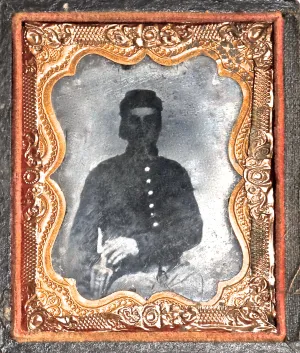
 

Research Arsenal Spotlight 59: Benjamin Blatchford 2nd Massachusetts Heavy Artillery

Benjamin Blatchford was born in 1835 to William Blatchford and Mary (Gott) Blatchford of Massachusetts. He enlisted first in the 50th Massachusetts Infantry, a nine month’s regiment, where he served as first sergeant of company B. He later was commissioned as a lieutenant of company K in the 2nd Massachusetts Heavy Artillery on October 9, 1863. His occupation was given as a seaman.

Duty at Fort Norfolk, and Fort Woodruff, Virginia

Photo of Benjamin Blatchford who served as a lieutenant in Company K, 2nd Massachusetts Heavy Artillery.
Photo of Benjamin Blatchford who served as a lieutenant in Company K, 2nd Massachusetts Heavy Artillery via Spared & Shared.

Benjamin Blatchford’s letters begin while the 2nd Massachusetts Heavy Artillery was on guard duty at Fort Norfolk, Virginia. In a letter to his parents written on January 25, 1864, Benjamin Blatchford described the Union and Confederate prisoners they were guarding and the tough measures they used to maintain order.

“We are still at Fort Norfolk and the prospect is that we will stop here some time. This fort is very pleasantly situated on the Elizabeth River and by water, not much more than a rifle shot from the City of Norfolk, but by land I should think it is about 2 miles. I can go to the City every four days. All we have to do is guard prisoners and attend to the Company Drills. The last named takes up 4 hours per day—two hours in the forenoon and two in the afternoon. The rest of the time I have to myself except every fourth day when I have to go on as Officer of the Guard and see that the prisoners are well guarded. Yesterday they brought in a very smart-looking man. He is or was a surgeon in the rebel army. He was captured over the river.

I think we have about two hundred prisoners in the fort, most of them are rebels. The Union prisoners that are in there are all soldiers and they have [sentences] all the way from three months to twenty years to serve. They are a hard set of men but we get along with them first rate. We have had no trouble with the rebel prisoners at all and all [the trouble] we ever had is with the Union prisoners. But it did not last long as we are well-armed and ready to shoot a few for an example—and [when] they found we would do it, they have backed down and don’t cause any trouble now.”

On May 29, 1864, Benjamin Blatchford wrote from Fort Woodruff, Virginia and described a recent scare where the outnumbered Union forces awaited a rebel attack that never materialized.

“We have had very easy times at Fort Woodruff. Nearly all of the troops have been taken from the defenses of Norfolk. We have not over six hundred effective men to defend two forts and about one mile of breastworks. We are in a strong position and except they come in force, they can’t start us.

We had quite a scare here about ten days ago. The report was that the rebels were marching on this place and had been seen that afternoon so we formed the two companies and went into the fort—or at least the two companies with the exception of Lieut. Smith and myself and 30 men. We went into a redoubt about four hundred yards from the fort and manned three brass guns and stood ready to give them the contents of our guns as they came down the road. We stood by our guns until after 12 o’clock midnight and made up our minds that the rebs would not attempt to trouble us that night, so we placed a guard on the outposts and laid down. We lay under the guns while the companies in the fort lay on their arms.

After we had fairly got asleep, the rain fell in torrents and as we had no tents, we got a little damp, One shower would not hardly pass before another would rise and the remainder of the night was very dark except when lit up by sharp flashes of lightning which was followed by heavy rolls of thunder.

In the morning we went back to our camp and have not heard any report of rebs advancing since, and I hardly think we will again for they have all they can attend to at Richmond. We are very pleasantly situated here. I think the Officers and men have got better quarters than I ever saw or had since I have been in the army.”

Benjamin Blatchford transfers to the 3rd US Artillery

Though duty at Fort Woodruff was rarely taxing and in general quite safe, Benjamin Blatchford longed to serve the Union cause more directly on the front lines. On August 10, 1864, he wrote  to his brother-in-law, Henry Lowe, and revealed that he had applied for a transfer to the front and that it had recently been accepted.

“We have been expecting to be sent to the front but I have about given that up. I have got tired of doing nothing so I have made an application to be sent to the front and I receive an answer last Saturday—to hold myself in readiness to go at any time. I expect to take command of a section in a regular battery. They have sent for another section and if they get it, I am to have command. I have been trying to get to the front for some time but this is the first opportunity that has offered and I am sure of going if they get the section.”

Benjamin Blatchford also asked Henry to keep his transfer to the front a secret as he didn’t wish to worry his family.

“I don’t want you to let anyone know that I expect to go to the front because they might write home and Mother would hear of it and worry about it. I don’t want her to know until after I have been there some time.”

On August 22, 1864, Benjamin Blatchford wrote to his mother about his new assignment to the 3rd US Battery, but made no mention that the transfer had been at his own request.

“I have received a detail to report to the 3rd U. S. Battery which occupied a position on the line about five miles from Bermuda Hundred. This battery was in Mexico at the time of the Mexican War and was commanded by Ringgold; afterward Sherman. But it is now called Hamilton’s Battery. It is a battery that has seen a great deal of service and has a good name. I was detailed here because this battery is short of officers but how long I shall remain here is impossible to tell.

When I left Fort Woodruff my own company was short of officers and for that reason I think that they will make an application to have me sent back to my own regiment but I hope not for I think I shall like it here first rate and if I go back at all, I hope it won’t be until after Richmond is taken or we are ordered into winter quarters.

This battery is in position at the front behind the breastworks and is about 700 yards from the Rebel line. We can see the rebs anytime we look over the breastworks and could pick them off but we have little or no picket firing and both parties show themselves without fear of being shot at. I like it here first rate so far—much better that I did doing nothing at Fort Woodruff. We have not had any firing where this battery is stationed for two days and when they do fire, they don’t do any mischief.”

Benjamin Blatchford and the Second Battle of Fort Fisher

The Assault and Capture of Fort Fisher, January 19, 1865. Harper's Weekly, February 4, 1865. page 72.
The Assault and Capture of Fort Fisher, January 19, 1865. Harper’s Weekly, February 4, 1865. page 72, via Wikimedia Commons.

On February 16, 1865, Benjamin Blatchford wrote a letter to an unnamed friend and recounted his previous fourteen months in the military service beginning with the 2nd Massachusetts Heavy Artillery doing garrison duty at Fort Norfolk. He then described the various actions the 3rd US Artillery had been involved in, including some concluded less than a week previous. He wrote in the largest detail about the fighting to capture Fort Fisher.

“Accordingly I joined Battery E, 3rd U. S. Artillery as commander of a section, and have been with it in every march and every battle, and have not lost an hour’s duty since last July.

I was with the first expedition against Fort Fisher and was one of the number who returned to the Army of the James with a long face because we did not, nor could not, take Fort Fisher.

I was also with the 2nd Expedition against Fort Fisher. Was was unable to land our artillery the first day so I had a fine chance to witness the bombardment which was said to be the most terrific of anything of the kind on record. On the 2nd day we landed our artillery to assist in the land attack. A line of works was at once thrown up facing Wilmington, the right resting near the ocean and the left on the Cape Fear River. We knew the rebs had a strong force in our rear and knew that they intended to break our line when the assault was made on the fort. Accordingly our guns were placed in position on this line, our left—or the left of our battery, resting on the Cape Fear river.

We waited anxiously nearly all day for the rebs to come and give us a try. At length we found out they were forming to charge us. After they were formed, the commenced to advance but when they saw our artillery, they gave it up and went back. Deserters from the rebs say that they formed twice to charge us but gave it up. This battery is one that I have read about before I came to war. It was Ringgold’s Battery in the Mexican War; afterwards Sherman’s. And now Hamilton’s Battery. It is considered one of the best batteries in the United States.

Last Saturday we had a little fighting and advanced on line about two miles nearer Wilmington. The loss on the part of the line where I was was light—not over 75 killed and wounded. I think that we shall start again soon and not make much of a stop this side of Wilmington.”

Benjamin Blatchford mustered out in September 1865. He died on November 18, 1906 and was buried in Gloucester, Massachusetts.

We’d like to give a special thanks to William Griffing of Spared & Shared for his work in transcribing and sharing these letters.

To read more of Benjamin Blatchford’s letters and access thousands of other Civil War letters and documents, sign up for a Research Arsenal membership.

If you enjoyed this article, check out some of our other featured collections like Elbert Corbin of the 1st New York Light Artillery and Albert Brown of the 16th Maine Infantry.

JOIN THE RESEARCH ARSENAL COMMUNITY TODAY.