Research Arsenal Spotlight 63: Thomas Griffith 116th New York Infantry

Thomas Griffith was born in 1846 to William and Clarinda Griffith of Gowanda, New York. He was very young when he enlisted in August, 1862, around the age of 15 or 16 years old, although he gave his age as older on the muster rolls. In this collection of six letters to an unnamed aunt, Thomas Griffith details the twisted path that led to his enlistment in the 116th New York Infantry.

Thomas Griffith’s Enlistment Story
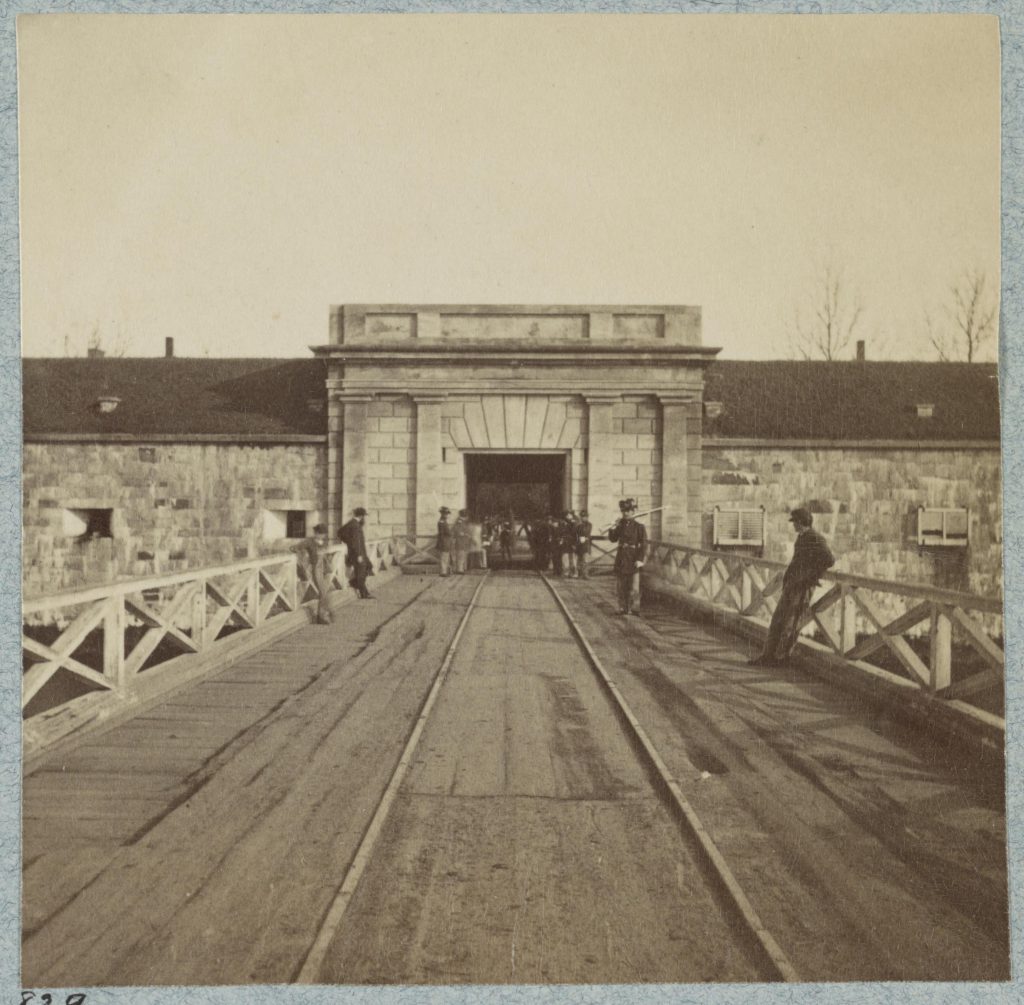
Photograph shows Union guards among a group of men at the entrance to Fortress Monroe where one of Thomas Griffith’s first letters was datelined.

A frequent topic of the letters Thomas Griffith wrote was how he came to be enlisted in the 116th New York Infantry, along with his hope that he would soon be able to get a discharge. In his first letter written on September 1, 1862, Thomas Griffith made the sad declaration of, “My father is dead. He died about four months ago.”

In another letter written on March 14, 1863, Thomas Griffith gave an account that suggests his enlistment was related to the death of his father and a relative named John whom he did not want to live with. The girls mentioned in the passage are Thomas Griffith’s three younger sisters, Anna, Louisa, and Rosa.

“About the girls coming up there, I should think that John would send them up there. He has had the care of all the stuff that was left and I think he has sold a good deal of the things. He wanted me to come and live with him but I would not do it after he had acted so mean to me. He hired Quint for him and then he wanted me but I would not go. I will never step inside of his door so long as I live. He has acted mean to me. He never noticed [me] till he wanted me to go and work for him. He thought that I was of no account but he found out that I was for I had as good a suit of clothes as any boy in Gowanda that work and fought.

I went to Buffalo, went on board the Towanda and went on one trip to Chicago and then I—like a fool—enlisted. I could of got out of the regiment if I had a mind to. I wish I had. I thought first that I would enlist [in] the Irish Brigade.”

Though Thomas Griffith did not enlist in the Irish Brigade, he didn’t enlist directly in the 116th New York Infantry either. He explained the several regiments he served with in a letter written on January 15, 1863.

“I enlisted first in the Eagle Brigade [100th NYSV] for a drummer. I then got into the Fire Zouaves [73rd New York Infantry] and then I got to exchange in the 116th [New York] which I have been with for 5 months. I wish I could get my discharge and I would come up there. I do not like it at all.”

It was almost certainly Thomas Griffith’s young age that had him enlisting initially as a drummer but by the time he transferred to the 116th New York Infantry he was listed on the rolls as 19 years old (despite actually being around 17) and he served as regular private.

Thomas Griffith and Skirmishes with Confederates

While the story of how he came to be enlisted unfolded over several letters written by Thomas Griffith, he wrote much more often about various skirmishes his fought in. In his first letter to his aunt written September 1, 1862, he wrote from Fortress Monroe and mentioned that he had already been in skirmishes.

“We have not seen a regular battle but we have seen some hard skirmishing. We went out in Pennsylvania and drove the rebels out of there. The new Monitor is going with us and a lot of other gunboats. The two largest guns in the world is lying at the fort—the ‘Union’ and the ‘Lincoln.’ We went out ashore and pitched our tents and expected to camp there for about two weeks but the orders came that we had all have to strike the tents and go aboard the ships and so we did.”

On January 15, 1863, Thomas Griffith wrote his second letter and explained what the regiment had been doing for the past few months.

“We left Fortress Monroe and set sail for Ship Island where we arrived after about ten days sail past the coast of Florida and through the Gulf of Mexico. We went to Ship Island two weeks when we set sail and came up the Mississippi river. We are about ten miles from New Orleans.

We have had a hard battle. There is about one half of the regiment killed and a good many wounded. There is not more than three hundred fit for duty. I was in the battle but I did not get hurt much—I was knocked down though. But I am thankful that I did not get hurt worse.”

Two days later Thomas Griffith wrote slightly more about the recent fight.

“There is not over three hundred men able to do duty. Some are sick and others wounded and the rest is dead. I got out of there pretty good. I had my ramrod knocked out of my hand when I was loading my gun with a bullet. We then charged on them and a got knocked down again. We drove them back. We are bound to open the Mississippi river. All say that they have took Vicksburg and I think that they are going to send us up there. I hope they will send us up there.”

Thomas Griffith was misinformed about Vicksburg. The city was not taken until July 1863.

The 116th New York Infantry at Baton Rouge, Louisiana
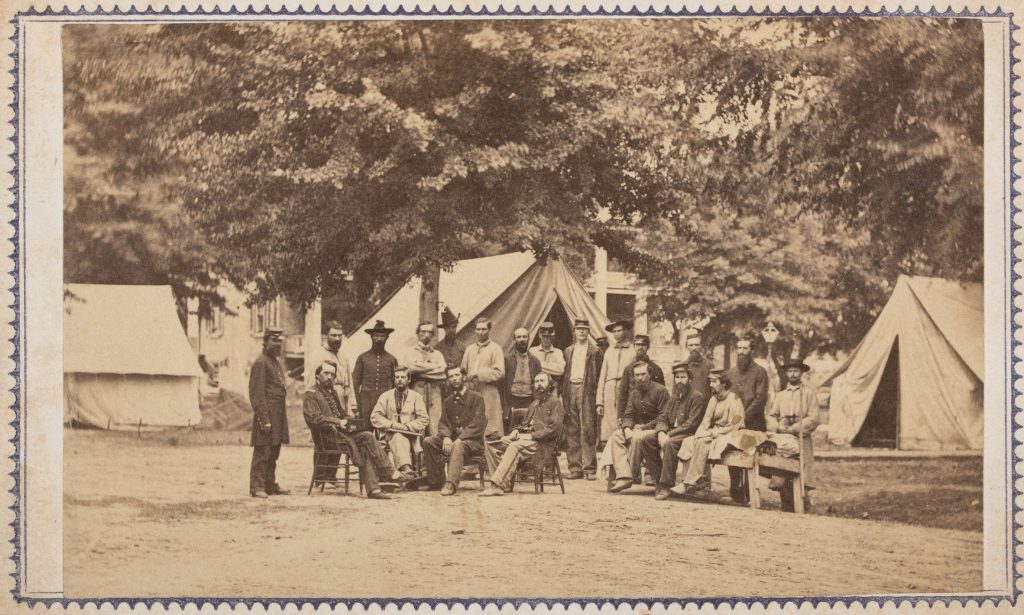
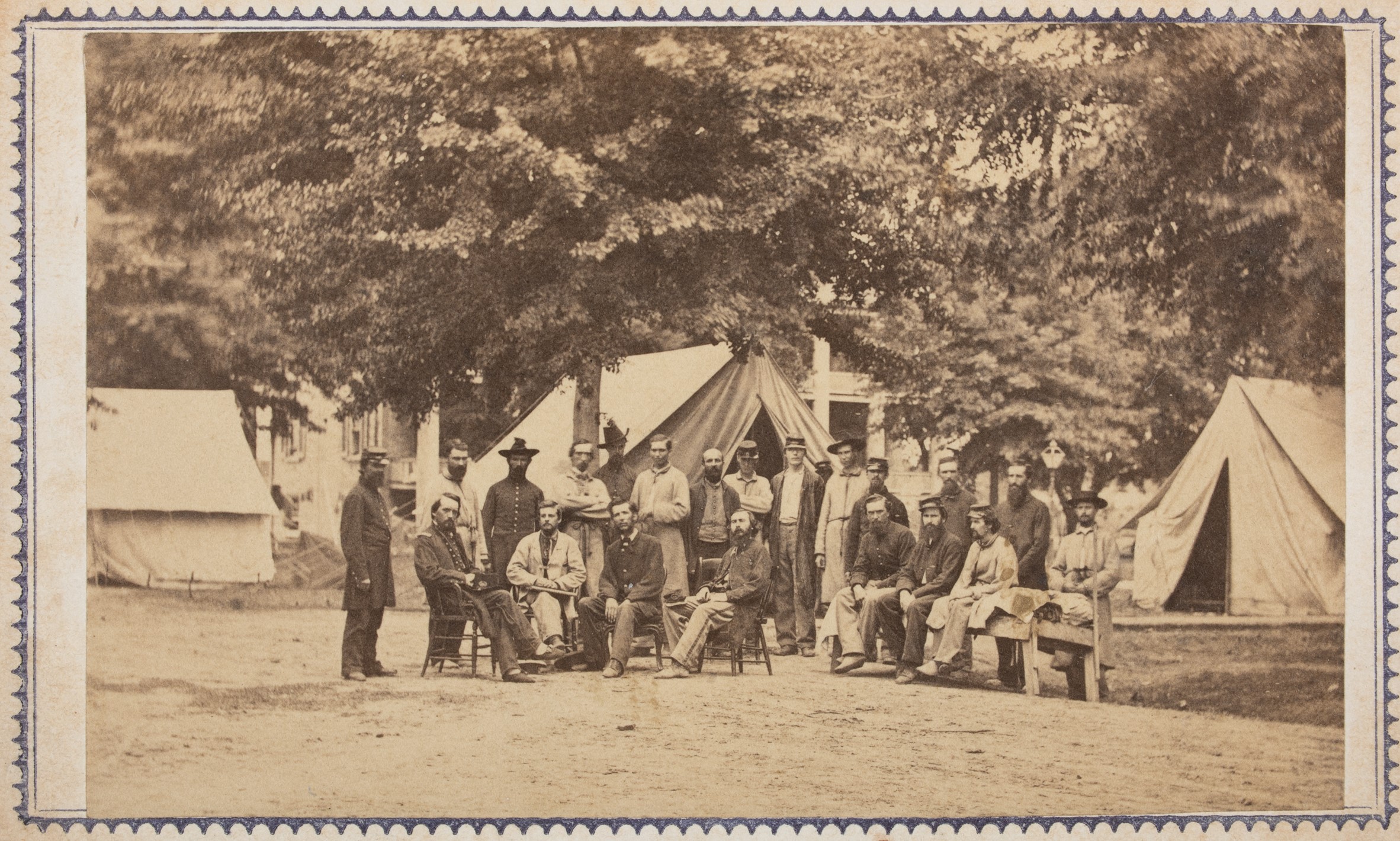
CDV of Medical Staff at Baton Rouge in 1863.
CDV of Medical Staff at Baton Rouge in 1863.

Beginning in March, 1863, Thomas Griffith’s letters were datelined from Baton Rouge, Louisiana. In a letter written on March 14, 1863, Thomas Griffith revealed that he spent several weeks in the hospital with a bad fever. Despite that, he was still up to date on the movements of the 116th New York Infantry.

“Our regiment left this morning and lots of other regiments too. I think that they are going up to Port Hudson. There was some gunboats and mortar boats went up the river today. I saw General Banks and his staff riding around. There was a grand [review] the other day and I saw him go by.”

In a letter fragment dated to sometime around March, 1863, Thomas Griffith wrote more about the 116th New York Infantry’s operations in Louisiana.

“We was a going up to Red River but it was so swampy that we could not go any further so we went back and went on board the boat and come back and went out to our camp. Then we got orders the next day to go out to the pontoon bridge and build it up so that we could cross it to go up to Port Hudson. We went out there and commenced to work when the rebel cavalry came and drove us back. We had no guards out so they took all of the things that we had to work with and a good many guns.”

On April 27, 1863 Thomas Griffith wrote another letter and by this time he was back with his regiment. He described his regiment’s location and duties in Baton Rouge.

“Our regiment is stationed at Baton Rouge inside of the breastworks where we are doing picket and guard duty. We expect to go to Donaldsonville in a little while. It’s awful hot here in the daytime and at night the mosquitoes bite. We have all drawn mosquito bars. The boats are up to Port Hudson still. We can hear firing all the while.

We have been out chopping down the trees all around so that the guns can take a good range of the enemy if they attack us. They say that they are going to take Baton Rouge from us. There is six mortar boats lying alongside of the river so that they can shell them out.”

A bit later in the letter he added some more detail.

“We have some hard times on picket with the Tennessee Cavalry. They come inside of our lines and try to steal and plunder. There is lots of guerrillas all around in the woods. We have three lines of pickets and one line of cavalry.”

Sadly, Thomas Griffith was killed a month after this letter was written while fighting at the Battle of Port Hudson.

We’d like to give a special thanks to William Griffing of Spared & Shared for his work in transcribing and sharing these letters.

To read more Thomas Griffith’s letters as well as access thousands of other Civil War letters and documents, sign up for a Research Arsenal membership.

If you enjoyed this article, check out some of our other featured collections like Josiah Osgood of the 24th Massachusetts Infantry and Otis Whitney of the 27th Iowa Infantry.

Finally, we previously highlighted a collection from another soldier in the 116th New York Infantry, Albert Jenkins Barnard.
Research Arsenal Spotlight 29: Albert Jenkins Barnard 116th New York Infantry

Albert Jenkins Barnard was born in 1841 to Albert Barnard and Elizabeth Atwater (Jenkins) Barnard of Buffalo, New York. His father died in 1849, and he had one brother, Lewis, who he mentions frequently in his letters.

On August 13, 1862, Albert Jenkins Barnard enlisted in the 116th New York Infantry as was mustered in as captain of company B.

Albert Jenkins Barnard and the Lieutenants of Company B

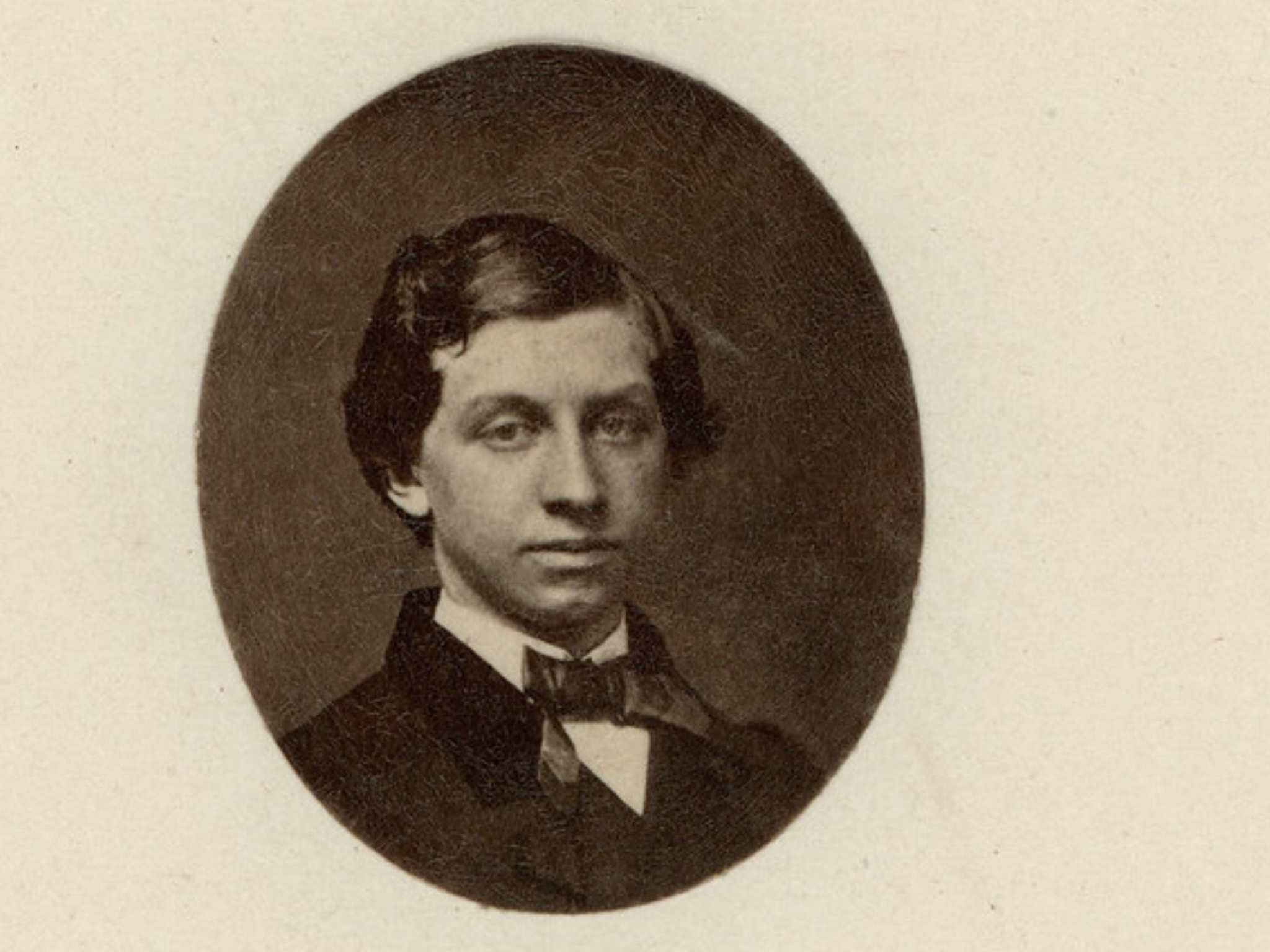
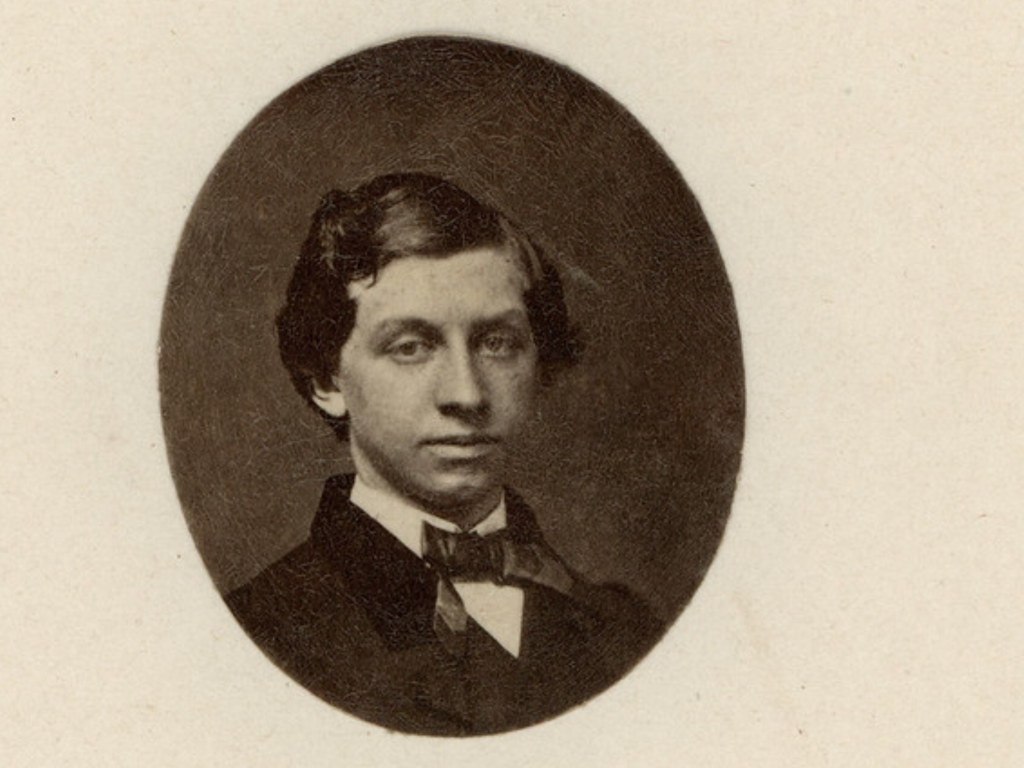
Photo of a young Albert Jenkins Barnard.
Photo of a young Albert Jenkins Barnard via Findagrave.com

After taking command of his company, Albert Jenkins Barnard found himself dissatisfied with both lieutenants under his command. The first hint of trouble showed in a letter  he wrote to his brother, Lewis, advising him not to enlist unless he could be an officer.

“I don’t think much of my lieutenants and think they will soon be ousted. Let me say here, don’t enlist as a private on any account. Do not accept any position lower than Orderly [Sergeant]. Camp duty is mighty hard, although we have some nice times. You ought not to accept a position lower than 2nd Lieutenant.”

On September 22, 1862, Albert Jenkins Barnard wrote to his mother about the situation, including some positive words about their Colonel, Edward Payson Chapin.

“We all like Col. Chapin very much. He is a much better officer than we supposed. He gives his orders splendidly and handles his men like a veteran. Major Love—he too is a bully officer. We have got a fine regiment and very few poor officers. But they won’t be permitted to stay long. Two of them, I regret to say, are in Co. B. I guess they will both have to leave this week. Willis, the 1st Lt. is a disagreeable fellow. The men don’t like him at all and he can’t learn military. When I returned from Baltimore Saturday, he was drilling the company. As soon as they saw me, they gave me three cheers. Corbett (the 2nd Lt.) is a very clever, good sort of a countryman, but he can’t drill and never can learn. I feel very sorry for him. The Colonel says I shall have John Dobbins just as soon as he can arrange matters.”

In October, 1862, things came to a head and both First Lieutenant Leander Willis and Second Lieutenant Daniel Corbett were replaced. In the case of Leander Willis, he faced rather serious accusations which forced his resignation, as Albert Jenkins Barnard detailed in a letter written on October 4, 1862.

“I have really been very busy of late; more so the last week on account of having no Lieutenants. Yes, Corbitt (my 2nd) resigned last Monday. Col. Chapin advised it as it was clear enough to us all that he could never make an officer, that the men wouldn’t have any confidence in. Willis is a scamp, and had his choice to resign or be disgraced. About three weeks ago he borrowed my muster roll and carried it to Washington where, through a sharper, he laid claims against the government for about one thousand dollars. He claimed that he had spent about that much for board for the men, from the time they went to Camp Morgan to live; which is all a humbug. The boys are all from the country and lived at home till they went to camp. When Mr. Willis returned from Washington the Colonel sent for him and told him that he knew all about his performances, and that his resignation would be accepted, and the soon he sent it in the better. So in it went and out he went. They, the Lieutenants, are still in camp. Corbitt will probably be appointed postmaster or something else but Willis will have to skedaddle.”

The “Little Captain”

After sorting out his junior officers, the next task that consumed Albert Jenkins Barnard was making sense of the expenses that occurred while the company was first being formed. On the first muster roll of the 116th New York Infantry, the captain of company B was given as Joseph E. Ewell, however he seems to have left shortly after the regiment was formed and Albert Jenkins Barnard had his suspicions that Ewell never seriously intended to stay on as captain.

“A captain is responsible for all company property; we all have to take receipts from the men for everything that they draw. The receipts for this company were given to the Quarter Master so all I have to go by is the word of the men. However, I have got the men to sign the clothing book as I am all sound there. I expect to be out something but cannot tell how much. Most of the captains are out from forty to sixty dollars worth but mine won’t be near that. I think if Capt. Ewell had really intended going with his company, he would not have let things run at odds and ends as they did. This I found out after I got here and have had to straighten out myself. He did not take a single receipt that he delivered. Now don’t let this bother you for I am all right now and am much better off than most of the captains.”

Albert Jenkins Barnard was also concerned with making sure his men drilled well and maintained a clean appearance. Despite his strict nature when it came to discipline, he also managed to acquire the nickname “the little captain,” which the men all found very amusing. He detailed the story as well as his duties to his mother in a letter  written October 26, 1862.

“John Dobbins and I still run the company alone as my first lieutenant has not arrived yet though I expect him every day now and we run it “bull,” as you may know from what the Colonel told Dr. [C. B.] Hutchins the other day after dress parade. He said, “Co. B is the best in my regiment” and the “little captain is a brick.” I am known here as the little captain and now I will tell you why. While I was messing with Lt. Jones and others one day, I was late to dinner and Jones told his servant—a little Dutch boy—to run and tell Capt. Barnard that dinner was getting cold. He stopped a minute and then said, “de cline capting?” which is, if pronounced as spelled here, the little captain. The boys all think it is a good joke and so that is my name. But nevertheless, my company can beat all others in the regiment in drill and appearance; on drill and dress parade. I punish all who appear without clean brasses and bright shoes by putting them on guard. At first I had a great many, but now scarcely ever have one.”

The 116th New York Infantry at Ship Island

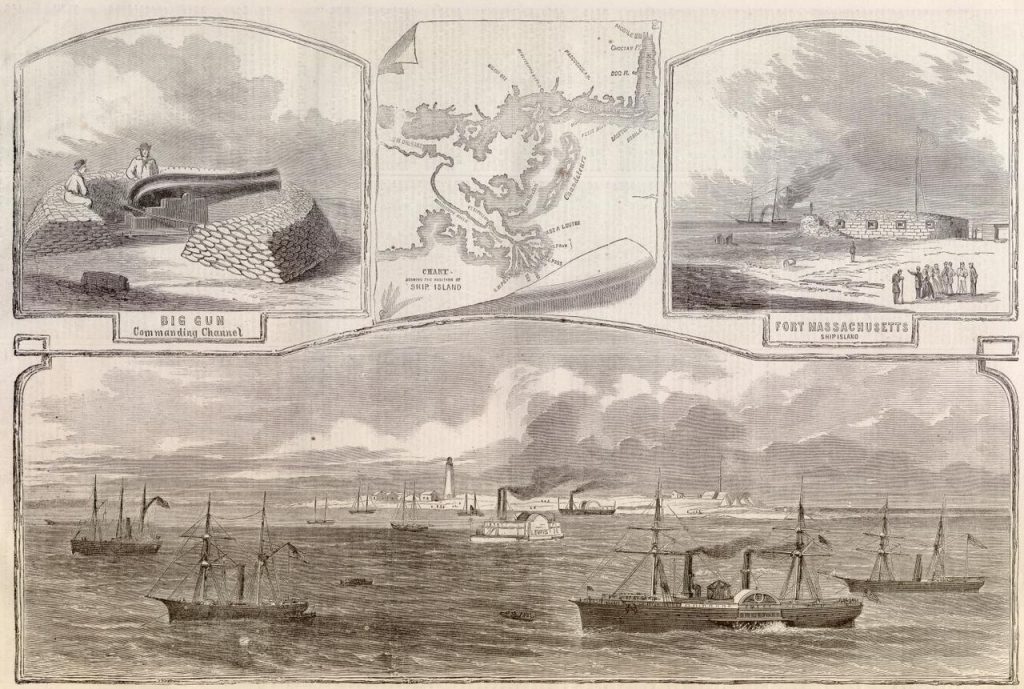
Illustration of Ship Island from January 4, 1862 issue of Harper’s Weekly.
Illustration of Ship Island from January 4, 1862 issue of Harper’s Weekly via Wikimedia Commons.

In December, 1862, the 116th New York Infantry set out for Ship Island, Mississippi. The voyage was long and stormy, and Albert Jenkins Barnard wrote a detailed account of it in a letter to his mother on December 14, 1862.

“After ten days sail, we find ourselves at Ship Island and ordered to New Orleans. On Thursday the 4th, we pulled up our anchor and started out to sea. When off Cape Henry (1 p.m.), we stopped till the rest of the fleet came out which was about 9 in the evening. We then all started together in two lines, seven ships in each line—the Baltic leading one, and we the other.

We kept together till the following noon when the wind commenced blowing and three dropped out and ran close to shore. About this time there were a great many sick aboard the ship. The wind kept increasing till midnight and I tell you what, it was a grand sight. The moon shone bright and the waves somewhat high. It was impossible to stand anywhere without holding on to something. From the deck, it looked as if ever time our bow went down that it was going under, but when the wave came she would rise again and part it and send the spray all over the ship. And once in awhile, a wave would roll clear over the paddle boxes. Perhaps you will have some idea of the force of the wind when I saw that it would take the tops off the waves and blow the water as it does the dust from the dirt piles in our streets.”

On December 21, 1862, Albert Jenkins Barnard wrote another letter, this time detailing the island itself.

“We get along very nicely although this is such a sandy, wild place. There is nothing but sand for four miles. Then there is a swamp that reaches nearly from shore to shore and in the swamp Alligators and a species of palm tree. Further on is a sort of prairie covered with tall rushes which are so long that they will reach a man’s knees when riding on horseback. About six miles from here is a beautiful little lake in which are plenty of fish and lots of ducks. We are having a better time here than I supposed we would. We have been living on oranges and oysters since we came here.”

While on Ship Island, the 116th New York Infantry celebrated Christmas in a rather unique way by having senior officers and the non-commissioned officers and privates change roles for the day. Albert Jenkins wrote about the day in a letter written on January 2, 1863 after the regiment had moved to Greenville, Louisiana.

“Christmas Day the command was turned over the non-commissioned officers and privates. Christmas Eve the companies held their elections for Captain &c. and then the officers so chosen deleted the field officers. Sergt. John Rohan of Co. D was the Colonel, a boy from Co. A the Lt. Colonel, and one of the color corporals was Major. These officers were to do the best they could and they did first rate. Went through with guard mounting and dress parade without making a mistake.

John Higgins was detailed as corporal of the first relief and I corporal of the 3rd. Most of the others had to stand guard. Some of the men would run the guard and then the officer in command would send me with a guard to arrest them. They kept us running, I tell you. They had most of the officers in the guard house. It was a very warm day. Those not on duty were around without their coats.”

Albert Jenkins Barnard was discharged on July 29, 1863 after being promoted to lieutenant colonel but never being mustered as such. After the war he married Clara Sizer, who was the sister of William Sizer who was frequently mentioned in his letters. Albert Jenkins Barnard died on January 10, 1916 at the age of 74.

To read the full collection of letters by Albert Jenkins Barnard and access thousands of other Civil War letters and documents, sign up for a Research Arsenal membership.

We’d like to give a special thanks to William Griffing of Spared & Shared for his work in transcribing and sharing these letters.

If you enjoyed this article, check out some of our other featured collections like Jacob Claar of the 138th Pennsylvania Infantry and William Fish of the 11th New Hampshire Infantry.


JOIN THE RESEARCH ARSENAL COMMUNITY TODAY.