RG 94 Spotlight: 21st Illinois Infantry

The Research Arsenal is proud to be digitizing and adding historical records of Civil War regiments held at the National Archives to our online database so that researchers and historians can access material that previously required a trip to Washington D.C. The 21st Illinois Infantry is one of the many regiments that has been added to our database.

The 21st Illinois Infantry: From Grant’s First Command to Victory in the Western Theater

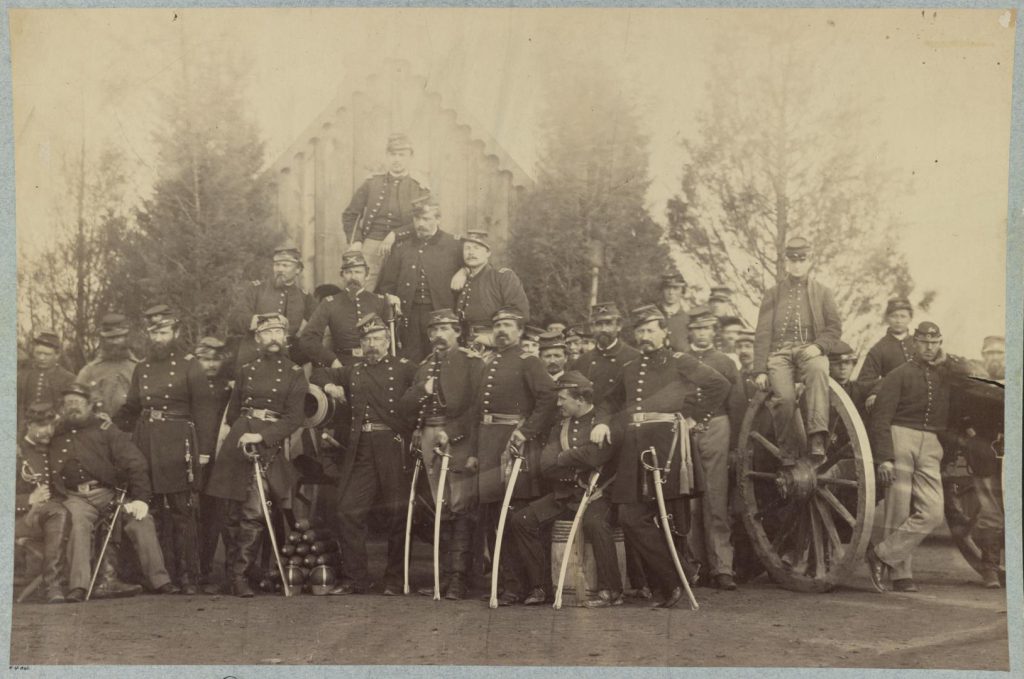
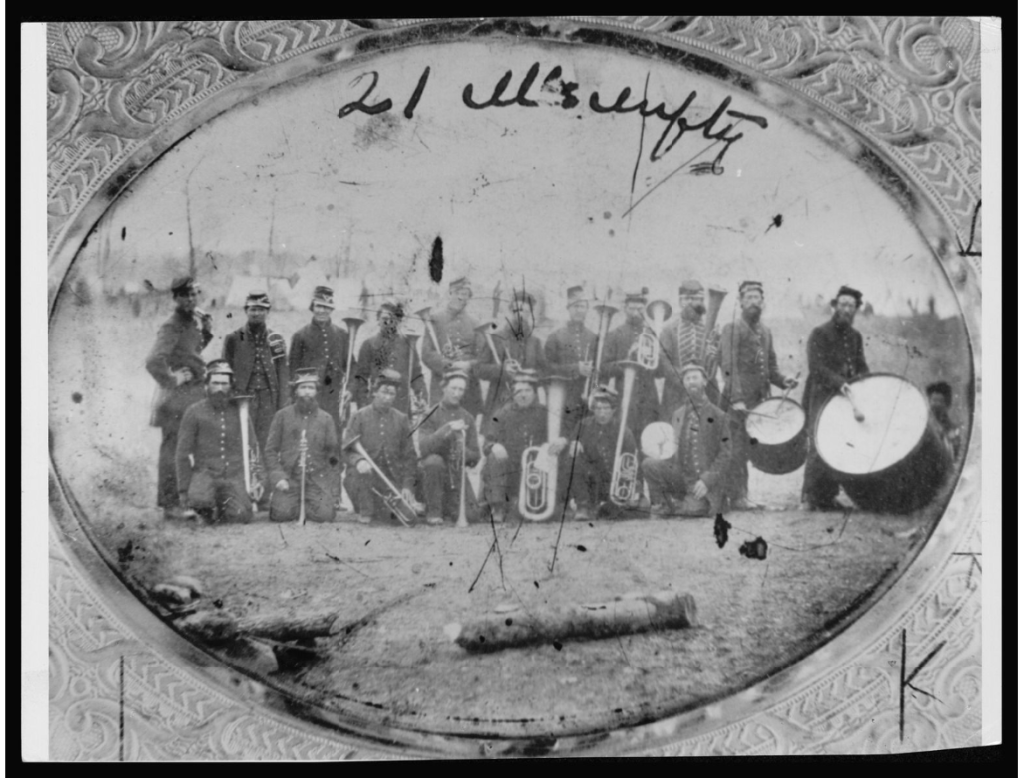
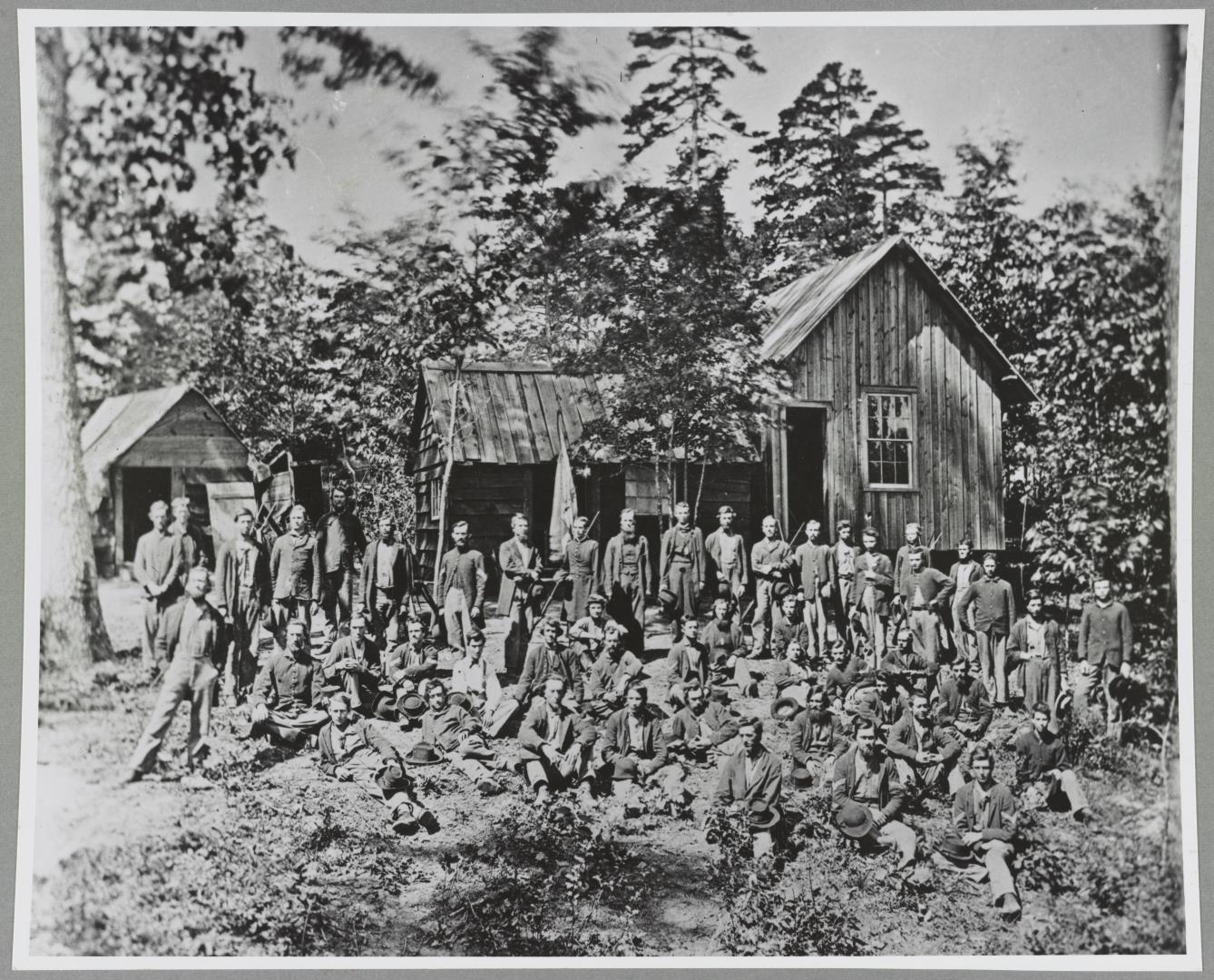
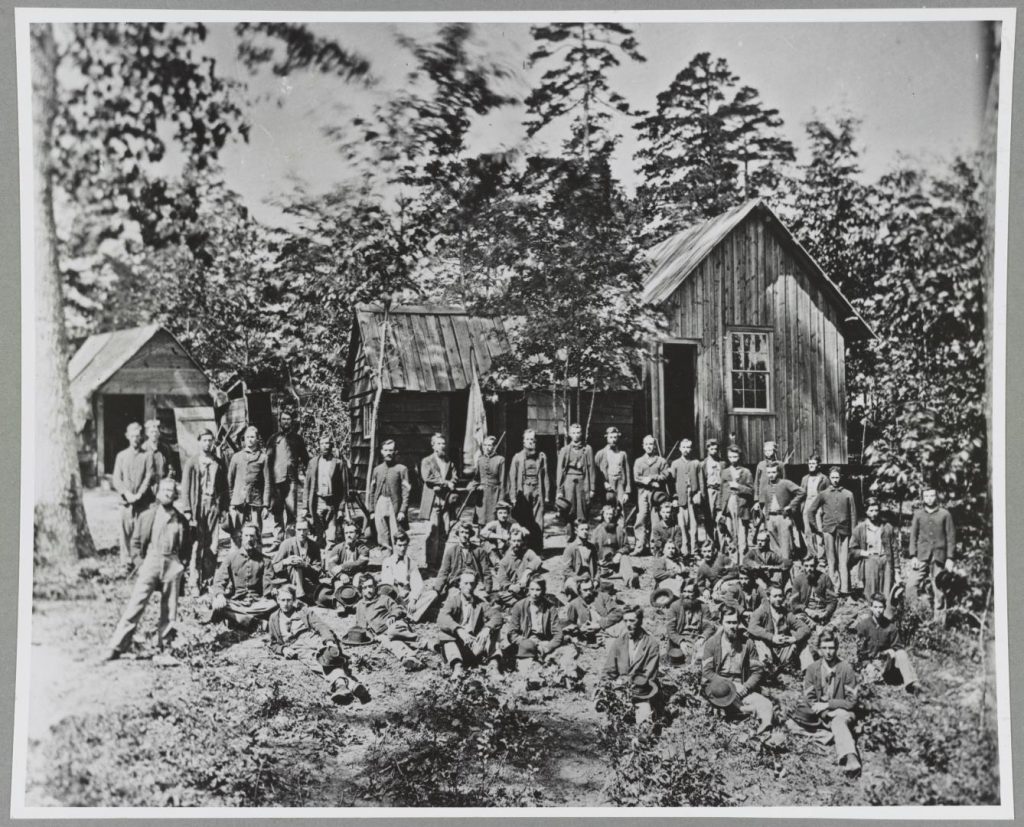
21st Illinois Infantry band
This is an image of the 21st Illinois Infantry band taken on an unknown date and location. Courtesy: https://dan-masters-civil-war.blogspot.com/2021/06/the-desperate-day-before-us-21st.html

When the Civil War erupted in the spring of 1861, thousands of Illinois men answered President Abraham Lincoln’s call for volunteers. Among them was the 21st Illinois Volunteer Infantry, a regiment that would earn an enviable reputation for discipline and courage while serving in nearly every major campaign of the Western Theater. During four years of war, the regiment marched from the rugged hills of southeastern Missouri to the streets of Atlanta, fought in some of the conflict’s bloodiest battles, and finished its service occupying Texas after the Confederacy’s collapse.

Perhaps no aspect of the regiment’s history is more notable than its connection to Ulysses S. Grant, who took command of the 21st Illinois before becoming one of the Union’s greatest generals. Yet the regiment’s true story is found in the letters of the ordinary soldiers who endured disease, exhausting marches, fierce combat, and years away from home while remaining committed to preserving the Union.

A Regiment Takes Shape

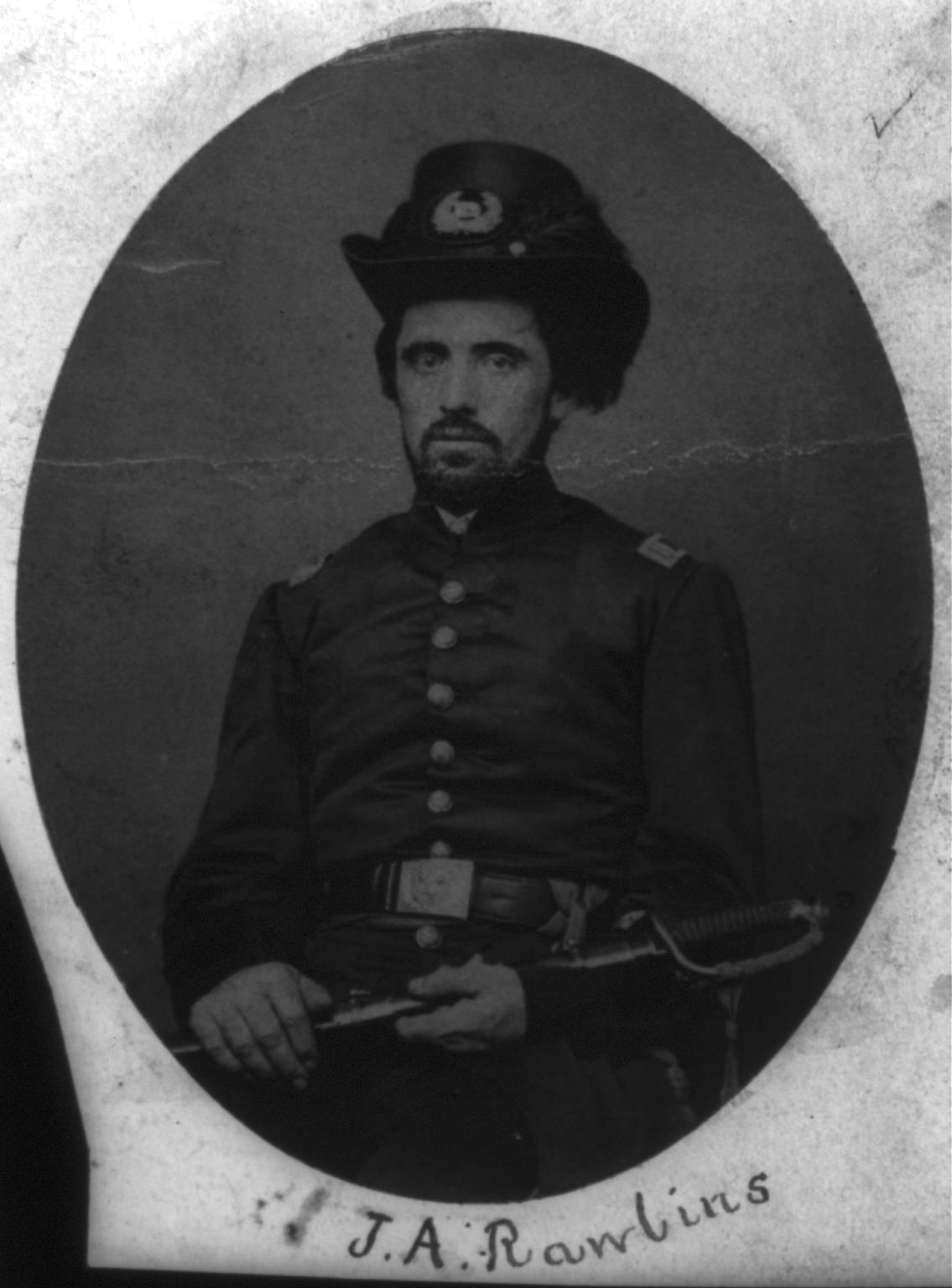
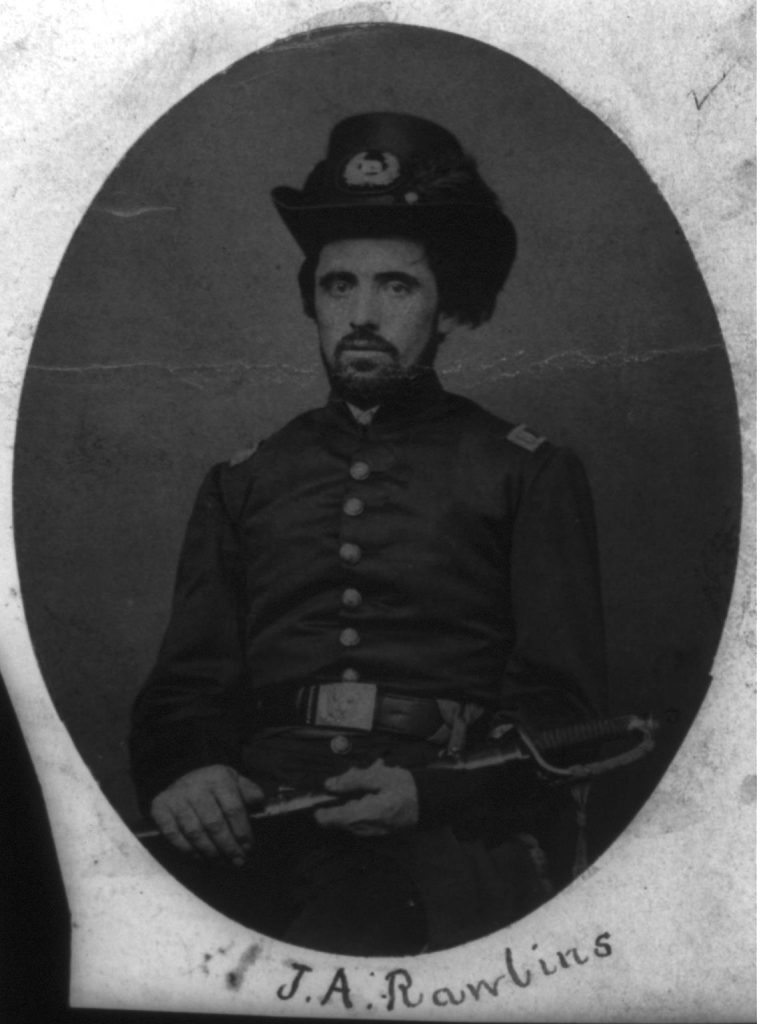
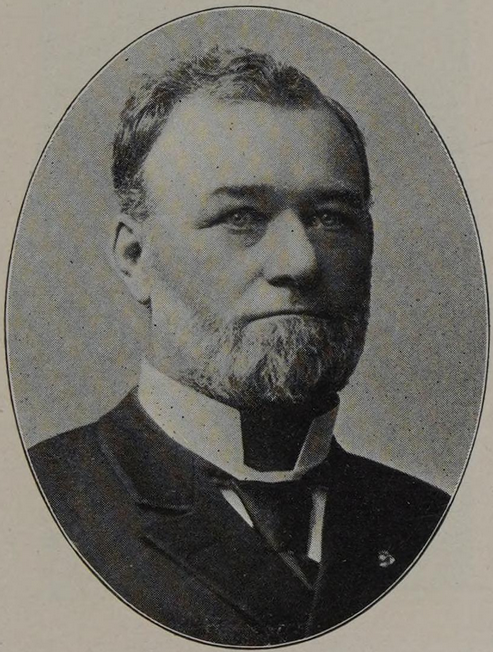
Captain J.A. Rawlins of the 21st Illinois Infantry
Captain John Aaron Rawlins. Pivotal in the rallying of volunteers and in recruitment of the 45th Illinois Infantry. Transferred to command of the 21st Illinois Infantry and subsequently requested by Ulysses S. Grant to serve as his Aide De Camp reporting to Grant September 14th, 1861. By May 1862, Rawlins was promoted to Major and again to Lieutenant Colonel on September 1st. on August 11th 1863, Rawlins was promoted to Brigadier General and served as Grant’s Chief of Staff until brevet to Major General April 9th, 1865. Later served as Secretary of War under Grant dying of consumption in office in 1869. The city of Rawlins, Wyoming is named after Captain Rawlins, as he camped on the townsite during a railroad survey in 1867. https://app.researcharsenal.com/imageSingleView/69065

The 21st Illinois Infantry was organized at Mattoon and mustered into Federal service on June 13, 1861, for a three-year enlistment. Like many volunteer regiments raised during the war’s opening months, the men came from farming communities and small towns throughout central Illinois. Enthusiasm for enlistment was abundant, but military discipline was another matter entirely.

When Captain Ulysses S. Grant resigned from the regular army in 1854, few would have predicted his future prominence. Re-entering military service in 1861, he was appointed colonel of the 21st Illinois on June 15. He later recalled finding a regiment that possessed courage but little order. Rather than attempting to win popularity, Grant immediately imposed strict discipline, drilling the men relentlessly and insisting upon obedience.

The transformation was dramatic. The same regiment that had once been considered unruly soon developed into one of the dependable infantry organizations of the Western armies. Grant’s brief tenure with the 21st Illinois proved equally significant for his own career. Within weeks he received promotion to brigadier general, beginning the remarkable rise that would eventually carry him to command all Union armies.

Although Grant departed early in the regiment’s service, the standards he established remained throughout the war.

Learning the Hard Lessons of War in Missouri

The regiment’s first campaigns took place in southeastern Missouri, where Confederate forces threatened Union control of the region. Rather than immediately participating in grand battles, the men learned soldiering through long marches, difficult weather, and scattered engagements against Confederate forces.

Winter campaigning tested the volunteers as much as enemy fire. While stationed at Camp Ironton in January 1862, Private Stephen Perry Freeman of Company H found himself too ill to accompany his regiment on an expedition against Confederate troops near Greenville. Writing home to Lydia Waller, he described both his disappointment and the hardships facing his comrades:

“The regiment nearly all left here today on a march of 20 days—all that was able to go—and I was one reported not able to stand the trip. But it is the first time I have ever failed since I left home.”

Freeman understood exactly what the regiment faced. Missouri’s winter offered little comfort to soldiers living in tents:

“The weather here is very bad. It snowed here today all day. The snow is six or seven inches deep and very muddy also. The Boys is going to have a very hard tramp of it this time.”

His letter also reveals another reality of Civil War service—loneliness. With the regiment gone, camp suddenly became quiet:

“Times here tonight appears very dull. It puts me in mind of old times when I was a boy and my Mother would go away and leave me to take care of the house.”

Like thousands of Union soldiers, Freeman longed for letters from family and friends almost as much as he longed for home itself. The regiment continued operations throughout Missouri, participating in the campaign that secured southeastern Missouri and helped open the Mississippi Valley to later Union advances.

Into the Heart of the Western Theater

During 1862 the 21st Illinois became part of the expanding Union offensive through the Western Theater. The regiment participated in operations against New Madrid, the advance on Corinth, and the hard-fought Battle of Perryville in Kentucky.

Letters written by Lieutenant Charles Howe vividly describe the exhausting rhythm of campaigning. His correspondence reflects the constant marches, uncertain supplies, and ever-present possibility of battle that defined life in the Army of the Cumberland. Rather than experiencing continuous combat, soldiers often spent weeks marching before suddenly finding themselves under fire with little warning. The regiment’s greatest trial of 1862 came at the Battle of Stones River near Murfreesboro, Tennessee. Fighting erupted on December 31, and the 21st Illinois was heavily engaged during one of the war’s bloodiest battles.

Among those who never returned home was Stephen Perry Freeman. Less than a year after writing hopefully from Camp Ironton, he was killed during the battle on December 30, 1862. His younger brother, Harmon, continued serving with the regiment until he was captured and later died in Confederate captivity at Danville, Virginia, in February 1864. Their story illustrates the tremendous sacrifices made by families throughout Illinois as the war dragged on.

Veterans Forged by Battle

By 1863 the 21st Illinois was no longer a regiment of inexperienced volunteers. Years of campaigning had transformed the survivors into seasoned veterans. They fought at Chickamauga, one of the Civil War’s fiercest battles, where Union forces suffered a costly defeat before later recovering during the Chattanooga Campaign.

The regiment’s discipline, first instilled by Grant, proved invaluable during these desperate engagements. Veterans who had survived Missouri, Corinth, Perryville, and Stones River understood how to maintain formation under fire and support one another amid the confusion of battle. The hardships of continual campaigning strengthened the bonds between the soldiers. Those relationships became one of the defining characteristics of Civil War regiments, where shared danger often created friendships lasting a lifetime. Many members of the 21st Illinois reenlisted as Veteran Volunteers, demonstrating their commitment despite years of hardship and loss.

Marching with Sherman to Atlanta

The regiment entered perhaps its most famous campaign in the spring of 1864 as part of General William T. Sherman’s advance toward Atlanta. For more than four months, the soldiers marched almost daily while fighting a series of engagements across northern Georgia.

Private George W. Thompson of Company H wrote home shortly after Atlanta fell, providing one of the best firsthand accounts of the regiment’s experience. Reflecting on more than three years together, he wrote:

“All the soldiers that belong to our company seems as brothers to me for we have been together so long that I hate to part with one of them.”

That simple observation captures the remarkable camaraderie that developed among veteran soldiers after years of shared danger.

Thompson also expressed the fierce patriotism that motivated many Union volunteers. Rejecting Northern opponents of the war, he declared:

“I am not a butternut nor a copperhead. I am for the Union and the Constitution… and I will take my musket and go on the battlefield and fight the rebels until the sun ceases to rise before I will give up our country.”

His words reflected the determination of veterans who believed the enormous sacrifices already made demanded complete victory. Rather than offering only patriotic sentiment, Thompson carefully described Sherman’s movements during the final operations against Atlanta. He explained how Union forces abandoned their original lines, marched south to cut Confederate railroads, and systematically destroyed vital transportation routes:

“We have taken Atlanta without getting many men killed… we struck the railroad 16 miles below Atlanta and destroyed 30 miles of the railroad.”

His account continued with the fighting around Jonesboro, where Confederate General John Bell Hood attempted to save his remaining rail connections:

“We formed a line of battle and then fighting began. It lasted till after night when they fell back… we followed them up until we heard that Atlanta was evacuated.”

The capture of Atlanta became one of the Union’s greatest strategic victories, boosting Northern morale and helping secure Abraham Lincoln’s reelection. After months of continuous campaigning, Thompson admitted how exhausted the regiment had become:

“We have been on the campaign so long that we are all worn out so we will have to rest for one month before we will be able to march again.”

Even victorious soldiers paid a tremendous physical price for Sherman’s relentless offensive.

Final Victories and the War’s End

The fall of Atlanta did not end the regiment’s service. The 21st Illinois continued campaigning during the Franklin-Nashville Campaign, helping destroy Hood’s Army of Tennessee in late 1864. The victories at Franklin and Nashville effectively eliminated the Confederacy’s last major offensive force in the Western Theater. After Confederate resistance collapsed in 1865, the regiment was sent to Texas for occupation duty. Like many veteran organizations, its final months consisted not of dramatic battles but of maintaining order as the nation slowly transitioned from war to peace. The 21st Illinois was finally mustered out in December 1865 after more than four years of service.

A Lasting Legacy

The history of the 21st Illinois Volunteer Infantry mirrors the larger story of the Union Army in the West. Organized during the first rush of enthusiasm in 1861, the regiment matured under the demanding leadership of Ulysses S. Grant before proving itself in campaigns stretching from Missouri to Georgia.

Its soldiers endured disease, brutal marches, bitter winter camps, and some of the war’s hardest fighting. Many never returned home, including Stephen Freeman, whose quiet letter from Camp Ironton speaks poignantly of homesickness and uncertainty only months before his death. Others, like George Thompson, survived long enough to witness Atlanta’s capture and express confidence that the Union would ultimately prevail.

Their letters remind us that regimental histories are more than lists of battles and casualty figures. They are stories of ordinary citizens who became soldiers, formed lifelong friendships, sacrificed for causes they believed in, and helped preserve the United States during its greatest national crisis.

When Ulysses S. Grant first assumed command of the 21st Illinois, he inherited a regiment that required discipline and direction. By the war’s end, it had become a veteran organization whose record reflected the determination, endurance, and courage of the citizen-soldiers who served within its ranks.

Sources

The Research Arsenal is proud to hold 1,263 digital scans of the 21st Illinois Infantry’s regimental history on its database. These consist of just nearly 1,250 pages of material from the National Archives Records Group 94 files. These include Regimental Descriptive books, Order books, and Morning Reports. Visit the Research Arsenal, click on “Search NARA Records” then select “RG94” and “21st Illinois Infantry” from the drop-down menus. In addition, the Research Arsenal contains letters, and other forms and documents relating to the 21st Illinois Infantry.

Civil War Index. 21st Illinois Infantry.
https://civilwarindex.com/armyil/21st_il_infantry.html

Dan Masters’ Civil War Chronicles. The Desperate Day Before Us: The 21st Illinois at Chickamauga. https://dan-masters-civil-war.blogspot.com/2021/06/the-desperate-day-before-us-21st.html

Illinois GenWeb. 21st Illinois Volunteer Infantry History.
https://illinoisgenweb.org/civilwar/history/021.html

National Park Service. Charles Howe Letter Transcriptions.
https://www.nps.gov/stri/learn/historyculture/upload/Howe_Charles_letter_Transcription_508.pdf

Research Arsenal. 1862 STEPHEN PERRY FREEMAN TO LYDIA JANE WALLER. https://app.researcharsenal.com/imageSingleView/14657

Research Arsenal. 1864 GEORGE W. THOMPSON TO LYDIA JANE WALLER. https://app.researcharsenal.com/imageSingleView/63663

Spared & Shared. 21st Illinois Infantry Collection.
https://sparedshared23.com/category/21st-illinois-infantry/


RG 94 Spotlight: 30th Indiana Infantry

The Research Arsenal is proud to be digitizing and adding historical records of Civil War regiments held at the National Archives to our online database so that researchers and historians can access material that previously required a trip to Washington D.C. The 30th Indiana Infantry is one of the many regiments that has been added to our database.

The 30th Indiana Infantry: A Regiment’s Journey Through the Western Theater

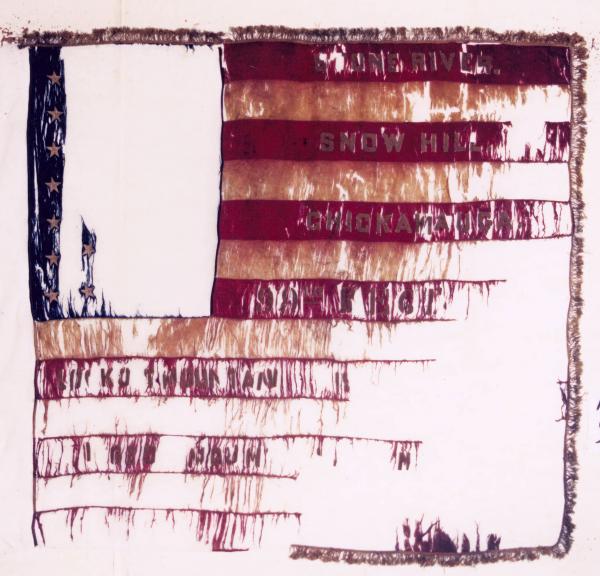
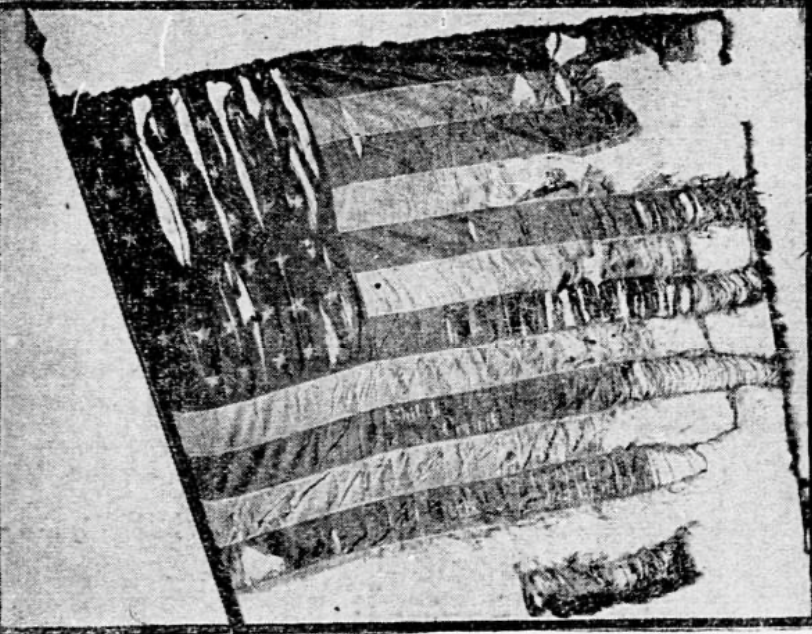
U.S. Flag carried by the 30th Indiana Infantry.
U.S. Flag carried by the 30th Indiana Infantry. By The National tribune – The National tribune, June 7, 1900, page 6, Public Domain, https://commons.wikimedia.org/w/index.php?curid=183041534

The 30th Indiana Volunteer Infantry served with distinction throughout nearly the entire Civil War, participating in many of the Western Theater’s most significant campaigns. Organized in the fall of 1861, the regiment marched from the hills of Kentucky to the fields of Tennessee, through Georgia with General William T. Sherman, and ultimately into the Carolinas before the Confederacy surrendered in 1865. Their service took them through some of the war’s bloodiest battles, including Shiloh, Stones River, Chickamauga, Chattanooga, the Atlanta Campaign, and the March to the Sea.

While official reports record troop movements and casualty figures, the true story of the 30th Indiana is best understood through the words of its soldiers. The surviving letter of Corporal Jesse L. Adams and the wartime journal of Private Thomas Hogarth offer remarkable glimpses into the everyday realities of military service—from the excitement of early campaigns to the loneliness and pain of recovering from a battlefield wound.

Organizing for War

The 30th Indiana Infantry was organized at Fort Wayne and mustered into Federal service on September 20, 1861. Commanded by Colonel Sion Bass, a lawyer and politician who had been born in Kentucky but remained steadfastly loyal to the Union, the regiment was composed of companies recruited from northeastern Indiana communities. Like thousands of other volunteers, many of its members had little military experience before answering President Abraham Lincoln’s call for troops.

Following a period of instruction at Camp Allen and Camp Wood, the regiment moved south into Kentucky as part of Major General Don Carlos Buell’s Army of the Ohio. The soldiers expected an adventure, but they soon discovered that campaigning involved far more marching than fighting. Long days on muddy roads, rough camps, unpredictable weather, and limited supplies quickly replaced the patriotic excitement that had accompanied their enlistment.

Into Kentucky

One of the regiment’s earliest firsthand accounts comes from Corporal Jesse L. Adams of Company D. Writing from Bowling Green, Kentucky, on February 24, 1862, Adams described the regiment’s advance after Confederate forces abandoned one of their strongest defensive positions in Kentucky.

“We left Camp Wood the 14th and got in Bowling Green the 25th of February. This is a wonderful place now, I tell you. The Rebels was well fortified here. It is a beautiful place. There is a considerable of a town here.”

His observations reflected the excitement many Union soldiers felt as they occupied territory that Confederates had only recently evacuated. The capture of Bowling Green represented another important step toward Nashville and the deeper South.

Adams also explained how quickly the regiment expected to move onward.

“We are encamped on the Big Barren River. We shan’t stop here long. We shall go on to Nashville soon as we can cross the river.”

Yet beneath the optimism was an honest assessment of military life. Like many volunteers, Adams had already learned that soldiering was far different from the patriotic image many civilians imagined at home.

“I think it looks a great deal better than I do for we look pretty raunchy here and we feel so too, I tell you. A soldier’s life is a dog’s life as near as you can come at it. You had better let soldier’s life alone… If you come down here once, you won’t want to leave home again very soon.”

His words remain one of the most candid descriptions of a volunteer soldier’s early experience. Endless marches, poor sleeping conditions, exposure to the elements, and uncertain meals were becoming routine for the men of the 30th Indiana.

Baptism of Fire at Shiloh

Only weeks after Adams wrote his letter, the regiment marched rapidly toward Pittsburg Landing after Confederate forces surprised General Ulysses S. Grant’s army on April 6, 1862. The 30th Indiana entered the Battle of Shiloh on the second day of fighting as Buell’s reinforcements joined the Union counterattack.

The regiment fought courageously in repeated assaults near Shiloh Church, suffering heavy casualties. Colonel Sion Bass received a mortal wound while leading his men and died several days later. Corporal Jesse Adams was also mortally wounded during the fighting. Transported to the City General Hospital in St. Louis, he died on April 21, 1862, at only nineteen years of age.

Reading his earlier letter after knowing his fate gives special meaning to the closing words he wrote to his friend:

“This from a friend as long as life remains.”

Neither Adams nor the recipient of his letter could have imagined that it would become one of the final surviving records of his life.

The War Continues

Although Shiloh proved devastating, the regiment’s service had only begun. Throughout 1862 and 1863 the 30th Indiana continued campaigning with the Army of the Ohio and later the Army of the Cumberland. The regiment fought during the Kentucky Campaign, participated in the Battle of Perryville, and endured the brutal fighting at Stones River near Murfreesboro, Tennessee.

The soldiers who survived those campaigns pressed on through the Chickamauga Campaign in 1863. Like many Union regiments in the Western Theater, the 30th Indiana experienced both victory and defeat, often marching hundreds of miles between battles. Following the Union victory at Chattanooga, the regiment joined General William T. Sherman’s Atlanta Campaign before participating in the March to the Sea and the Carolinas Campaign during the final months of the war.

These campaigns demanded remarkable endurance. More soldiers often suffered from disease, exposure, and exhaustion than from enemy bullets. The regiment’s history was therefore shaped not only by battles but also by the physical hardships that accompanied years of campaigning.

Thomas Hogarth’s Story

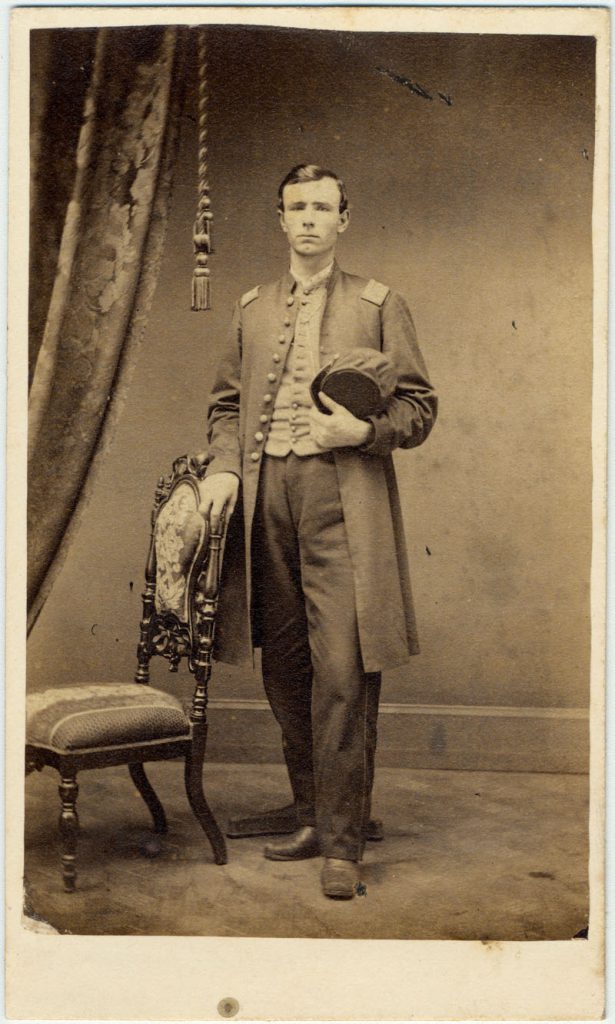
Thomas Hogarth 30th Indiana Infantry
Portrait of Captain Thomas Hogarth, 30th Indiana Infantry. Wounded in the shoulder at the Battle of Stones River December 31, 1862, he made a recovery and returned to his regiment. After the war he worked for the railroad. Image: https://friendsofallencounty.org/military/images/weldon/Hogarth.jpg

One of the most remarkable surviving records from the regiment belongs to Private Thomas Hogarth of Company H. Unlike Adams’ letter, Hogarth’s diary follows the difficult months after he was wounded during the Battle of Stones River on December 31, 1862.

His journal opens on New Year’s Day 1863, not with dramatic descriptions of combat but with the painful reality of its aftermath.

“This morning my shoulder feels quite bad… I get an ambulance and am on my way toward Nashville… I get out and walk and get left behind and go into the 4 Division Hospital and have my arm dressed up.”

The next day’s entry reveals the severity of his injury.

“The doctor takes 4 pieces of bone from the wound that I received at the Battle of Murfreesboro on the 31st of December. Nothing much to eat… Shoulder hurts quite much indeed.”

Those few sentences vividly illustrate Civil War medicine. Surgeons often removed shattered bone fragments without the benefit of modern antibiotics, while hospital diets frequently consisted of little more than coffee, broth, and whatever supplies happened to be available.

Recovering Far From Home

Rather than returning immediately to duty, Hogarth began a lengthy journey through military hospitals in Nashville, Louisville, Covington, and finally Camp Dennison, Ohio. His diary chronicles not just medical treatment but the emotional challenges of being separated from his regiment.

Simple entries convey profound loneliness.

“Quite lonesome here.”

Letters from family became the highlight of his days. Even while recovering from his wound, Hogarth devoted much of his energy to maintaining correspondence.

“I have written about 25 letters since I have been wounded.”

He eagerly anticipated packages from home and faithfully recorded every visitor, letter, and newspaper he received. A box containing a clean shirt, newspapers, and stewed apples became an event worthy of recording in his diary.

Small moments of kindness also lifted his spirits. On February 22 he described an evening that briefly allowed the wounded soldiers to forget the hardships surrounding them.

“Last night there was five ladies came in to sing to the sick soldiers some songs and we enjoyed ourselves very much.”

The entry provides a touching reminder that civilian volunteers frequently visited hospitals to comfort wounded soldiers through music, conversation, and small gifts.

Waiting to Return

As winter progressed, Hogarth’s greatest frustration became waiting. Like many recovering soldiers, he desperately wanted to rejoin his comrades, but his physicians refused to release him until they believed he was fully healed.

On February 21 he summarized his situation in one simple sentence:

“The doctor will not let me go to my regiment until it heals up completely.”

That brief observation captures an aspect of Civil War service often overlooked. For every dramatic battlefield charge, there were weeks or months of recovery, uncertainty, and patience. Thousands of wounded soldiers struggled not only with pain but with the emotional burden of watching their regiments continue campaigning without them.

A Regiment That Endured

The surviving writings of Jesse Adams and Thomas Hogarth provide two very different windows into the experience of the 30th Indiana Infantry. Adams represents the eager young volunteer marching confidently into the war’s early campaigns, while Hogarth reveals the long, often lonely road faced by those who survived serious wounds.

Together, their words remind us that the history of a Civil War regiment cannot be measured solely by battles won or lost. It is also found in muddy camps, letters home, hospital wards, friendships maintained through correspondence, and the quiet determination to recover and continue serving.

By the time the war ended in 1865, the 30th Indiana had marched hundreds of miles and participated in many of the Union Army’s greatest campaigns in the Western Theater. Their sacrifices helped preserve the Union, while the personal writings of men like Jesse Adams and Thomas Hogarth continue to preserve the human story behind the official record.

Sources

The Research Arsenal is proud to hold 830 digital scans of the 30th Indiana Infantry’s regimental history on its database. These consist of just over 800 pages of material from the National Archives Records Group 94 files. These include Regimental Descriptive books, Order books, Letter books, Morning Reports, and more. Visit the Research Arsenal, click on “Search NARA Records” then select “RG94” and “30th Indiana Infantry” from the drop-down menus. In addition, the Research Arsenal contains letters, and other forms and documents relating to the 30th Indiana Infantry.

RG 94 Spotlight: 21st Michigan Infantry

The Research Arsenal is proud to be digitizing and adding historical records of Civil War regiments held at the National Archives to our online database so that researchers and historians can access material that previously required a trip to Washington D.C. The 21st Michigan Infantry is one of the many regiments that has been added to our database.

The 21st Michigan Infantry: From Perryville to Sherman’s March

A group of 21st Michigan Infantry soldiers pose in the field in the undated photo.
A group of 21st Michigan Infantry soldiers pose in the field in this undated photo. https://app.researcharsenal.com/imageSingleView/69595

When the 21st Michigan Volunteer Infantry was organized in the summer of 1862, few could have imagined the remarkable path the regiment would follow during the Civil War. Recruited primarily from western and northern Michigan counties and mustered into service on September 4, 1862, the regiment entered the war at a time when the Union desperately needed fresh troops. Over the next three years, the men of the 21st Michigan would participate in some of the war’s most significant campaigns, including Perryville, Stones River, Chickamauga, Chattanooga, the Atlanta Campaign, and Sherman’s March to the Sea.

The regiment’s story is one of endurance. The men faced hard marching, heavy combat, disease, captivity, and the constant challenge of maintaining their ranks. Yet despite these hardships, the 21st Michigan earned a reputation as a dependable regiment that could be called upon for both combat and engineering duties whenever the Union Army needed them.

A Regiment Raised in Michigan

The 21st Michigan was recruited from a large area of the state, including Ionia, Kent, Ottawa, Muskegon, Grand Traverse, Mackinac, and many other counties. According to Michigan’s official wartime records, the regiment entered service with approximately 1,000 officers and men. Before departing for the front, the regiment was presented with a silk flag by the women of Ionia, a symbol of the community’s support and confidence in the volunteers who were leaving home for war.

The presentation of colors was an important moment in the life of any Civil War regiment. Michigan records note that the flag was carried throughout the regiment’s service and survived all of its campaigns. After the war, it was formally returned to the citizens who had presented it, serving as a tangible reminder of the sacrifices made by the regiment and the communities that supported it.

First Battles in Kentucky and Tennessee

The 21st Michigan entered active service quickly. The regiment was sent west and soon found itself engaged in the Kentucky Campaign. Its first major battle came at Perryville in October 1862, one of the largest battles fought in Kentucky. Although still inexperienced, the regiment performed well under fire and gained valuable battlefield experience.

The men later participated in the Battle of Stones River near Murfreesboro, Tennessee, where Union and Confederate forces fought one of the bloodiest engagements of the war. Like many regiments in the Army of the Cumberland, the 21st Michigan endured harsh winter conditions, long marches, and repeated combat operations that steadily reduced its numbers.

As casualties mounted from battle and disease, maintaining the regiment’s strength became increasingly difficult. Nevertheless, the regiment remained in active service and continued to accompany the Army of the Cumberland during some of its most important campaigns.

Chickamauga and the Capture of Colonel McCreery

Portrait of William B. McCreery, Colonel of the 21st Michigan Infantry later in life. McCreery escaped Libby Prison in Richmond, VA through a tunnel. After the war he had a successful career in banking and also served as Michigan's State Treasurer for three years.
Portrait of William B. McCreery, Colonel of the 21st Michigan Infantry later in life. McCreery escaped Libby Prison in Richmond, VA through a tunnel. After the war he had a successful career in banking and also served as Michigan’s State Treasurer for three years.

One of the regiment’s most difficult experiences came during the Battle of Chickamauga in September 1863. During the fighting, Colonel William B. McCreery was wounded and captured by Confederate forces. He was eventually transported to the notorious Libby Prison in Richmond, Virginia, where many Union officers were held under harsh conditions.

Years later, McCreery described Libby Prison as “that prison-house of torture and slow death, familiarly known as the ‘Libby Prison.'” His account provides a vivid firsthand description of the suffering endured by Union prisoners. Conditions were crowded, food was scarce, and disease was common. Prisoners often depended upon supplies sent from home for survival.

McCreery’s story did not end in captivity. In February 1864, he participated in one of the most famous prison escapes of the Civil War. More than one hundred Union officers tunneled out of Libby Prison in a daring attempt to regain their freedom. Reflecting on his successful return to Union lines, McCreery later wrote:

“It was like passing from death unto life, and our hearts filled with gratitude.”

His escape became one of the most remarkable episodes associated with the 21st Michigan and demonstrated the determination that characterized many of the regiment’s officers and men.

More Than Infantry: Engineers at Chattanooga

Headquarters of the 21st Michigan Infantry. 1865 (?) based on other photographs this camp was in Chattanooga Tn around November 1864.
Headquarters of the 21st Michigan Infantry. Based on other photographs this camp was in Chattanooga TN around November 1864. https://app.researcharsenal.com/imageSingleView/68091

Although organized as an infantry regiment, the 21st Michigan often performed engineering duties that proved vital to Union success. Following the Union victory at Chattanooga, the regiment helped rebuild essential infrastructure needed to support military operations in Tennessee and Georgia.

The soldiers worked as carpenters, laborers, and bridge builders. They assisted in constructing storehouses, repairing transportation routes, and improving supply lines. One of their most important contributions was helping create the Military Bridge across the Tennessee River. This bridge allowed Union forces to move men and supplies more efficiently and helped establish Chattanooga as a major logistical center.

These engineering assignments may not have carried the glory of battlefield charges, but they were essential to the Union war effort. Without reliable transportation and supply networks, armies could not remain in the field. The work of regiments like the 21st Michigan helped make future campaigns possible.

Sherman’s Campaigns

In 1864, the 21st Michigan returned to more active combat service during General William T. Sherman’s campaigns in Georgia. The regiment participated in operations leading to the capture of Atlanta and later joined Sherman during his famous March to the Sea.

The campaign represented a new style of warfare. Rather than simply defeating Confederate armies, Sherman sought to destroy the South’s ability to continue the war. Railroads, supply depots, and military resources were systematically targeted. Soldiers frequently conducted foraging expeditions to gather food and supplies from the countryside.

For the men of the 21st Michigan, these operations involved constant marching and hard labor. They moved through Georgia and later the Carolinas, helping to bring increasing pressure on the Confederacy during the final year of the war.

The Regiment’s Legacy

Like many Civil War units, the 21st Michigan suffered heavily from disease as well as combat. Hundreds of men who entered service in 1862 never returned home. Yet the regiment’s record illustrates the diverse responsibilities that Civil War soldiers often carried. They fought in major battles, guarded supply lines, built bridges, repaired infrastructure, and endured the hardships of military life over three long years of war.

The history of the 21st Michigan also reminds us that victory depended on more than battlefield heroics. The regiment’s engineering work at Chattanooga, its service during major campaigns, and the perseverance of men like Colonel McCreery all contributed to the Union cause.

When the war ended in 1865, the regiment returned home having participated in some of the most important operations of the Western Theater. Their battle-worn regimental flag, carried from Kentucky to Georgia and beyond, stood as a symbol of service, sacrifice, and endurance. Today, the story of the 21st Michigan Volunteer Infantry remains an important chapter in both Michigan history and the broader story of the Civil War.

Sources

The Research Arsenal is proud to hold 1,036 digital scans of the 21st Michigan Infantry’s regimental history on its database. These consist of just over 1,000 pages of material from the National Archives Records Group 94 files. These include Regimental Descriptive books, Order books, Letter books, Morning Reports, and more. Visit the Research Arsenal, click on “Search NARA Records” then select “RG94” and “21st Michigan Infantry” from the drop-down menus. In addition, the Research Arsenal contains photographs, letters, and other forms and documents relating to the 21st Michigan Infantry.


Understanding National Archives Records Group 94: A Treasure Trove for Civil War Research

What is Records Group 94?

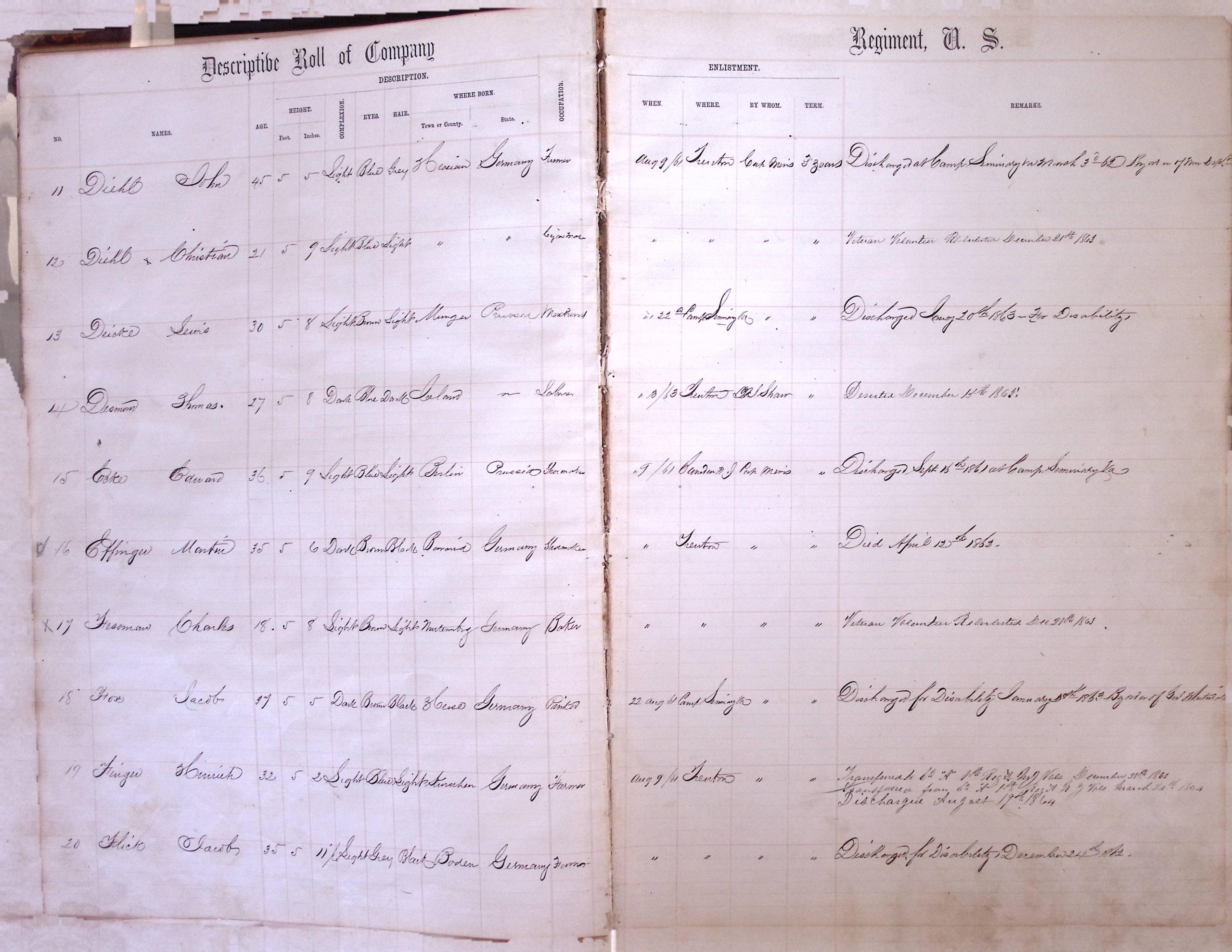
Descriptive Roll 4th NJ Infantry for companies A-E. This image is taken from one of our scans of documents located in Records Group 94.
Descriptive Roll of the 4th New Jersey Infantry for companies A-E. This image is taken from one of our scans of documents located in Records Group 94.

Over the past year or so, the Research Arsenal has been digitizing regimental books from Records Group 94 at the National Archives and adding them to our searchable database. But for those who many not be familiar with Records Group 94 and its contents, we thought it might be wise to put a bit of a primer out on it.

Understanding National Archives Record Group 94: A Treasure Trove for Civil War Research

For anyone researching the American Civil War, few collections at the National Archives are as important as Record Group 94 (RG 94), the Records of the Adjutant General’s Office. This massive collection contains millions of pages of military records created and maintained by the U.S. Army between the Revolutionary War era and World War I. For Civil War historians, genealogists, and descendants of Union soldiers, RG 94 is one of the most valuable sources available because it preserves the administrative records that documented the service of volunteer soldiers and military units throughout the war.

The Adjutant General’s Office served as the Army’s central recordkeeping agency. It was responsible for maintaining personnel records, recording military orders, collecting reports from units in the field, compiling returns, and preserving information about officers and enlisted men. As a result, Record Group 94 contains an enormous range of documents relating to the Civil War and the soldiers who fought in it. Today, it remains one of the primary collections used by researchers seeking to reconstruct military service histories.

What Is Record Group 94?

Record Group 94 encompasses the records of the Adjutant General’s Office from the late eighteenth century through 1917. The collection includes correspondence, orders, muster rolls, returns, personnel records, registers, indexes, and numerous specialized record series created by the War Department. The National Archives estimates that the record group contains more than 137 million pages of textual records, making it one of the largest military collections in federal custody.

While the collection covers many periods of American military history, Civil War researchers most often use the portions relating to volunteer organizations raised by the states for federal service between 1861 and 1865. These records provide both individual soldier information and detailed records concerning entire regiments and companies.

Regimental Descriptive Books

One of the lesser-known but extraordinarily useful record series within RG 94 is the collection of Regimental Descriptive Books and Company Descriptive Books.

These books were maintained by regimental adjutants and contain personal information about soldiers when they entered service. Researchers can often find details not available in the CMSRs.

Information commonly recorded includes:

  • Age at enlistment
  • Place of birth
  • Occupation
  • Height
  • Eye color
  • Hair color
  • Complexion
  • Date and place of enlistment
  • Name of recruiting officer
  • Remarks concerning service, transfers, desertion, death, or reenlistment

These books effectively provide a physical and biographical snapshot of a soldier at the time he entered the army. Modern historical databases and demographic studies of Civil War soldiers have relied heavily on these records.

Muster Rolls and Muster-In/Muster-Out Books

Muster rolls form the backbone of Civil War military recordkeeping.

Every company periodically submitted rolls listing the soldiers assigned to the unit and noting their status. These records documented whether a soldier was present for duty, absent, hospitalized, on detached service, captured, wounded, or deceased.

Researchers can often trace a soldier’s wartime experience through consecutive muster rolls. They may reveal:

  • Dates of service
  • Temporary absences
  • Transfers
  • Medical issues
  • Promotions and reductions in rank
  • Deaths during service

Muster-in and muster-out rolls additionally record the formal entry and exit of soldiers from federal service. These records served as the primary source material later used to create the Compiled Military Service Records.

Returns and Morning Reports

Another important category consists of military returns and reports.

Regiments, posts, and departments regularly submitted returns that summarized their condition and strength. Morning reports recorded the daily status of soldiers in a company or regiment.

These records may reveal:

  • Number of men present for duty
  • Sick soldiers
  • Soldiers absent on leave
  • Prisoners of war
  • Casualty figures
  • Unit locations
  • Changes in command

For researchers interested in reconstructing a unit’s activities rather than focusing on a single soldier, returns and reports can provide a detailed picture of day-to-day military operations.

Letters, Orders, Registers, and Correspondence

RG 94 also contains extensive correspondence series created by the Adjutant General’s Office.

The collection includes:

  • Letters received
  • Letters sent
  • Registers of correspondence
  • Telegrams
  • Administrative reports
  • Orders and circulars

These records can be especially useful when researching officers, disciplinary matters, promotions, resignations, courts-martial, recruiting efforts, or unusual service situations. The accompanying registers and indexes frequently allow researchers to locate individual pieces of correspondence concerning specific soldiers or military units.

Why Record Group 94 Matters

Record Group 94 remains one of the most important collections for Civil War research because it bridges the gap between individual soldiers and the larger military organizations in which they served. The records document not only who served, but also where they served, how they served, and what happened to them during their military careers.

A researcher studying a Union soldier can often use RG 94 to reconstruct an entire military history—from enlistment and physical description, through battles, hospitalizations, and promotions, all the way to discharge. Likewise, researchers studying a regiment can use muster rolls, returns, and Record of Events books to trace the unit’s movements and activities throughout the war.

More than 160 years after the Civil War, the records preserved in Record Group 94 continue to serve as one of the foundational sources for understanding the experiences of Union soldiers and the administrative machinery that supported the Union Army.

How to Access These Sources

The Research Arsenal currently has over 122,000 pages of Records Group 94 material online. These include a variety of books such as Regimental Descriptive books, Morning Reports, Letter Books and more. An important thing to remember is that the amount of information available for each regiment can vary wildly. Some regiments may have a nearly complete record of service, while others may only have a few books available at the National Archives. Presumably, the missing volumes have been lost or were perhaps never donated to the National Archives to begin with. Using the Research Arsenal to access the records saves you a potentially costly trip to Washington D.C. and is currently the only online database with these records available.

Visit the Research Arsenal, click on “Search NARA Records” then select “RG94” and then select the regiment of your choice from the drop-down menus. If the regiment you are looking for is not listed, then it likely has not been digitized yet. If you’d like to sponsor a regiment you can do so via the link here: https://www.11thovc.com/shop-2

For More Information on Records Group 94:

National Archives. “Record Group 94: Records of the Adjutant General’s Office.” https://www.archives.gov/findingaid/stat/discovery/94

National Archives. “Records of the Adjutant General’s Office, 1780’s–1917 (Record Group 94).” https://www.archives.gov/research/guide-fed-records/groups/094.html

National Archives. “Pre-1917 Army Records at the National Archives.” https://www.archives.gov/research/military/army/pre-ww1

National Archives. “Civil War Records: Basic Research Sources.” https://www.archives.gov/research/military/civil-war/resources

National Archives. “An Overview of Records at the National Archives Relating to Military Service.” https://www.archives.gov/publications/prologue/2002/fall/military-records-overview.html

National Bureau of Economic Research. “Union Army Data: Regimental Record.” https://www.nber.org/programs-projects/projects-and-centers/union-army-data/union-army-data-regimental-record


RG 94 Spotlight: The 89th Illinois Infantry

The 89th Illinois Infantry: The Railroad Regiment’s Hard Road from Stones River to Nashville

CB&Q locomotive No. 29, built in 1855
CB&Q locomotive No. 29, built in 1855. The 89th Illinois Infantry was largely recruited from Chicago-are railroad companies and earned the nickname the “Railroad Regiment.” Source: https://www.bnsf.com/news-media/railtalk/heritage/cb&q-history.html

The Research Arsenal is proud to be digitizing and adding historical records of Civil War regiments held at the National Archives to our online database so that researchers and historians can access material that previously required a trip to Washington D.C. The 89th Illinois Infantry is one of the many regiments that has been added to our database.

Among the many Illinois regiments that served in the Civil War, few compiled a combat record as extensive as the 89th Illinois Infantry. Known as the “Railroad Regiment” because it was organized with the support of Illinois railroad companies, the regiment entered Federal service in August 1862 and spent nearly its entire existence in the Western Theater. From Perryville and Stones River to Chickamauga, Missionary Ridge, Atlanta, Franklin, and Nashville, the men of the 89th marched and fought across hundreds of miles of contested territory. Their story is one of endurance as much as battlefield heroism, and fortunately it survives through the letters of soldiers such as Charles C. Capron and William Harkness, whose firsthand accounts reveal what life was like inside one of the Army of the Cumberland’s hard-fighting regiments.

Organization of the Railroad Regiment

The 89th Illinois Infantry fully embraced their railroad background and their motto became "Clear the Track" which they even had sewn onto their regimental flag.
The 89th Illinois Infantry fully embraced their railroad background and their motto became “Clear the Track” which they even had sewn onto their regimental flag. Source: https://www.forestparkreview.com/2019/06/25/civil-war-volunteers-from-the-village-of-harlem-now-forest-park/

The 89th Illinois was organized at Chicago on August 27, 1862, under Colonel John Christopher and Lieutenant Colonel Charles T. Hotchkiss. It earned its nickname the “Railroad Regiment” because it was raised, funded, and heavily rostered by the executives and employees of the major Chicago-area railway companies–The Chicago, Burlington & Quincy, Chicago & North Western, and Illinois Central railroads. Many officers and enlisted men, such as Company C’s Lieutenant Joel Kinney, worked as station agents and rail operators before enlisting. The men famously stitched their motto, “Clear the Tracks,” onto their national flag.

Almost immediately after entering service, the regiment was sent to Kentucky and thrown into the campaign against Confederate General Braxton Bragg. The men had scarcely learned the routines of army life before finding themselves marching through Kentucky in pursuit of an elusive enemy. Like many new soldiers, they quickly discovered that war involved far more marching than fighting. Lieutenant William Harkness described the regiment’s early movements in a letter home, explaining that they had been “on the move all the time.” The regiment marched through Shelbyville, Frankfort, Lawrenceburg, Perryville, and Crab Orchard, often under difficult conditions and with little certainty about where the campaign would lead.

The campaign exposed the soldiers to the grim realities of war even before they entered major combat. Harkness remembered Perryville after the battle as a place overflowing with suffering. “Every house seemed to me to be filled with wounded men,” he wrote, estimating that thousands of wounded Union and Confederate soldiers remained in the town. He also described the constant struggle for food, noting that soldiers often left the ranks in search of chickens, potatoes, honey, and bread because army rations became monotonous after weeks of marching. Such observations reveal how quickly idealized notions of military glory gave way to the daily hardships of campaigning.

Battle of Stones River

The regiment’s true baptism of fire came at the Battle of Stones River at the end of 1862. Although only four months old, the 89th Illinois performed well enough that it quickly earned a reputation as a veteran organization. The cost was severe. The regiment suffered 142 casualties killed, wounded, and captured during the battle. Among the dead was Captain Henry S. Willett of Company H. Stones River demonstrated that the regiment could stand in battle, but it also introduced the men to the heavy losses that would become a recurring theme throughout their service.

For many recruits, the first experience under fire never faded from memory. One of the regiment’s most vivid chroniclers was Charles C. Capron, who enlisted in the 89th Illinois in 1863 at the age of seventeen. By joining an experienced regiment, Capron entered a unit that had already fought its way through Kentucky and Tennessee. Before his first battle at Chickamauga, he admitted his fear but also his determination to prove himself. Looking back, he recalled that on the morning of battle he took his place in the ranks “resolved to see what they done.” Those simple words capture the mindset of countless young Civil War soldiers who entered combat with equal measures of apprehension and curiosity.

The regiment continued to gain experience during the Tullahoma Campaign, including fighting at Liberty Gap, where Captain Herbert M. Blake of Company K was mortally wounded. Yet the greatest test of the regiment’s courage lay ahead at Chickamauga in September 1863. There, amid one of the bloodiest battles fought in the Western Theater, the 89th Illinois suffered devastating losses. Lieutenant Colonel Duncan J. Hall was killed, along with Captains Rice, Spink, and Whiting, Lieutenant Ellis, and many enlisted men. The regimental history later observed that Chickamauga seemed to place “the seal of its devotion” upon the regiment.

For Capron, Chickamauga was unforgettable. Years later he still remembered the terror and confusion of his first major engagement. The regiment lost 14 men killed, 88 wounded, and 30 missing. Veteran soldiers disappeared from the ranks, leaving painful gaps among comrades who had marched and campaigned together for months. The battle stripped away any lingering illusions about war and left survivors with memories that would remain vivid long after the conflict ended.

Following Chickamauga, the regiment participated in the Chattanooga Campaign. Under General August Willich’s brigade, the 89th Illinois joined the assault on Missionary Ridge. In one of the most dramatic attacks of the war, Union soldiers stormed the Confederate positions overlooking Chattanooga and drove the defenders from their works. The regiment paid for its success with additional casualties, including Lieutenant E. O. Young and Captain Henry L. Rowell. Yet Missionary Ridge helped reverse the Union’s fortunes in Tennessee and opened the door for future operations into Georgia.

Atlanta Campaign

The year 1864 proved to be the regiment’s most demanding period of service. The 89th Illinois marched south with General William T. Sherman’s army and participated in nearly every major engagement of the Atlanta Campaign. The regiment fought at Rocky Face Ridge, Resaca, Pickett’s Mill, Kennesaw Mountain, Peachtree Creek, Atlanta, Jonesboro, and numerous lesser actions. Casualties mounted steadily. Lieutenant Nathaniel Street and Captain William Harkness both lost their lives during the campaign.

Harkness’s surviving letters reveal a thoughtful and educated officer who viewed military service through both patriotic and religious lenses. Friends who knew him remembered him as a devoted Christian and respected leader. After his death near Atlanta in 1864, one comrade wrote to his family that “he was a brave man and a good soldier for his country.” The same writer added that Harkness appeared to be “full in the faith” and believed he was now reunited with his deceased child in heaven. Such letters remind modern readers that behind casualty statistics were families receiving heartbreaking news from distant battlefields.

The Atlanta Campaign inflicted some of the heaviest losses suffered by the regiment during the war. According to the regimental history, 211 men were killed, wounded, or captured during the operations around Atlanta. Yet even when not engaged in direct combat, the regiment found itself performing dangerous and essential work. Because of its railroad connections and experience, the “Railroad Regiment” was assigned important duties repairing rail lines damaged by Confederate raids. Maintaining Sherman’s supply network was crucial to the success of the campaign, and the regiment’s work helped keep the army moving forward.

After the fall of Atlanta, the 89th Illinois was sent back to Tennessee in time to participate in the final destruction of General John Bell Hood’s army. The regiment fought at Spring Hill, Franklin, and Nashville. At Nashville, Lieutenant P. G. Taite was killed when struck by a cannonball. The battle shattered Hood’s army and effectively ended major Confederate operations in Tennessee. The regiment then joined the pursuit of the retreating Confederates before settling into winter quarters.

The Toll of War

Captain Henry L. Rowell of of Co. C, 89th Illinois Infantry Regiment, in uniform with sword. Photograph shows identified soldier who was wounded at the Battle of Missionary Ridge, Tennessee, on November 25, 1863 and died from his wounds on December 3, 1863.
Captain Henry L. Rowell of of Co. C, 89th Illinois Infantry Regiment, in uniform with sword. Captain Rowell was wounded at the Battle of Missionary Ridge, Tennessee, on November 25, 1863 and later died from his wounds on December 3, 1863. Source: https://app.researcharsenal.com/imageSingleView/4304

By war’s end, the 89th Illinois had accumulated a remarkable combat record. The regiment had participated in nearly every major campaign fought by the Army of the Cumberland after 1862. It had endured losses at Stones River, Chickamauga, Missionary Ridge, Atlanta, and Nashville. Out of 1,403 men who served on its rolls, only 381 remained to be mustered out with the regiment. The remainder had been killed, wounded, disabled, transferred, or otherwise lost to service. The casualty figures alone testify to the severity of the regiment’s experience.

For Charles Capron, survival brought little reward. When the regiment was mustered out in June 1865, he still had time remaining on his enlistment and was transferred to another unit. Writing home, he lamented, “The old boys has returned home and it is very lonesome here.” He feared that disease might prove more deadly than bullets, observing that “disease is some times worse than the bullet.” Tragically, his prediction proved correct. Having survived Chickamauga, Missionary Ridge, Atlanta, Franklin, and Nashville, Capron died of fever in Texas in August 1865.

Perhaps the most fitting tribute to the 89th Illinois came from Colonel Charles T. Hotchkiss, who reflected on the regiment’s wartime service after the conflict ended. “Our history is written on the head-boards of rudely-made graves from Stone River to Atlanta,” he said. Those words captured both the pride and the sacrifice of the Railroad Regiment. The men of the 89th Illinois helped secure Union victory across the Western Theater, but they paid dearly for that achievement. Their story survives not only in official records and battle reports, but also in the letters of ordinary soldiers who endured the marches, hardships, fears, and sacrifices that defined the Civil War soldier’s experience.

Sources

The Research Arsenal is proud to hold 723 digital scans of the 89th Illinois Infantry’s regimental history on its database. These consist of 708 pages of material from the National Archives Records Group 94 files. These include Regimental Descriptive books, Morning Reports, Morning Reports and Letter Books and more. Visit the Research Arsenal, click on “Search NARA Records” then select “RG94” and “89th Illinois Infantry” from the drop-down menus. In addition, the Research Arsenal contains photographs, letters, and other forms and documents relating to the 89th Illinois Infantry.


RG 94 Spotlight: The 32nd Indiana Infantry

The Research Arsenal is proud to be digitizing and adding historical records of Civil War regiments held at the National Archives to our online database so that researchers and historians can access material that previously required a trip to Washington D.C. The 32nd Indiana Infantry is one of the many regiments that has been added to our database.

A Regiment of “German Sons”

Troops of the 32nd Regiment, Indiana Volunteers by Captain Adolph Metzner, 32nd Indiana Infantry.

The story of the 32nd Indiana Infantry is inseparable from the immigrant experience in the Civil War. Organized in August 1861 at Indianapolis, the regiment was composed almost entirely of German-Americans—many of them political refugees from the failed revolutions of 1848.

Under the leadership of Colonel August Willich, himself a veteran of European revolutionary struggles, the regiment quickly gained a reputation for discipline and professionalism. Their drilling and battlefield conduct were shaped by European methods, particularly Prussian tactics, which set them apart from many volunteer regiments early in the war.

Observers noted that the unit’s precision and cohesion made a strong impression. As one contemporary description summarized, the regiment was known for its “highly disciplined” nature and distinctive training methods. This discipline would soon be tested under fire.

Baptism of Fire at Rowlett’s Station

The regiment’s first combat came at the Battle of Rowlett’s Station on December 17, 1861, in Kentucky—a relatively small engagement that nevertheless became central to the unit’s identity. Tasked with protecting a vital railroad bridge over the Green River, the 32nd Indiana found itself facing a much larger Confederate force, including the famed Texas cavalry.

The battle unfolded in dense woodland and open ground, where the Hoosiers held firm despite repeated attacks. Contemporary accounts emphasize the imbalance of forces, noting that “fewer than five hundred Union infantrymen…faced roughly thirteen hundred Confederates.”

Even more remarkable was their ability to withstand cavalry charges in open terrain—an uncommon feat for infantry early in the war. As later reports recalled, the regiment’s stand “against repeated cavalry assaults became a minor sensation.”

Though the battle itself was tactically inconclusive, the Union achieved its strategic objective. The railroad remained open, and the regiment earned praise from higher command. General Don Carlos Buell officially commended the unit for its “gallantry.” For the men of the 32nd Indiana, Rowlett’s Station was more than a fight—it was proof of their effectiveness as soldiers.

Memory and Sacrifice: The Bloedner Monument

32nd Indiana Infantry replacement Bloedner Monument
32nd Indiana Infantry replacement Bloedner Monument.

In the aftermath of Rowlett’s Station, one of the regiment’s soldiers, Private August Bloedner, undertook a remarkable act of remembrance. He carved a stone monument to mark the graves of fallen comrades—an artifact now considered the oldest surviving Civil War monument. The monument bore the names of thirteen soldiers, all German immigrants who had died in service to their adopted country. Their sacrifice carried symbolic weight:

“The 13 soldiers…enlisted, fought and died for their adopted country.”

The inscription, written in German, reflected the dual identity of the regiment—men who were both immigrants and Union soldiers.

Today, the monument stands as a powerful reminder of how deeply immigrant communities were invested in the Union cause, even in the war’s earliest and most uncertain days. It has been conserved and moved to the Frazier History Museum in downtown Louisville, Kentucky. A duplicate of the monument was carved in sturdier marble and installed in September 2011 at Cave Hill Cemetery.

From Shiloh to Atlanta: A Hard-Fought War

Troops of the 32nd Indiana Infantry at Chickamauga, September 1863. Drawing by Captain Adolph Metzner.

After Rowlett’s Station, the 32nd Indiana moved south with the Army of the Ohio, participating in some of the most significant campaigns in the Western Theater. At Shiloh in April 1862, the regiment endured the chaos of one of the war’s bloodiest early battles. It later fought at Corinth, Stones River, and Chickamauga—engagements that tested even veteran units.

In 1864, the regiment marched with Union forces through Georgia during the Atlanta Campaign, fighting at places such as Resaca, Kennesaw Mountain, and Peachtree Creek. These campaigns transformed the regiment from green volunteers into seasoned veterans. Yet attrition was constant. By the later years of the war, the unit had been reduced and reorganized, with remaining soldiers continuing service in garrison and field operations.

Discipline, Identity, and Legacy

The 32nd Indiana Infantry stood out not only for its battlefield service but for its unique cultural identity. Its German-speaking ranks, European leadership, and strict discipline made it one of the most distinctive regiments in the Union Army. Their success demonstrated that immigrant soldiers—often viewed with suspicion in American society—could become some of the most effective troops in the field. At Rowlett’s Station, they proved their courage. In the long campaigns that followed, they proved their endurance.

Mustering Out—and Remembering

After years of campaigning, the regiment’s remaining members were sent to Texas, where they were finally mustered out in December 1865. Their service had spanned the entire arc of the war—from its uncertain beginnings in Kentucky to its conclusion on the far edges of the former Confederacy. Today, their legacy endures most tangibly in the Bloedner Monument—a simple, hand-carved memorial that speaks across generations. It reminds us that the Civil War was not only a struggle between North and South, but also a story of immigrants who fought—and died—for a nation they had chosen as their own.

Sources

The Research Arsenal is proud to hold 410 digital scans of the 32nd Indiana Infantry’s regimental history on its database. These consist of nearly 400 pages of material from the National Archives Records Group 94 files. These include Regimental Descriptive books, Order books, Morning Reports, and more. Visit the Research Arsenal, click on “Search NARA Records” then select “RG94” and “32nd Indiana Infantry” from the drop-down menus. In addition, the Research Arsenal contains photographs, letters, and other forms and documents relating to the 32nd Indiana Infantry.


RG 94 Spotlight: The 29th Ohio Infantry

The Research Arsenal is proud to be digitizing and adding historical records of Civil War regiments held at the National Archives to our online database so that researchers and historians can access material that previously required a trip to Washington D.C. The 29th Ohio Infantry is one of the many regiments that has been added to our database.

The 29th Ohio Infantry: Voices from “Giddings’ Regiment”

The story of the 29th Ohio Infantry is best told not through summaries of battles, but through the words of the men who lived them. Organized in 1861 in northeastern Ohio, the regiment would serve in both eastern and western theaters, fighting from the Shenandoah Valley to Sherman’s March.

“Giddings’ Regiment”: Reputation and Risk

From its earliest days, the 29th Ohio carried a political identity. Raised largely within the district of abolitionist congressman Joshua R. Giddings, the regiment quickly became known by his name.

The regimental history explains both the pride and the danger attached to that identity:

“The Twenty-ninth Regiment was known as the ‘Giddings Regiment,’ having been recruited almost entirely within the bounds of his old Congressional District, and many of the officers and men had long been his personal friends. This fact gave to the regiment a certain notoriety from the beginning.”

But that notoriety came with fear—particularly if captured:

“It was often remarked in the early history of the regiment, that should any member of it be taken prisoner and his identity become known, he would be likely to receive but little mercy at the hands of the enemy; that he would be regarded not only as a common soldier, but as an Abolitionist fanatic, and especially hunted down and exterminated.”

Before the regiment had even proven itself in battle, its men understood that their cause—and their reputation—might mark them for harsher treatment.

Baptism in Campaign: Illness, Marching, and Reality

Like many regiments, the 29th Ohio’s first enemy was not Confederate fire, but disease and exhaustion.

As they prepared for early movements in 1862, the toll was immediate:

“About fifty-five men were left behind in camp sick, most of them suffering from measles… It was a severe trial to those who were compelled to remain, as the regiment moved away to meet the enemy, while they were left helpless in their tents.”

The emotional strain of absence is striking—these men feared missing the fight just as much as others feared entering it.

Camp Humor and Discipline

Illustration of Colonel Lewis P. Buckley of the 29th Ohio Infantry.
J. Hamp DeCheverell of Company B wrote: “Nobody who ever knew Colonel Buckley will ever forget him. A brave man, a great admirer of order and discipline, faultlessly neat and tidy, a confirmed dyspeptic; yet the most ticklish and fun provoking humor often cropped out in his conversation and intercourse with men. One morning, away down between Bull Run and Fredericksburg, when the tired and jaded men were in line for the day’s march, the Colonel was in his saddle with his toes daintily touching the stirrups, his pale, clean shaven face shaded by the visor of his blue cap, from beneath which his practiced eye swept the whole regiment at a glance, while his well-polished sword, firmly gripped, stood perpendicular, resting against the shoulder; with a stentorian voice he published the following order: ‘Men of the Twenty-ninth, let there be no straggling on the march to-day. But if any of you do straggle take Twenty-ninth off from your caps and put on One Hundred and Tenth Pennsylvania.'” Source: https://www.gutenberg.org/files/65589/65589-h/65589-h.htm

Even in hardship, humor and identity shaped daily life. One oft-repeated moment in the regiment reveals both discipline and wit during a march:

“Let there be no straggling on this march. Keep closed up and preserve your distance. But if any man does fall out by the way, let him take off the number ‘Twenty-ninth’ from his cap, and when he reaches camp put on ‘One Hundred and Tenth Pennsylvania.’”

The joke carried a sharp edge: straggling was shameful—but the way it was enforced relied as much on pride as punishment.

The Emotional Weight of Soldiering

The regimental history frequently pauses to reflect—not just recount events. One passage captures the emotional bond forged through shared hardship:

“The eye will moisten, and the heart swell with emotions of no ordinary character, as he is reminded, by some familiar name or incident, of the camp, the march, and the battle; of the companions who shared his toils and dangers, and who now sleep in unknown graves, or linger with shattered constitutions, the wrecks of what were once strong men.”

This is not written in the immediacy of battle—but in memory. It shows how deeply the experience lingered long after the war.

Antietam to Gettysburg: Endurance Under Fire

The 29th Ohio fought through the Army of the Potomac’s hardest campaigns—Antietam, Chancellorsville, and Gettysburg among them.

But rather than glorify combat, the regimental voice often emphasizes the anonymity of sacrifice:

“Many a brave man has fallen in this contest whose name will never be known beyond the narrow circle of his immediate friends. Their individual deeds of daring and patriotism will never be recorded… and yet they may have loved their country as well, and periled their lives as freely, as those whose names have been emblazoned in history.”

This quiet acknowledgment stands in contrast to official reports—it is the perspective of soldiers who saw how easily courage could go unrecorded.

Western Campaigns and National Recognition

Transferred west, the 29th Ohio participated in the Chattanooga and Atlanta campaigns, and ultimately in Sherman’s March.

Recognition came at the highest levels. The regimental history preserves a portion of General William T. Sherman’s praise:

“The officers and soldiers of the Army of the Tennessee have already received the thanks of the Nation… and it now only remains for me to thank you in person for the gallantry, endurance, and soldierly conduct which you have displayed in this campaign.”

Such words carried weight—but the men themselves often measured their service differently: in survival, in endurance, and in the memory of those lost.

The March Through the South

As the regiment moved through Georgia and the Carolinas, the tone of the war shifted. The end was approaching—but the strain remained constant.

The cumulative experience of years of campaigning shaped how veterans later reflected on their service:

“Four years of active service had wrought a wonderful change in the appearance and character of the men. The light-hearted boy had become the thoughtful, earnest man; the careless and indifferent had learned lessons of responsibility and duty which could never be forgotten.”

War had not just tested them—it had remade them.

Memory and Obscurity

29th Ohio Infantry monument at Gettysburg with veterans. Photo taken in the 1880s.
The 29th Ohio Infantry monument, located along the east side of Slocum Avenue on Culp’s Hill. Veterans pose with Gettysburg historian John Bachelder (standing), who was referred to by the Gettysburg Compiler in 1887 as “Colonel John B. Bachelder, of Massachusetts, the well-known superintendent of tablets and legends of the Gettysburg Memorial Association.” The monument was dedicated on “Ohio Day,” September 14, 1887. “Ohio Day” in Gettysburg saw the dedication of fourteen monuments to Ohio regiments. The 29th Ohio infantry monument was referred to in the Compiler as the “massive 29th.” The monument was constructed by the South Ryegate Vermont Company and “represent[s] the front of a wall tent with the flaps thrown back, the space being occupied with a stack of muskets and accoutrement suspended from them.” Source: https://www.gettysburgdaily.com/then-and-now-29th-ohio-infantry-monument/
Perhaps the most powerful theme in the regiment’s history is the tension between remembrance and obscurity.

One passage stands as a kind of quiet epitaph for the rank and file:

“No monument may mark the spot where they sleep; no friendly hand may ever plant a flower upon their graves; but their memory will live in the hearts of those who knew them, and in the history of the country for which they died.”

This is the essence of regimental history—not just recording movements and engagements, but preserving memory against disappearance.

Sources

The Research Arsenal is proud to hold 1,823 digital scans of the 29th Ohio Infantry’s regimental records on its database. These consist of nearly 1800 pages of material from the National Archives Records Group 94 files. These include Regimental Descriptive books, Letter books, Morning Reports, and more. Visit the Research Arsenal, click on “Search NARA Records” then select “RG94” and “29th Ohio Infantry” from the drop-down menus. In addition, the Research Arsenal contains photographs, letters, and other forms and documents relating to the 29th Ohio Infantry.

RG 94 Spotlight: The 17th Michigan Infantry

The Research Arsenal is proud to be digitizing and adding historical records of Civil War regiments held at the National Archives to our online database so that researchers and historians can access material that previously required a trip to Washington D.C. The 17th Michigan Infantry is one of the many regiments that has been added to our database.

The 17th Michigan Infantry in Battle: From South Mountain to the Overland Campaign

Officers of the 17th Michigan Infantry. Source: https://www.emich.edu/175-anniversary/stories/17th-michigan.php

The 17th Michigan Infantry earned its place in Civil War history through hard fighting, endurance, and sacrifice. Known as the “Stonewall Regiment” after South Mountain, the unit went on to serve in some of the most brutal campaigns of the war—from Antietam and Fredericksburg to the grinding battles of 1864 under Ulysses S. Grant.

Through the diary of Private David Lane and additional historical records, we can follow the regiment’s journey from eager volunteers to hardened veterans.

Baptism by Fire: South Mountain and Antietam

As covered earlier, the regiment’s first experience of combat came quickly in September 1862. At South Mountain, the 17th Michigan proved its mettle under fire:

“Every man of us ‘bowed his acknowledgments;’ then… every spine became rigid… ‘No more concessions will you get from us.’”

The cost was steep:

“About thirty of our brave boys were killed, and over one hundred wounded… The Seventeenth has been baptized in blood and christened ‘Stonewall.’”

At Antietam, the regiment again advanced under heavy fire:

“We crossed the Antietam River… charged up the heights… and quietly sat down ’mid bursting shells and hurtling balls until relieved.”

These early battles transformed the regiment from raw recruits into seasoned soldiers.

Fredericksburg and the Crisis of Confidence

At Fredericksburg in December 1862, the Union army suffered a devastating defeat. Though not heavily engaged in the assault, the 17th Michigan witnessed the consequences.

Lane’s words reflect the army-wide disillusionment:

“This whole army… is thoroughly demoralized. It has lost all confidence in its leaders—a condition more fatal than defeat.”

This moment is crucial in understanding the regiment’s development—not just physically, but mentally. The soldiers were learning that courage alone could not overcome poor leadership.

Western Service: Kentucky and Tennessee, 1863

In early 1863, the 17th Michigan was transferred west with the Ninth Corps. Here, the regiment experienced a different kind of warfare—less formal, more unpredictable.

Lane described the volatile conditions:

“Kentucky is like a seething volcano, ready to burst into flames at any moment.”

Instead of major pitched battles, the regiment carried out:

  • Provost duty (maintaining order)
  • Guarding supply lines
  • Responding to guerrilla threats

This period tested discipline and endurance rather than battlefield aggression. It also exposed the men to political tensions surrounding Union control and emancipation in border states.

Return to the Eastern Theater

By early 1864, the Ninth Corps—including the 17th Michigan—returned east and was incorporated into the Army of the Potomac under General Ulysses S. Grant.

This marked the beginning of a new phase of the war: continuous, relentless campaigning against Robert E. Lee’s army.

The Wilderness (May 1864): Into the Inferno

The Overland Campaign opened with the Battle of the Wilderness, one of the most chaotic and terrifying engagements of the war. Dense jungle-like undergrowth, limited visibility, and rapidly spreading fires made combat especially brutal. The 17th Michigan fought in these tangled woods, where units often lost cohesion and men fought at close range. Though Lane’s diary does not cover this phase, regimental histories describe severe fighting and heavy losses. The Wilderness introduced a new kind of warfare with constant contact with the enemy, little rest, and no decisive victory.

Spotsylvania Court House (May 1864): The Bloody Angle

Depiction of the fierce hand-to-hand combat that the 17th Michigan Infantry engaged in during the Battle of Spotsylvania Courthouse in the Bloody Angle. Source: https://www.wearethemighty.com/mighty-history/bloody-angle-worst-fighting-civil-war/

Following the Wilderness, the army moved to Spotsylvania, where the 17th Michigan participated in some of the most intense fighting of the campaign. The battle is best known for the “Bloody Angle,” where Union and Confederate troops fought in close quarters for nearly 24 hours in rain and mud. Conditions were horrific. The fighting at the “Bloody Angle” during the Battle of Spotsylvania Court House (May 12, 1864) was one of the most intense hand-to-hand engagements of the Civil War. It began when Union Gen. Winfield S. Hancock’s II Corps breached the “Mule Shoe Salient,” a critical defensive bulge in the Confederate line, leading to over 20 hours of brutal, relentless combat in a cold, pouring rain. Soldiers from both sides fought at point-blank range, often separated only by earthworks, using bayonets, clubbed muskets, and pistols, while artillery bombarded the cramped space. The carnage was unparalleled, with bodies piling up in the trenches, leading to the nickname “Hell’s Half Acre” and the felling of a 22-inch diameter oak tree by small arms fire alone. While the battle ended with the Confederates withdrawing to a new, shorter line, the day resulted in nearly 17,000 casualties combined, symbolizing the horrifying attrition of Grant’s Overland Campaign.

The 17th Michigan, like many regiments in the Ninth Corps, endured repeated assaults and heavy casualties during this period.

Cold Harbor (June 1864): Assault Against the Impossible

At Cold Harbor, Union forces launched one of the most infamous attacks of the war against entrenched Confederate positions. Though the 17th Michigan’s exact position varied within the corps, the experience reflected a broader truth of the campaign: frontal assaults against fortified positions often led to devastating losses. The soldiers—many now veterans—understood the danger. Across the army, men wrote their names on pieces of paper and pinned them to their uniforms before advancing, anticipating death.

Petersburg (1864–1865): Siege Warfare and Survival

After Cold Harbor, the campaign shifted to Petersburg, where the war became a prolonged siege.

Here, the 17th Michigan experienced:

  • Constant skirmishing
  • Trench warfare
  • Sniper fire and artillery bombardment
  • Exhaustion from long-term exposure

This phase of the war resembled, in many ways, the trench warfare of later conflicts. Survival required endurance more than maneuver.

The Human Cost: Endurance Beyond Battle

Looking back to Lane’s earlier reflections, we can see how the emotional and physical burdens of war only deepened over time.

His words from 1862 resonate even more strongly when applied to the later campaigns:

“It is all hardship—but I was prepared for all that. I expected to suffer—to endure…”

And his devotion to home remained a constant anchor:

“Thoughts of the dear ones at home are ever present, inspiring me with hope… a beacon light… on the stormy sea of strife.”

By 1864–1865, the regiment that had once marched out nearly 1,000 strong had been reduced repeatedly by battle and disease, replenished by recruits, and hardened into a veteran fighting force.

Conclusion: A Regiment Transformed by War

The 17th Michigan Infantry’s story is one of transformation:

  • 1862: Eager volunteers baptized in fire at South Mountain and Antietam
  • 1863: Hardened soldiers navigating uncertainty in the Western Theater
  • 1864–1865: Veterans enduring the relentless brutality of Grant’s campaigns

From open-field battles to trench warfare, from enthusiasm to endurance, the regiment’s journey reflects the broader evolution of the Civil War itself. Through the words of David Lane and the historical record, we see not just where they fought—but how they endured.

Sources

The Research Arsenal is proud to hold digital scans of the 17th Michigan’s regimental records on its database. These consist of nearly 500 pages of material from the National Archives Records Group 94 files. These include Regimental Descriptive books, Letter books, Morning Reports, and more. Visit the Research Arsenal, click on “Search NARA Records” then select “RG94” and “17th Michigan Infantry” from the drop-down menus. In addition, the Research Arsenal contains photographs, letters, and other forms and documents relating to the 17th Michigan Infantry.

RG 94 Spotlight: The 4th New Jersey Infantry

“We Marched, Fought, and Endured”: The 4th New Jersey Infantry in the Overland Campaign and Petersburg

4th New Jersey Infantry photographed on parade in 1861.
4th New Jersey Infantry photographed on parade in 1861. Photograph featured in Baquet’s History of the First Brigade, New Jersey Volunteers (First Brigade), from 1861 to 1865, page 389 (481 in digital scan PDF).

The Research Arsenal is proud to be digitizing and adding historical records of Civil War regiments held at the National Archives to our online database so that researchers and historians can access material that previously required a trip to Washington D.C. The 4th New Jersey Infantry is one of the many regiments that has been added to our database.

By 1864, the men of the 4th New Jersey Infantry were no longer new soldiers. They were veterans—hardened by years of campaigning and now entering what would become the most brutal phase of the war.

The Wilderness: Into the Thicket of Fire

As the Army of the Potomac advanced in May 1864, the First New Jersey Brigade moved into the tangled, suffocating terrain of the Wilderness. Baquet describes the confusion and violence of the fighting:

“The brigade was soon hotly engaged, the enemy being encountered in force in the dense woods. The line advanced steadily, delivering its fire with coolness and precision, though the undergrowth was so thick as to render the alignment irregular and the movements difficult. The fire of the enemy was severe, and the men were subjected to a galling musketry which told heavily upon the ranks.” (Baquet, p. 452)

In this environment, visibility was limited, formations broke apart, and the fighting became intensely personal.

Capern’s letters reflect the same strain and anticipation that defined these early days of the campaign:

“We could hear the fierce rattle of the musketry, and the booming of the cannon, and we could see the shells bursting in the air above the trees. It was a grand but terrible sight, one that I shall never forget. We stood looking on for some time, watching the smoke rise and hearing the continual roar, and wondering how long it would be before we should be called into the fight.”

The Wilderness was not just a battle—it was chaos, noise, and suffocating fear.

Continuous Movement: No Rest for the Army

One of the defining features of Grant’s campaign was constant movement. Baquet emphasizes how little rest the men received as they pushed forward:

“The march was resumed with but little delay, the troops moving by night as well as by day, and halting only for brief intervals. The men were greatly fatigued, but there was no straggling; all seemed impressed with the importance of the movement and the necessity of pressing forward.” (Baquet, p. 456)

Capern’s account mirrors this exhaustion almost word for word:

“We kept on the march till daylight, and then lay down for a little rest. I was so tired that I believe I marched a good piece with my eyes shut. We have been two days without anything to eat, and feel it very much. Still, we have to keep along, for there is no stopping.”

Here, the official history and the soldier’s voice align perfectly—discipline and endurance carrying the men forward despite extreme fatigue.

Spotsylvania: Holding Under Fire

At Spotsylvania Court House, the fighting became even more intense. Baquet describes the brigade under heavy and sustained fire:

“The position occupied by the brigade was one of great exposure, and the fire to which it was subjected was exceedingly severe. Notwithstanding this, the men held their ground with great firmness, returning the fire with spirit and effect, and maintaining their line under circumstances of the utmost trial.” (Baquet, p. 468)

This was no brief engagement. The fighting dragged on, testing both physical and mental endurance.

Capern captured the cumulative toll of this kind of sustained combat:

“We are all sore after eleven days fighting and marching, and nearly worn out. We have had a most mighty hard time, and how much longer it will continue God only knows. The men are in good spirits, however, and determined to go through with it.”

The phrase “most mighty hard time” feels almost understated in light of the conditions they endured.

Hunger, Exposure, and Survival

As the campaign wore on, logistical strain added to the hardship. Baquet notes the increasing difficulty of maintaining the army in the field:

“The men suffered considerably for want of proper rations, the rapid movements of the army rendering it difficult for the supply trains to keep up. Notwithstanding these privations, the command continued in good condition, and was ready for duty whenever called upon.” (Baquet, p. 472)

Capern’s firsthand account reveals just how severe those privations could become:

“All I had to eat was a little dust and dirt out of the bottom of my haversack. I was so hungry that I ate it and thought it good. We have suffered a great deal for something to eat, and it tries a man very much.”

This is the lived reality behind Baquet’s more measured description.

Petersburg: Life in the Trenches

When the campaign settled into siege at Petersburg, the nature of the war changed—but the hardship did not lessen. Baquet describes the transition to trench warfare:

“The brigade was now engaged in the duties incident to a siege, occupying the lines before Petersburg, and constantly exposed to the fire of the enemy’s sharpshooters and artillery. The men were required to be continually on the alert, and the labor of strengthening and maintaining the works was unceasing.” (Baquet, p. 489)

This was a new kind of warfare—static, grinding, and relentless.

Capern’s earlier reflections on fatigue and exposure take on new meaning in this context:

“We do not get much rest, and when night comes we are glad enough to lie down, no matter where it is… It hurts a man to sleep out on the bare, frozen ground these frosty nights. We have but little to cover us, and the cold is very severe.”

Even without constant charges, the siege demanded endurance of a different kind—long-term survival under fire.

Preparing for Death

Whether in open battle or entrenched lines, the awareness of mortality never left the soldiers. Capern described preparing for combat in deeply personal terms:

“We piled up our knapsacks and everything we did not want to carry into the fight, never expecting to see them again. I felt that I might be called upon to die, and I tried to prepare myself for it. I put my trust in God and felt that whatever might happen would be for the best.”

This quiet moment—shared by countless soldiers—speaks more powerfully than any battle report.

Reflection: “Thankful… to Have Got Off with My Life”

Example of a letter from Thomas Capern, Company E, 4th New Jersey Infantry, sent to his mother, Mary.

By the end of these campaigns, survival itself was a kind of victory. Capern reflected:

“After seeing what I have seen, I am thankful to God for having got off with my life. Many a poor fellow has fallen who went out as strong and hopeful as I. It makes a man feel very serious when he thinks of these things.”

Baquet’s history records movements, engagements, and outcomes. Capern records something else entirely—the emotional cost.

Conclusion: The Veteran’s War

The pages of Baquet (451–504) show a regiment constantly in motion—fighting, marching, digging, and holding under pressure. Capern’s letters show what that experience felt like. Together, they reveal the true nature of the 4th New Jersey Infantry in 1864–1865: not just a fighting unit, but a body of men who endured hunger, exhaustion, fear, and loss—and continued forward anyway.

Sources

The Research Arsenal is proud to hold digital scans of the 4th New Jersey’s regimental records on its database. These consist of over 1,100 pages of material from the National Archives Records Group 94 files. These include Regimental Descriptive books, Order books, Morning Reports, and more. Visit the Research Arsenal, click on “Search NARA Records” then select “RG94” and “4th New Jersey Infantry” from the drop-down menus. In addition, the Research Arsenal contains photographs, letters, and other forms and documents relating to the 4th New Jersey Infantry. Thomas Capern’s letters featured in this post are also available on the Research Arsenal.


RG 94 Spotlight: The 76th Ohio Infantry

The 76th Ohio Infantry: A Regiment Forged in the Western Theater

Battle-torn regimental flag of 76th Ohio Infantry Regiment
Battle-torn regimental flag of 76th Ohio Infantry Regiment with photographs of Major General Charles Robert Woods and Major General William Burnham Woods propped on the ground beside it. An officer’s sword and sash are also hanging from a string in front of the flag. https://app.researcharsenal.com/imageSingleView/3760

The Research Arsenal is proud to be digitizing and adding historical records of Civil War regiments held at the National Archives to our online database so that researchers and historians can access material that previously required a trip to Washington D.C. The 76th Ohio Infantry is one of the many regiments that has been added to our database.

The 76th Ohio Infantry Regiment was one of the many volunteer units raised in Ohio during the early months of the American Civil War. Organized in late 1861 and early 1862, the regiment served almost entirely in the Western Theater and became part of General William T. Sherman’s veteran army. Over the course of the war the men of the 76th Ohio fought in some of the most significant campaigns of the conflict, including Shiloh, the Vicksburg Campaign, Chattanooga, and Sherman’s later operations across the South.

Their story is preserved not only in official records but in the vivid recollections of the soldiers themselves. Through memoirs and personal narratives we can glimpse the hardships, dangers, and emotions experienced by the young men who marched under the regiment’s banner.

“Boys” Who Became Soldiers

The 76th Ohio Infantry was largely recruited in Massillon and surrounding communities in Stark County, Ohio. Like many Civil War regiments, it was composed primarily of very young men. One veteran later reflected on the youth of the soldiers who filled its ranks:

“Glancing over their muster roll… one would be impressed with the large proportion only eighteen years old… I have felt safe to conclude that the average age of all the volunteers in this company during the war did not exceed twenty years.”

Many of these recruits had come directly from farms, schools, and small-town businesses. They had little military experience when they enlisted, yet they quickly found themselves thrust into a vast and brutal war. Despite their inexperience, the soldiers remembered their comrades with admiration. According to one recollection, the company consisted of:

“An intelligent, steady, sturdy lot of men—‘boys’ most of them would be called at home.”

Learning War the Hard Way

The regiment quickly entered the active campaigns of the Western Theater. Early operations in Tennessee and Mississippi included participation in the campaigns surrounding Fort Donelson, Shiloh, and Corinth. For the new soldiers, the transition from civilian life to army life was abrupt and often confusing. Military organization was still evolving, and many mistakes were made in the early stages of the war. One soldier later summarized the learning curve faced by the Union army:

“Everything had to be learned—mostly through dearly bought and disastrous experience.”

Early in the war, soldiers were burdened with heavy equipment and large wagon trains filled with supplies and tents. As the conflict continued, the army learned that mobility was far more important.

A veteran recalled the transformation that occurred as the war progressed:

“One has but to compare the soldier of the earlier period… expecting the government to make his life comfortable, with the same individual a year or two later… content to possess a change of clothing, a blanket or rubber poncho, a meal of bacon and hard-tack in his haversack and a bed of leaves or fence rails.”

These hardships gradually turned inexperienced recruits into seasoned veterans.

Camp Life and Army Equipment

The daily life of the infantryman was physically demanding. Each soldier carried a large amount of equipment, including clothing, rations, ammunition, and bedding.

A soldier from the 76th Ohio described the standard equipment carried by a Union infantryman:

“Clothing consisted of a dark blue blouse, light blue pants, forage caps, low broad-soled shoes… Each soldier carried a gray woolen blanket and a rubber blanket. Food was carried in an oilcloth haversack… and water in a round, flat tin canteen.”

Their early weapons were heavy Belgian rifles that were unpopular among the troops. One soldier remembered them vividly:

“Our first guns were old second-hand Belgian rifles… short, heavy, clumsy arms with a vicious recoil… they always let us know without question when we fired them, for mine kicked hard enough to bruise my shoulder.”

Eventually the regiment received new Springfield rifles, which were far more accurate and reliable.

Hardship on the Mississippi: The Vicksburg Campaign

One of the most important chapters in the history of the 76th Ohio came during the Vicksburg Campaign of 1863. Before the final assault on the Confederate stronghold, the regiment spent months encamped in unhealthy swampy ground near the Mississippi River. Conditions at Young’s Point were miserable and dangerous.

One soldier remembered the gloomy environment:

“Sanitary conditions were unhealthy to an extreme from lack of good drinking water, bad drainage, and malarial surroundings… The whole atmosphere of the place was gloomy and depressing.”

Disease took a heavy toll. In one company alone, several men died during the short time they remained there. Despite the suffering, the soldiers continued preparing for the campaign that would ultimately seal the fate of Vicksburg.

Under Fire at Vicksburg

Illustration of the Siege of Vicksburg and Union soldiers taking shelter from artillery fire as described by soldiers of the 76th Ohio Infantry.
Illustration of the Siege of Vicksburg and Union soldiers taking shelter from artillery fire as described by soldiers of the 76th Ohio Infantry. https://www.battlefields.org/learn/civil-war/battles/vicksburg

When Union forces finally advanced on the city, the 76th Ohio helped occupy the high ground overlooking the Mississippi River north of the city.

The siege exposed soldiers to constant artillery fire. One veteran described the terrifying experience of enduring Confederate shells:

“We got the benefit of the return fire… without any protection; consequently had to take some of the worst shelling we were ever under… One twenty-pounder Parrott shell scattered a rail shelter under which a quartette of our boys were playing cards, without injuring any of them.”

Another shell landed nearby while a soldier rested beneath a haystack:

“Another tore a furrow alongside a hay-rick under which one was lying… they tore the limbs off the oak tree under which I made my bed of fence-rails.”

Even with the constant danger, the soldiers developed a grim sense of endurance.

After weeks of siege, the Confederate garrison surrendered on July 4, 1863. The victory was one of the greatest triumphs of the Union war effort.

A soldier of the 76th Ohio wrote simply:

“Our exultation was unbounded at the glorious termination of our hard, long and disastrous campaigning.”

The March to Chattanooga

Soon after Vicksburg, the regiment joined Sherman’s forces in a long march to relieve Union troops trapped at Chattanooga. The march was exhausting. Roads were clogged with wagons and artillery, rain turned the ground into mud, and food was scarce. Soldiers often marched nearly without rest.

One veteran recalled the desperate hunger during this movement:

“For the last three days our haversacks were practically empty… I remember how gratefully and eagerly I ‘snailed on’ to a coarse brown biscuit I found in a haversack one of the Johnnies had thrown away.”

Despite exhaustion, the regiment reached the battlefield in time to participate in the dramatic victories at Lookout Mountain and Missionary Ridge, which drove Confederate forces from their strong positions around Chattanooga.

The Horror of Battle

Later fighting during the Chattanooga operations revealed the brutal reality of Civil War combat. One soldier described a terrible moment when Union troops advanced into heavy fire:

“They were in unobstructed and easy range of the batteries posted on the ridge… and were mowed down in swathes by the grape and canister that swept the field. It was simply murderous, and horrifying to look at, but the brave survivors closed up their ranks and kept forward.”

Scenes like this were repeated again and again throughout the war.

The Final Victory

The 76th Ohio continued serving with Sherman’s forces through the remainder of the war. When the Confederacy finally collapsed in 1865, the regiment traveled to Washington, D.C., where Union armies gathered for the Grand Review.

The spectacle left a powerful impression on the veterans who witnessed it. One soldier remembered the cheers that greeted Sherman and his battle-hardened troops:

“Who that saw it can ever forget the tremendous ovation that greeted Sherman as he appeared at the head of his column… his bronzed, travel-stained veterans filing past in company front with their faded uniforms but proud bearing.”

Shortly afterward the regiment was mustered out of service.

Reflecting on his wartime experience, one soldier concluded:

“Thus ended about as strenuous a three years’ experience as could well fall to the lot of youth. I was a veteran at nineteen.”

Remembering the 76th Ohio

Like many Civil War regiments, the 76th Ohio Infantry was composed largely of ordinary citizens who answered their country’s call in a time of crisis. Over the course of the war they marched thousands of miles, endured sickness and hunger, faced artillery and rifle fire, and helped secure Union victory. Today their voices—preserved in memoirs and regimental histories—allow us to understand the Civil War not only as a series of campaigns and battles but as a deeply personal experience lived by thousands of young men who carried the war on their shoulders.

Sources

The Research Arsenal is proud to hold digital scans of the 76th Ohio’s regimental records on its database. These consist of over 1000 pages of material from the National Archives Records Group 94 files. These include Regimental Descriptive books, Order books, Morning Reports, and more. Visit the Research Arsenal, click on “Search NARA Records” then select “RG94” and “76th Ohio Infantry” from the drop-down menus. In addition, the Research Arsenal contains photographs, letters, and other forms and documents relating to the 76th Ohio Infantry.


JOIN THE RESEARCH ARSENAL COMMUNITY TODAY.